IRRIGATION MASKS IT
What a well-watered lawn is really telling you
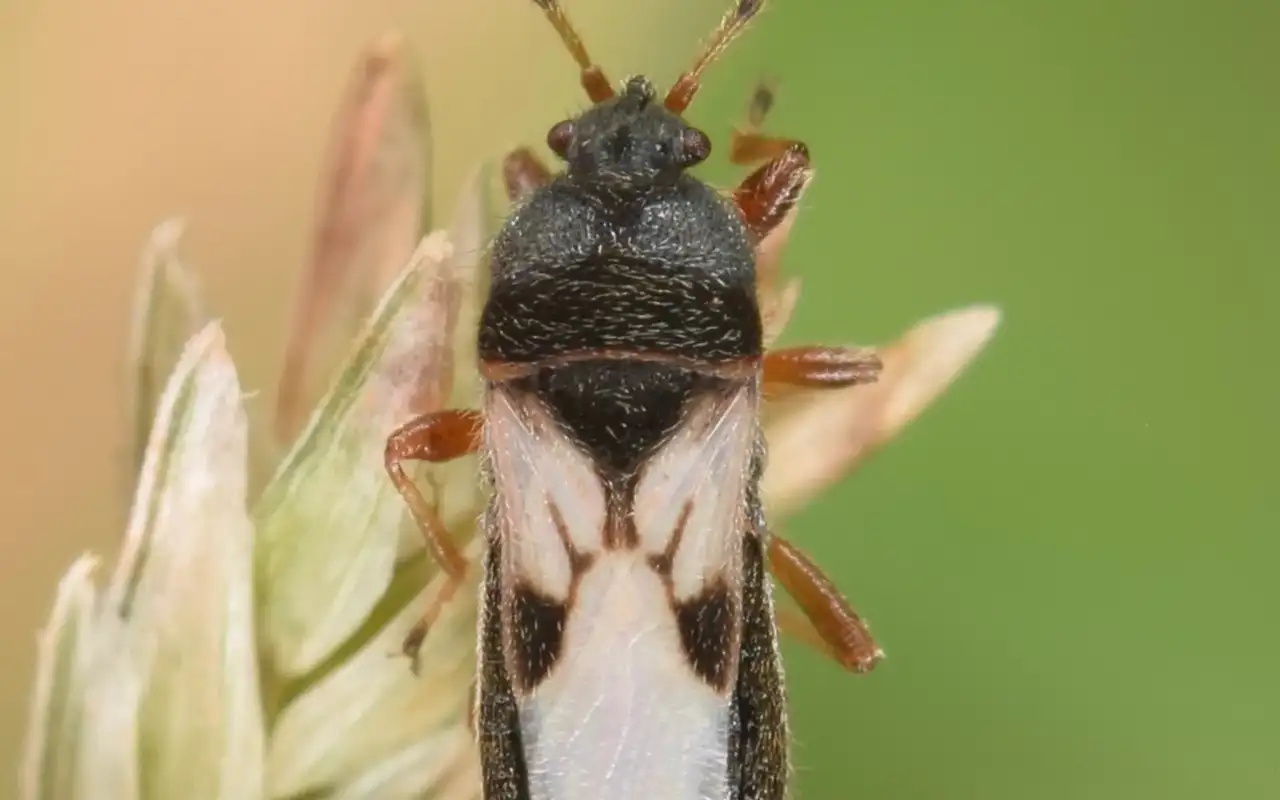
Well-watered lawns take longer to show an insect problem and cost more while they hide it. Across the newer Roanoke subdivisions along TX-114 and I-35W, irrigation runs hard enough that chinch bug damage reads like a zone that is not reaching, so the first fix people try is more water. The insect stops the grass using moisture at all, so sprinklers cannot win that argument.
In the historic core around Oak Street the grass is older and the soil settled, and the balance shifts to grubs and armyworms. Grubs work two to four inches below the surface on the roots, so the lawn goes loose before it goes brown. Armyworms come in off the greenbelt and creek corridors in late summer and take the surface off overnight.
PRICE BY THE HOUSE
Turf coverage on a Roanoke property
The lawn work is part of a year-round plan, and the plan is priced on the house. Complete Home & Lawn Defense covers the whole yard for $40 to $73.50 a month; Home Defender covers the structure plus turf inside about 25 feet for $30 to $54. Month to month, nothing to sign, and the number arrives before any commitment.
Roanoke spans small historic-core houses and large newer builds, so the table below stretches across most of the range. Anything over 6,000 square feet gets quoted individually. If a quote you are given does not line up with the published band for your size, it is fair to ask what is driving it.
Historic core, 1,500 sq ft or less
$40/mo
Whole lawn, smallest houses
1,500 to 3,000 sq ft
$40–$51.50/mo
Mixed across the town
4,500 to 6,000 sq ft
$62–$73.50/mo
Larger builds off TX-114
Over 6,000 sq ft
Quoted
Priced on the property before you agree
Every number on this page comes from our published price list. Roanoke homes get the same table as everyone else; the instant quote reads your square footage and lot size and hands you your own line.
WHERE IT ENDS
Parts of this a Roanoke owner should not expect
It does not cover the greenbelt. Land behind the fence belongs to the city or the HOA, we do not treat ground we are not contracted for, and armyworms crossing from it are not something a lawn program can prevent. What we can do is treat your side thoroughly and watch that boundary in late summer.
It does not repair turf. Once the insect is dead the lawn still has to rebuild roots and fill in, which is a watering and feeding job measured in weeks, and badly damaged patches need sod. We walk the lawn and say which is which rather than letting you wait on grass that is not returning.
It also does not compete with a design problem. Shrubs pressed against the brick, mulch piled up the slab and sprinklers keeping the foundation wet create their own pest pressure, and those are things to change rather than to treat around. We point at them on every visit until somebody moves them.
TREAT NOW OR WAIT
Preventive timing against reacting to damage
The cheapest grub treatment is the one applied in late summer while the larvae are small and near the surface. Waiting until the lawn actually looks bad usually means autumn, by which point those same grubs are large, deep in the root zone and much harder to kill, and the damage that made you call has already been done.
Chinch bugs are the opposite case and are treated on discovery, because they are surface feeders in the thatch and the treatment goes in shallow and acts quickly. That is why we test rather than spraying to a schedule: the two insects want opposite timing and opposite depth, and the wrong combination is a wasted application.
OPENING VISIT
What the first Roanoke appointment covers
The irrigation story
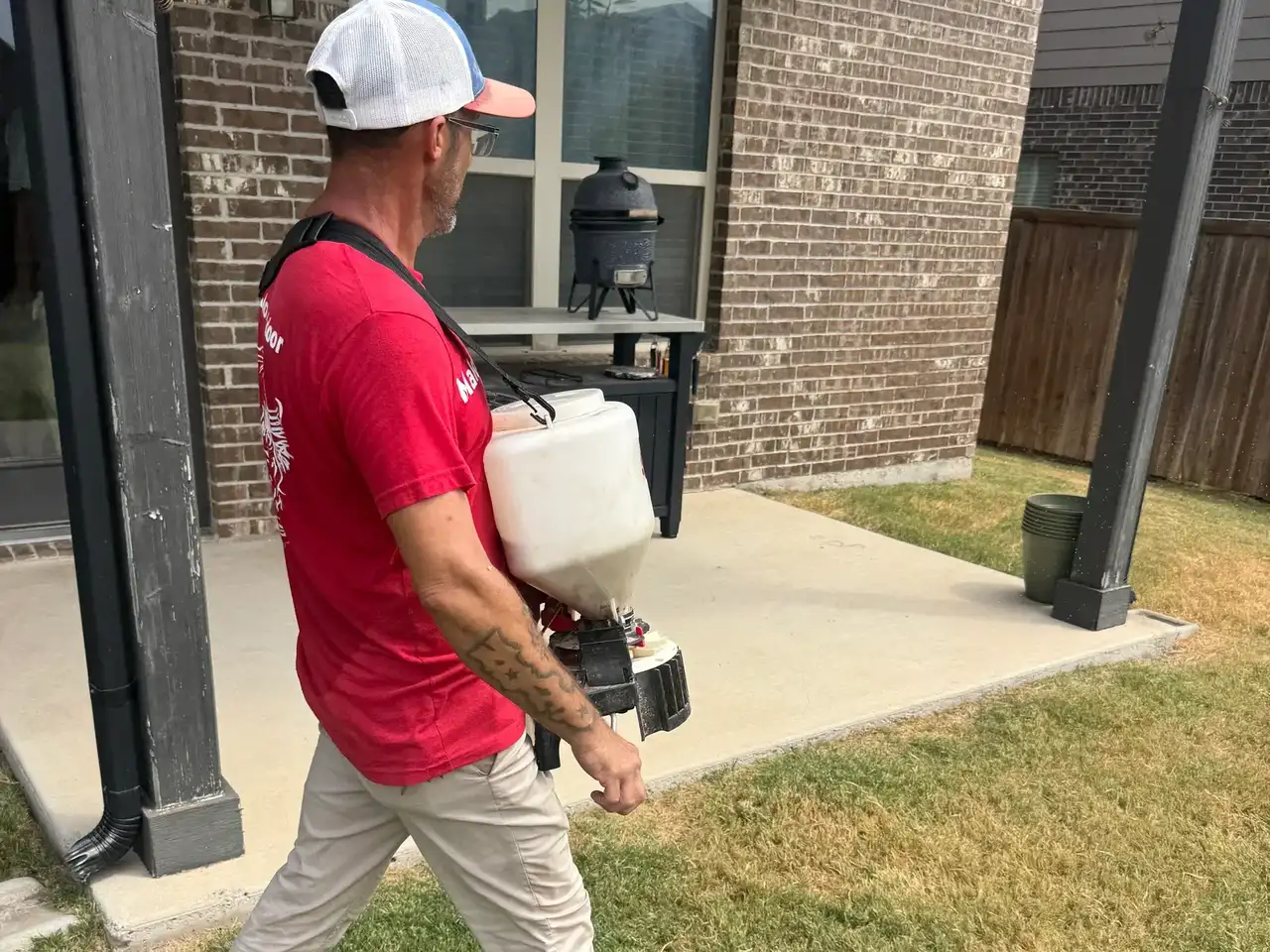
We ask what the sprinklers do before we look at the grass, because on an irrigated lawn the watering schedule explains a great many brown patches. A zone that has failed leaves damage shaped like the spray pattern; an insect does not.
Hands in the turf
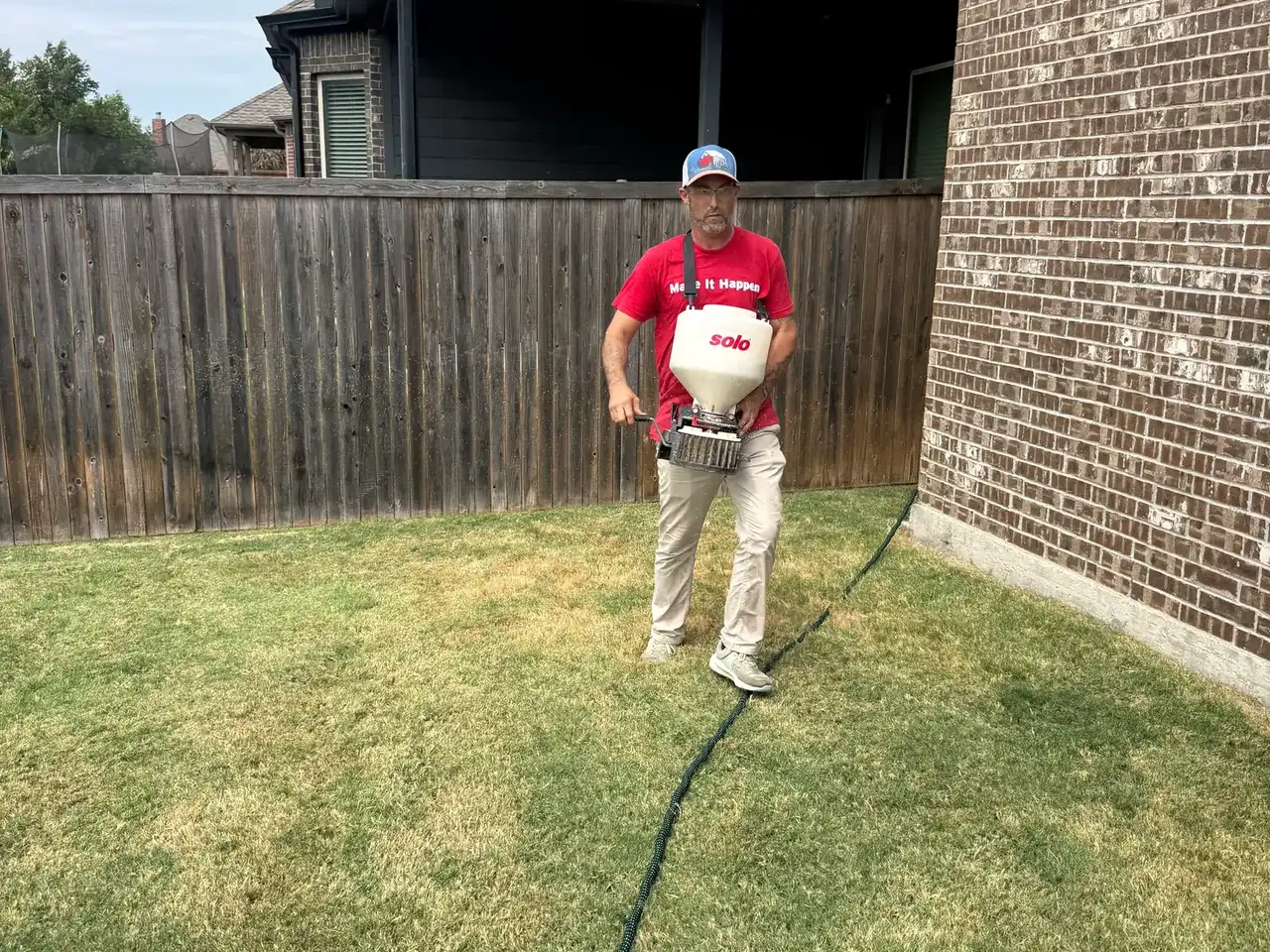
Then the two checks: a hard tug at the edge of any soft area to see whether roots are still holding, and a flooded can pressed into a hot green-to-brown edge to float chinch bugs out of the thatch. We would rather find nothing than sell an application that achieves nothing.
The greenbelt side
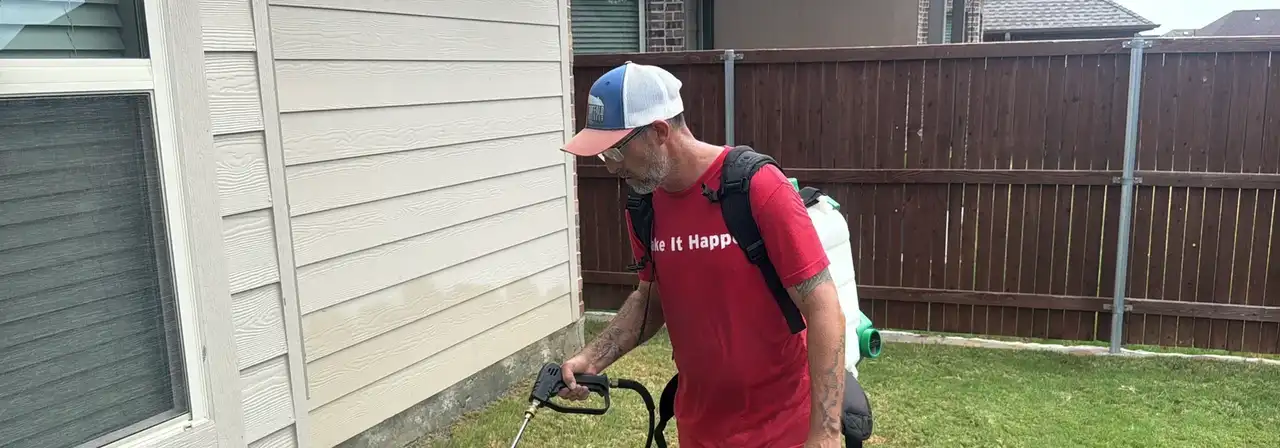
Lots backing onto a creek corridor or a greenbelt get their boundary walked, because that is where armyworm pressure and a good deal of everything else originates. The treated buffer goes there, and we tell you what to keep mowed.