HISTORIC CORE AND 114
Two different rodent problems on one Roanoke map
Around the historic core the issue is accumulated age. Older structures settle, mortar cracks, additions meet the original building at a joint that was never properly closed, and thresholds wear down. Every one of those is a quarter-inch opportunity, and the animals using them are usually mice working at ground level.
Out along TX-114 and I-35W the houses are new and the pressure comes from outside instead. Greenbelts, creek corridors and ground still waiting to be built on all hold rodents, and a lot backing onto any of them takes traffic at the fence line regardless of how good the envelope is.
The method does not change with the postcode. We find the openings that show sign, close them with material that cannot be chewed, trap what is already inside, and come back to confirm it held.
WHAT ROANOKE PAYS
Twenty-five dollars, on top of the plan the house needs
Rodent control is a $25 monthly add-on to Home Defender or Complete Home & Lawn Defense. There is no version without a plan underneath, and the $25 does not move with the size of the house, the number of entry points or how long the first visit takes.
What moves is the plan. A smaller older house at 1,500 to 3,000 square feet carries Home Defender at $33 to $38, so $58 to $63 a month in total; the larger newer builds at 3,000 to 4,500 square feet are $38 to $46, giving $63 to $71. Complete Home & Lawn Defense treats the whole yard on the same bands, $40 to $51.50 and $51.50 to $62. You hear the figure before you agree, and there is no cancellation fee waiting at the other end.
Rodent add-on
$25 a month
Attached to either year-round plan
Home Defender, 1,500 to 3,000 sq ft
$33–$38 a month
Houses in and around the old core
Home Defender, 3,000 to 4,500 sq ft
$38–$46 a month
The newer corridor subdivisions
Complete Home & Lawn Defense, 3,000 to 4,500 sq ft
$51.50–$62 a month
Whole yard treated as well
Every number on this page comes from our published price list. Roanoke homes get the same table as everyone else; the instant quote reads your square footage and lot size and hands you your own line.
PLAIN ABOUT THE GAPS
What rodent work in Roanoke will not fix
It will not undo an old addition. Where a room was added onto an original Roanoke structure, the joint between the two is often the worst opening on the building, and sometimes there is no sound material to fasten to on one side. We seal what we can and tell you when what is really needed is a builder rather than more mesh.
It will not clear a greenbelt. The corridors behind the newer streets are permanent rodent habitat and treating them is neither possible nor legal in any useful sense. Your house being closed is the achievable outcome, and it is the one that stops the noise.
It will not survive an unsealed shed either. A garden building full of stored cushions and bagged seed feeds a population thirty feet from your back door, and if that stays as it is, the trapping never quite finishes.
ALL AT ONCE OR STAGED
Sealing everything on day one against spreading it over the plan visits
Doing the whole envelope on the first visit is what we aim for, and on most Roanoke houses it is achievable: the openings get found, closed and logged in one go, and the trapping starts immediately. That is the version that ends fastest and it is what the $25 assumes.
Occasionally a house needs staging, usually an older one where something has to be repaired before it can be sealed, or where access is blocked by stored belongings. In that case we close everything that is ready, trap in the meantime, and finish the rest on the next plan visit. It works, but it takes longer to go quiet, so if you can clear access before we arrive it is genuinely worth doing.
THE INSPECTION ROUTE
What the first Roanoke visit covers
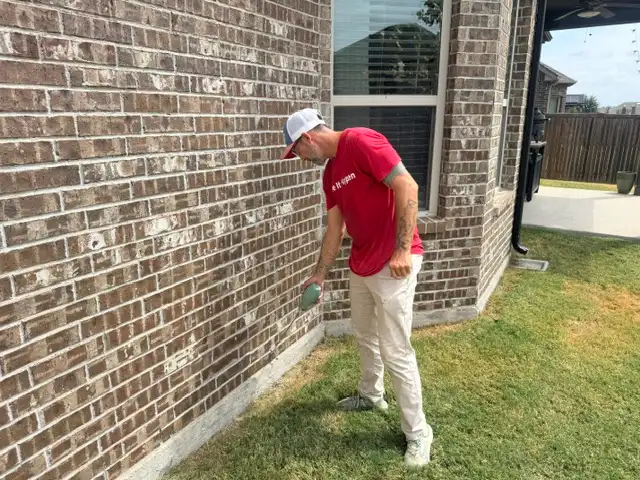
The oldest part of the structure
On any house that has been extended or altered, we start where the original building meets everything added since. Joints, changes in material and old vents are the most reliable openings on a building with history, and they get probed properly rather than glanced at.

The back boundary and what is behind it
Where a lot faces a greenbelt, a creek corridor or ground still to be developed, we walk that fence line for runs, burrows and droppings. It tells us which face of the house is taking the pressure and where traps and locked stations should go.
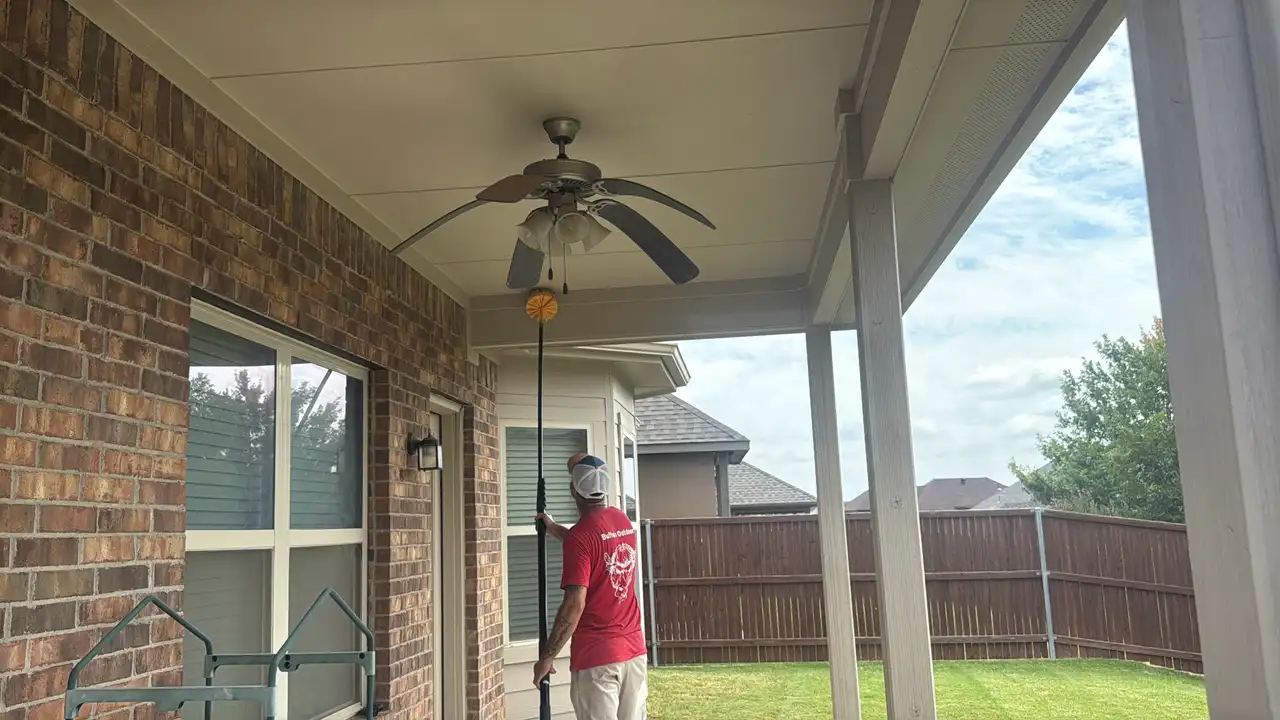
Low, high and inside
Then the standard sweep: bottom course, thresholds, garage corners, utility penetrations, then up to soffits, roof returns and anywhere a limb reaches the roof. The weep holes come packed with copper mesh and dusted as part of both year-round plans, and the attic is read for runways before anything is set.