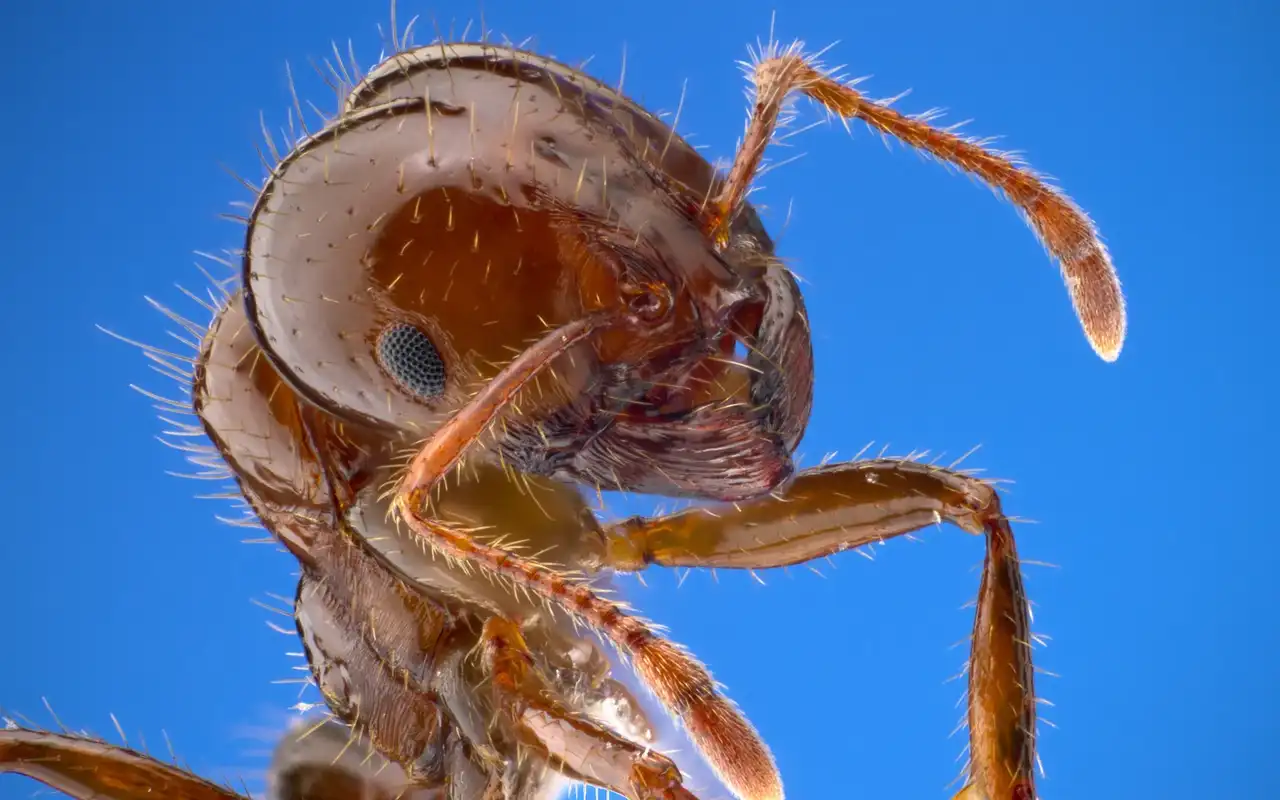
SHADE VERSUS CLEARINGS
Fire ants in Benbrook live in the clearings
Benbrook is the most wooded town we work, and fire ants dislike woods. A colony needs warm soil, which means direct sun for a good part of the day, so a lot off Winscott or Vega under a full 1970s canopy might carry one mound in the brightest corner and nothing else. Chiggers and ticks are the bigger problem under those trees, which is why fire ants sit third on our Benbrook list.
The exceptions are the open spots. A lake-side lot with a wide mown yard running toward Benbrook Lake, a back yard where trees were cleared for a pool, or turf that was recently resodded all give a queen exactly the bare, sunny ground she is looking for. Ground near the lake and the Clear Fork also floods, and flooding drives colonies upward into a rash of new mounds within days of a storm.
NO SEPARATE CHARGE
What a Benbrook homeowner pays, and why fire ants are not on the invoice
Fire ant treatment has no price of its own; it comes with either year-round plan. Home Defender runs $30 a month for a house of 1,500 square feet or less, $33 to $38 up to 3,000, and $38 to $46 up to 4,500, which covers most of the established homes on the Benbrook side of 76126 and the east side that mails as Fort Worth in 76116.
If chiggers are the reason you are reading this at all, look at Complete Home & Lawn Defense instead, since it treats the whole yard and the boundary with the wooded draws where chiggers overwinter. That plan is $40 to $62 for the same house sizes, and the fire ant bait is part of it just the same. Either way you see the exact number first, and there is nothing to sign.
House up to 1,500 sq ft
$30/mo
Older interior Benbrook homes
1,500 to 3,000 sq ft
$33–$38/mo
Most of Winscott and Vega
3,000 to 4,500 sq ft
$38–$46/mo
Larger lake-side houses
Whole-yard plan, same sizes
$40–$62/mo
Adds chigger and lawn insect treatment
Every number on this page comes from our published price list. Benbrook homes get the same table as everyone else; the instant quote reads your square footage and lot size and hands you your own line.
WHAT BAIT WILL NOT DO
Honest limits for a wooded, lake-side town
Bait needs foragers, and foragers need warmth. On a deeply shaded Benbrook lot in early March the ants may not be active enough to collect it yet, so we watch soil temperature and the forecast rather than spreading on a calendar date. Spring and fall are the windows.
It will not treat the lake land. Public ground below your property line belongs to the Corps or the city, and we treat up to your boundary only, so a shoreline lot will always see some colonies budding in from the untreated side. The year-round visits are what keep that steady trickle from becoming an established population.
And it is not instant. From the day we spread to the day the last mound goes quiet is often two or three weeks, sometimes less, and a rainstorm in between will make it look like nothing happened. Mounds that pop up between scheduled visits are covered; you call, we come back, no charge.
BAIT VS THE JUG FROM THE STORE
Why a Benbrook homeowner usually loses with mound drench
The mound drench sold in every hardware store is designed for the mound you can see, and in a shaded Benbrook yard that mound is often the only one, which makes the drench tempting. Pour it on and the workers die, the queen moves five feet into the sun and rebuilds, and in a fortnight you have two mounds and the sense that the product was junk. The product was fine; the method just never reaches the queen.
Broadcast bait is carried down to her by the workers themselves. Spread over the whole lawn, it also lands on the colonies you have not seen, including the ones budding in from the lake side. Doing it yourself is legitimate if you buy a broadcast bait, cover the full yard rather than the mound, and pick a dry stretch in spring or fall; the plan simply means somebody else is watching the calendar and the forecast for you.
OUR FIRST WALK
The first fire ant visit on a Benbrook lot
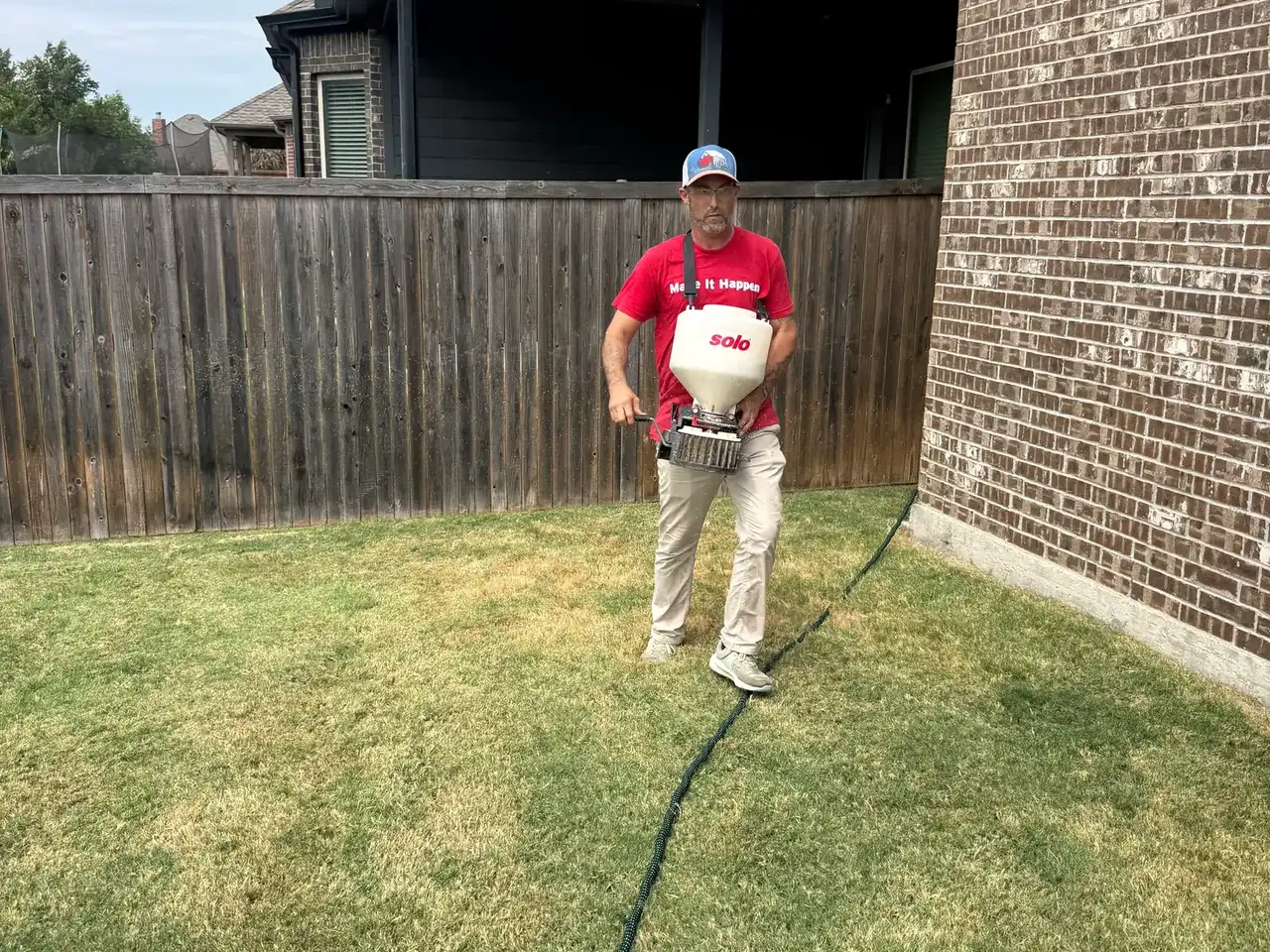
Sun map of the yard
Before anything goes down we walk the lot and note where the canopy opens and where the ground stays warm through the afternoon. On a lake-side property the open mown slope toward the water is nearly always where the colonies sit.
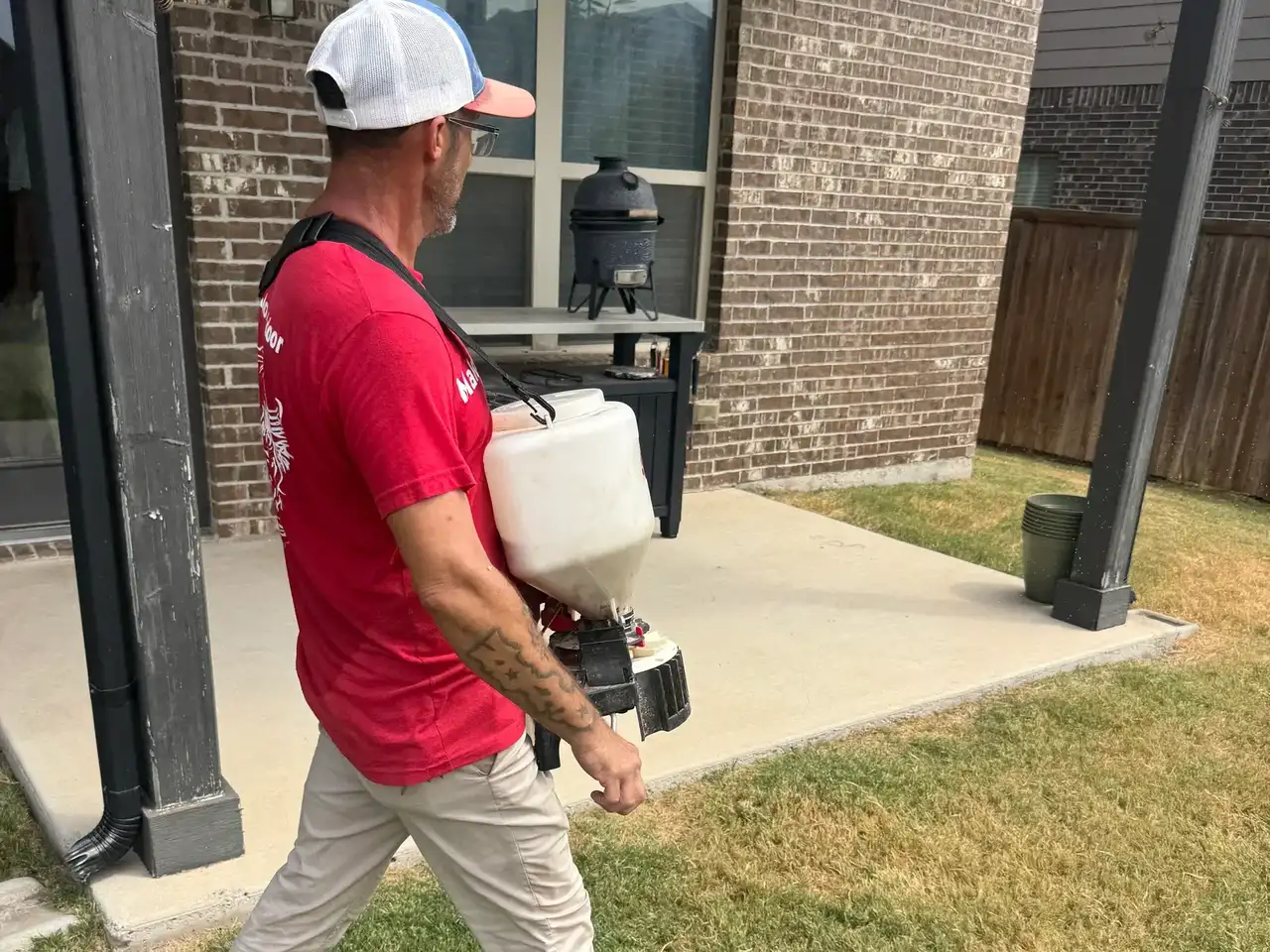
Bait over all of the turf
The granules go across the full lawn at a light rate with a broadcast spreader, shade included, because a colony under the trees is unlikely but not impossible. Nothing about the application shows on the grass afterward.
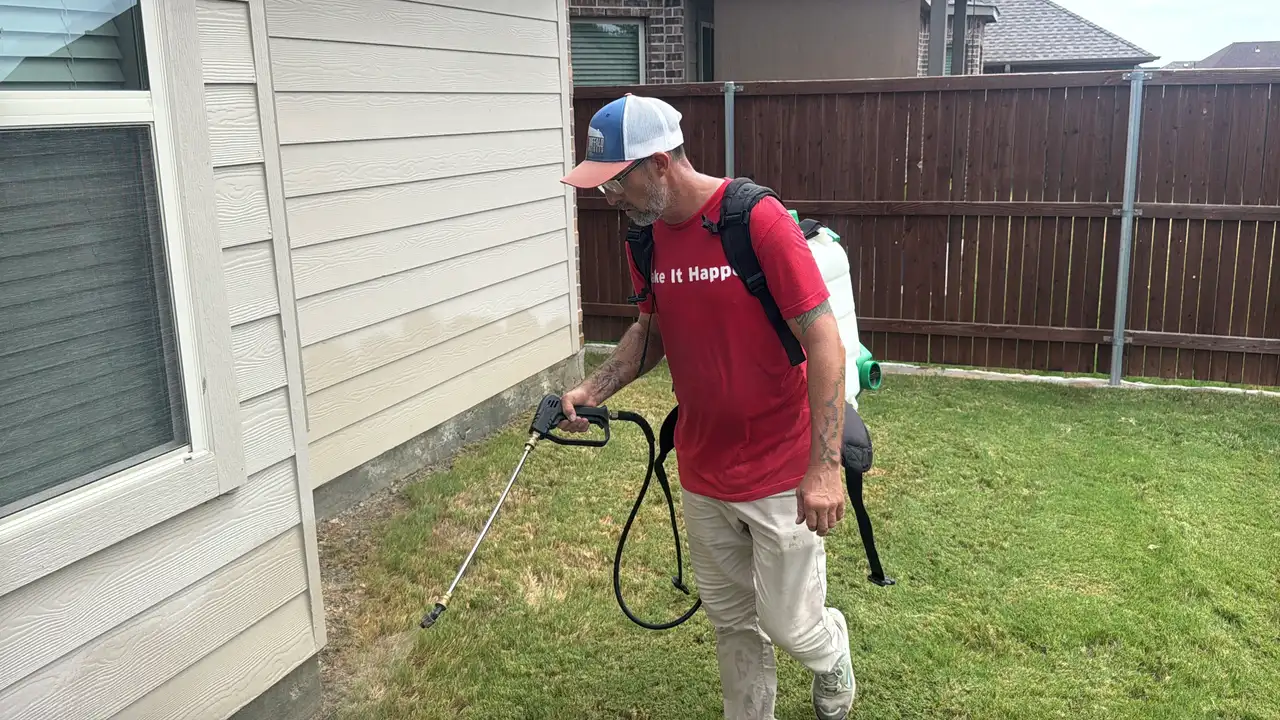
The wooded boundary, if you are on the whole-yard plan
Where the yard meets a wooded draw or the lake land we treat the boundary strip for chiggers and ticks, since that edge is where most Benbrook problems actually start. Fire ants get covered there too; they colonise disturbed edges readily.