TREES CHANGE THE JOB
What a wooded lot does to the pest pressure on a house
It feeds it. Benbrook is the most heavily wooded town we serve, and leaf litter, shaded mulch and damp ground under the canopy are where crickets, pillbugs, millipedes, earwigs and roaches live. Spiders and scorpions follow that food supply to the wall, then look for a way in. The Clear Fork corridor and the lake keep humidity up, which keeps all of it going longer into the fall than it does on an open lot.
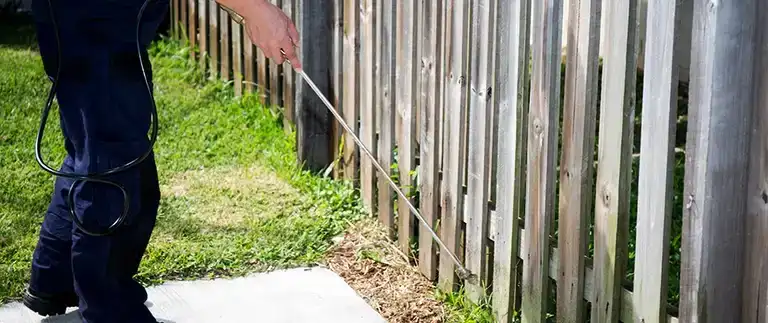
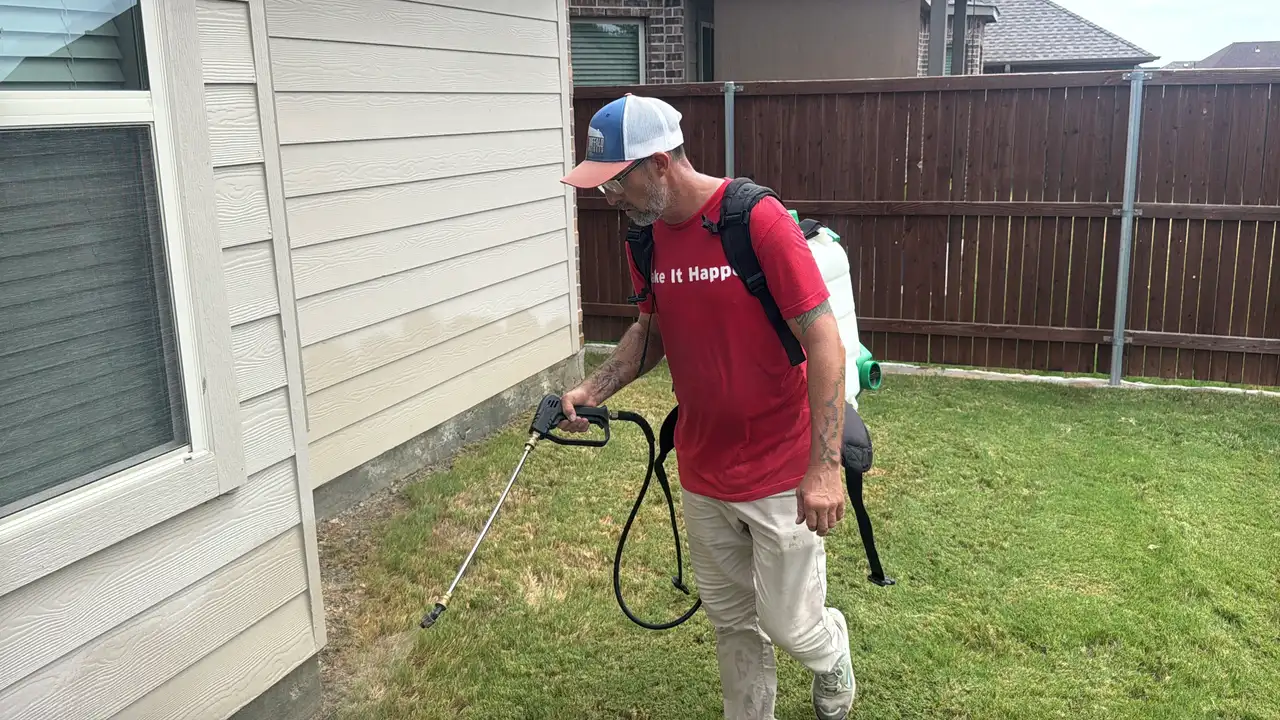
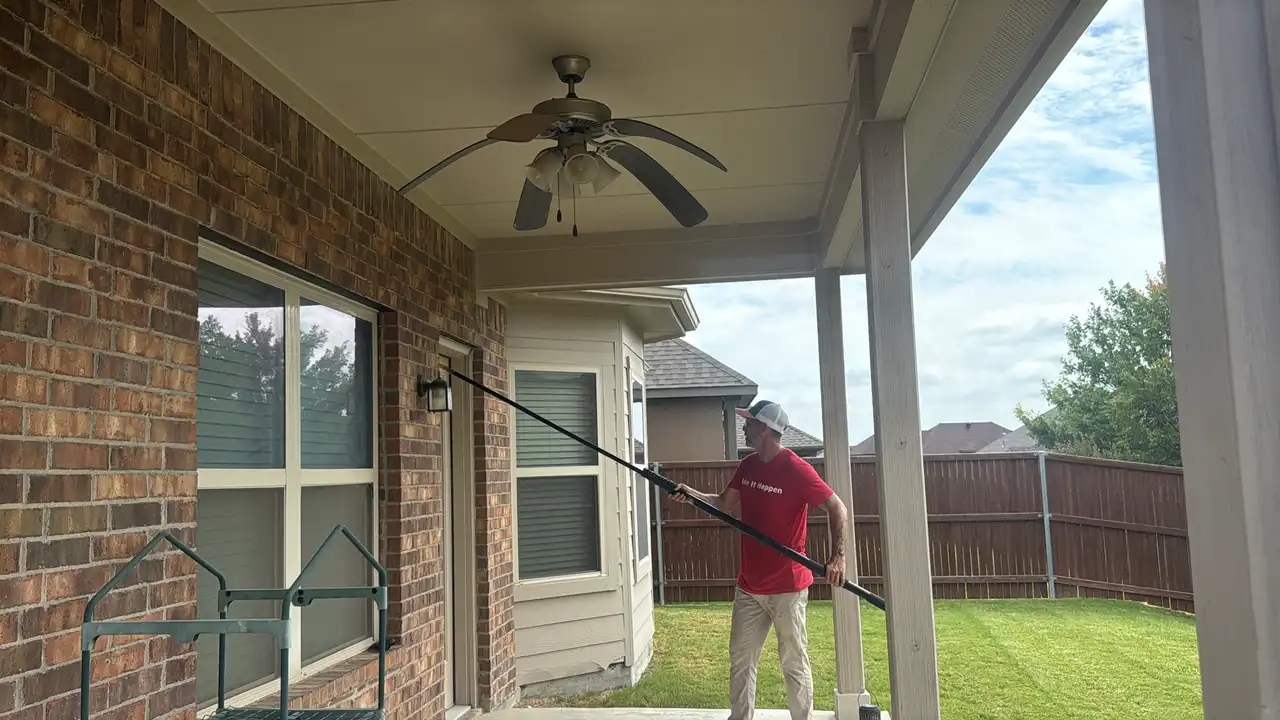
Home Defender is aimed straight at that chain. Four visits a year put a liquid band around the foundation and three feet up the wall, clear the eaves, soffits and door frames with a web pole, dust every brick weep hole with Delta Dust, and broadcast a granular barrier about 25 feet out. Fire ant bait is part of it, and the plan is month to month.
WHAT IT RUNS HERE
Monthly pricing for a Benbrook house
Home Defender is $30 to $54 a month and the number comes off the square footage of the home, not the lot, which is good news in a town of large wooded lots and fairly modest houses. A 1,400 square foot home in the older interior sections is $30. A 2,300 square foot one is $33 to $38. A 3,400 square foot house on the Winscott side is $38 to $46.
If you want the trees and the back half of the property treated rather than a band around the house, Complete Home & Lawn Defense is $40 for the smallest homes, $40 to $51.50 through the mid-size band and $51.50 to $62 above that. No contract on either, no startup fee, no cancellation fee, and anything that flares up between the four visits is retreated at no charge.
1,500 sq ft or less
$30 a month
Plenty of the older interior housing stock
1,500 to 3,000 sq ft
$33 to $38 a month
The most common Benbrook range
3,000 to 4,500 sq ft
$38 to $46 a month
Larger homes out toward the lake side
Rodent control add-on
$25 a month
Only alongside a year-round plan, never alone
Every number on this page comes from our published price list. Benbrook homes get the same table as everyone else; the instant quote reads your square footage and lot size and hands you your own line.
THE LIMITS, SAID PLAINLY
Four things a Benbrook homeowner should know going in
Ticks are not on this plan. Yards near Benbrook Lake or backing a wooded draw carry them, and ticks sit with fleas and mosquitoes in the separate 21-day program that runs April through September. Buying a perimeter plan and expecting the tick problem to end is the single most common mismatch we head off here.
The 25-foot ring stops well short of a wooded boundary. Chiggers overwinter in leaf litter, so if your trouble spot is the shaded strip where the mowing stops, the base plan is treating the wrong 25 feet and you want the whole-yard upgrade instead.
We do not treat down to the water or across onto public lake land, because it is not our property to work. Your side of the boundary gets treated hard, and that is where the useful line sits anyway.
Lastly, dust in the weep holes is included but sealing them is not. On original 1970s brick under heavy canopy, scorpions keep finding the same openings until copper mesh physically closes them, and that is quoted separately.
SHADE OR NO SHADE
Is treatment worth it when the yard is mostly shade?
More worth it, not less, which surprises people. Shaded, damp ground is where the insects at the bottom of the chain live, so a shady Benbrook lot is producing more of the crickets and pillbugs that draw spiders and scorpions to the wall than an open sunny one does. The barrier has more to catch, so it is doing more work per dollar.
What shade does change is how you spend the money. On a sunny lot the lawn is the battleground and the whole-yard plan looks obvious; under canopy the highest-value work is at the structure, the eave line and the brick. If your house is the older kind off Winscott, put the money into exclusion and the perimeter band first.
THE WALKAROUND
What we look at before anything is sprayed
What is touching the wall
Shrubs planted tight to the brick, mulch piled above the slab line and leaf litter banked against the foundation are covered routes to the house. We tell you what to pull back, then treat what stays, because a band under six inches of wet mulch is not doing much.

The eave and soffit line
Under mature trees, wasps and spiders rebuild in the same corners year after year. The web pole clears eaves, soffits, porch ceilings and door frames on every visit, which is the part of the job that keeps them from resetting.
Weep holes and the granular ring
Every weep hole along the bottom course of brick takes Delta Dust, then granular product goes out roughly 25 feet into turf and beds with fire ant bait. Gate access is all we need, and you get a text when the technician is on the way.