SHADE AND LAKE AIR
Why the biting starts here first
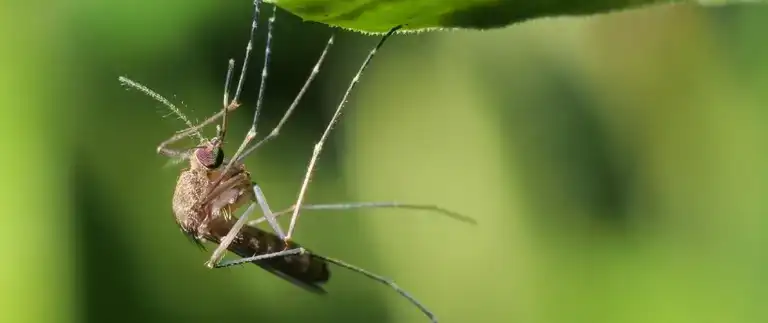
Benbrook is the most heavily wooded place on our map, and the lake plus the Clear Fork corridor keeps humidity sitting behind all that tree cover. A mosquito needs a cool damp spot to pass the daylight, a wooded draw packed with leaf litter is exactly that, and lake-side lots are usually biting in late March while drier parts of the county are still quiet.
The older interior streets off Winscott and Vega have the mature trees without the direct lake influence, so pressure there is steady all summer instead of early and extreme. Ticks and chiggers come with both versions, which is why the same visit treats turf and bed edges, and it covers Benbrook in 76126 and 76116, including addresses that mail as Fort Worth.
PER-VISIT COST HERE
What the program costs on a wooded lot
Each visit is priced off the lot and nothing else, and Benbrook spreads right across the table. Compact lots on the established interior streets sit in the $49.95 and $59.95 bands, while larger wooded properties toward the lake side run $79.95 up to $129.95, and anything past about an acre is measured and quoted.
You pay as the visits happen from April through September, with no contract and no cancellation fee, so stopping in August means simply stopping. Retreats between scheduled visits are included, one interior treatment comes with the service if you end up needing it, and your own number is waiting at /instant-quote.
Lots up to 7,000 sq ft
$49.95 a visit
Older interior streets off Winscott
Lots of 17,001 to 22,000 sq ft
$79.95 a visit
Wooded yards with a real boundary to treat
Lots of 42,001 to 47,000 sq ft
$129.95 a visit
Large properties over on the lake side
Over 47,000 sq ft
Quoted
Roughly an acre and above
Every number on this page comes from our published price list. Benbrook homes get the same table as everyone else; the instant quote reads your square footage and lot size and hands you your own line.
STRAIGHT ABOUT IT
Where a fog stops being able to help
We do not treat down to the water, and that limit is worth saying first. Public lake land is not ours to spray, the useful line is your boundary, and a Benbrook property on the lake side keeps receiving arrivals from ground nobody treats at all.
Leaf litter also beats chemistry. Deep litter under the trees traps moisture, shelters chiggers straight through winter and gives adults somewhere to hide from an application, so raking the worst of it back off the fence line does more for a wooded lot than an extra visit ever would.
This is not a shield you buy once, either. It thins at about three weeks and faster after the hard spring rain that comes off the river bottom, so the schedule is every 21 days, returns in between are free, and we do not sell a single fog to cover one weekend.
CLEAR IT OR TREAT IT
Cutting the brush back versus paying for the fog
Habitat work is the cheaper half and nobody needs a license for it: mow where the yard meets the woods, thin brush that blocks airflow, keep the gutters running and tip out anything holding water. On a wooded lot those chores knock the population down before a drop of product is ever applied.
What clearing cannot do is remove the adults already resting in canopy and hedge lines, or put anything between an ankle and the ticks waiting in the boundary strip. That is the part the 21-day program handles. Most wooded properties need both halves, and doing only one is why some homeowners conclude mosquito control does not work.
FIRST STOP, BENBROOK
What we look at on a wooded property
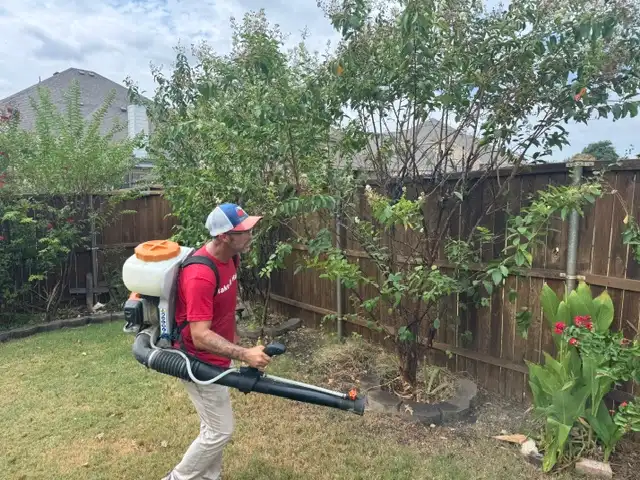
Where the mowing stops
The technician finds the line between kept lawn and woods or draw first, because that strip is where ticks wait and chiggers overwinter. It gets a deliberate treated band rather than a quick pass on the walk back to the truck.
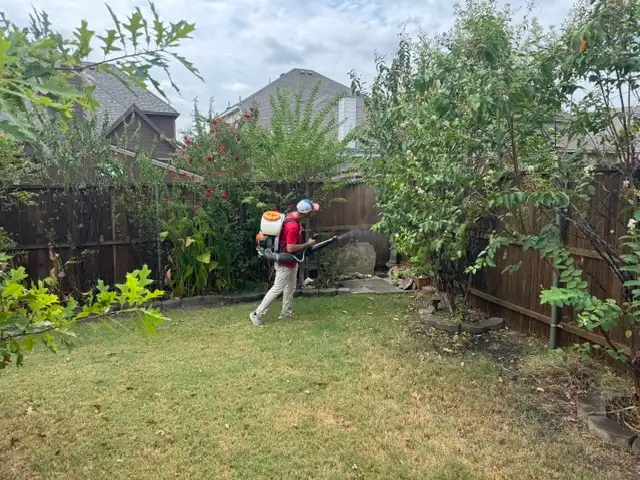
Canopy, litter and fence shade
Then the fogger works low canopy, shrub banks, deck skirting and the shaded north wall. Sun-baked open turf is left alone, because nothing sits there in a Texas July when a damp hedge is available instead.

Water that will not drain
French drains, low spots off the slope and anything still holding water days after rain get larvicide. We walk the property with you and point out the saucers, tarps and toys worth tipping, which is the homeowner half of the job.