TELL WHICH JUSTIN
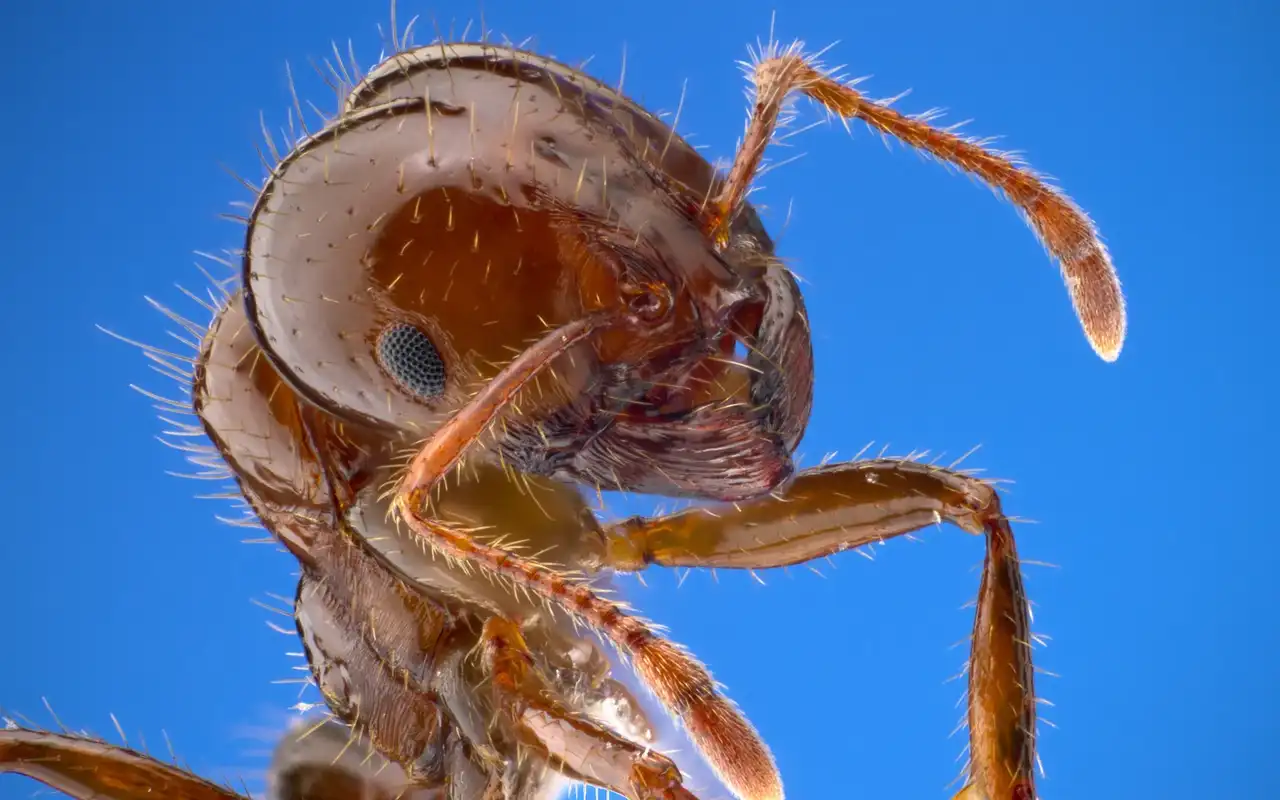
Count your mounds and you can date your own soil
A rough rule works surprisingly well here. If the lawn produces one or two mounds a season, you are on the settled soil of the older core off FM 156, where competing ant species have held the ground for decades and a fire ant queen has nowhere easy to land. If you are finding a dozen, you are almost certainly out toward FM 407 and Timberbrook on ground that was graded within the last few years.
The distinction sets expectations rather than the treatment. Both kinds of Justin yard get the same broadcast bait across the same whole lawn. What differs is how quickly the yard refills afterwards, and therefore how much of the value sits in the repeat visits rather than in the first one.
TWO SIDES, ONE LIST
What the two halves of town actually pay
The same table, because the plans price on the square footage of the house rather than on which side of town it stands. An older home under 1,500 square feet is $30 a month on Home Defender, and the 1,500 to 3,000 band runs $33 to $38. A newer build at 3,000 to 4,500 square feet is $38 to $46.
On Complete Home & Lawn Defense those same three sizes read $40, $40 to $51.50 and $51.50 to $62, with the whole yard treated instead of the perimeter and 25 feet beyond it. Fire ant bait sits inside both plans, and so does copper mesh sealing of the weep holes, which most companies around here bill for separately.
Older core, under 1,500 sq ft
$30/mo
Home Defender at the entry band
1,500 to 3,000 sq ft
$33–$38/mo
Found on both sides of town
New builds, 3,000 to 4,500 sq ft
$38–$46/mo
The Timberbrook-side sizes
Whole-yard version
$40–$62/mo
Complete Home & Lawn Defense
Every number on this page comes from our published price list. Justin homes get the same table as everyone else; the instant quote reads your square footage and lot size and hands you your own line.
NO OVERSELLING
Three places this treatment stops
It stops at your fence. The town is small enough that plenty of properties still touch open ground, none of which anybody treats, so it keeps pushing queens back across the line. A treated buffer at the boundary slows that down and the repeat visits handle the rest, but nothing switches it off.
It stops short of instant. Bait needs two to three weeks to work through a colony and reach the queen, and the mound looks entirely normal for most of that time. Any product that clears a mound in an afternoon has killed the workers standing on it and nothing underneath.
And it stops at the wall. What gets inside an older Justin house comes through worn door sweeps, cracked mortar and open weep holes, and it is the perimeter treatment, the Delta Dust and the copper mesh in those holes that deal with it. Different problem, same plan, no extra charge.
OLD CORE OR NEW BUILD
Which half of town needs this more?
The new subdivisions, on the fire ant question alone. Graded ground out toward FM 407 produces mounds reliably for years, and a household with small children there is buying something they will use every summer. The older core off FM 156 sees a fraction of that pressure and could reasonably wait if ants in the yard were the only issue.
In practice it tends to run the other way. Older houses have the gaps that let ants, roaches, scorpions and mice indoors, so those owners sign up for the structure and treat the bait as a bonus. New builds are tight but the ground beneath them is full of ants, so those owners sign up for the yard. Same two plans, opposite reasons.
FIRST APPOINTMENT
What we do on the first call in Justin
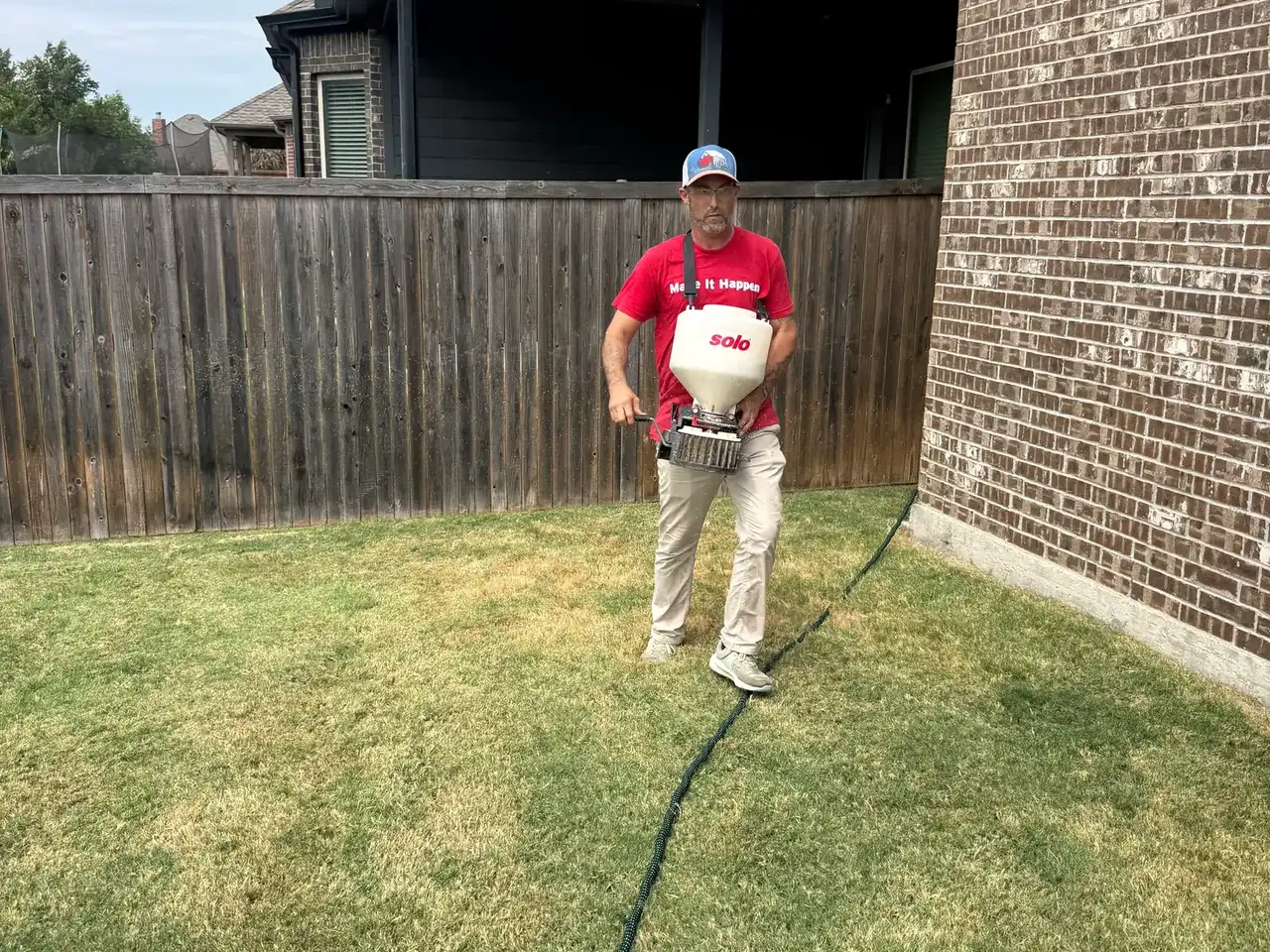
Date the ground, not the house
We ask when the lot was graded and when the turf went down, because that predicts a mound count better than the age of the building does. A newer house on old ground behaves like old ground, and the reverse is just as true.
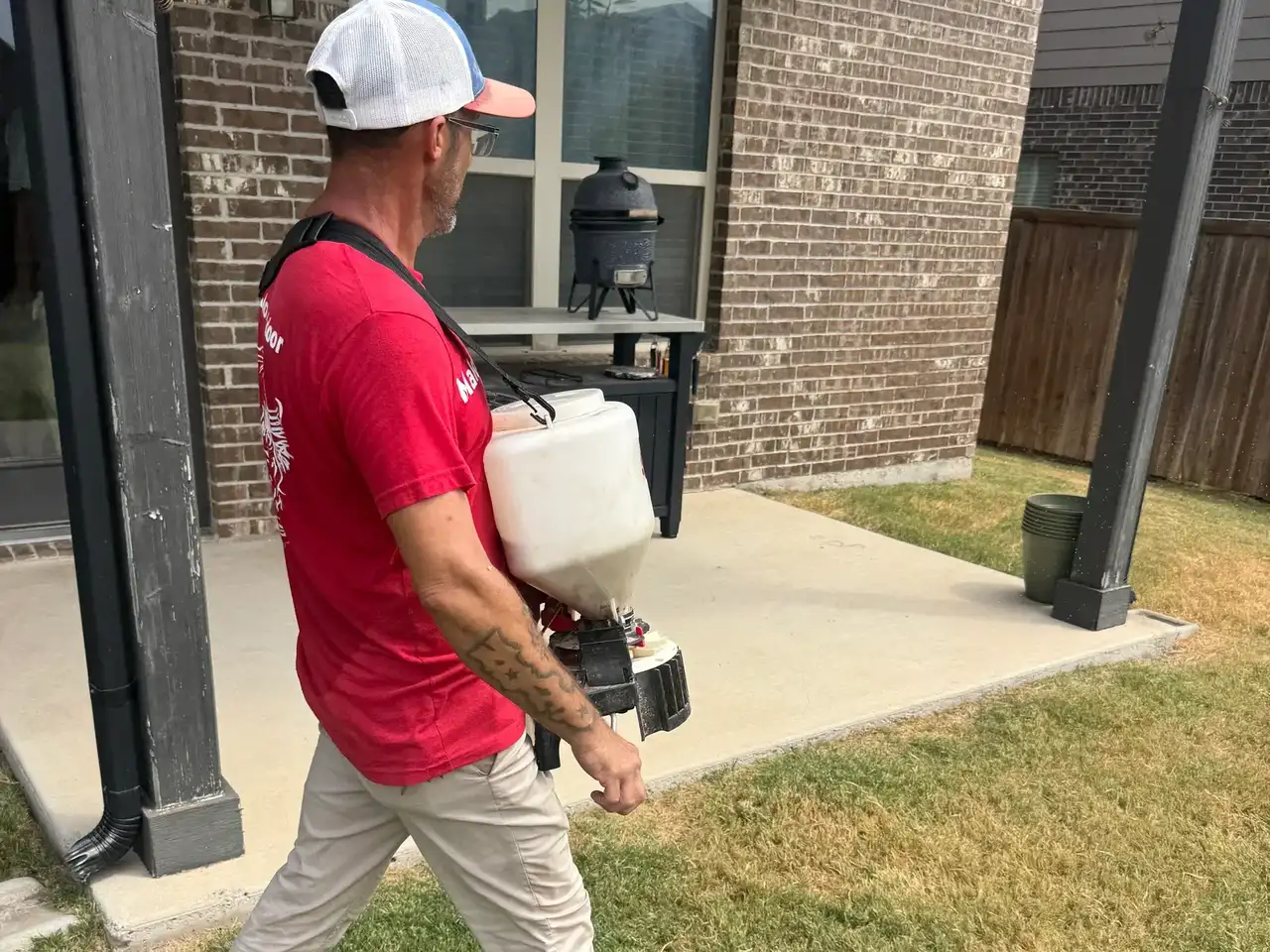
Broadcast, then the boundary
The spreader covers the whole mowed lawn at a very light rate, and where the property meets open land we treat a buffer strip instead of pretending a fence is a barrier. The application waits for roughly a day of dry weather.
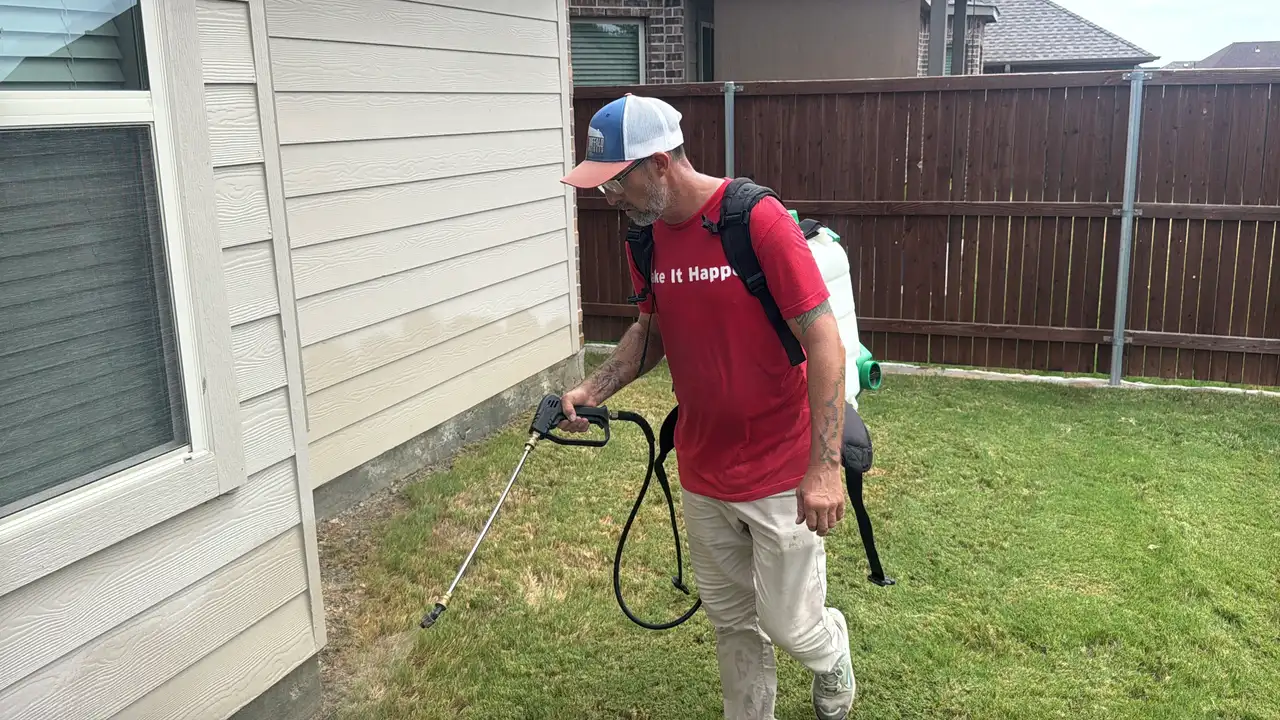
Weep holes, dusted and sealed
The structural half of the visit runs the foundation band and eaves, dusts every weep hole with Delta Dust and packs it with copper mesh so the hole closes permanently. That sealing belongs to the plan, not to a separate invoice.