
TWO SIDES OF ONE TOWN
Which half of Justin you live on changes the flea answer
Around the older core off FM 156 the ground has been settled for decades, the trees are tall and the shade beneath them never really lifts. Flea larvae do well in that, because they need damp soil out of the sun, and an established yard has plenty in the beds, under the porch and along the north wall.
Out toward FM 407 and Timberbrook the picture flips. Young builder turf in full sun is genuinely hostile to larvae, so a new lawn here rarely breeds fleas on its own, and what does turn up has usually arrived on an animal from somewhere else.
Ticks draw no such distinction. This is a small town and plenty of properties on both sides still touch open pasture, and that boundary is where ticks wait regardless of how old the house behind it happens to be.
PRICED ON THE LOT ALONE
What the visits come to on either side of town
The house does not enter into it, which surprises people who have already priced a year-round plan. Flea and tick work is billed per visit on lot square footage, so most Justin homes sit between $49.95 and $79.95, and the bigger parcels at the town edge climb from there into quoted territory past about an acre.
Visits land every 21 days from April through September and you are never locked in. If the first couple of treatments show you had less of a problem than you feared, stop, and there is no cancellation charge for doing it.
7,000 sq ft or less
$49.95 a visit
Tighter lots in the older core
12,001 to 17,000 sq ft
$69.95 a visit
Common on the newer subdivision streets
22,001 to 27,000 sq ft
$89.95 a visit
Larger lots out toward the town edge
Over 47,000 sq ft
Quoted
Past about an acre we measure first
Every number on this page comes from our published price list. Justin homes get the same table as everyone else; the instant quote reads your square footage and lot size and hands you your own line.
THE PARTS WE CANNOT DO
Straight talk about what a yard treatment misses
The pet is not ours to treat. We work the ground and the building perimeter and nothing beyond that, so an animal with no veterinary preventive keeps re-importing adults while the household keeps seeing them. Doing one side and not the other is the most common way people waste a season.
Detached buildings are the second gap. Older Justin properties come with sheds, garages and workshops that have earned gaps over the years, and when a stray cat or a rodent beds down in one, fleas keep coming from there. Clearing it out and closing the way in beats treating around the outside of it.
The third is the pasture next door. We treat a buffer where your mown ground meets the tall stuff, which cuts what crosses, but ticks keep being produced out there and the habit of checking legs and dogs afterward stays sensible.
OLD CORE OR NEW BUILD
Same price, different work, depending on the address
On an older Justin lot the value sits in the shaded ground: the beds, the underside of the porch, the strip along the fence where leaf litter gathers. That is where the larvae are, and an application that covers the open lawn while skipping those places will disappoint you.
On a new build the value is almost entirely at the boundary and around any standing water, because the turf itself is too hot and too young to hold much. Both addresses pay by lot size and get identical visits; what differs is where the time goes, which is worth saying out loud when you call.
THE FIRST JUSTIN VISIT
What gets sorted out before anything is applied
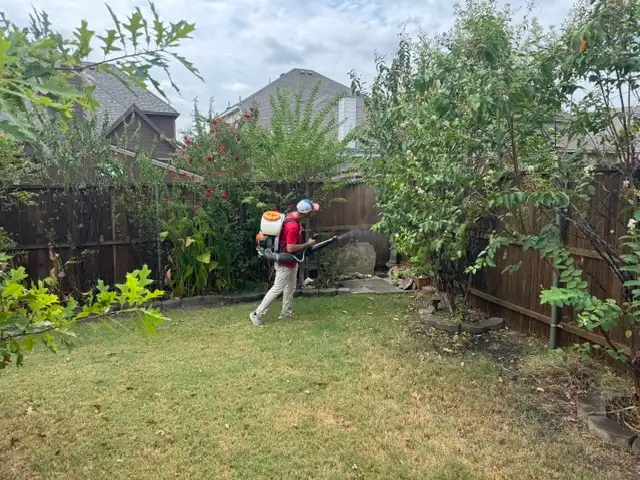
Which pattern your property fits
The age of the house and the shape of the lot tell us where to concentrate: shaded harborage on an older place, the fence line and the damp margins on a newer one. It takes one walk-round and it changes the whole visit.
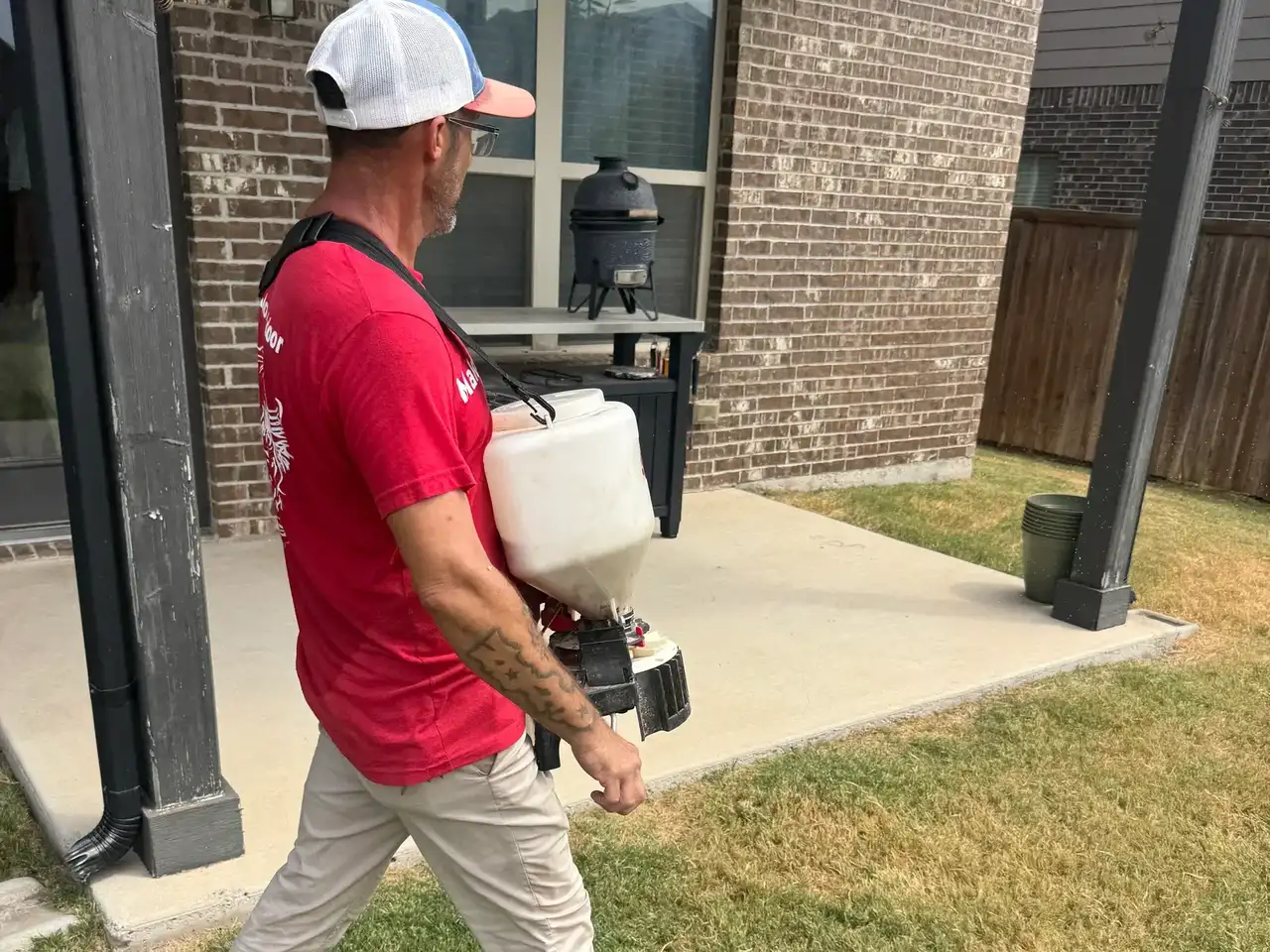
Where the mowing stops
This is a small enough town that many lots still meet open ground, so we find exactly where your maintained grass ends. That line gets the treated buffer, because it is where ticks wait and where chiggers come from as well.
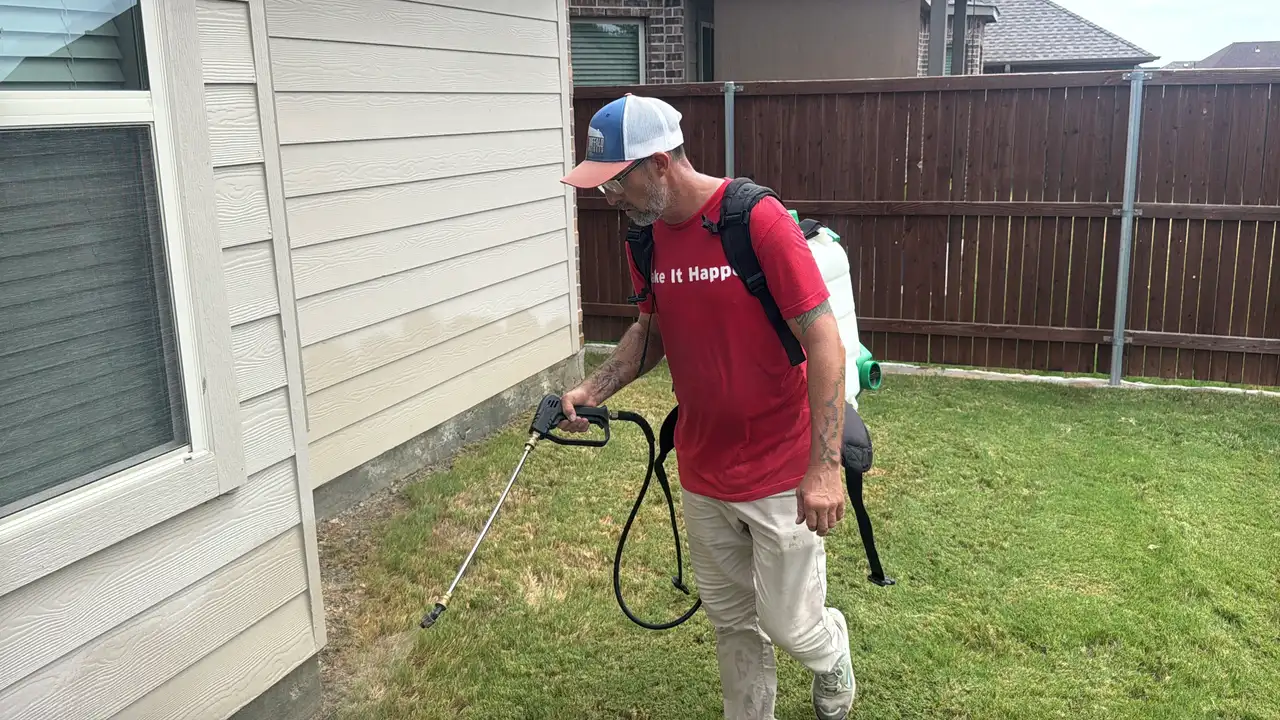
Outbuildings and shaded structures
Sheds, detached garages and anything an animal sleeps under get inspected rather than walked past. If something is living in one you will hear about it, because treating the lawn around an active harborage wastes both our time.