TWO HALVES, ONE 76247
Which half of town is your house in?
The answer changes what you are buying. The older core off FM 156 and Old Justin Road has settled soil and houses that have had decades to open up gaps: worn door sweeps, cracked mortar, utility penetrations nobody ever sealed. The newer subdivisions out toward FM 407, Timberbrook among them, sit on recently graded ground with young builder turf laid on top.
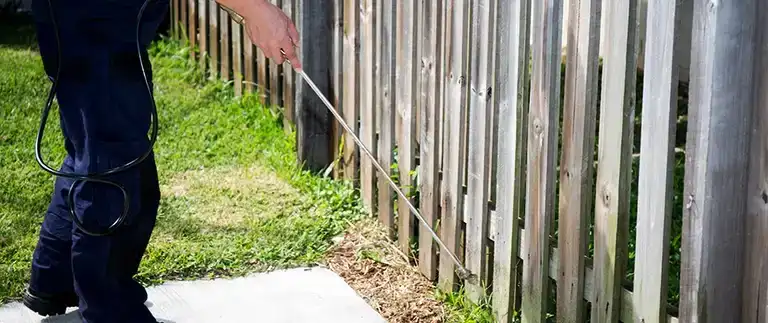
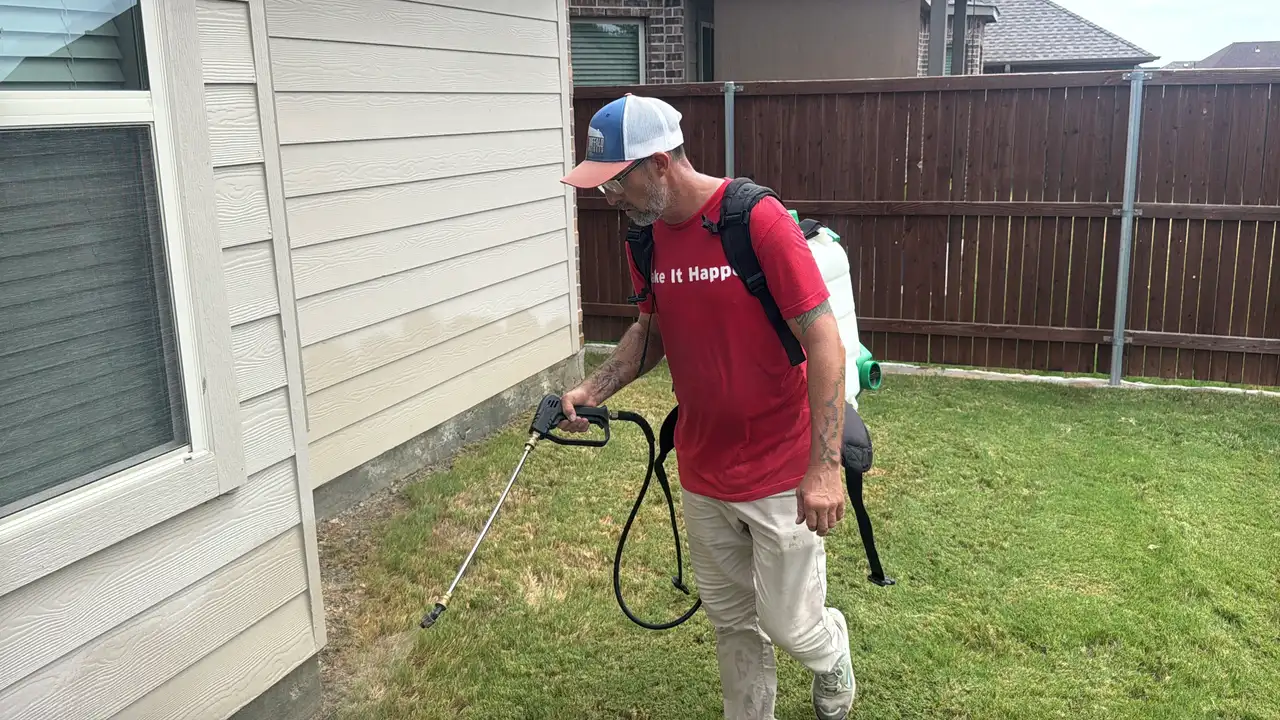
Home Defender performs the same set of jobs at both: a liquid band along the foundation and three feet up the wall, an eave and door-frame sweep with a web pole, Delta Dust in every brick weep hole, a granular barrier about 25 feet out, and broadcast fire ant bait, four times a year. On an older Justin house the value sits mostly in closing routes through the wall. On a new one it sits mostly in the ground.
WHAT IT RUNS IN JUSTIN
The price, older core or new subdivision
Square footage of the house is the only input, which means an eighty-year-old cottage and a builder plan of matching size pay the same figure. Home Defender is $30 to $54 a month across the whole range, and the smaller houses in the older part of town frequently come in at the bottom of it.
Everything is billed monthly against the four visits. You get the number before agreeing to anything, retreatments between visits are not charged, one interior treatment is included if a problem already got indoors, and no contract signs you up for a term you have to serve out.
1,500 sq ft or less
$30 a month
Some of the smaller older-core houses
1,500-3,000 sq ft
$33-$38 a month
The common band on both sides of town
3,000-4,500 sq ft
$38-$46 a month
Newer subdivision floor plans
Rodent control
$25 a month
An add-on where an older house has open gaps
Every number on this page comes from our published price list. Justin homes get the same table as everyone else; the instant quote reads your square footage and lot size and hands you your own line.
BEFORE YOU SPEND ANYTHING
When a Justin homeowner should hold off on this
If the real complaint is mice in an older house, buying a perimeter plan on its own will not fix it. Rodent work is exclusion before it is anything else, meaning finding and closing the entry points actually in use, then trapping, then coming back to check the work. It is $25 a month added to a year-round plan, and the quarterly pest visit does not do it by itself.
If the complaint is mosquitoes, this is the wrong product too. The tree canopy over the older streets holds humidity and keeps pressure up, and a barrier meant for crawling insects does nothing to something flying over the top of it. That is the 21-day program from April through September, priced on your lot rather than your house.
And no treatment replaces a screwdriver. A door sweep worn down to daylight, mulch banked up over the slab, a gap around a hose bib: those are afternoon jobs for a homeowner, and four professional visits a year do not compensate for leaving them undone. We will point them out on the walk. Closing them is yours.
SEALING OR SPRAYING
On an older house, which one buys you more?
Both, and in that order. On the older Justin housing stock the gaps have had fifty years or more to widen, so product going down outside is working against a wall that is letting things through in several places at once. Closing those routes makes everything the treatment does last longer, and most of them cost very little to close.
The one opening you should not seal yourself with the wrong material is the weep holes. They exist so the brick wall can drain, they are simultaneously the busiest entrance into a North Texas home, and steel wool rusts and stains the brick within a season. Delta Dust goes into every one on every visit as standard, and copper mesh packing is available as a priced add-on when you want them properly shut.
FIRST STOP IN JUSTIN
What gets checked before the sprayer comes off the truck
What the brickwork tells us
The technician reads the house before treating it, because an older Justin home and a Timberbrook build need the first visit weighted differently. Old brick earns the slower inspection: mortar joints, thresholds, utility penetrations and the state of the weep holes. New brick gets a harder look at the ground instead.

Band, sweep and every weep hole
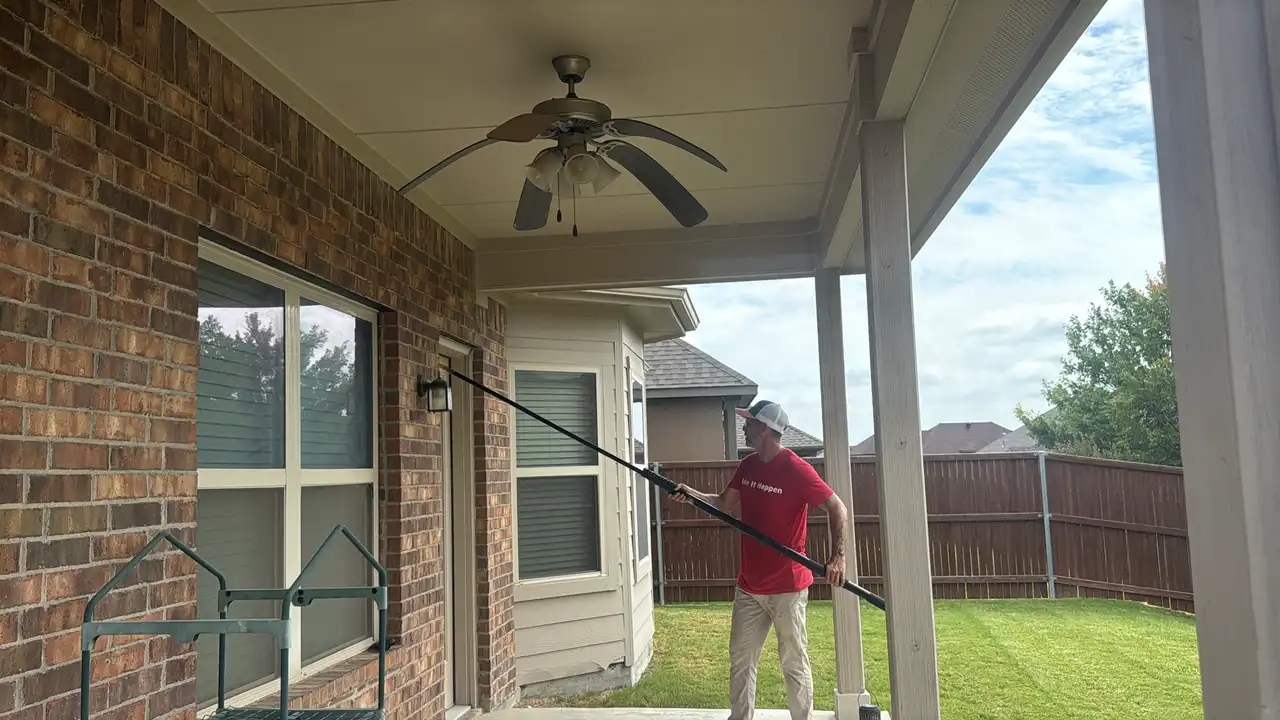
Liquid goes along the slab and about three feet up, the web pole strips eaves, soffits and door frames of webs and wasp starts, and each weep hole along the bottom course takes Delta Dust. Counting them matters, because a house where half were missed is a house that keeps letting things in.
Out to the ring, then the bait
Granular goes into the turf and beds roughly 25 feet from the walls, where crawling insects are breeding, and fire ant bait is broadcast across the yard on the same trip. Only gate access is needed, so staying home is optional, and you get a text when the technician is en route.