TWO TOWNS, TWO LAWNS
Old core or new subdivision?
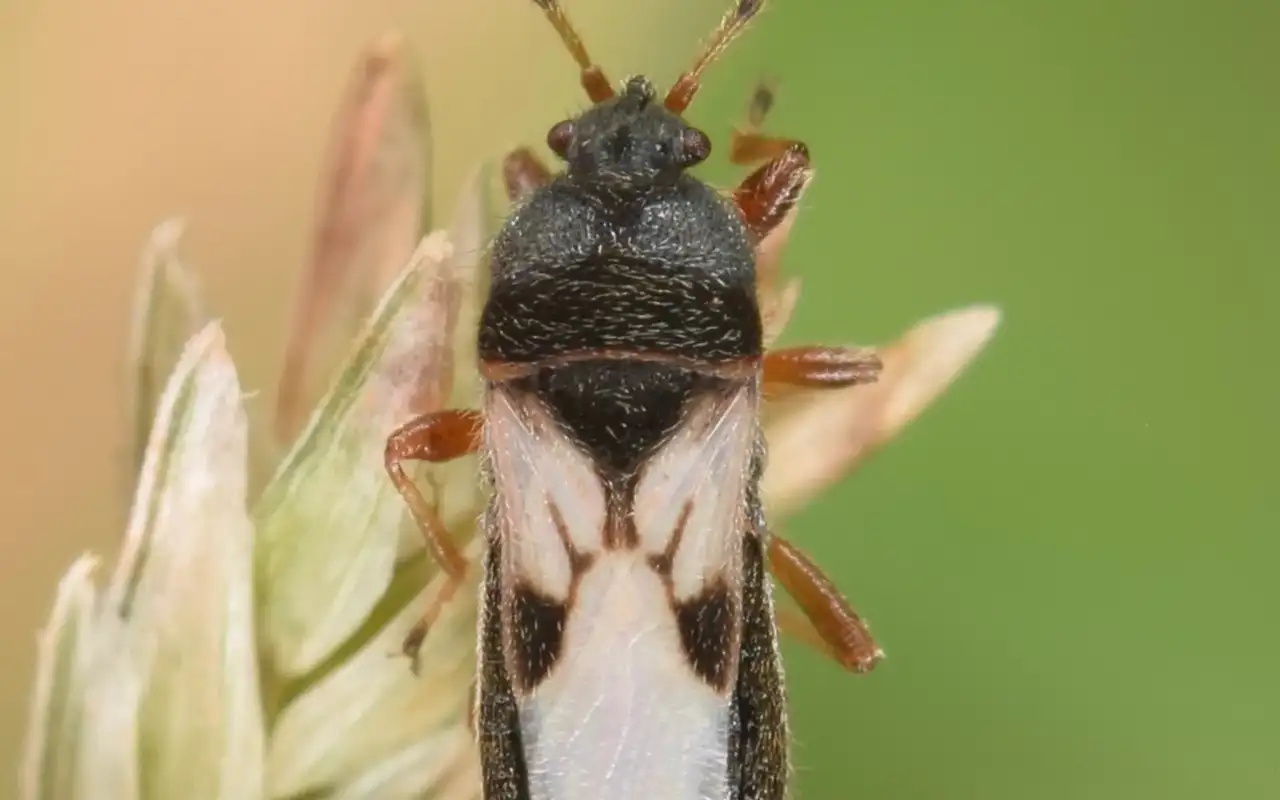
Ask which decade the grass went down and half the diagnosis is finished. Lawns in the older core off FM 156 are decades-established Bermuda and St. Augustine on settled soil under mature trees, and they lose grass to grubs and to fall armyworms. Out toward FM 407 and Timberbrook the sod is young, shallow-rooted and sitting in full sun on graded ground, which is chinch bug territory.
That split is why brown patches mean different things at either end of Justin. On a two-year-old lawn a dying strip beside the driveway is far more likely to be insects than drought. On a fifty-year-old lawn under canopy, the same brown is more often shade, disease or a watering habit, and we will tell you when that is what we find.
WHAT IT ADDS UP TO
Justin pricing for turf insect coverage
Neither side of town buys this by itself; it comes inside a year-round plan priced on the square footage of the house. The whole lawn is covered on Complete Home & Lawn Defense at $40 to $73.50 a month. Home Defender at $30 to $54 a month treats the structure plus the turf within roughly 25 feet of it.
Older homes tend to sit low in the table and the newer Timberbrook-era houses higher, which is worth knowing before you assume a price. There is no fee to start and none to stop, retreatments between scheduled visits are covered, and the instant quote returns the exact figure off your address.
Older core, under 1,500 sq ft
$40/mo
Whole lawn on the small houses
1,500 to 3,000 sq ft
$40–$51.50/mo
Both sides of Justin
Newer builds, 3,000 to 4,500 sq ft
$51.50–$62/mo
Typical of the newer subdivisions
Home Defender across those sizes
$30–$46/mo
Turf inside the 25-foot ring
Every number on this page comes from our published price list. Justin homes get the same table as everyone else; the instant quote reads your square footage and lot size and hands you your own line.
HONEST LIMITS
Three things we cannot do for your lawn
We cannot treat our way past a watering problem. An irrigation zone that has quit, or a lawn watered lightly every day instead of deeply twice a week, produces the same tired brown grass that insects do, and an application laid over the top of it is money spent for nothing.
We cannot regrow what has already died. Stopping the feeding is the whole of what the treatment does; recovery is your watering, your fertility and, where the turf is gone, new sod. On the shaded lawns in the old core, some of it will not come back no matter who works on it.
We cannot promise this is even the problem. Several of the usual causes of a discoloured North Texas lawn are not insects at all, and the tests exist to rule them out. If nothing is feeding, we say so and do not write up an application.
SEALING VS SPRAYING
The lawn is not where an indoor problem starts
If ants or mice are getting inside an older Justin house, treating the lawn is not the fix and we will not pretend otherwise. Decades-old brick develops gaps at the weep holes, thresholds and utility penetrations, and closing those is what ends a long-running indoor habit. Turf insects are an outdoor issue that never crosses the wall.
The two sit in one plan for a reason, though. A year-round plan bands the foundation, treats the eaves, dusts weep holes with Delta Dust and covers the turf, so the structure and the lawn are handled on the same visits. Sealing those weep holes permanently with copper mesh is included too, where most companies in this market charge extra for it.
FIRST LOOK
How we approach a lawn in Justin
Which half of town
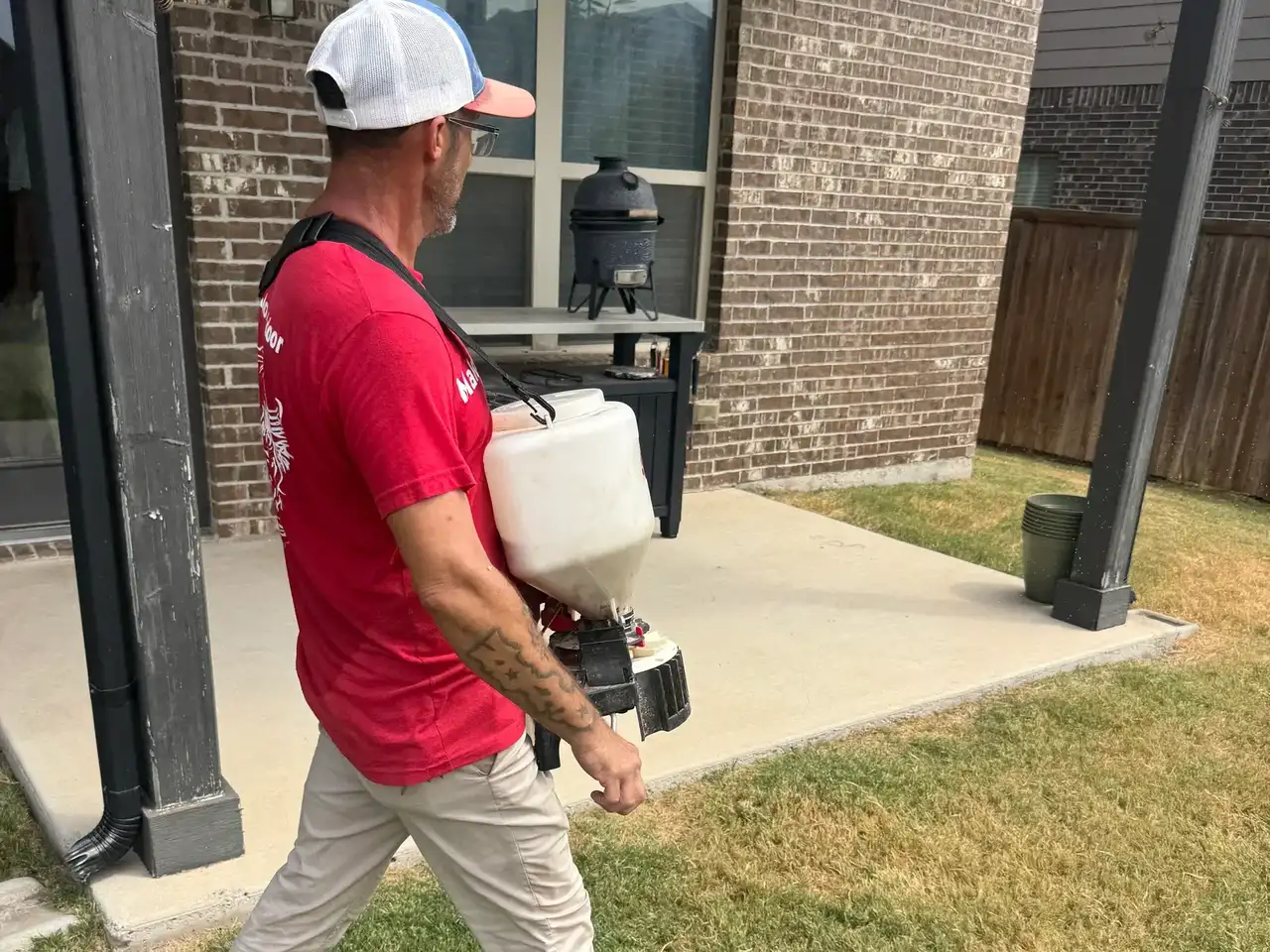
The age of the house and the age of the sod set the first hypothesis before anybody kneels down. A recently built lawn gets the chinch bug checks first, an established one gets the grub checks first, and both get looked at properly either way.
Testing, not guessing
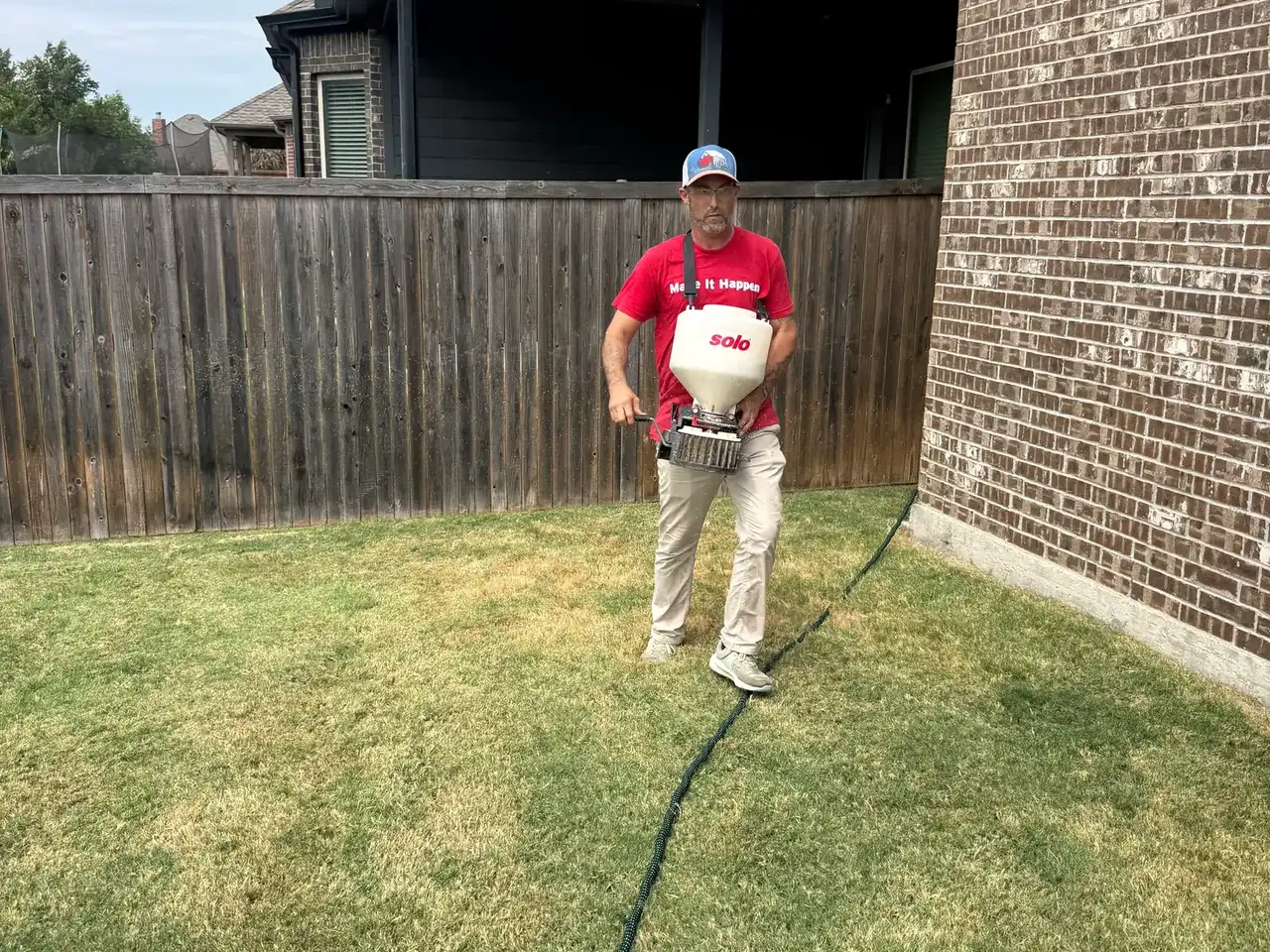
Two tests decide it. Grip the turf at the damage edge and pull, because roots that have been eaten give no resistance at all, then press a bottomless can into the soil at a green-to-brown boundary and flood it, because chinch bugs float. Neither costs anything, and either can end with no treatment.
The open edge
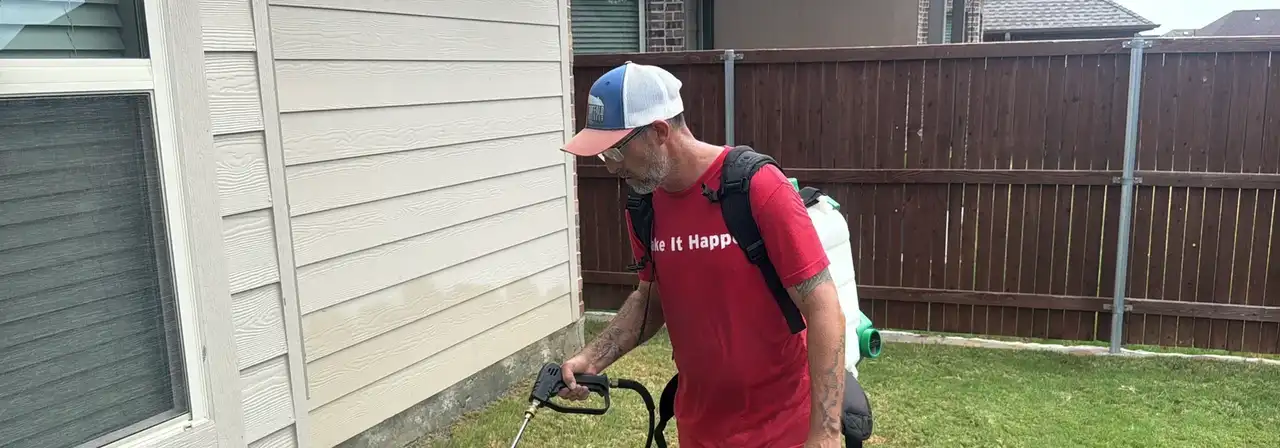
Justin is small enough that many properties still touch open ground, and that boundary is where armyworms build up before they cross. We treat a buffer there rather than pretending the fence is doing something.