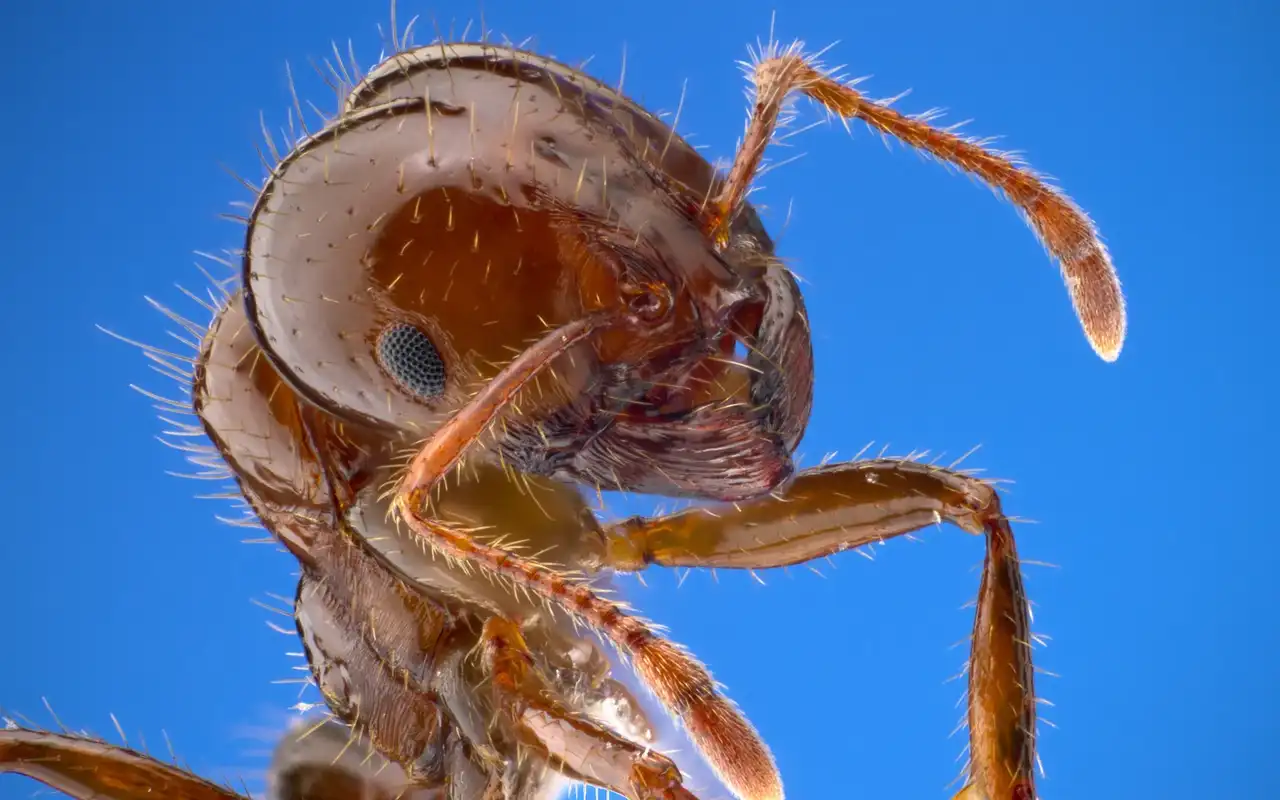
MORE TURF, MORE COLONIES
What makes a Southlake lot different for fire ants
Square footage. Southlake has the largest average lot size on our map, and a fire ant colony needs nothing more than open, sunny turf, so a wide irrigated lawn off White Chapel or Carroll can host a dozen colonies where a quarter-acre lot hosts one. Irrigation makes it worse in a dry August, because a watered lawn is the only soft ground around and the colonies concentrate there.
The ornamental beds that drive Southlake's mosquito pressure are mostly irrelevant here. Fire ants avoid deep shade and dense planting; they settle in the lawn, along hardscape edges where the soil warms first, and around irrigation boxes and AC pads. Toward Bob Jones and the Grapevine Lake corridor, lots that meet undeveloped ground also get steady reinvasion from it.
PRICED ON THE HOUSE, NOT THE LOT
Southlake homes sit at the top of the plan pricing, and fire ants still cost nothing extra
Here is a pleasant surprise for a Southlake homeowner used to yard services priced on acreage: the year-round plans go by the square footage of the house, and the fire ant bait covers the whole lot regardless. A 3,000 to 4,500 square foot home is $38 to $46 a month on Home Defender; 4,500 to 6,000 is $46 to $54; above 6,000 we quote it individually.
Complete Home & Lawn Defense is the version most large Southlake lots end up on, because it adds treatment of the entire yard for chinch bugs, grubs and chiggers. It runs $51.50 to $62 for the 3,000 to 4,500 band and $62 to $73.50 for 4,500 to 6,000. There is no contract on either, and the exact monthly figure comes to you before anyone books a visit.
3,000 to 4,500 sq ft
$38–$46/mo
Home Defender, bait across the full lot
4,500 to 6,000 sq ft
$46–$54/mo
Where much of Southlake lands
Same sizes, whole-yard plan
$51.50–$73.50/mo
Complete Home & Lawn Defense
Over 6,000 sq ft
Quoted
Both plans, priced after we see the house
Every number on this page comes from our published price list. Southlake homes get the same table as everyone else; the instant quote reads your square footage and lot size and hands you your own line.
WHERE IT GOES WRONG
The Southlake-specific ways fire ant bait fails
Irrigation is the number one problem. Bait has to stay dry for roughly 24 hours so the foragers will pick it up as food, and a Southlake lawn on a nightly watering schedule washes it into the thatch before that happens. We will ask you to skip a cycle, and if the controller is on an app your lawn company runs, somebody has to actually do it.
Mowing and bagging right behind us is the second. A crew that mows the day after we bait and collects the clippings has just collected the bait, so tell us which day the lawn service comes.
The third is the property line. If your Southlake lot backs onto Bob Jones or another stretch of open land, queens will keep flying in from ground nobody treats. Bait clears what is on your side and the year-round visits keep clearing it; it will never make the far side of the fence ant-free.
WHICH PLAN FOR A BIG LOT
Home Defender or Complete Home & Lawn Defense, when the fire ants are the same either way
The fire ant treatment is identical on both plans, so the choice comes down to what else is living in the lawn. Home Defender treats the house perimeter, the eaves and 25 feet out, plus the fire ant broadcast across the yard, and for a Southlake home whose lawn is otherwise healthy that is enough.
Complete Home & Lawn Defense earns the extra $10 to $20 a month on a lot where the turf itself is under attack: chinch bugs in sun-baked St. Augustine, grubs lifting the sod in late summer, chiggers along a boundary with natural ground. On an acre of irrigated lawn a single chinch bug outbreak costs more in resodding than a year of the upgrade, and we will say so plainly if your yard does not need it.
DAY ONE ON A LARGE LOT
What we do the first time we work a Southlake property
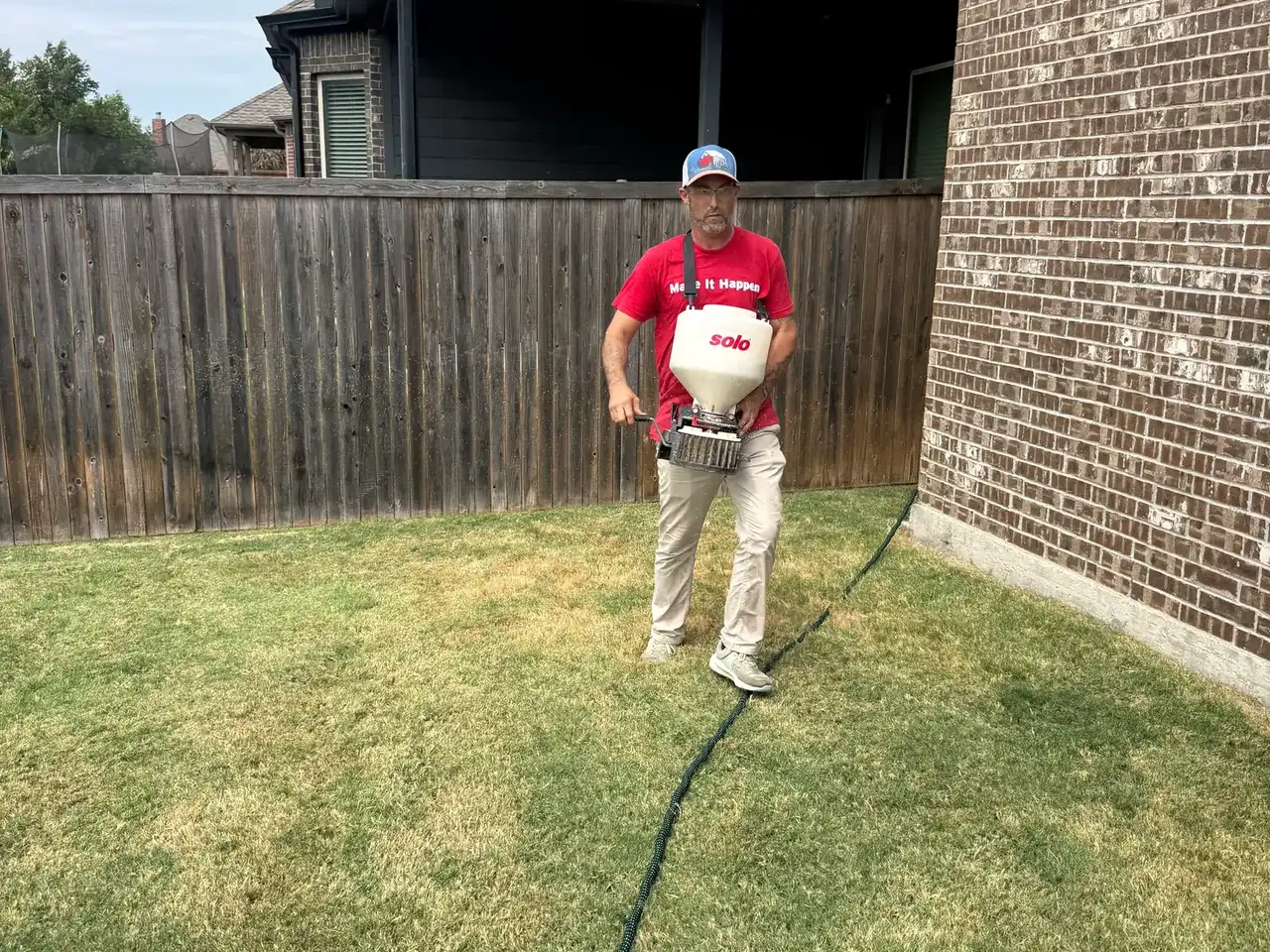
Map the irrigation and the no-spray zones
We ask where the controller is and when it runs, and we note pollinator plantings and blooming beds so nothing lands on them. Fire ant bait goes on turf and hardscape edges, not in the flower beds.
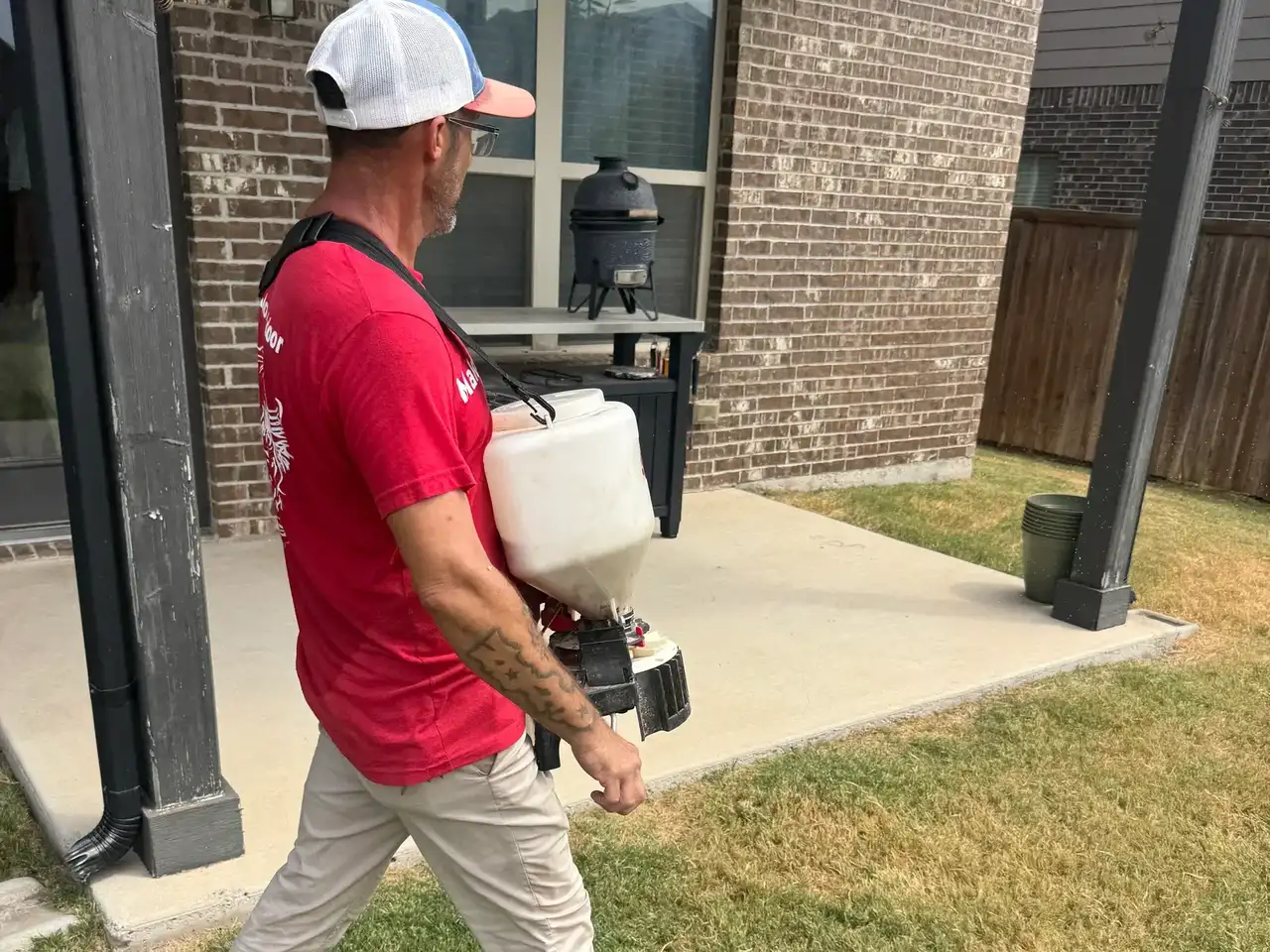
Broadcast the entire lawn, not a ring around the mounds
On a large Southlake lot this is the longest part of the visit, and we build the time in rather than rushing it. The rate is light enough that the lawn looks identical afterward.
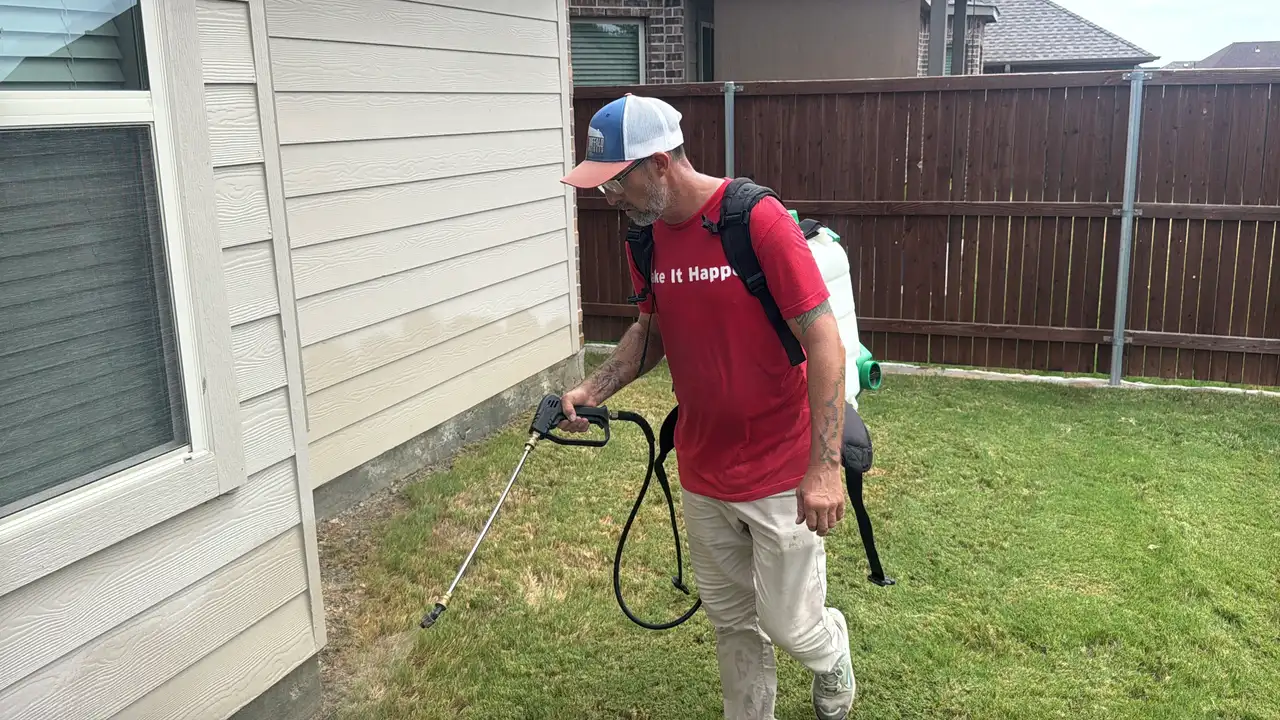
Walk the boundary with the open ground
Where the lot meets the Bob Jones side or any unmowed land, we look at how the pressure crosses and where the first mounds will reappear. That edge is also where the chigger and tick work happens on the whole-yard plan.