
COMPACT TOWN, MIXED SOIL
Why the new house on the block gets the fire ants in Westworth Village
Because its dirt was just turned over. Westworth Village is compact and largely built out, so most of its homes are mid-century brick on soil that settled decades ago and already holds the native ants that keep fire ants in check. When one of those houses comes down and a new infill build goes up, the lot is scraped, trenched and re-graded, and for the next few years it is the freshest ground on the street.
That new build is where the mounds land first, and from there queens spread to the sunny front lawns on either side. The Trinity River along the edge of town adds a second pattern: lots near the water sit on ground that floods, and high water pushes colonies up into sudden mounds the way a heavy rain does everywhere else.
BY HOUSE SIZE, NOT LOT SIZE
What a Westworth Village home pays for fire ant control
Nothing beyond the plan. Fire ant bait is part of both Home Defender and Complete Home & Lawn Defense, and the monthly price follows the size of the house. A 1,400-square-foot mid-century home in Westworth Village is $30 a month on Home Defender; the newer infill houses, which tend to be built larger on the same lots, more often land at $33 to $38 for 1,500 to 3,000 square feet or $38 to $46 for 3,000 to 4,500.
Complete Home & Lawn Defense is $40, $40 to $51.50 and $51.50 to $62 in those same three bands, and the extra buys treatment of the entire lawn for chinch bugs, grubs and armyworms as well. The number is settled before you commit to anything, through the instant quote at /instant-quote or a text, and there is no contract behind it.
Up to 1,500 sq ft
$30/mo
Most original Westworth Village homes
1,500 to 3,000 sq ft
$33–$38/mo
Larger originals and smaller infill
3,000 to 4,500 sq ft
$38–$46/mo
The newer infill builds
Complete Home & Lawn Defense
$40–$62/mo
Across those three bands
Every number on this page comes from our published price list. Westworth Village homes get the same table as everyone else; the instant quote reads your square footage and lot size and hands you your own line.
THE CATCH
Where fire ant bait lets a Westworth Village homeowner down
It is slow on purpose. The granules are a food the workers carry to the queen, and until she has eaten enough of it the colony keeps building, so expect active mounds in a Westworth Village yard for two to three weeks after the first pass. A drench would be faster and would also, most of the time, just move the colony.
Rising water undoes the appearance of progress. When the Trinity or a tributary comes up after a storm, colonies on the low lots shift upward and throw new mounds within days, and homeowners read that as the treatment failing. The colony was already there; the water made it visible. Anything that surfaces before the next scheduled stop is re-treated free.
It also does nothing for the ants inside a sixty-year-old house. Trails on the counter or in the bathroom are almost always a different species using worn thresholds and open weep holes, which is why the fire ant bait lives inside a plan that also treats the perimeter and dusts the brick.
INFILL VS ORIGINAL
Does a new infill build in Westworth Village need a different fire ant plan?
Same plan, different urgency. The bait, the rate and the coverage are identical on a 1958 ranch and on the two-storey that replaced the one next door, because in both cases the entire lawn gets broadcast. What differs is how soon it matters: the infill lot should be baited its first spring, before the colonies are large enough to be obvious, while the settled lot can usually wait for the regular schedule.
If you own the older house beside a new build, you are in the path. Queens from the disturbed lot will try your sunny front yard first, so the whole-yard bait on your side is what keeps a neighbour's construction from becoming your problem. If you are moving into the new build, start the plan when you get the keys rather than after the first storm.
FIRST STOP IN 76114
How the first fire ant visit goes in Westworth Village
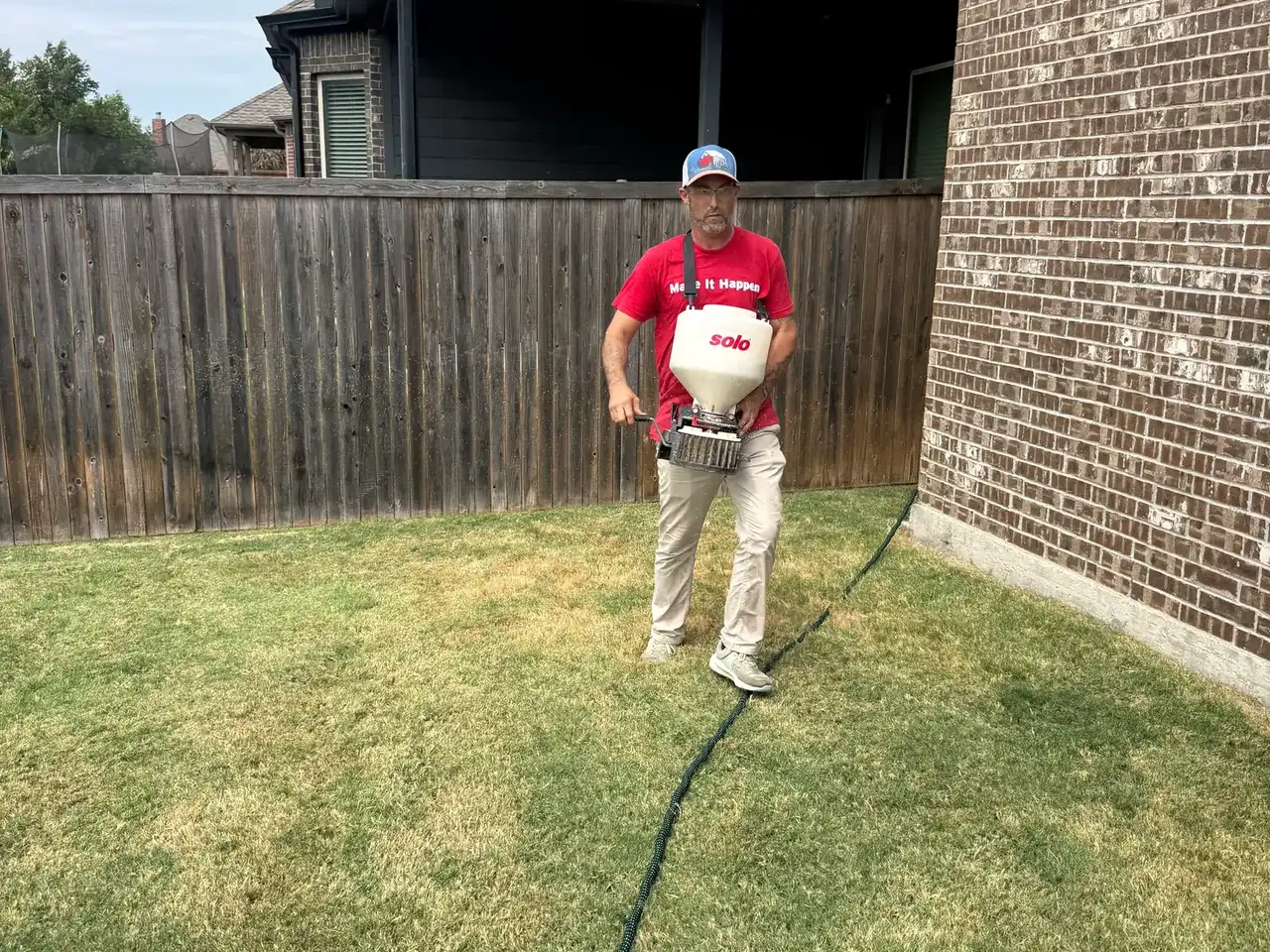
Read the lot's history
Fresh grading, a recent fence, a new driveway apron or a re-sodded strip tells us where the soil was disturbed and where colonies will be. On a shaded mid-century lot that is often just the front lawn; on a new infill build it is the whole yard.
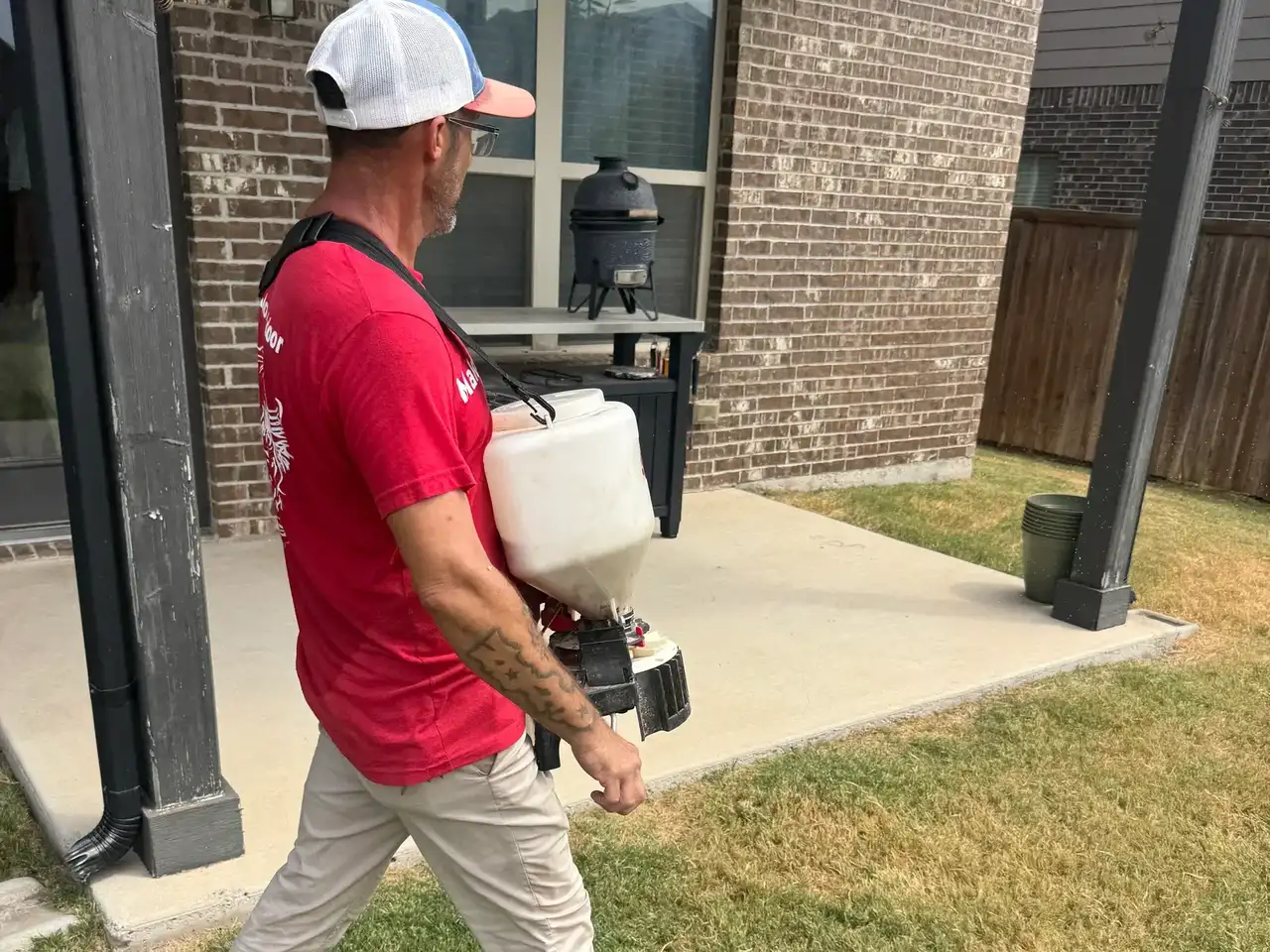
Spread over the full lawn
Bait goes on with a broadcast spreader at a light rate across every part of the turf, not around the mounds you noticed. We choose a day with a dry 24 hours ahead, and if the forecast turns we move the visit rather than waste the application.
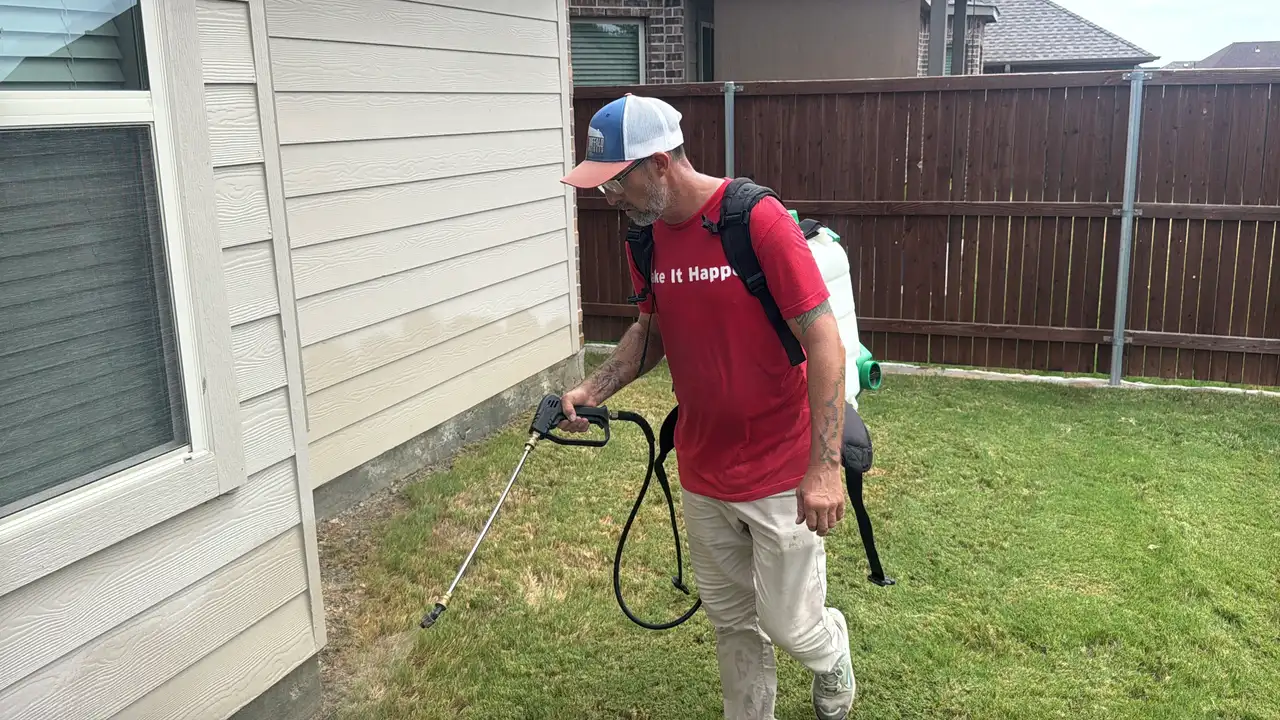
Deal with the house too
A Home Defender visit also treats the foundation and eaves and puts Delta Dust into the weep holes. On mid-century Westworth Village brick the gaps at the bottom course have had sixty years to open, so that part gets real attention.