MORE THAN YOU EXPECT
Why a compact city bites above its size
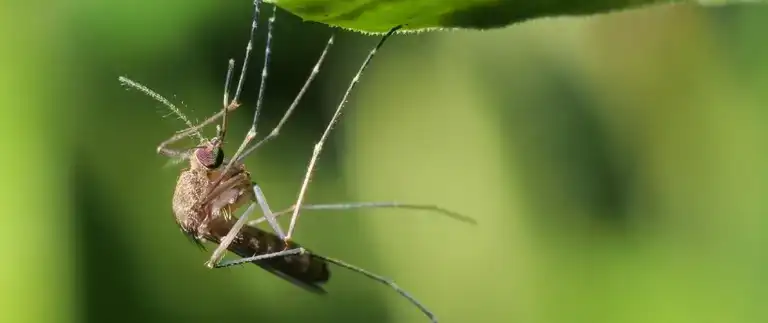
Water at the edge of town does it. The Trinity and the tributaries running to it sit alongside Westworth Village, and permanent water is a permanent hatch, so yards here see more activity than a tidy built-out city of mid-century homes and newer infill would otherwise produce. Housing age tells you about rodents and weep holes; the river tells you about mosquitoes.
The rest is shade. Sixty-year-old trees over the older blocks hold damp still air at ground level all day, and the newer infill houses sitting between them inherit the same canopy along the fence lines. The 21-day cycle from April through September is aimed straight at that resting cover, with turf and bed edges treated for fleas and ticks at the same visit.
PER VISIT, BY LOT
What treatments cost in Westworth Village
Most addresses here price at $49.95 or $59.95 a visit, with the deeper lots reaching $69.95, because the platting in this part of the county produced modest ground. The measurement is the lot and only the lot, so a rebuilt infill house and the 1960s home next door pay by their yards rather than by their finishes.
It is billed as the visits happen, one at a time. No season is prepaid, no contract is signed, no startup fee applies and nothing is owed if you stop in July. Anything that comes back between scheduled treatments is handled without a second invoice, and /instant-quote will give a Westworth Village address its band straight away.
Lots of 7,000 sq ft or less
$49.95 a visit
Typical of the older blocks
Lots from 7,001 to 12,000 sq ft
$59.95 a visit
Where most homes here land
Lots from 12,001 to 17,000 sq ft
$69.95 a visit
Deeper lots toward the river side
Every number on this page comes from our published price list. Westworth Village homes get the same table as everyone else; the instant quote reads your square footage and lot size and hands you your own line.
WHAT TO EXPECT
Being realistic about a river-edge town
Zero is not on the table. The low ground along the Trinity produces adults continuously and they travel, so every yard in Westworth Village receives some traffic regardless of what is applied within the fence. The program's job is to stop your own shrubs, canopy and fence line from housing a resident population, and that is the part of the count you can actually influence.
Small lots put a limit on it too. When the untreated yard next door is thirty feet away, a barrier does a smaller share of the total work than it does on an acre, which is why we describe the result as a noticeably better patio rather than an empty one. Anyone promising more than that on ground this size is overselling.
Finally, the treatment is temporary on purpose. About three weeks is what it holds through the summer, storms shorten it, and that is why visits are set at 21 days and why a yard that comes back early gets re-treated at no charge rather than being told to wait.
ONE YARD OR TWO
Does it help if the neighbour treats as well?
It genuinely does, and on lots this size it makes more difference than anything else you could spend the same money on. Mosquitoes do not travel far when they do not have to, so two adjoining treated yards remove a much larger continuous block of resting habitat than one treated yard wedged between two untreated ones. Households on the same fence line who both sign up usually report a better summer than either would alone.
This is not a package we sell. There is no group rate on the price list and no discount to chase, so the only reason to mention it to a neighbour is that it works. If nobody nearby is interested, the program still earns its place on your own lot; it simply has to do more of the work by itself, and the honest expectation should be set accordingly.
HOW IT STARTS
What happens at the first treatment
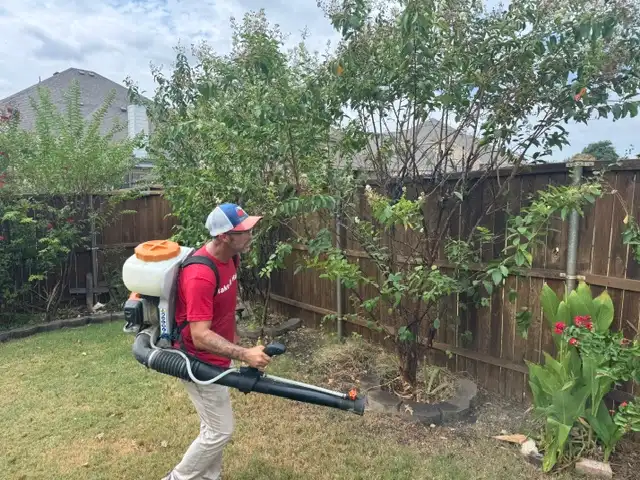
Finding the two percent
Adults occupy a small share of any property, so the technician walks it first: the shaded side of the house, the densest beds, deck skirting, the fence run under the biggest tree and, on the river side of town, the boundary nearest the low ground.
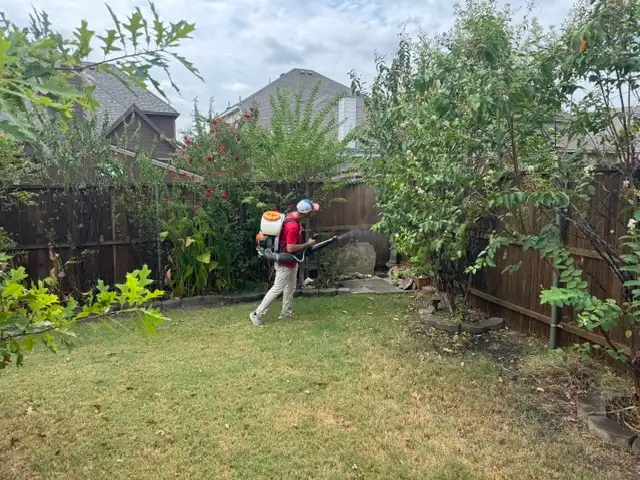
The fog, then the edges
Ornamental trees, hedges, shrub beds and shaded structures take the backpack fogger, while a separate pass along turf and bed edges deals with fleas and ticks. Open lawn in full sun receives very little, because nothing is resting there during the day.

The breeding walk
Before leaving, everything on the lot holding water gets pointed out, from a plant saucer and a bird bath to gutters and a corner that drains slowly. Whatever cannot be tipped out is larvicided. You do not need to be home; an unlocked gate and a text on approach cover it.