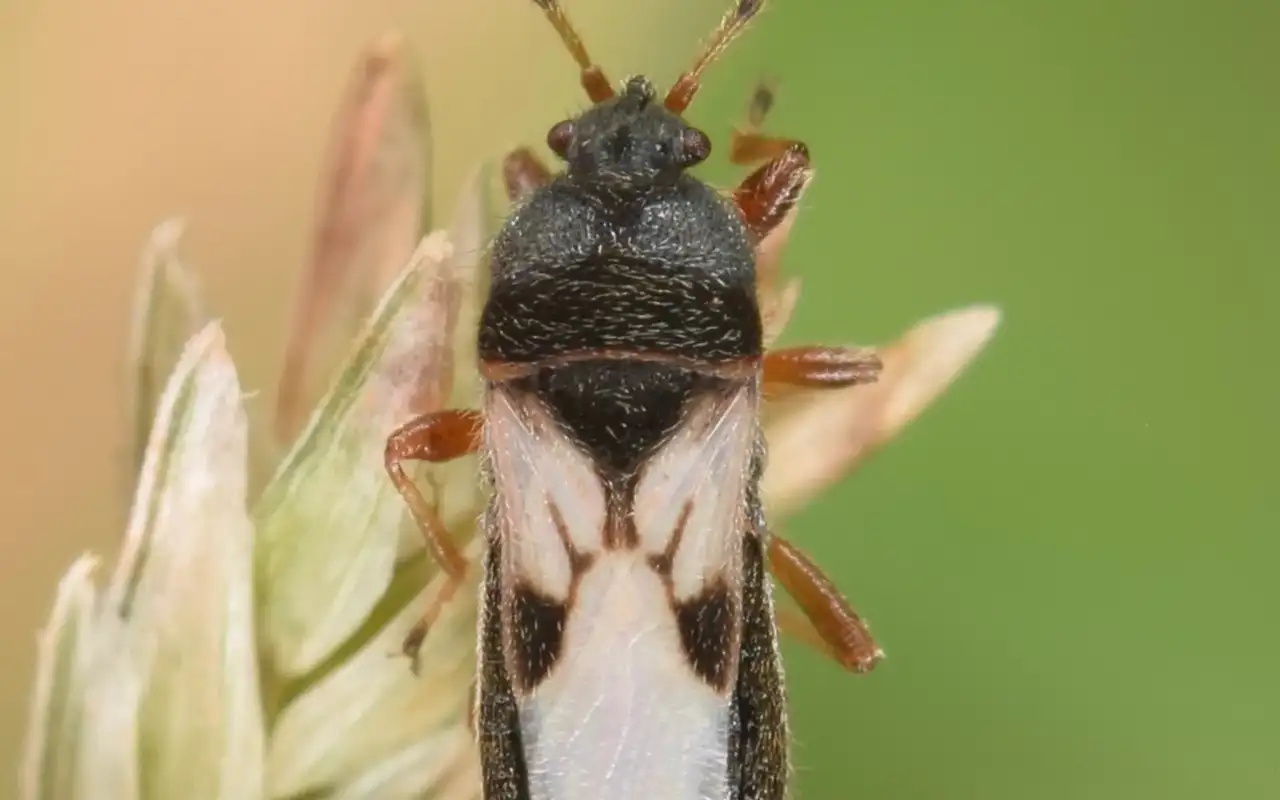
TWO HOUSES, TWO INSECTS
Which Westworth Village lawn is yours: the old one or the new one?
It matters, because the town is compact and mostly built out, so the newer infill homes stand right beside mid-century brick, and the two carry different insects. Fresh builder sod on a rebuilt lot is thin, shallow-rooted St. Augustine in full sun, and that is chinch bug turf. The sixty-year-old lawn next door is deep-rooted and shaded, and its problem, when it has one, is grubs.
A chinch bug feeds by injecting a toxin that stops the blade moving water, so the grass browns exactly the way it does in a drought and the sprinkler cannot rescue it. A grub never touches the blade. It sits two to four inches down and eats the roots, and the first thing the homeowner feels is the lawn going soft, then a section that lifts like a mat. Along the Trinity edge of Westworth Village, the animals digging for those grubs at night often give the game away first.
THE MONTHLY FIGURE
Pricing lawn insect coverage in Westworth Village
Both insects get treated under the same year-round plan, and the plan is priced on the house rather than the lawn. The whole yard is covered on Complete Home & Lawn Defense at $40 to $73.50 a month. Home Defender runs $30 to $54 and includes the applicable lawn treatment to roughly 25 feet from the foundation.
The spread inside Westworth Village is wider than the town's size suggests. A mid-century ranch under 1,500 square feet is $40 a month on the whole-yard plan, while a new two-storey infill build at 3,500 square feet is $51.50 to $62. Retreatments between the scheduled visits are covered, one interior treatment is included if you ever need it, and there is nothing to sign.
1,500 sq ft or less
$40/mo
The original mid-century ranches, whole yard
1,500 to 3,000 sq ft
$40–$51.50/mo
Larger originals and smaller infill
3,000 to 4,500 sq ft
$51.50–$62/mo
New two-storey infill builds
Home Defender, 1,500 sq ft or less
$30/mo
Lawn to about 25 feet, often the whole small lot
Every number on this page comes from our published price list. Westworth Village homes get the same table as everyone else; the instant quote reads your square footage and lot size and hands you your own line.
WHERE IT STOPS
The limits of a lawn insect treatment, said plainly
Dead St. Augustine stays dead. Once chinch bugs have finished a strip along a new Westworth Village driveway, killing them protects what is left but does not revive the brown, and builder sod that thin usually has to be replaced rather than nursed back. We say so at the first visit rather than after the second invoice.
Water problems are not insect problems. Brand new sod on a rebuilt lot is often browning because the irrigation was set for the builder's two weeks and never adjusted, and on the older lawns a stuck zone or a shaded corner does the same. Heat, drought, brown patch and dollar spot are all on the list of usual July causes, and none of them is fixed by anything in a spreader.
And the treatment cannot argue with the calendar. Grubs are easy to kill while they are small in late summer and hard to kill once they are large in the fall, and chinch bug product only works if it reaches the thatch rather than sitting on soaked grass. Right product, wrong month or wrong depth, and the money is gone.
NEW SOD VS OLD TURF
Do the two kinds of Westworth Village lawn need the same plan?
No, and this is where the Home Defender ring changes the answer. On a small original lot, 25 feet from the walls covers most of the grass, and a grub patch in that ring is already inside the cheaper plan. On an infill build the lot is the same size, but the chinch bug strip along the driveway or the sidewalk is often right at the edge of the ring or past it, which tips the decision toward the whole-yard plan.
The other difference is urgency. Grubs work slowly enough that a late-summer check with a spade is the whole strategy. Chinch bugs in thin new sod can take a strip in a couple of hot weeks, so on a recently sodded Westworth Village lot we would rather you float a can at the first brown edge than wait to see whether it spreads.
STEP ONE
What the first Westworth Village visit involves
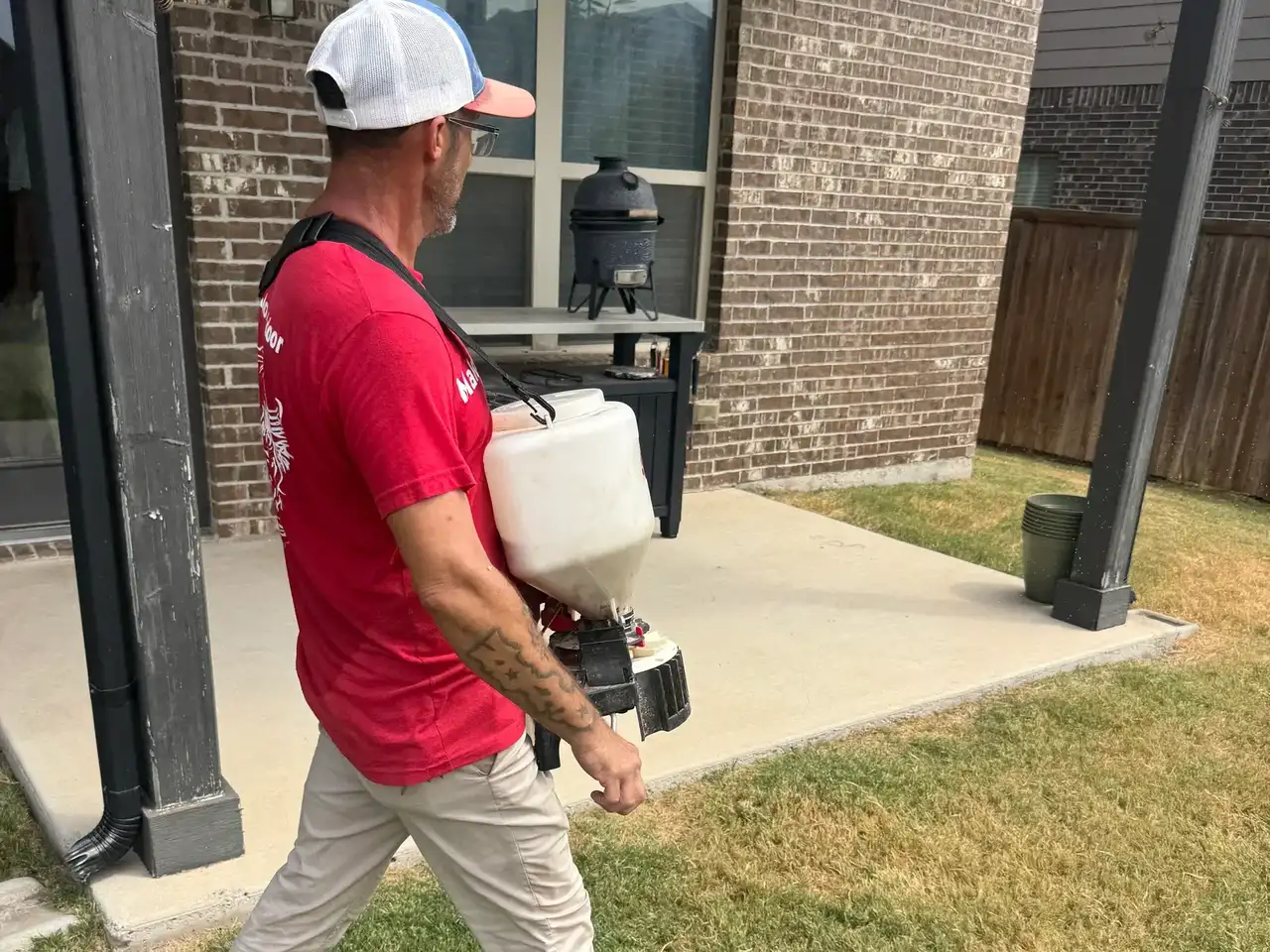
Which lawn is it
We ask when the turf went down. Sod under three years old in full sun gets the chinch bug check along its hottest edges; an established lawn gets the tug and the count. Skipping that question is how the wrong insect gets treated.
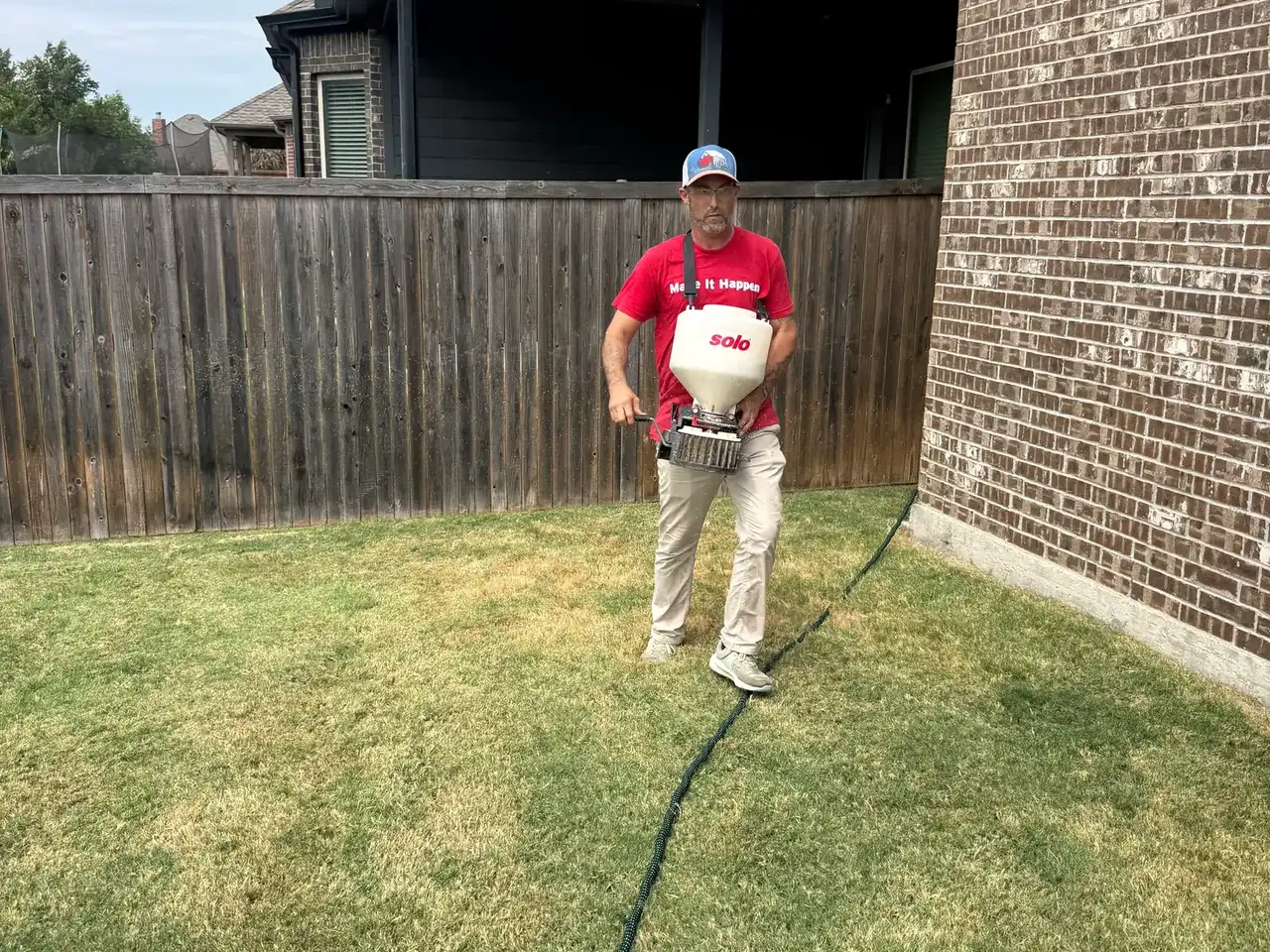
Test at the boundary
Both tests happen where green meets brown, not in the middle of the dead patch. A bottomless can of water sunk two inches into that line brings chinch bugs to the surface; a pull on the turf there shows whether the roots are still attached.
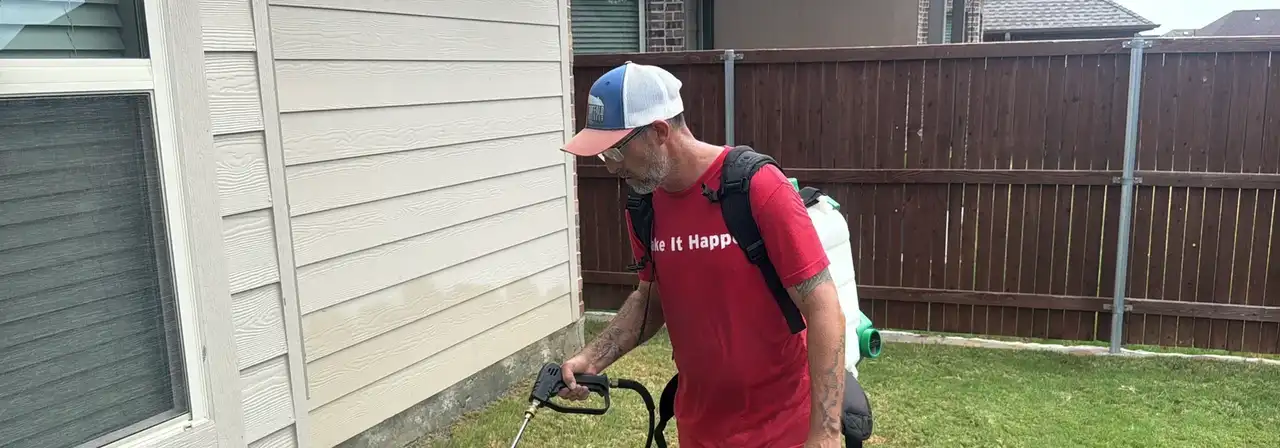
Everything the plan includes
Turf coverage is one part of a year-round plan, so the same appointment treats the foundation band and eaves, dusts the weep holes with Delta Dust and broadcasts fire ant bait. On sixty-year-old brick that first look at the gaps is half the value.