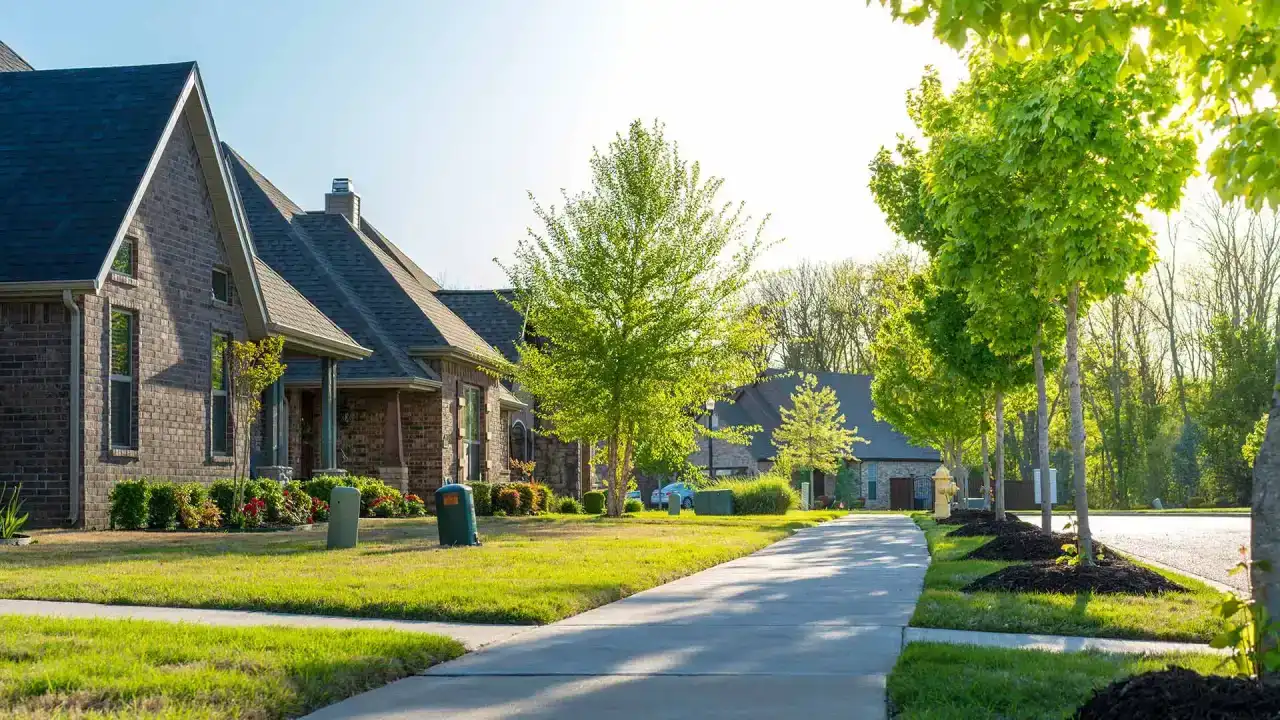
RIVER EDGE, MID-CENTURY BRICK
Do the Trinity River lots in Westworth Village get more rats?
Yes, and the reason is the river corridor itself. The Trinity and its tributaries along the edge of Westworth Village are a permanent rat habitat with water, cover and food, so the houses nearest the bank see more pressure than the interior streets do. When a cold snap comes, the nearest warm structure is where they go.
The mid-century houses that make up most of the town have brick that has had sixty years to open up. Thresholds are worn, the mortar around the bottom course has settled, and the weep holes were never a concern to the builder. The newer infill on the same blocks has tighter brick but the usual new-construction gaps at the garage-door corners and around the AC line set.
So the inspection is what decides the job on a Westworth Village address. Once we know which two or three openings are in use, we seal those, trap inside, and come back to confirm the seals held.
COST IN WESTWORTH VILLAGE
How the $25 rodent add-on stacks on a mid-century house
Add $25 a month to whichever year-round plan you carry and that is the rodent price; it is not offered alone. A typical mid-century Westworth Village house is under 3,000 square feet, which puts Home Defender at $30 to $38, so the total with rodents lands between $55 and $63 a month.
The newer infill is often larger, and a 3,000 to 4,500 square foot house is $38 to $46 for the base plan, or $63 to $71 with rodent work. Retreatments between scheduled visits are part of the plan, and you get the exact figure before committing. There is no contract and no fee to cancel.
Rodent add-on
$25 a month
Attaches to Home Defender or Complete Home & Lawn Defense
Home Defender, up to 1,500 sq ft
$30 a month
The smaller mid-century houses
Home Defender, 1,500–3,000 sq ft
$33–$38 a month
Most of the older Westworth Village streets
Home Defender, 3,000–4,500 sq ft
$38–$46 a month
Newer infill
Every number on this page comes from our published price list. Westworth Village homes get the same table as everyone else; the instant quote reads your square footage and lot size and hands you your own line.
WHAT WE CANNOT PROMISE
The parts of a Westworth Village rodent problem we do not control
We cannot control the river. Lots backing the Trinity corridor will have rats on the bank for as long as the bank exists, and the honest goal for those homes is a sealed house and monitored stations, not an empty yard. If a company promises to make a riverside lot rodent-free, ask them how.
We cannot do your carpentry. Sixty-year-old thresholds, a side door that no longer meets its frame and a garage-door seal flattened to nothing are the openings most often in use on the older Westworth Village streets, and replacing them is a homeowner or handyman job. Our sealing holds only once those are fixed too.
We cannot make the plan's insect treatment do rodent work. Nothing sprayed on the slab or the eaves slows a mouse down. Rodent control is mesh, sealant, traps and follow-up, which is why it is priced as its own line.
OLD BRICK VERSUS NEW INFILL
Why the same $25 buys a different job on two Westworth Village houses
On a 1960 house the exclusion is the long part. Several weep holes will show use, the mortar needs probing, and the door hardware is usually the real entry, so the first visit is mostly sealing and the trapping afterwards goes quickly.
On a five-year-old infill house the pattern flips. The brick is tight and the gaps are few and obvious, the garage corner or the line-set hole, so sealing is fast and the trapping period matters more because the animals already inside have fewer ways to leave. Same price, different emphasis, and we will tell you which one your house is before we start.
INSPECTION, STEP BY STEP
What the first Westworth Village visit covers
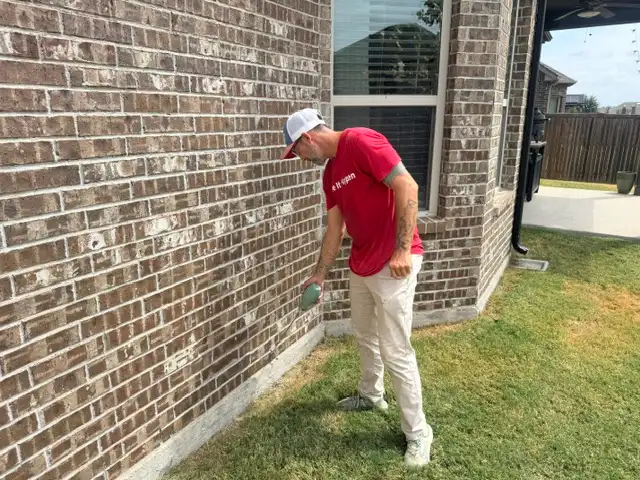
The side of the house facing the river
On lots near the Trinity we begin on the side the rats approach from, looking for runways along the fence line and rub marks at the nearest weep holes and penetrations. That is usually where the working entry is.

Bottom course, doors and mortar
On mid-century brick every weep hole and every cracked joint gets checked; the ones with sign are packed with copper mesh as part of the exclusion and the rest carry Delta Dust on the plan visits. Thresholds and garage corners are checked for daylight.
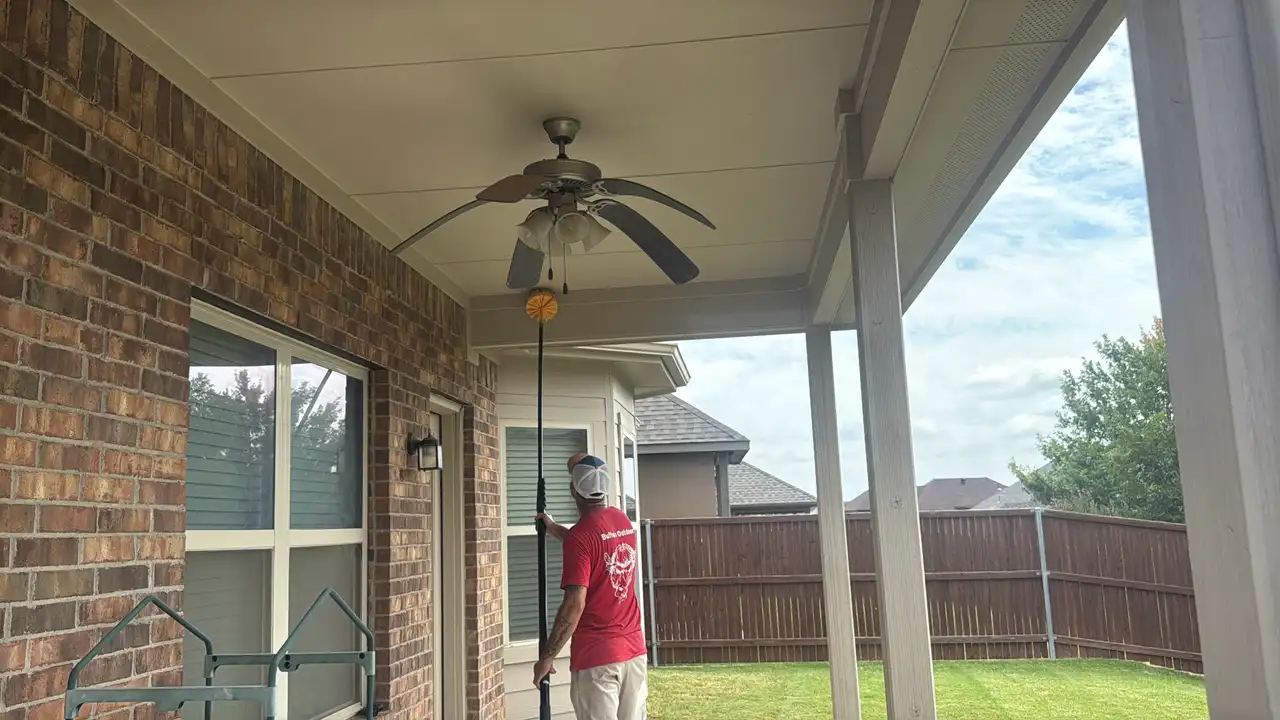
Attic reading and station placement
Inside, we look for runways in the insulation and droppings along the top plates, then set traps and locked stations on those paths. A follow-up is booked before we leave the driveway.