
SHADE ALONG THE TRINITY
Why a compact Westworth Village lot can still carry a flea problem
Flea larvae die in hot, dry, open turf, and a Westworth Village yard under mid-century oaks and pecans has very little of that. The ground beneath sixty years of canopy stays humid into August, leaf litter piles against the fence, and the pupae wait in that strip for a dog to brush past.
Toward the Trinity River and its tributaries the pressure climbs again. Riparian brush is where wildlife travels, and it seeds the lot edges with ticks and flea eggs that no amount of interior tidiness prevents. The newer infill houses have less canopy, but their north walls and the gap under a raised deck do the same job on a smaller scale.
On the Mosquito, Flea & Tick program we treat the full lawn and a band around the structure, returning every 21 days from April into September. What we cannot do is treat the animal, and an untreated dog will carry fleas back through the door faster than we can empty the yard.
PRICED ON A 76114 LOT
Most Westworth Village yards land in the two lowest bands
A compact lot is the cheapest kind to treat, and Westworth Village is mostly compact. The number follows the square footage of the lot, so a mid-century house on a standard street pays $49.95 or $59.95 each visit, and only the deeper lots toward the river reach $69.95.
Heavy shade does not raise the price, even though it raises the pressure. What you are paying for is the return trip on a 21-day rhythm, and the bill stops whenever you tell us to, because there is nothing signed. Type the address into /instant-quote and the band comes back without a sales call.
7,000 sq ft or less
$49.95 a visit
Standard mid-century lots on the interior streets
7,001 to 12,000 sq ft
$59.95 a visit
Corner lots and the newer infill on wider parcels
12,001 to 17,000 sq ft
$69.95 a visit
Deeper lots running toward the Trinity
Flare-up before the next visit
Included
Re-treated under the between-visit warranty
Every number on this page comes from our published price list. Westworth Village homes get the same table as everyone else; the instant quote reads your square footage and lot size and hands you your own line.
WHERE THE YARD TREATMENT STOPS
A treated lawn does not reach the sofa cushions
Fleas already laying eggs inside a Westworth Village house will keep going after the yard is spotless. The eggs fall off the animal wherever it rests, the larvae feed on dust and dried blood in the carpet pile, and that indoor cycle has no need of the lawn at all. Vacuuming hard, running the pet bedding through a hot wash, and a prescription product from your veterinarian are what break it; we include one interior treatment if you need it, but the lasting fix is those three habits.
Nor can we treat the river corridor. Wildlife moving along the Trinity will keep dropping ticks at the back fence, so a lot on that boundary gets a treated edge and a homeowner who checks the dog after every walk, not a promise of zero.
If nobody in the house owns a pet and nothing is biting anyone, you probably do not need this. A sunny lot with no animal traffic rarely builds a flea population worth paying to treat, and we would rather say so than sell you six visits.
MONTHLY PILL VERSUS THE YARD
Is the vet's prevention already doing this job?
For a lot of Westworth Village dogs, the vet product is enough by itself. A monthly oral or topical preventive kills adult fleas within hours of them biting, and if the yard is producing only a trickle, the pet never becomes a carrier. That is the cheaper route and we will tell you when it fits.
It stops being enough when the yard is manufacturing adults faster than the product kills them. Under a mature canopy near the river, a dog can pick up dozens a day, each one biting before it dies, and the household reads that as the medicine failing. Treating the yard cuts the supply so the preventive is handling stragglers instead of a flood; running both together is what actually ends the cycle.
FIRST VISIT, WESTWORTH VILLAGE
How the first treatment on a mid-century lot goes
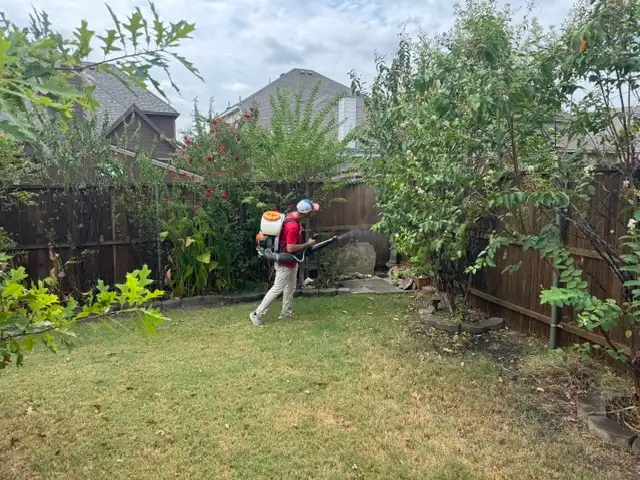
Finding where the shade never lifts
We walk the property before applying anything and mark the strips that stay damp: under the big trees, along the north side of the house, beneath decks and porch steps. On an older Westworth Village lot that is where nearly all the larvae are sitting.
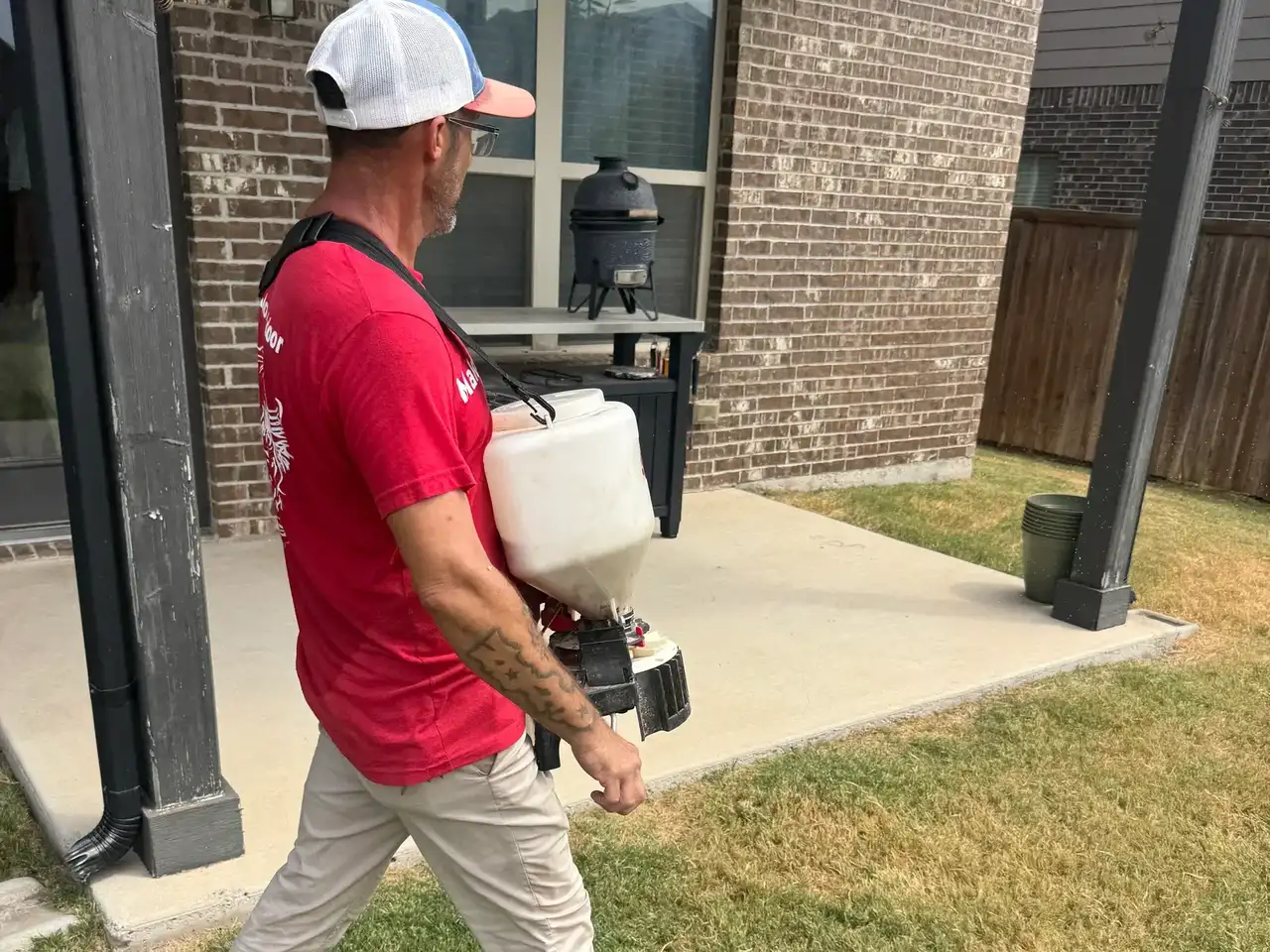
Whole lawn, then the foundation band
The entire turf area gets treated, not just the shaded spots, followed by a band around the building where fleas ride in on animals and ticks climb the brick. Lots that touch the Trinity greenbelt get extra attention at that boundary.
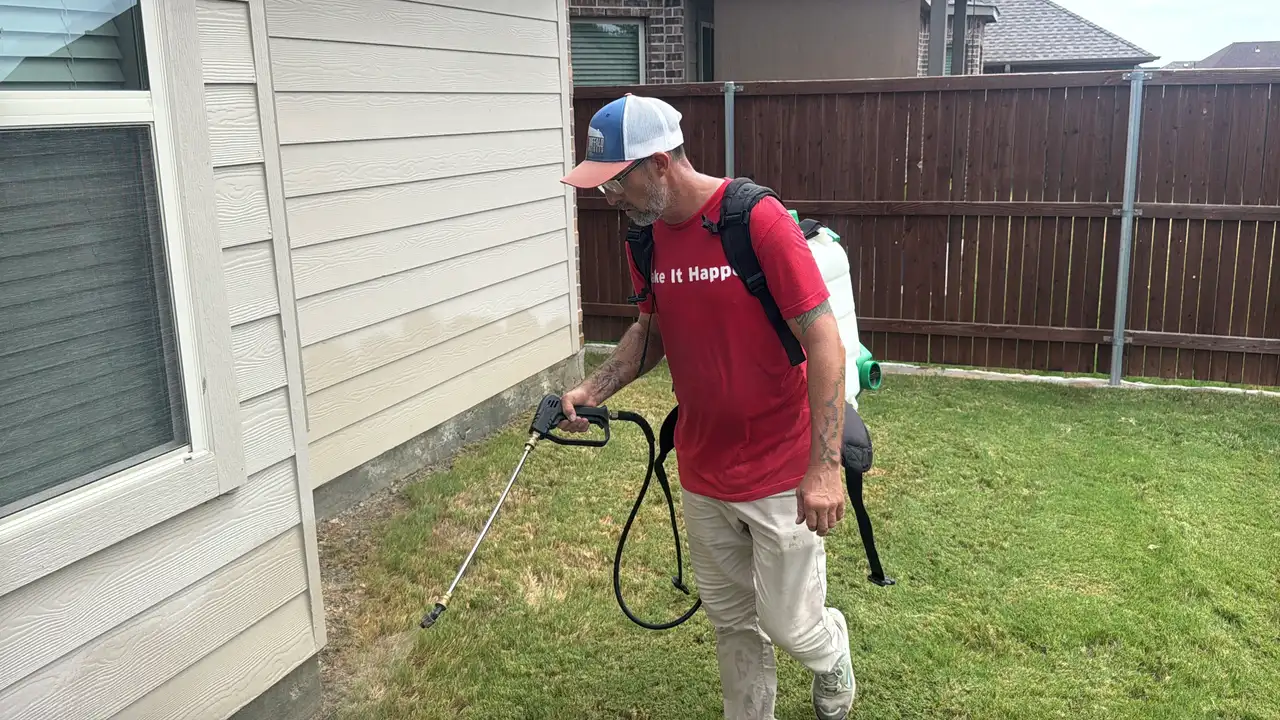
Two hours to dry, then back to normal
Pets and kids stay off the grass until the application dries, which in warm weather is roughly two hours. Nothing is applied to the animal, so there is no residue on your dog to think about, only on the turf.