TWO AGES OF BRICK
Which kind of Westworth Village house do you have?
The answer decides what the first visit is really for. Sixty-year-old brick has had time to open at the weep holes, the thresholds and the utility penetrations, and that is how ants, scorpions and mice get in. Newer infill on the same streets is tight, but its weep holes are wide open from the day the mason finished, and the ground around it was disturbed recently enough to suit fire ants.
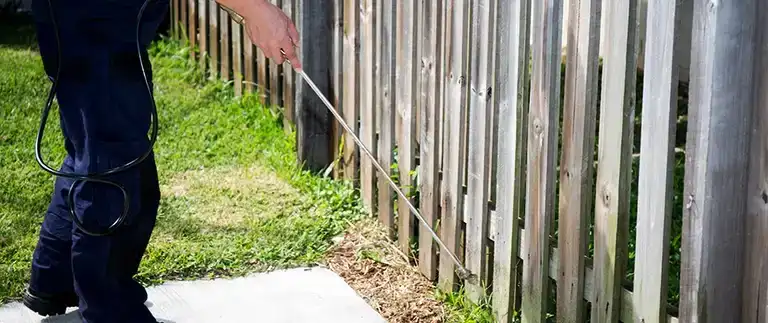
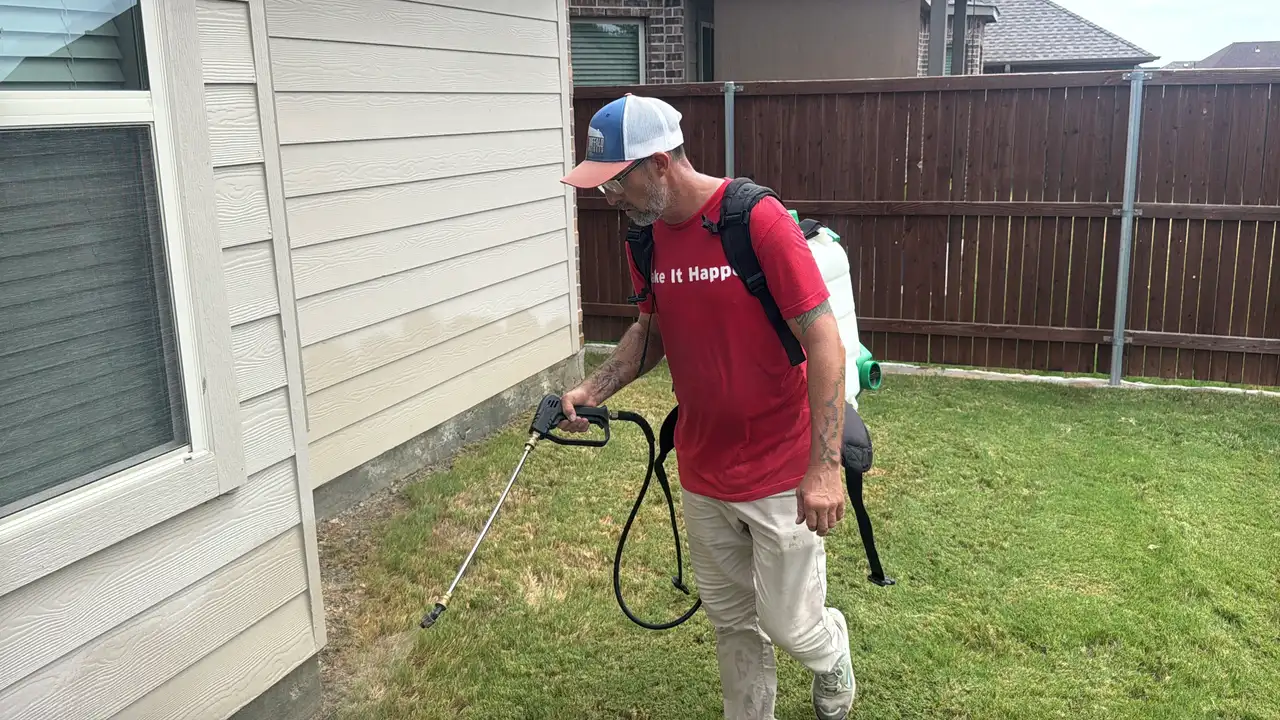
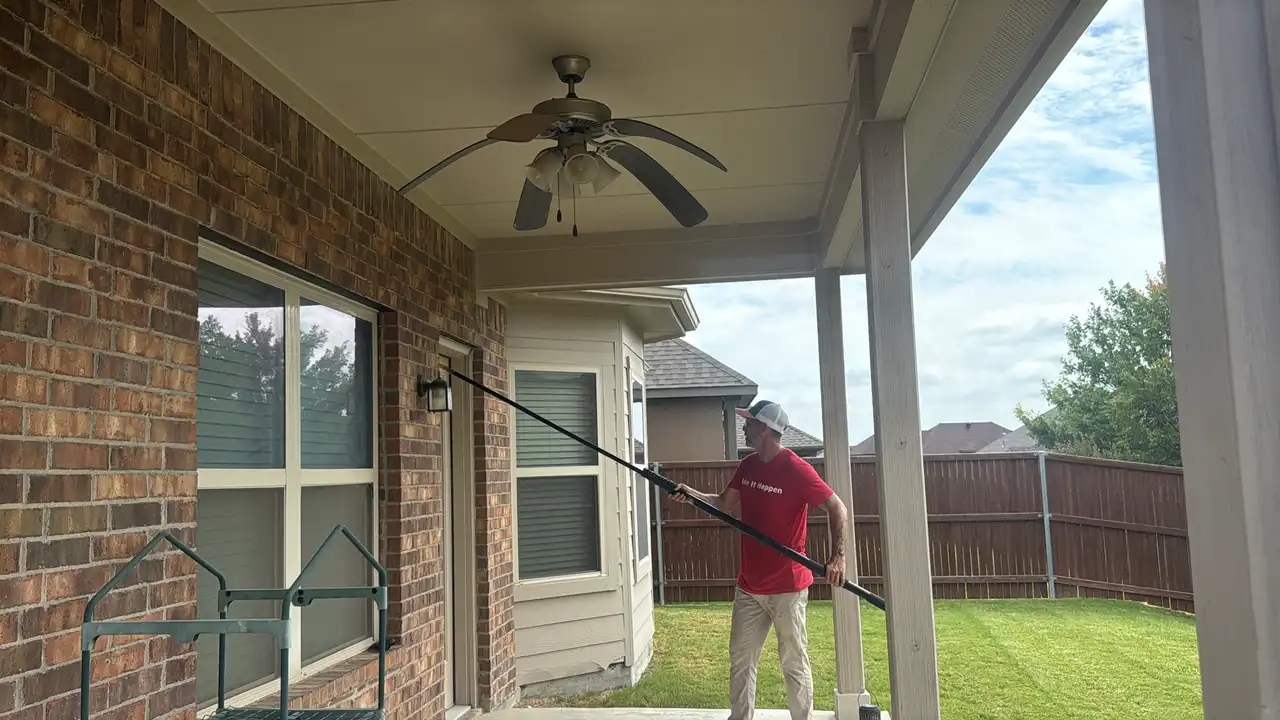
Home Defender handles both, four times a year: a liquid band around the foundation and three feet up the wall, a web-pole sweep of the eaves and soffits, Delta Dust in the weep holes, a granular ring about 25 feet out, and fire ant bait across the yard. What shifts from house to house is where the technician spends the time.
THE PRICE, 76114
What a Westworth Village home costs to keep treated
Square footage of the house is the entire formula. Mid-century floor plans in Westworth Village mostly fall between $30 and $38 a month, while the newer infill builds are larger and tend to land at $38 to $46.
Whichever band you are in, that figure carries any return trip between the scheduled visits, one interior treatment if you need it, and fire ant treatment. You hear the number before anything begins, and no contract, startup fee or cancellation fee comes with it.
1,500 sq ft or less
$30 a month
Plenty of the mid-century houses
1,500–3,000 sq ft
$33–$38 a month
The rest of the older stock
3,000–4,500 sq ft
$38–$46 a month
Most of the newer infill
Complete upgrade
$40–$73.50 a month
Whole yard instead of the 25-foot ring
Every number on this page comes from our published price list. Westworth Village homes get the same table as everyone else; the instant quote reads your square footage and lot size and hands you your own line.
THE RIVER CHANGES THINGS
What a barrier cannot do this close to the Trinity
It will not quiet the mosquitoes. The Trinity and the tributaries along the edge of town push mosquito pressure in Westworth Village above what the age of the housing would suggest, and none of that responds to product on a foundation. That is the 21-day program from April through September, priced per visit on lot size.
It will not stop a rat that already has a route. Properties toward the water see the occasional rodent, and rodents are solved by finding and sealing the openings in use, then trapping. That work is $25 a month attached to a year-round plan, and it is never sold on its own, because treating a yard does nothing whatever to a rodent.
And it does not replace basic repairs. A door sweep worn through, a garage-door corner that gapes, mortar cracked at a penetration: those are standing invitations, and four treatments a year cannot outrun them. The ones that matter get pointed out on the first visit.
WAIT OR SCHEDULE
Calling when you see something versus four set visits
Calling only when something appears is a defensible way to run a house, and on a tight newer build with no history of trouble it can be the cheaper one. The catch is that you are always answering a population that has already established itself outside and found its way in.
The scheduled version works from the other end: the barrier is renewed before pressure peaks each season, so the population outside the wall never reaches the size where it matters. On older Westworth Village brick, where the gaps are already there, that is the difference between four planned visits and a run of unplanned ones.
FIRST VISIT BY THE RIVER
What the technician reads before treating
The age of the wall
The brick gets looked at first, because a 1960s elevation and a recent infill build call for different attention. Old mortar, dropped thresholds and worn seals get noted on one; wide-open new weep holes and freshly turned soil get noted on the other.

The side facing the water
On lots sitting toward the Trinity, the boundary nearest the water is walked and treated as carefully as the front of the house. That is the direction pressure arrives from, and it is the side homeowners most often forget to mention.
Band, sweep, dust and ring
Then the standard sequence runs: liquid along the slab and up the wall, the web pole through eaves and soffits, Delta Dust into each weep hole, and granular broadcast out to about 25 feet with fire ant bait across the yard.