TWO POST OFFICES, ONE PLAN
What does a perimeter plan actually do for a house out here?
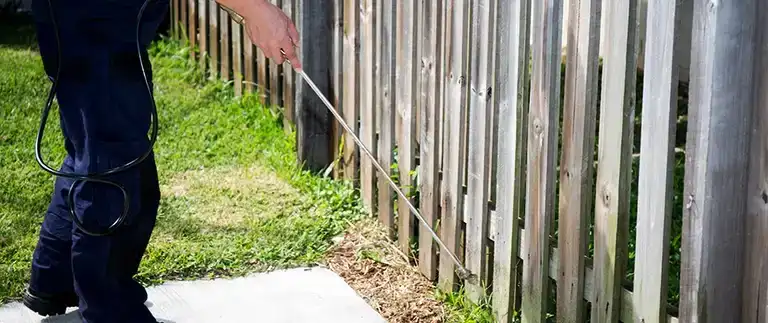
It keeps the crawling pests outside, which is where nearly all of them started. Willow Park stretches along I-20 west of Aledo with established acreage places and recently built subdivisions sitting beside each other, and the Home Defender Plan brings the same list of jobs to both: a liquid band around the foundation and about three feet up the wall, an eave and door-frame sweep with a web pole, Delta Dust worked into every brick weep hole, a granular barrier roughly 25 feet out, and fire ant bait broadcast across the yard.
Four visits a year, spaced about three months apart, is the entire schedule. What changes between a Willow Park acreage property and a builder home two roads over is not the checklist but what the barrier holds back: pasture-edge chiggers and scorpions under a woodpile on one, fire ants working through freshly graded clay on the other.
PRICED OFF THE FLOOR PLAN
What the monthly figure comes to on a Willow Park property
Home Defender runs $30 to $54 a month, and the meter is the square footage of the house rather than the land under it. That catches Parker County owners off guard: several acres of grass behind the home moves the number not at all, because the walls set the length of the foundation band and the eave line.
Billing is monthly and covers the four visits. A return trip between them is not charged, one interior treatment is included if something already got indoors, and you hear the figure before agreeing to anything. Nothing is owed to start, nothing is owed to stop, and no contract holds you to a term.
1,500-3,000 sq ft
$33-$38 a month
Older county homes and the smaller builder plans
3,000-4,500 sq ft
$38-$46 a month
Where most of the newer subdivision plans sit
4,500-6,000 sq ft
$46-$54 a month
Larger custom houses on the acreage side
Rodent control
$25 a month
An add-on to a year-round plan, not sold alone
Every number on this page comes from our published price list. Willow Park homes get the same table as everyone else; the instant quote reads your square footage and lot size and hands you your own line.
WHERE THE BARRIER GIVES OUT
The jobs Home Defender will not do on this kind of lot
Mosquitoes are not in it. A foundation band and a granular ring work on insects that walk through them, and anything with wings crosses both without ever making contact. If being bitten in your own back yard is the complaint, that is the Mosquito, Flea & Tick program instead: a visit every 21 days from April through September, priced on the lot rather than the house.
The ring also runs out of road on acreage. Where a mown Willow Park lawn meets pasture, chiggers and ticks live in the taller grass well past 25 feet from the wall, and no amount of product at the foundation reaches them. Either the treatment goes wider, which is the upgrade, or the mower does, which is free.
And weep holes stay open holes. The Delta Dust that goes into every one on every visit kills what crawls through, but the openings exist so the brick can drain and we leave them able to do it. Copper mesh packing is a separate add-on carrying its own price, never something folded quietly into the monthly figure.
RING OR THE WHOLE PLACE
Acreage or subdivision, which of the two plans fits
The only difference between them is how much ground gets treated. Home Defender covers the structure, the eaves and roughly 25 feet of surrounding turf and beds for $30 to $54 a month. Complete Home & Lawn Defense keeps every part of that and treats the whole yard instead of the ring, at $40 to $73.50 a month across the same square-footage bands.
Inside one of the newer Willow Park subdivisions, where the fence is close and somebody else's lawn starts on the far side of it, the ring genuinely covers the yard people stand in and the upgrade is money you can keep. On acreage the arithmetic flips. Chiggers, ticks and chinch bugs hold ground the ring never reaches, and the whole-yard version is the one that goes out to meet them.
THE FIRST WILLOW PARK VISIT
What the technician works through before leaving
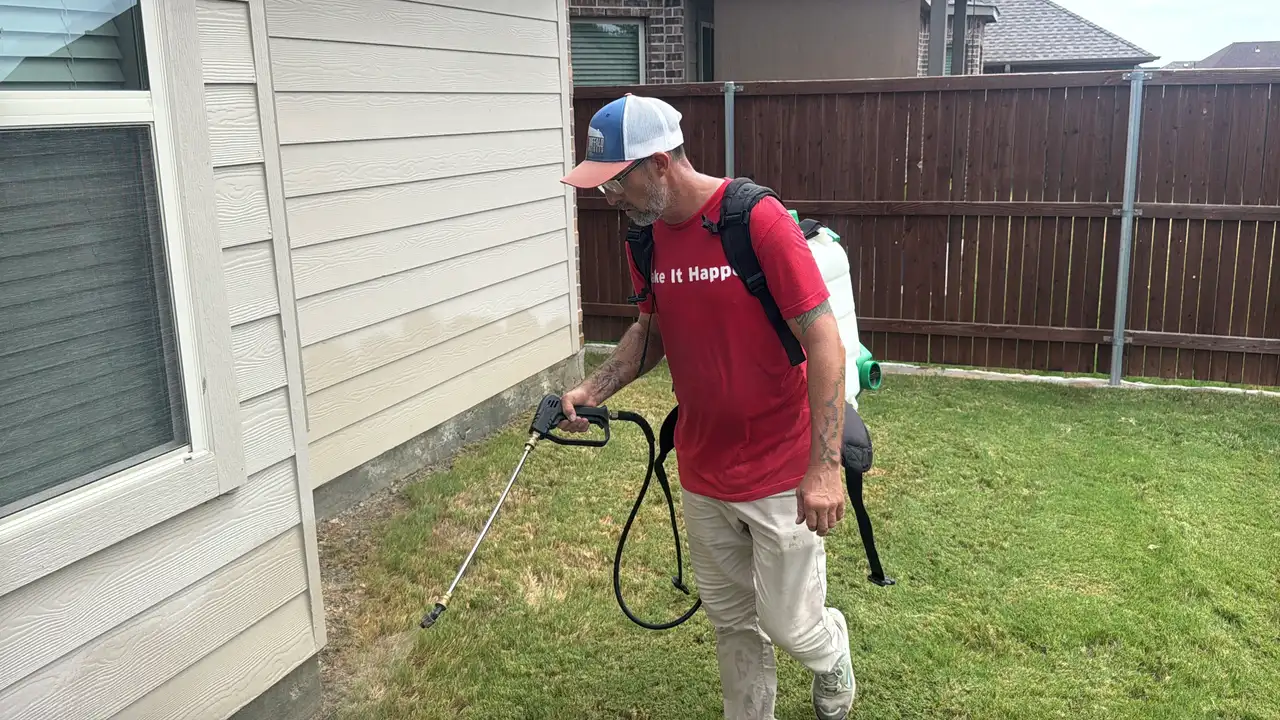
The line where the mower quits
On a Willow Park acreage lot the first thing walked is the seam between cut grass and whatever is behind it, pasture or brush or a neighbouring field. That seam produces most of the bite pressure, and it decides how the granular is laid down. On a subdivision lot the same walk is far shorter and ends at a fence.

Brick, eaves and the bottom course
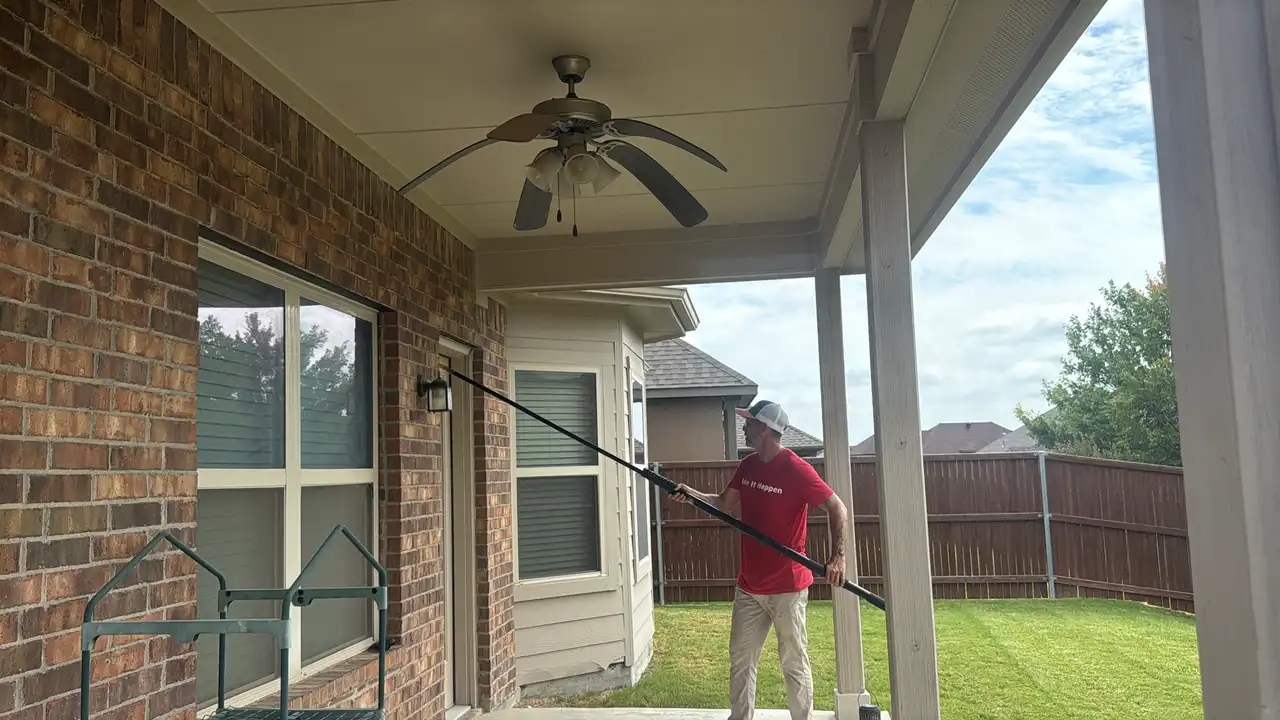
Liquid goes on the foundation and about three feet up the wall, then the web pole clears eaves, soffits and door frames so spiders and wasps lose the anchor points they rebuild from. Every weep hole along the bottom course takes Delta Dust, whether the brick went up last year or in the eighties.
Sheds, shops and the woodpile
Outbuildings get a look, because stacked wood and an open shop are where scorpions and rodents shelter before they ever try the house. You get told which structures matter and which are not worth worrying about. Gate access is all we need, and a text goes out when the technician heads your way.