
MORE EDGE THAN ANYWHERE
Why Argyle gets hit harder than the rest of Denton County
Because there is simply more edge per house. An Argyle acre usually carries fence line against pasture, a run of creek bottom or a brush line within a short walk of the back door, and every foot of it is chigger habitat. A quarter-acre lot in a built-out suburb has one back fence with a neighbor's mown grass behind it, which is why the same summer produces a few bites there and a miserable stretch here.
Tree cover compounds it. Shade holds moisture in the ground through the day and drops the litter larvae overwinter in, so a wooded property carries them from one year into the next rather than starting fresh each May. The bites arrive in a band at the sock line and the waistband because the larva climbs until fabric stops it, then feeds where the cloth presses skin.
ACRE LOTS, TOP OF TABLE
What Argyle homeowners pay for a treated yard
Between $51.50 and $73.50 a month for most houses out here, since Complete Home & Lawn Defense is priced on the home's square footage and Argyle houses run large. That plan covers the entire maintained lawn, which is what chiggers require, because the trouble starts where the mowing ends rather than at the patio. Past 6,000 square feet the number gets quoted after a walk-through.
Home Defender, $38 to $54 a month across those same sizes, bands the structure out to 25 feet. On an acre with the fence line a long way off, that band covers the part of the property chiggers care least about. Fire ant treatment rides on both plans, both are month to month, and the figure is agreed before anybody comes out.
3,000 to 4,500 sq ft
$51.50 to $62 a month
Whole lawn plus the treated buffer
4,500 to 6,000 sq ft
$62 to $73.50 a month
Common on the acreage streets
Over 6,000 sq ft
Quoted
After somebody has seen the property
Home Defender, 4,500 to 6,000
$46 to $54 a month
Structure ring, not the fence line
Every number on this page comes from our published price list. Argyle homes get the same table as everyone else; the instant quote reads your square footage and lot size and hands you your own line.
WHAT WE WILL NOT CLAIM
The limits of chigger work on an Argyle property
Several acres of genuine pasture will not be sprayed, and a company quoting you for that is quoting something that does not hold. Larvae repopulate open ground from whatever adjoins it within weeks, so the cost is high and the result is short. We treat the residential envelope and a buffer at the boundary, and say so up front instead of underquoting the rest.
Creek bottom is the other place the work stops. Damp, shaded, littered ground along a creek is the best chigger habitat in the county and it normally runs through several properties, so the strip nearest your lawn is what gets attention. Walking down into the bottom in shorts will still cost you in July.
Expect two or three treatments across the season rather than one that finishes the job. Larvae hatch in waves from May into August, and a yard cleared in late May has fresh pressure by early July. Those visits belong to the plan, so the count changes the schedule and not the invoice.
BUFFER STRIP OR OPEN FIELD
Treating a boundary against treating everything
On acreage the real choice is not DIY against professional, it is how much ground to cover. A treated buffer where mown yard meets pasture or brush catches the larvae crossing into the space you actually use, at a fraction of the cost of chasing them across the whole property. Blanket coverage of open land sounds thorough and performs poorly.
Your own contribution is mowing and clearing: hold the buffer short, pull brush and woodpiles back from the lawn, rake litter out from under the trees near the house. Sulfur dust still has defenders around here and does repel briefly, though on Argyle-sized ground reapplying it after every rain is more work than most people sustain.
THE WALK BEFORE ANY SPRAY
What the technician does first on an Argyle acre
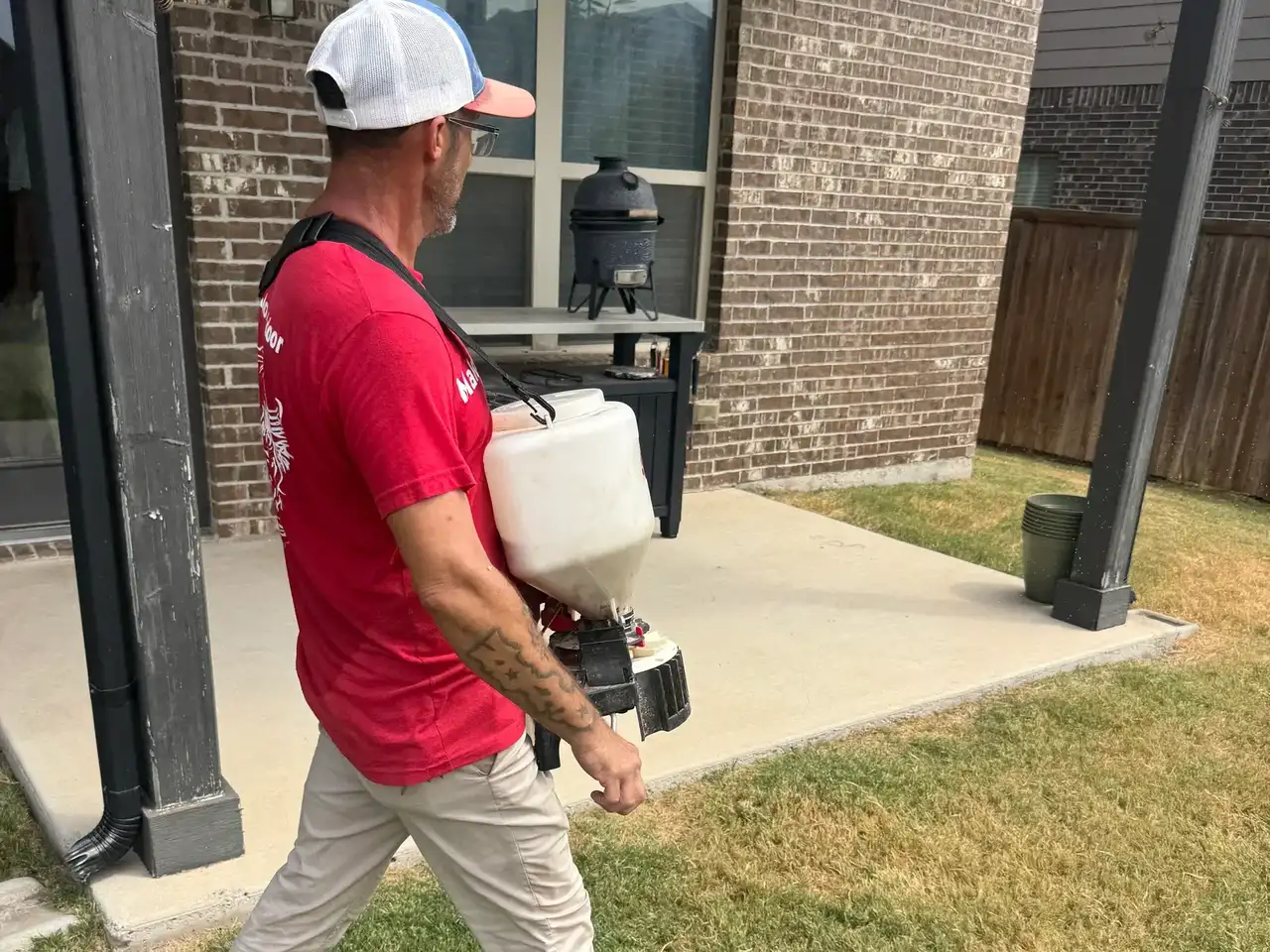
Walking the property line
The boundary gets walked before a hose comes off the truck, because the fence line, the brush behind it and any creek bottom decide where the treated buffer goes. On acreage that walk is the difference between a plan that works and product spread evenly across ground that never held chiggers.
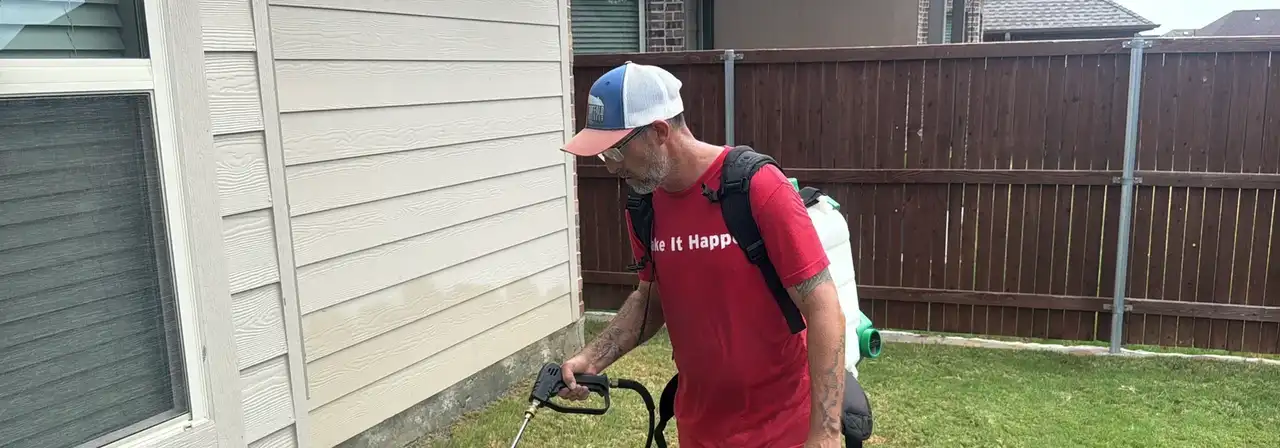
Horses and where they stand
Point out the animals, troughs, feed and tack and those areas are recorded as no-spray zones before treatment starts. It is a common enough conversation on properties out here that we would rather have it at the beginning than explain afterward.
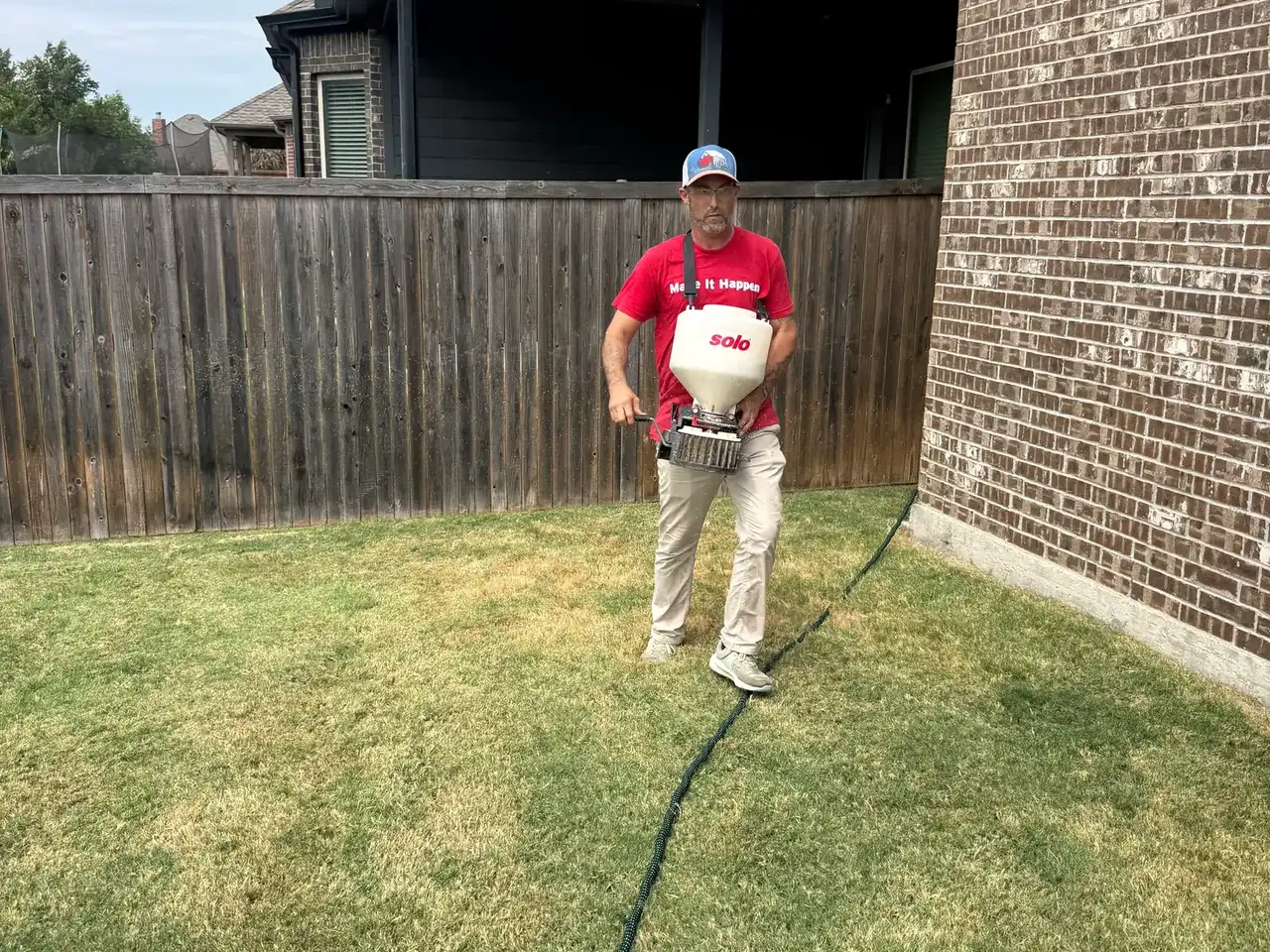
Weep holes at the house
The foundation still gets attention on the same visit: a three-foot band at every door, and Delta Dust plus copper mesh in the weep holes along the brick. Permanent sealing belongs to both plans rather than arriving as a quoted extra, which is unusual in this market.