
THE PASTURE EDGE
Where fleas and ticks actually live on an Argyle acre
Not in the mown part. Ticks hold position in the taller grass and brush at the property line, climb to roughly ankle height and wait for a dog, a horse, a deer or a person to pass, which on an Argyle place means the fence line and the creek bottom rather than the turf by the patio.
Fleas concentrate wherever animals rest. On acreage that is under the barn, in a tack room, along a shaded run, beneath a porch a cat has claimed. Those spots stay cool and damp, and the eggs, larvae and pupae that make up the bulk of the population sit in the top of that soil rather than on any animal.
The Mosquito, Flea & Tick program runs a visit every 21 days from April through September. On a large Denton County property the useful version of it is a treated residential envelope plus a buffer at the boundary, not a spray over open pasture.
ACREAGE PRICING, HONESTLY
What acreage costs, and where the published table stops
Price follows treated lot size, and Argyle is the town where that runs off the end of the table soonest. A large lot still inside the bands reaches $109.95 to $129.95 a visit, and anything beyond about an acre is measured and quoted, because pretending an acre and a half fits a fixed band would be guessing with your money.
The quote covers treatable ground rather than deed acreage, which usually makes it smaller than people expect. Where several acres of it are genuine pasture we will say plainly that blanket-treating it costs a fortune and does not hold, instead of quietly quoting the bigger number.
27,001 to 32,000 sq ft
$99.95 a visit
Larger subdivision lots on the Harvest side
37,001 to 42,000 sq ft
$119.95 a visit
Just under an acre of maintained yard
Over 47,000 sq ft
Quoted
Acreage, priced on the ground we treat
Livestock areas
Mapped as no-spray
Tell us where the animals are before day one
Every number on this page comes from our published price list. Argyle homes get the same table as everyone else; the instant quote reads your square footage and lot size and hands you your own line.
WHAT WE WILL NOT PROMISE
The honest ceiling on an acreage property
We will not tell you the ticks are gone. Open ground, creek bottom and the neighbour's pasture keep producing them, and a buffer at your boundary reduces what crosses rather than sealing it. Checking people and dogs after they have been out in tall grass stays part of living on a place like this.
We will not fix a barn by treating around it. Barns, shops and tack rooms are not sealed the way a house is, and when rodents or stray cats are living in them the flea supply stays topped up. Clearing the clutter and closing what they use is the work that counts there.
And we will not sell this to an Argyle household that does not need it. If the animals are on veterinary prevention, the ground near the house is open and sunny, and nobody is coming inside with bites, a full season of visits is money you could keep.
BUFFER OR BLANKET
Treating the boundary versus treating the whole place
A treated buffer at the fence line fits most properties out here. Ticks move from the edge inward, so a band of treated ground between the tall stuff and the part you actually use intercepts that traffic where it is densest, at a fraction of the cost of covering everything.
Blanket treatment of open pasture is the alternative and we are not enthusiastic about it. It is expensive, it needs repeating on the same three-week rhythm to mean anything, and grazing land brings label considerations a lawn does not. If someone quotes a cheap price to spray several acres, ask how long they expect it to last.
DAY ONE ON ACREAGE
How the first visit goes on an Argyle property
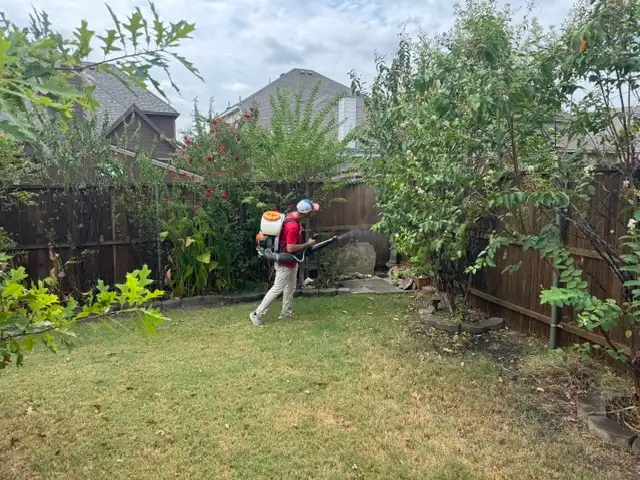
Walking the fence line
The boundary comes before the yard, because it decides where the buffer sits and how wide it has to be. Creek bottom, unmowed pasture and brush behind the fence each change that answer, and so does where the gates are.
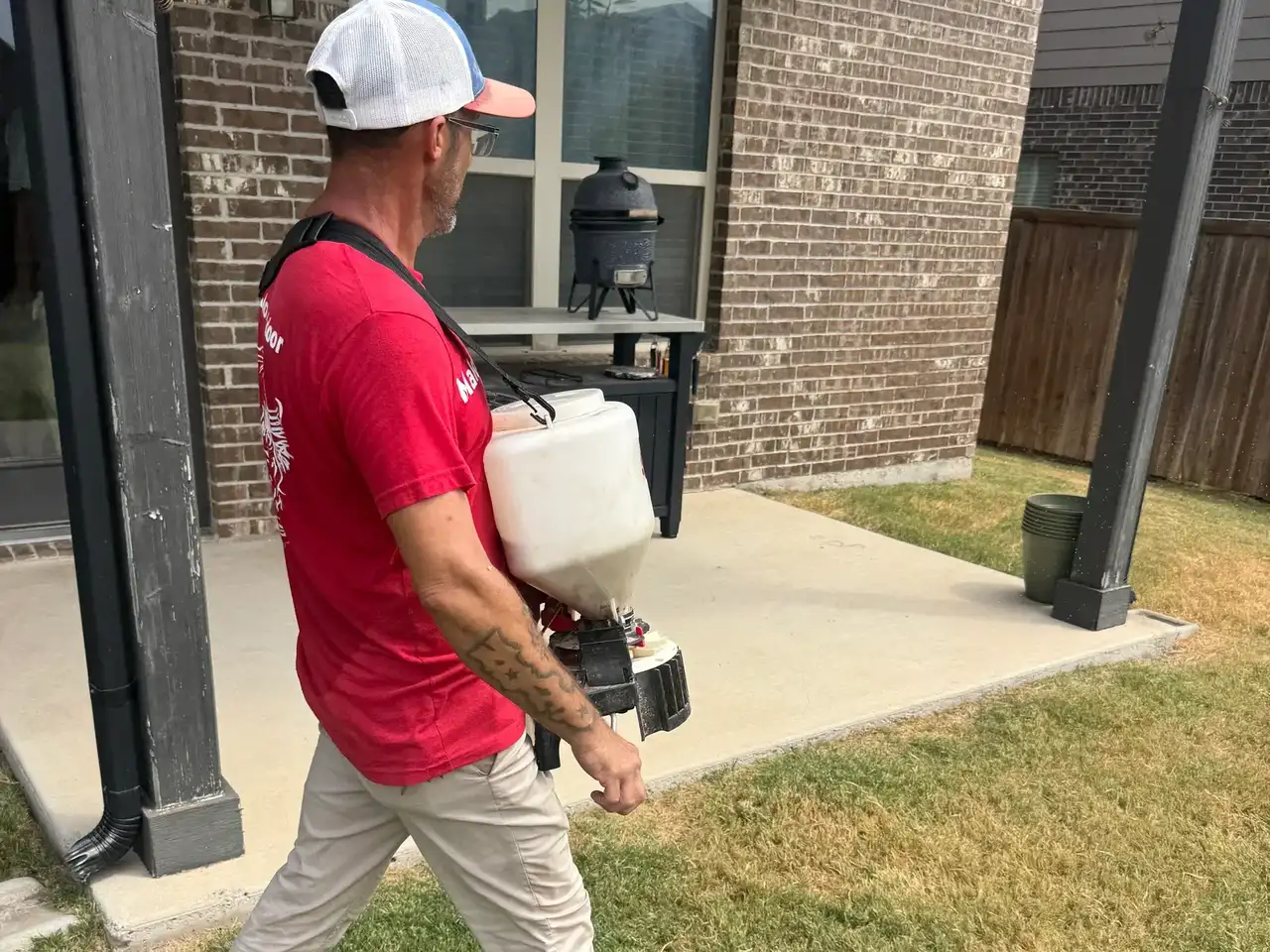
Animals and no-spray zones
Tell us where horses, livestock and outdoor pets are kept before we start and those areas get mapped out. Everything used is labelled for residential use and applied at label rate, but planning around animals beforehand beats explaining afterward.
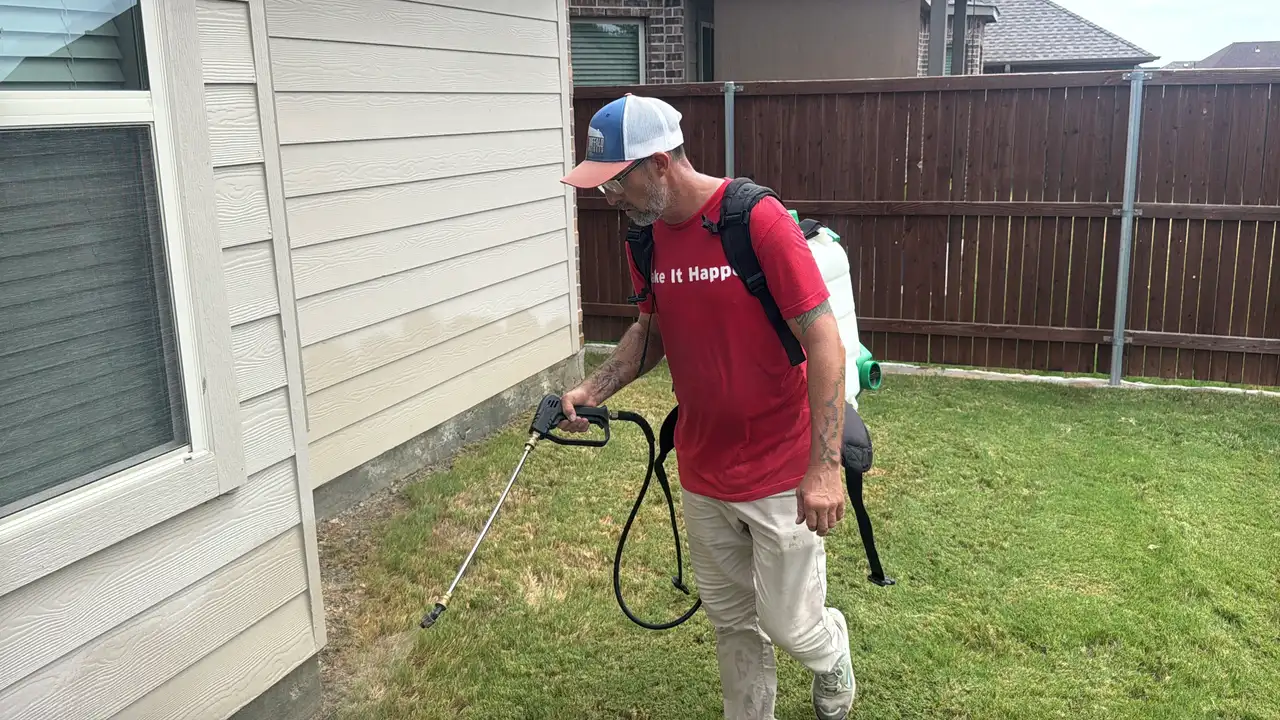
The structures, not only the ground
We look at the barn, the shop and any porch or deck an animal sleeps under, because that is where fleas concentrate on acreage. You get told what we treat and what needs clearing or closing to stop the resupply.