ACREAGE ARITHMETIC
How many colonies does an Argyle acre actually hold?
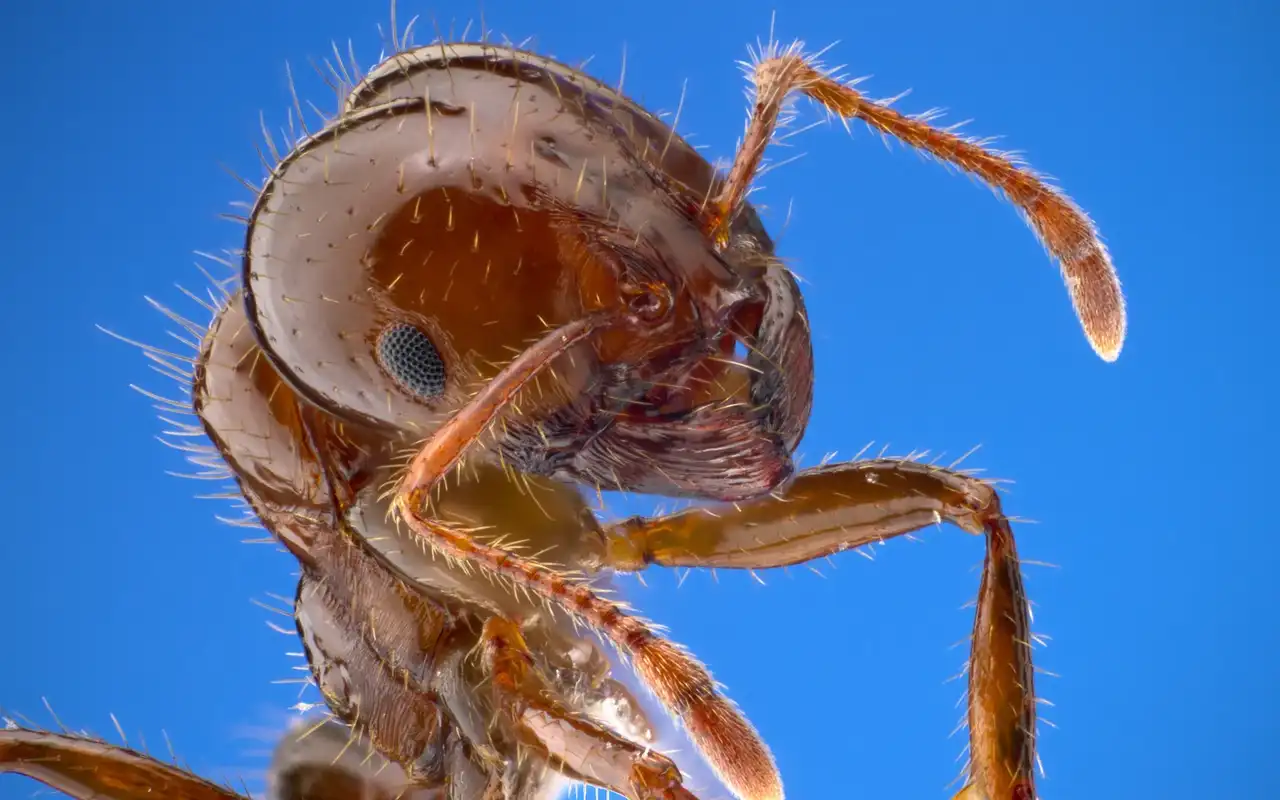
More than you have counted, and that is the honest place to start. Argyle is the acreage end of our map, with pasture, creek bottom and tree cover on properties that take real time to walk, and fire ants are content in all of it. The mounds you know about sit near the house and the drive; the rest are out along the fence line where nobody goes between mowings.
The Harvest side of town adds a different version of the same problem. Master-planned lots there sit on ground graded not long ago, and fire ants colonize disturbed soil faster than the species that used to hold it, so a new build can carry a heavier mound count than the old horse property next door to it.
ARGYLE PRICE BANDS
The bait is free; the plan is priced on the house
Fire ant work is included in Home Defender and in Complete Home & Lawn Defense without a separate charge, and neither plan prices off your acreage. Both read the square footage of the house instead, which is why an Argyle homeowner with several acres can still sit in the $38 to $46 a month band on Home Defender if the house runs 3,000 to 4,500 square feet.
Larger houses move up to $46 to $54 a month, and past 6,000 square feet we quote rather than assign a band. The whole-yard plan across those same two sizes is $51.50 to $62 and $62 to $73.50. None of it carries a contract, and you hear the number before you commit to anything.
3,000 to 4,500 sq ft house
$38–$46/mo
Home Defender on acreage
4,500 to 6,000 sq ft house
$46–$54/mo
The larger homes in town
Over 6,000 sq ft
Quoted
We look before we price
Whole-yard equivalent
$51.50–$73.50/mo
Complete Home & Lawn Defense
Every number on this page comes from our published price list. Argyle homes get the same table as everyone else; the instant quote reads your square footage and lot size and hands you your own line.
LIMITS OF A LAWN PLAN
What an acreage owner should not expect from us
A residential plan does not cover a pasture, and we would rather be blunt than take the work on false terms. What you are buying is the house, the yard the family actually uses and a treated buffer at the boundary. If you want twenty acres of grazing ground handled, that is a different kind of job at a different kind of price.
Bait cannot beat the creek bottom either. Low ground along a creek reloads with colonies constantly and a treated lawn does not stop it, so mounds will keep appearing at that end of an Argyle property. Retreatment between scheduled visits is included, which is how the cost of that stays with us rather than with you.
And there is a waiting period every single time. Colonies die two to three weeks after the granules go out, because the bait has to travel through the workers to reach the queen. If an area has to be clear for something specific, tell us early rather than the week before it matters.
BUFFER OR BLANKET
Treat the whole property, or a strip at the fence?
On an Argyle acre a buffer at the boundary plus whole-lawn bait is the sensible middle. Blanket-treating open pasture costs a great deal, does not hold once the neighboring ground reseeds it, and puts far more product out than the result justifies. We say so even though the bigger job would pay us better.
Treating only the strip near the patio is the opposite mistake. It leaves the colonies actually supplying your yard untouched and buys you a clean twenty feet inside a property that keeps refilling. The lawn gets bait wall to wall and the fence line gets the buffer, and it is that combination that holds.
WALKING THE FENCE
What the first Argyle appointment involves
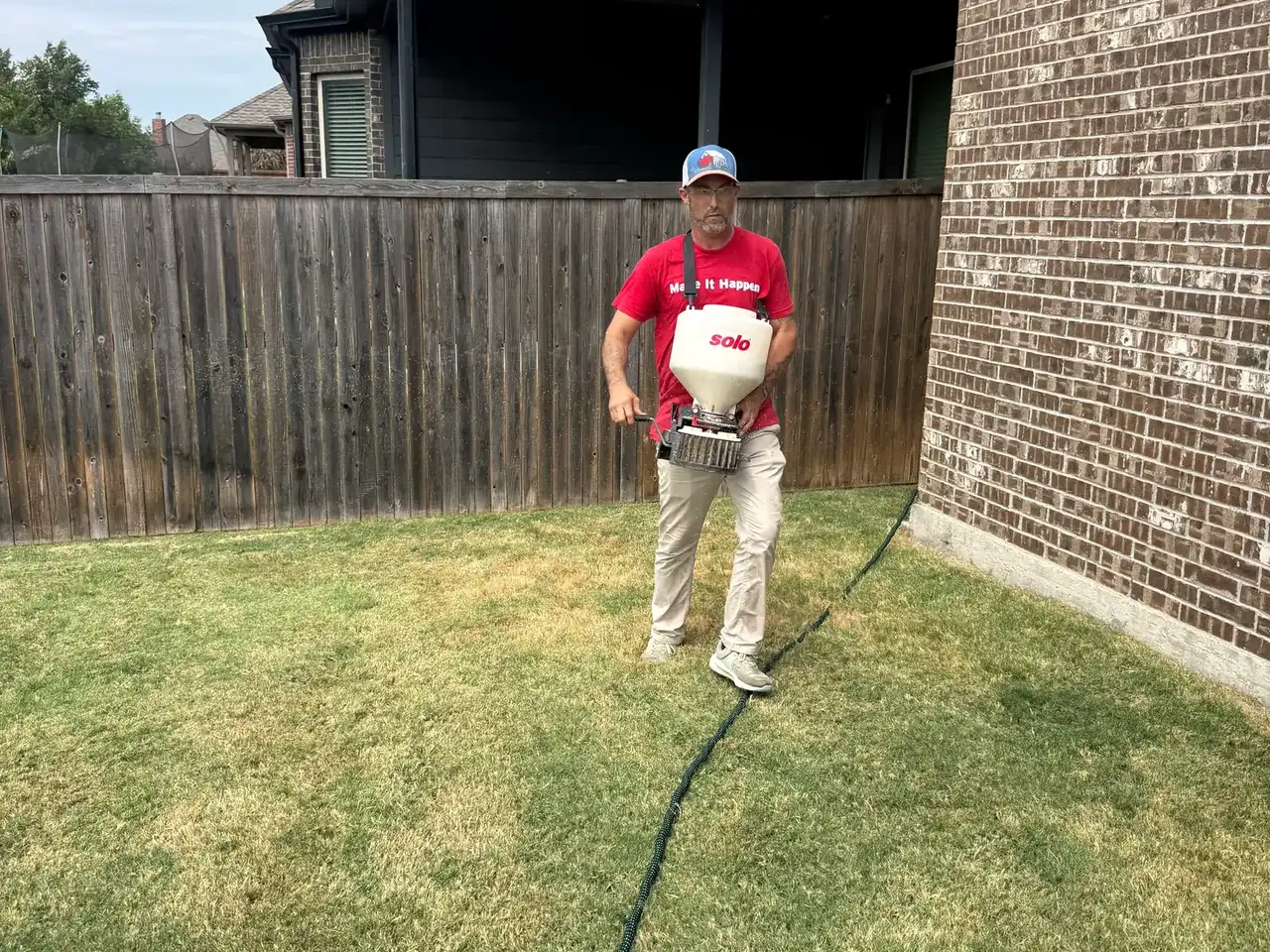
The boundary, before anything else
We walk the fence line and the creek side first, because that is where the pressure originates and where a treated buffer has to sit. On a property this size the walk takes a while, and it is the part of the visit that decides the plan.
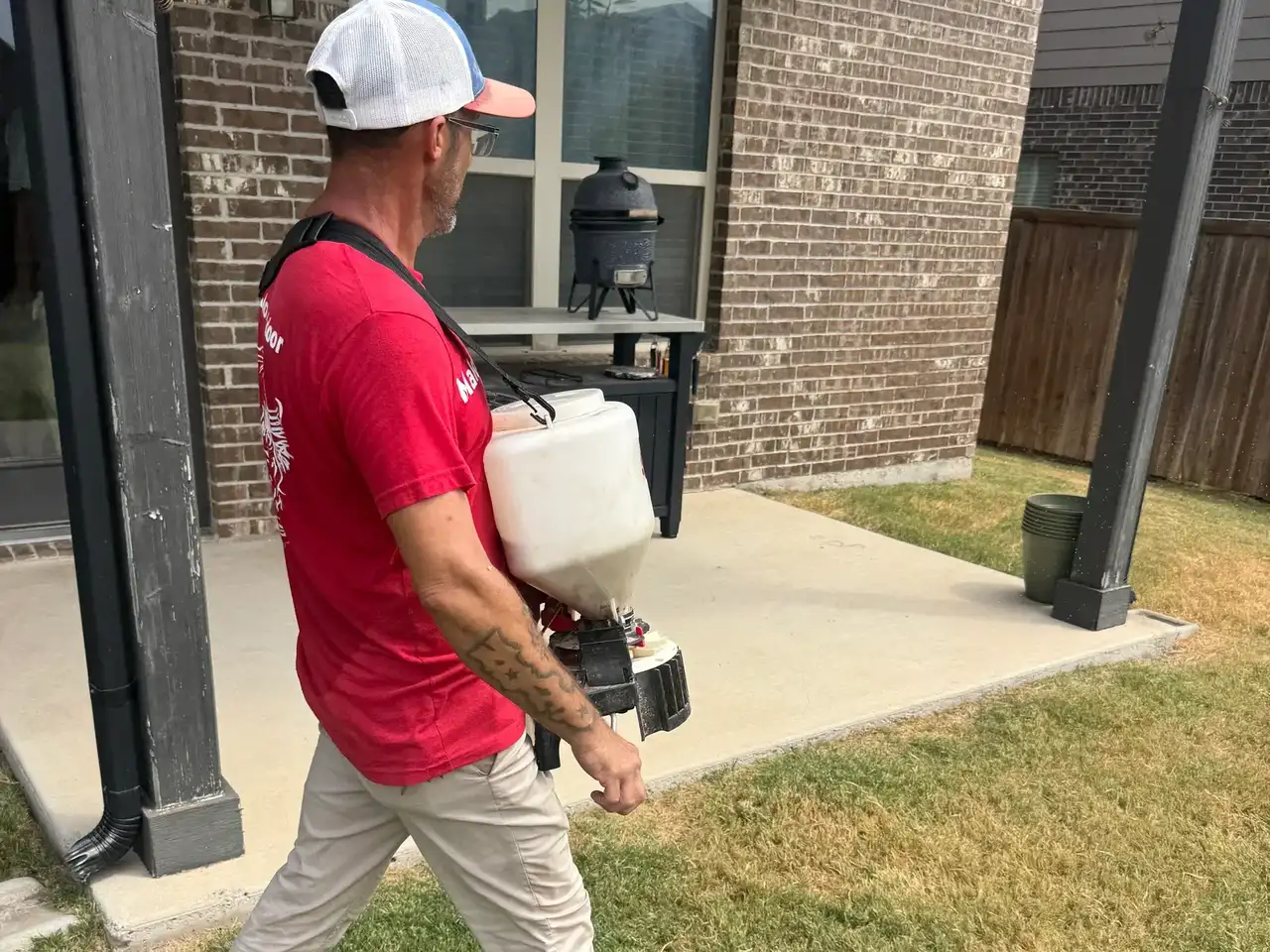
Livestock and no-spray zones
If there are horses, chickens or a vegetable garden, they get mapped before a spreader moves. Everything used is labeled for residential use and applied at label rate, and we would still rather work around the animals than reassure you after the fact.
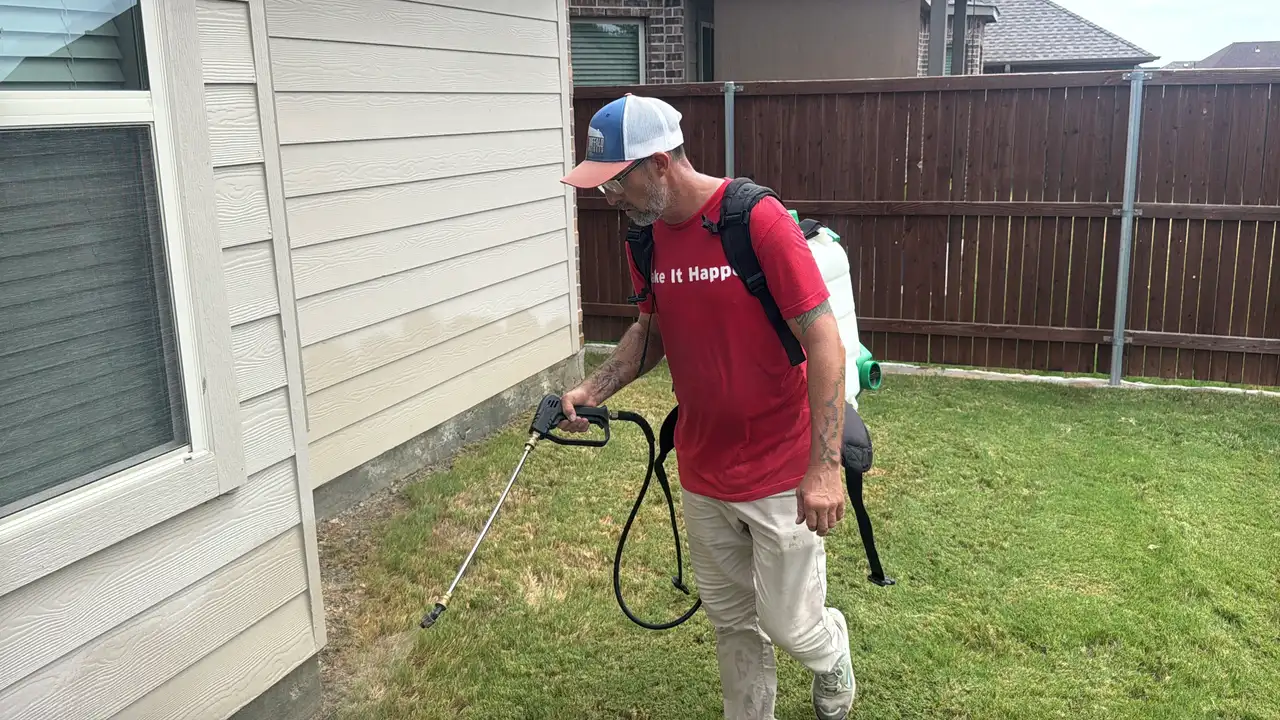
Broadcast, then the buildings
Bait goes across the mowed lawn in full, and then the structural half of the plan runs: foundation, eaves, Delta Dust in the weep holes and an inspection of the barn and shop, because outbuildings are usually where rodents stage before they reach the house.