TWO YARDS, TWO PESTS
Why Argyle gets both ends of the problem
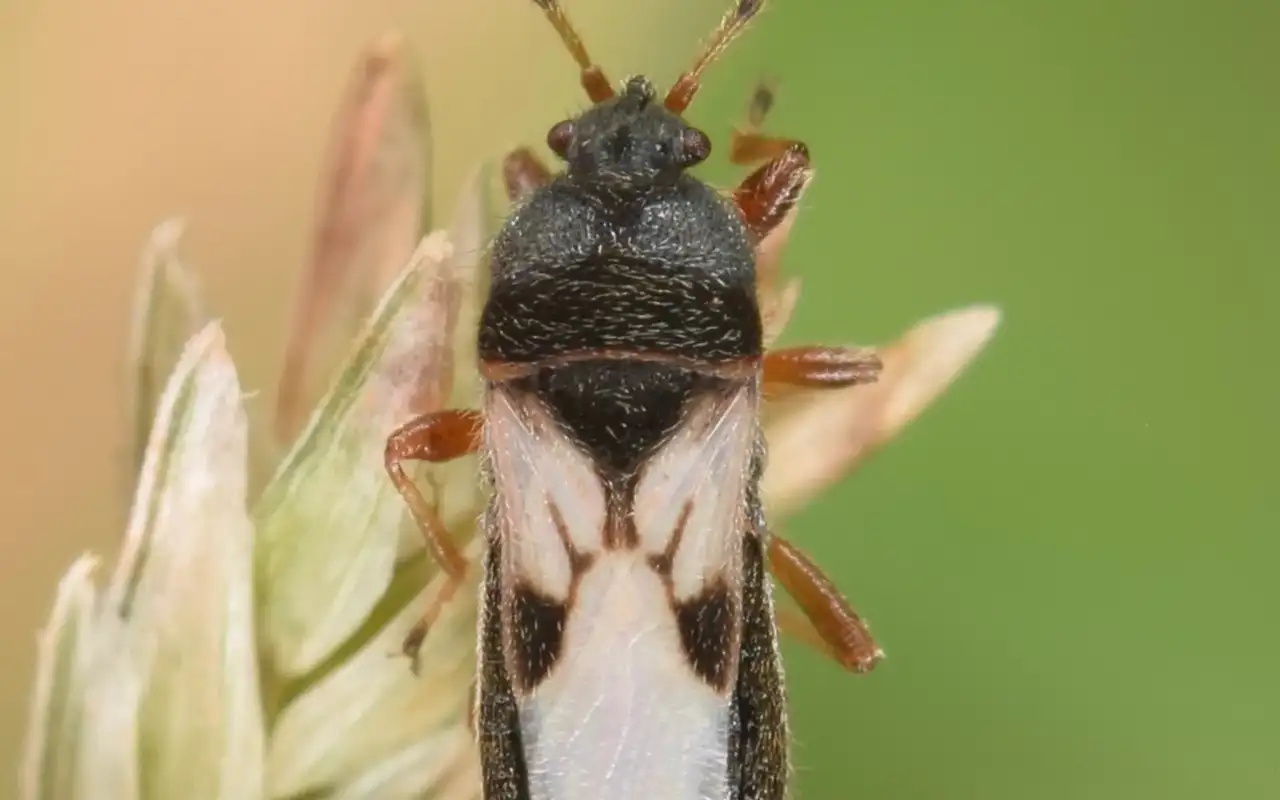
Argyle carries two different turf-insect stories on one map. Out on the acreage and horse property the lawn is an island surrounded by taller grass, and armyworms build up in that growth before crossing the mowed area in a front. On the Harvest side, where the houses are new and the sod is young, chinch bugs get the shallow-rooted St. Augustine they prefer.
Grubs sit underneath both. Beetle larvae feed on roots two to four inches down regardless of whether the ground was pasture last decade or last year, and the first sign is grass losing its hold rather than changing colour. On a big Argyle lot the loose patch is often discovered by an armadillo before the owner notices it.
ACREAGE PRICING
What this costs when the lot is large
Here is the part people are relieved by: the year-round plans are priced on the square footage of the house, not the acreage. A large lot with a moderate house does not push you up the table. Complete Home & Lawn Defense runs $40 to $73.50 a month and treats the whole maintained lawn; Home Defender is $30 to $54 a month with the lawn treatment inside roughly 25 feet.
Argyle houses do run bigger than average, so more properties here read from the upper rows, and anything over 6,000 square feet is quoted rather than banded. What we treat is the residential envelope, the yard you actually use, and we tell you where that line falls before you sign up rather than afterwards.
3,000 to 4,500 sq ft
$51.50–$62/mo
A common Argyle house size
4,500 to 6,000 sq ft
$62–$73.50/mo
The upper band, whole lawn treated
Over 6,000 sq ft
Quoted
Worked out on the property, not guessed
Same houses, Home Defender
$38–$54/mo
Turf treated about 25 feet from the wall
Every number on this page comes from our published price list. Argyle homes get the same table as everyone else; the instant quote reads your square footage and lot size and hands you your own line.
WHAT WE WILL NOT SELL
Where an Argyle lawn program stops
We do not treat pasture. Blanket-spraying acres of grazing ground costs a fortune, does not hold, and is not what these programs are built for, so if the armyworms are coming out of a hay field we say that instead of quoting for it. The lawn gets treated; the pasture is weather you live with.
The treatment also does not undo damage. Killing the insect halts the loss, and everything after is water, fertility and sometimes sod. On a big lawn, resodding a bad half-acre is expensive enough that catching it early is worth considerably more than the application itself.
And it is not a livestock service. If you keep horses, tell us where they are before the first visit so those areas go on the map as no-spray, and understand that a barn or a paddock is a different job from a lawn. Everything we apply is labelled for residential use and applied at label rate.
BROADCAST VS SPOT
Treating the lawn against chasing the damage
Spot-treating a visible brown patch is the instinct, and on acreage it is usually the wrong move. Grubs are already distributed well beyond the part of the lawn that looks bad, and chinch bugs spread outward from hot edges, so an application that stops at the ugly bit leaves behind the population that refills it.
Broadcasting across the maintained lawn is the honest version, and it is the same logic we use for fire ants out here, where the mounds you have not walked past yet are the ones that repopulate the yard. Fire ant treatment comes with both year-round plans, so on an Argyle property that broadcast is happening anyway.
WALKING THE PROPERTY
The first visit on an Argyle place
Boundary first
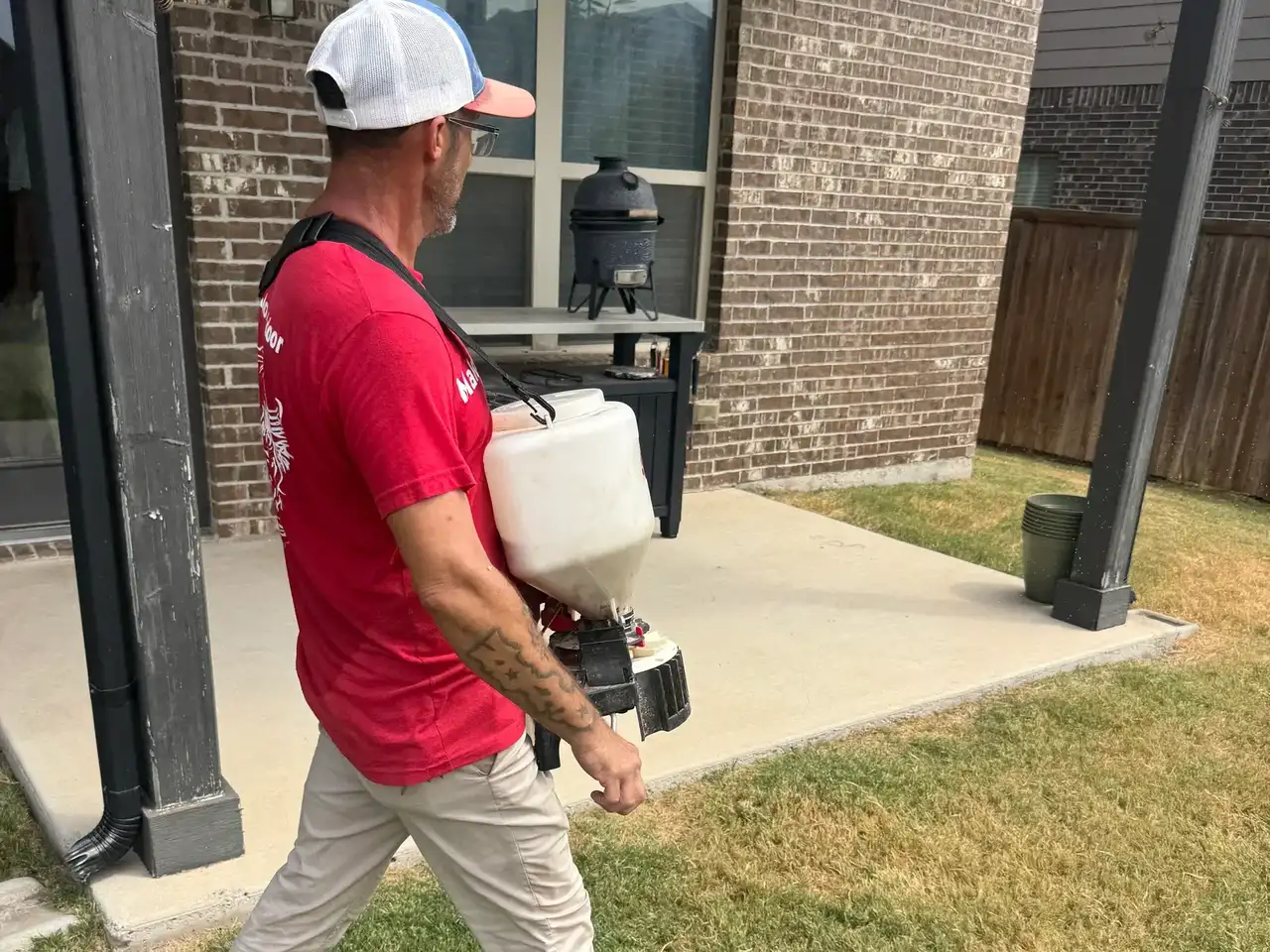
We walk the fence line before the lawn, because on an acre-plus property the taller grass and brush behind it is where armyworms and much else stages. Knowing where that edge sits decides where the treated buffer goes and where the useful line stops.
Animals and no-spray zones
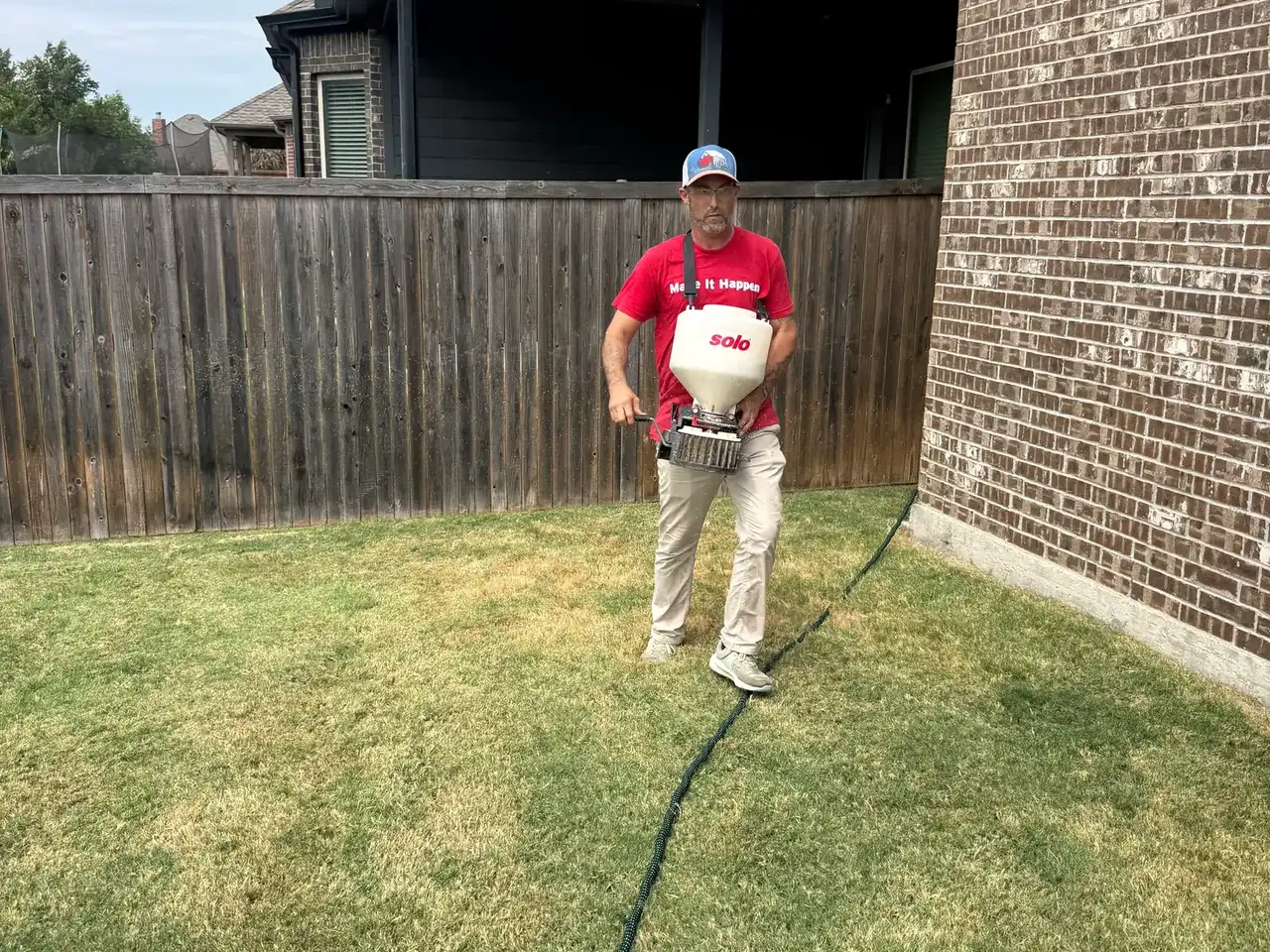
Anywhere horses, chickens or a vegetable garden live gets mapped before a spreader comes off the truck. We would far rather plan around livestock in advance than explain ourselves afterwards, so mention it on the phone if it applies to you.
Digging and soft ground
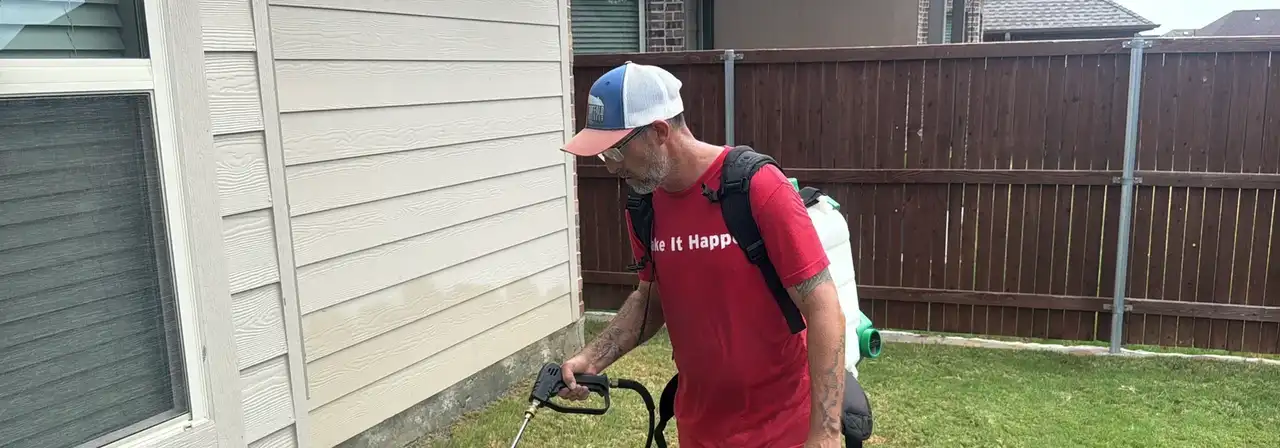
Any area that lifts when tugged, or that something has been turning over at night, gets a square foot folded back and the larvae counted. Over five white C-shaped grubs under that square is worth treating; two is background and we leave it alone.