
FORT WORTH, BY NEIGHBORHOOD
Which Fort Worth yards actually have chiggers
Fort Worth is large enough that the answer changes from one part of town to the next. The new construction along the Alliance corridor north of Loop 820, where our shop on Harmon Road sits, has thin canopy, heavy clay and wide-open lawns, and chiggers are a minor problem there next to fire ants. The older streets inside the loop, with 60- and 70-year-old trees and deep leaf litter, are a different story.
Anywhere a Fort Worth yard touches a creek corridor or the Trinity greenbelt edges, the tall grass and damp shade on that boundary produce chiggers from May through August. Chiggers are mite larvae, too small to see easily, and they climb from the grass until a sock or waistband stops them. The bite cluster at those tight spots is how you know it was chiggers and not something else.
PRICING BY HOME SIZE
What chigger control costs on a Fort Worth home
Chigger coverage comes with the yard portion of Complete Home & Lawn Defense, priced on the square footage of the house: $40 a month for a home under 1,500 square feet, up to $73.50 a month for one between 4,500 and 6,000, with anything larger quoted. It treats the whole lawn year-round and there is no contract to sign. Home Defender, at $30 to $54 a month, reaches 25 feet out from the foundation and no further.
A 1960s ranch in an older Fort Worth neighborhood often lands in the $40 to $51.50 band, while a newer 3,500-square-foot build in Park Glen or Summerfields sits between $51.50 and $62. You will have your exact number before committing, there is no startup fee, and retreatments between visits are covered by the warranty.
Under 1,500 sq ft
$40 a month
Small post-war homes inside the loop
1,500 to 3,000 sq ft
$40 to $51.50 a month
The most common Fort Worth band
3,000 to 4,500 sq ft
$51.50 to $62 a month
Newer two-stories north of Loop 820
4,500 to 6,000 sq ft
$62 to $73.50 a month
Over 6,000 sq ft is quoted
Every number on this page comes from our published price list. Fort Worth homes get the same table as everyone else; the instant quote reads your square footage and lot size and hands you your own line.
THE LIMITS
Three things this treatment cannot fix in Fort Worth
Product does not penetrate a layer of dead leaves. On the shaded older lots around Arlington Heights, Ridglea and TCU, the chiggers are living under the litter, and spraying the top of it is money wasted. Raking that out before we come is the homeowner's part of the job, and we will say so plainly.
We treat your property, not the greenbelt or the drainage channel behind it. City land along the Trinity or a creek keeps breeding chiggers whatever we do on your side, so a lot that backs onto it will always see some pressure crossing the fence. Treatment lowers what lives in your grass; it does not seal the boundary.
A brand-new Alliance-area yard with no trees, no edge and a fresh sod lawn probably does not have a chigger problem in the first place. If the bites there are random rather than clustered at clothing lines, the culprit is more likely mosquitoes or fleas, and buying chigger control for it would be the wrong purchase.
COMPARED TO DOING IT YOURSELF
Feed-store sulfur, a shorter mow, or the plan
Start with the free fix: mow the edges short, cut back brush along the fence and rake out the litter under the trees. That removes the shade and moisture chiggers need and it works in any part of Fort Worth. Sulfur dust is the traditional next step, and it does drive them off for a while, but it is messy, the smell lingers and it is gone after a rain.
What the year-round plan adds is a treatment of the entire lawn, heaviest at the shaded edges, plus a three-foot band at each door so larvae are not carried inside. Repellent on your skin protects you for one afternoon and leaves the population in the yard growing all season; treating the grass is what actually turns it down.
FIRST VISIT, ANY ZIP
How the first chigger visit runs at a Fort Worth address
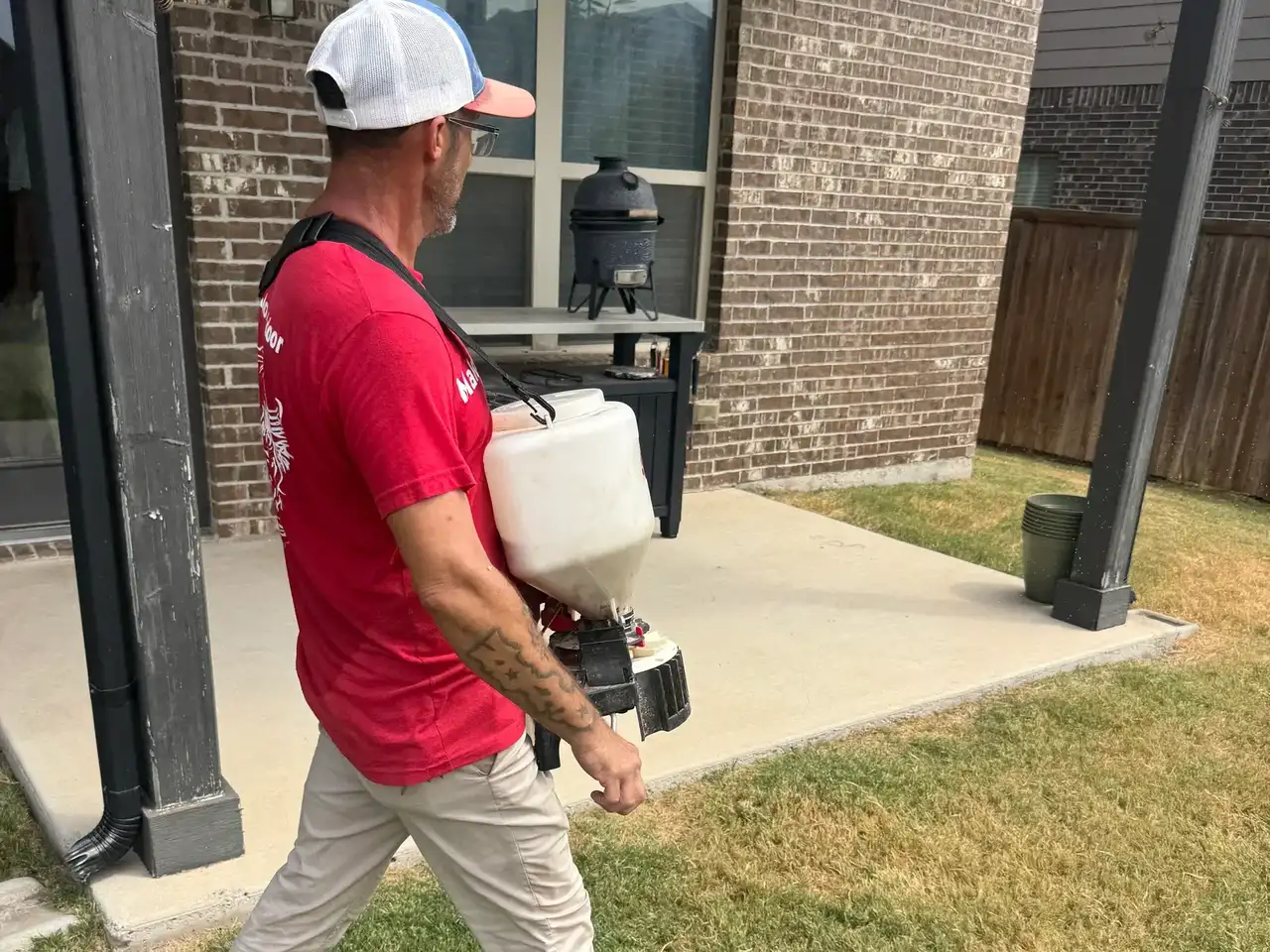
Reading the lot
The technician walks the boundary looking for what chiggers need: tall grass, brush lines, damp shade and leaf litter. On a shaded lot inside the loop that may be most of the back yard; on an open north Fort Worth lot it may be a single fence corner.
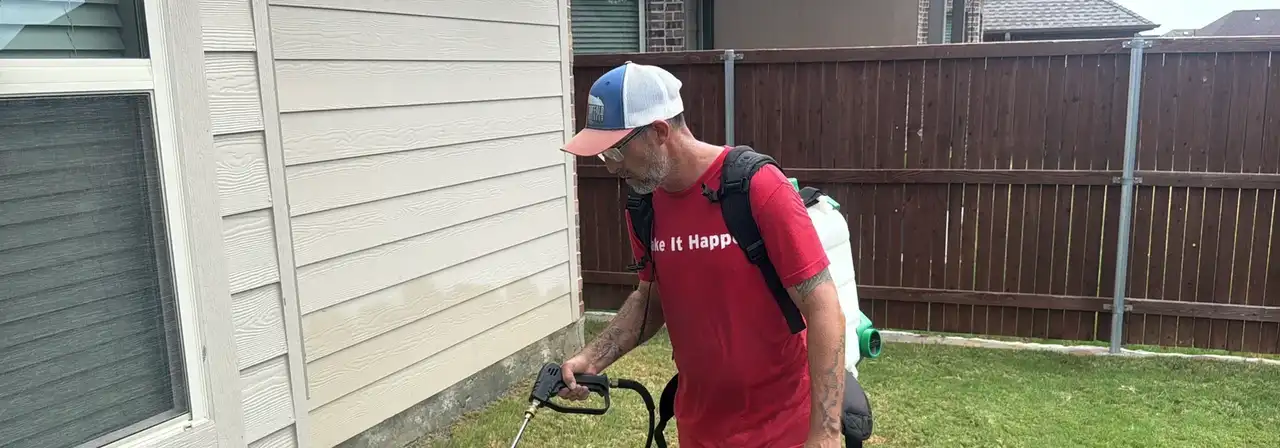
Treating the yard and the doors
The whole lawn is treated with extra attention on the edges, then every entry point gets a three-foot band. We run the entire city out of the Harmon Road shop in 76177, so 76131, 76137 and the older ZIPs south of the loop all get the same visit.
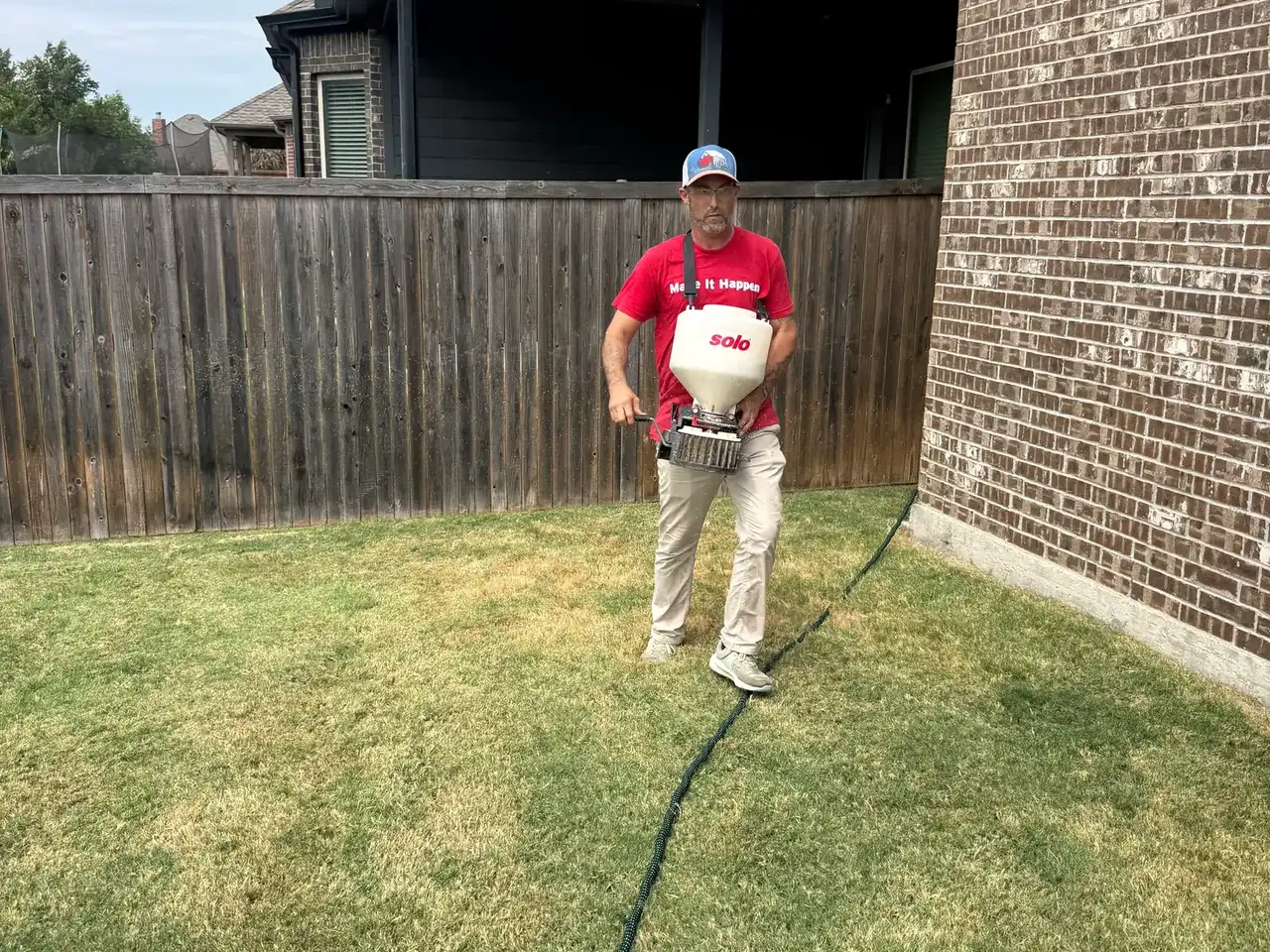
Telling you what to change
If leaf litter or an unmowed strip is going to undo the work, you hear it on the first visit rather than after the second flare-up. Chiggers overwinter in that litter, so the yards that clear it are the ones that stop having the same problem every year.