TWO CITIES, TWO PESTS
Which lawn insect is actually yours?
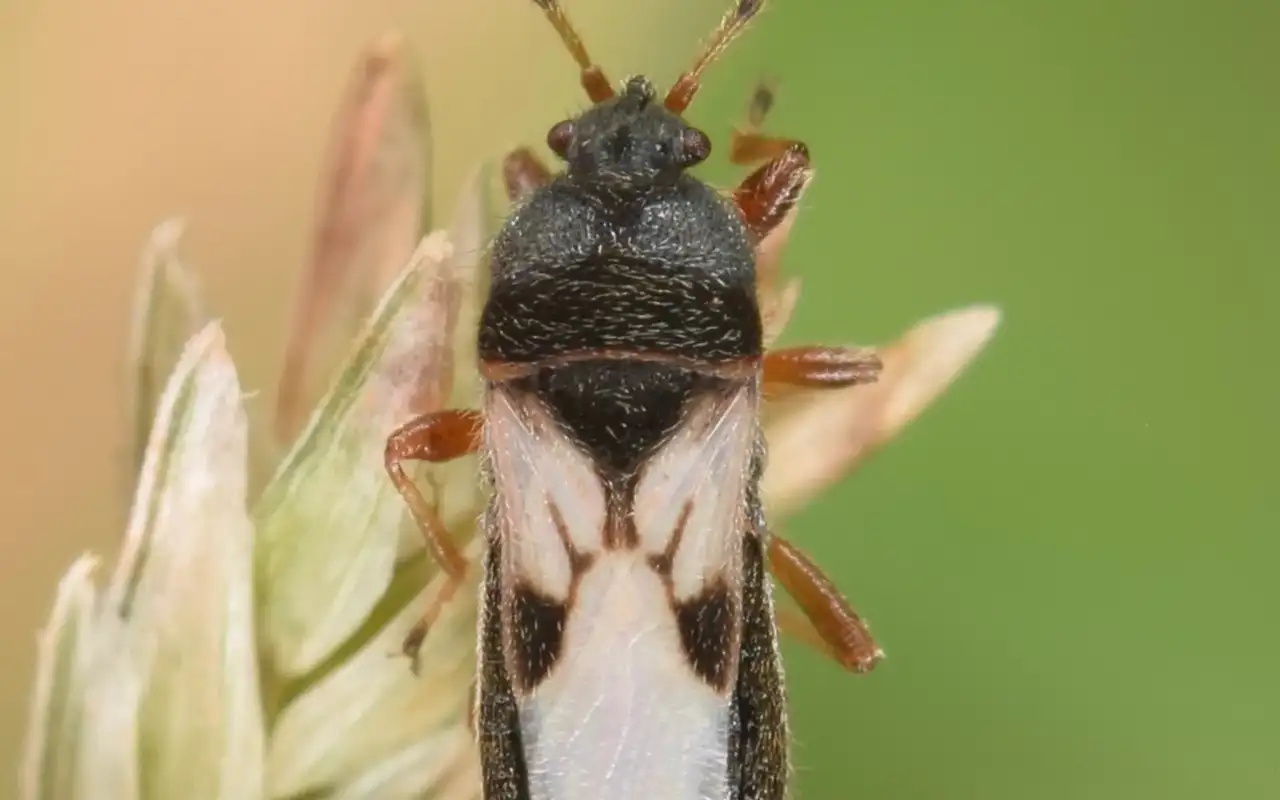
Fort Worth is too big for one answer, so we split it. North of Loop 820, through the Alliance corridor and the newer Park Glen and Summerfields builds, the lawns are young St. Augustine on thin disturbed clay, and the July calls are chinch bugs. Inside the loop, under sixty and seventy-year-old canopy, that pressure drops away and grubs become the main event.
The split matters because the two insects live at different depths and need different products. Chinch bugs sit in the thatch right at the soil surface. Grubs are beetle larvae two to four inches down, chewing the roots off the plant. Treating one as though it were the other is the most reliable way to spend money and change nothing.
FORT WORTH PRICING
What whole-lawn coverage costs here
It is part of a year-round plan rather than a separate line item, and the plan is priced on the square footage of your house. Complete Home & Lawn Defense treats the full lawn for $40 to $73.50 a month. Home Defender runs $30 to $54 and includes the applicable lawn treatment out to about 25 feet from the foundation.
A 1,400-square-foot bungalow inside the loop is $40 a month on the whole-yard plan. A 3,800-square-foot build up the Alliance corridor is $51.50 to $62. None of it carries a startup fee, a contract or a cancellation fee, and re-treats between scheduled visits are covered.
1,500 sq ft or less
$40/mo
Complete Home & Lawn Defense
1,500 to 3,000 sq ft
$40–$51.50/mo
Much of the older stock inside the loop
3,000 to 4,500 sq ft
$51.50–$62/mo
Typical of the newer builds up north
Home Defender, any size
$30–$54/mo
Lawn treated out to about 25 feet
Every number on this page comes from our published price list. Fort Worth homes get the same table as everyone else; the instant quote reads your square footage and lot size and hands you your own line.
THE HONEST LIMITS
When we tell a Fort Worth homeowner not to buy this
When the turf is thin because it is starved of light. Plenty of lawns under the mature Arlington Heights and Ridglea canopy are losing a fight with shade rather than with an insect, and no product on our truck fixes shade. That is a mowing height, fertility and sometimes a groundcover conversation instead.
When the tests come up empty. Brown patch, dollar spot, heat and plain under-watering all discolour a lawn in the same weeks the insects do, and most of the usual suspects are not insects. We would sooner leave a Fort Worth yard having sold nothing than aim an insecticide at a fungus.
And when the damage is already done. Killing chinch bugs in August does not bring back the strip of St. Augustine that died in July. We stop the feeding; the regrowth is water, fertility and in bad cases fresh sod, and we will tell you which of those you are looking at.
THE BAG VS THE SPREADER
Store-bought insecticide against a treated plan
The bag from the hardware store can absolutely work, and where it usually fails is not the chemistry. It fails on diagnosis, on timing and on watering in. Grub product has to be carried down to the root zone by irrigation or it never reaches the larvae, and a late-summer grub dies far more easily than that same grub does in October.
So if you know which insect you have and you will follow the label about soaking it in, handling it yourself is a reasonable call and we will not argue. If you are guessing at the insect from the colour of the grass, you are buying a bag on a coin flip. We have been reading North Texas turf since 2016 and we still run the tests before the spreader comes off the truck.
WHAT HAPPENS FIRST
The first lawn appointment, step by step
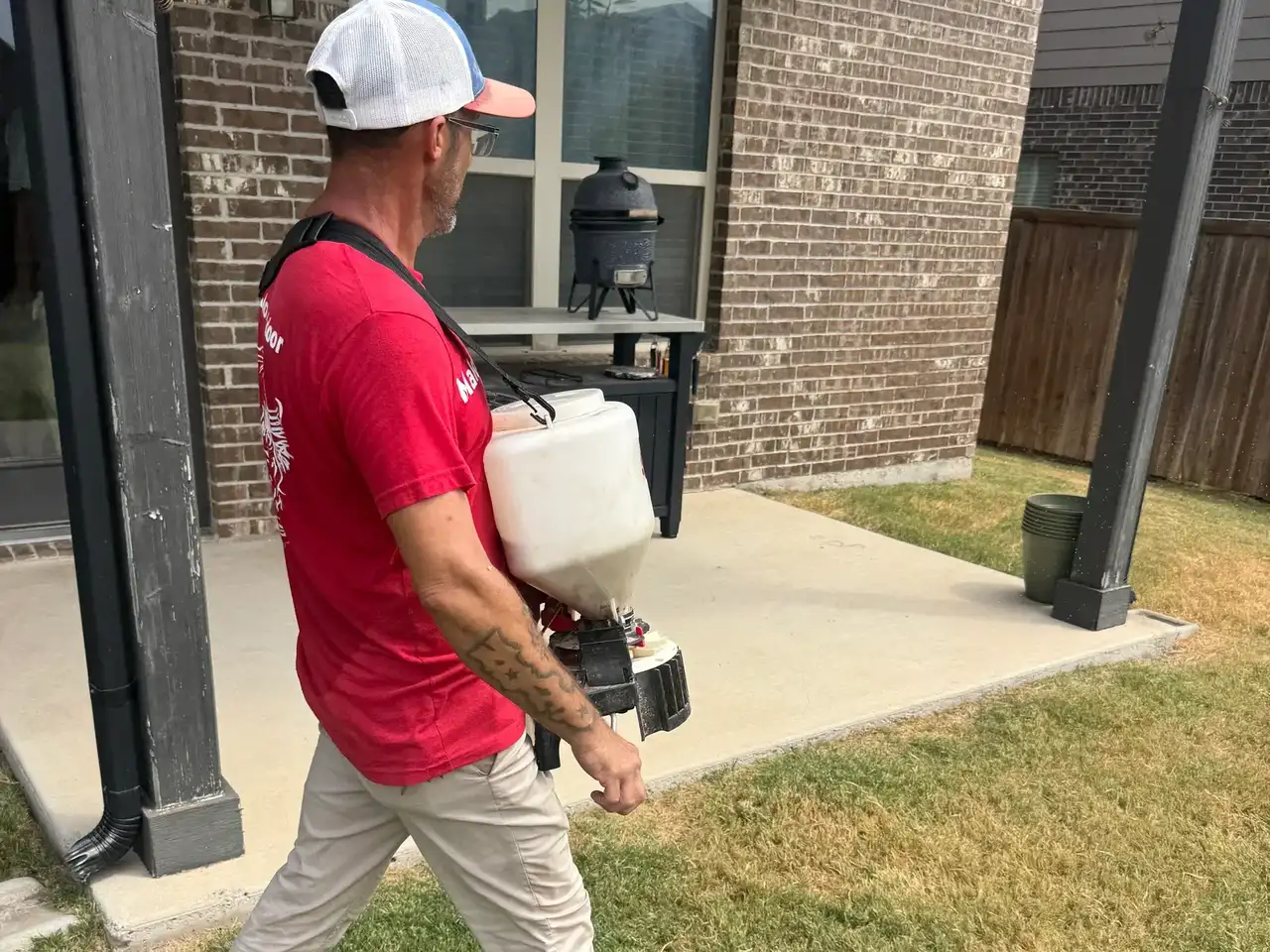
We test before we treat
Two field checks settle it: a tug at the edge of the brown to see whether the turf lifts away rootless, and a bottomless can pressed two inches into the soil and kept full of water so chinch bugs float up. Neither takes long and both are free.
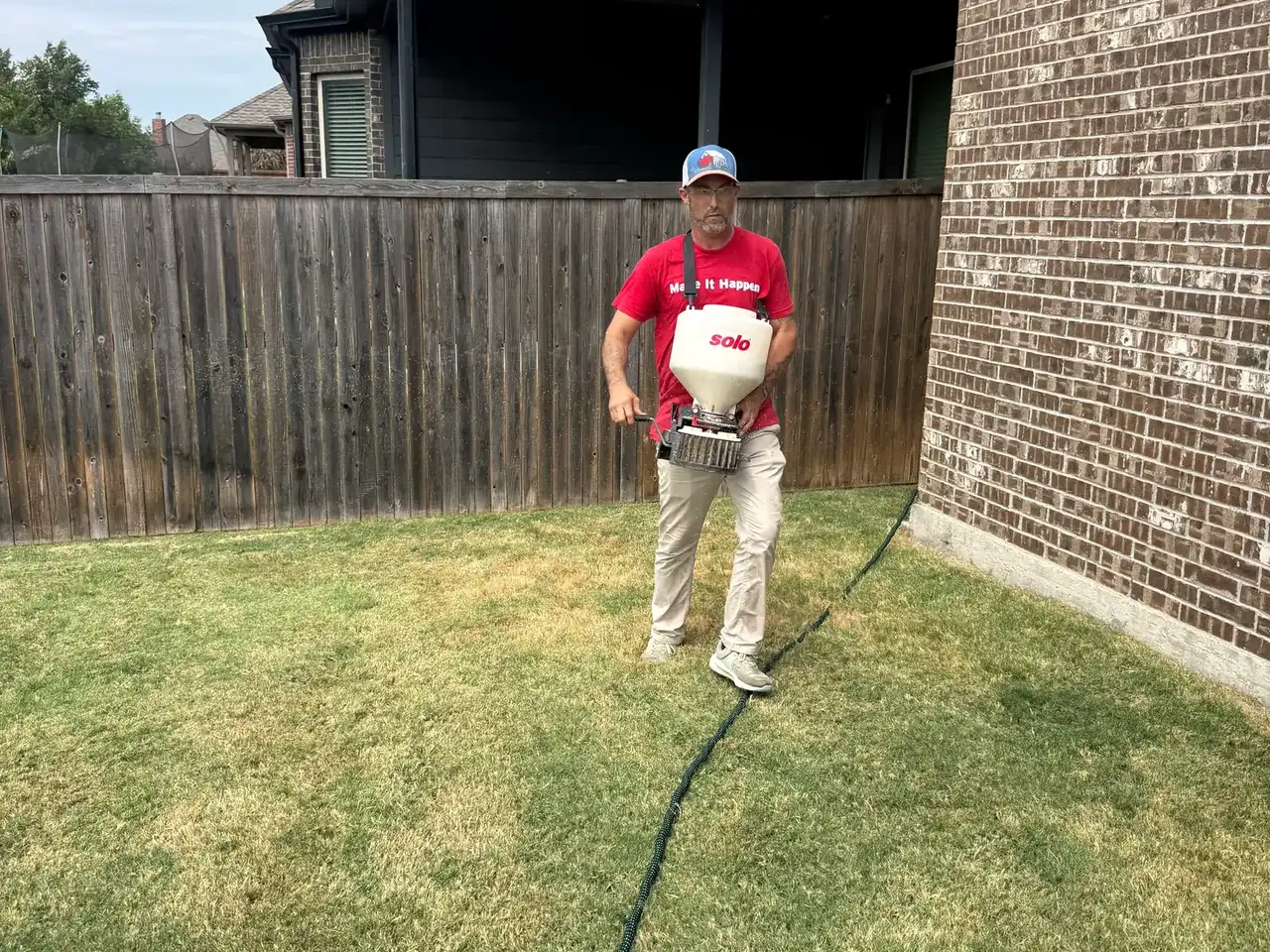
Reading the digging
Birds working a patch over and armadillos tearing up sod overnight are a grub sign rather than a separate problem, because they are after the larvae underneath. We look for that the same way we look at the turf itself.
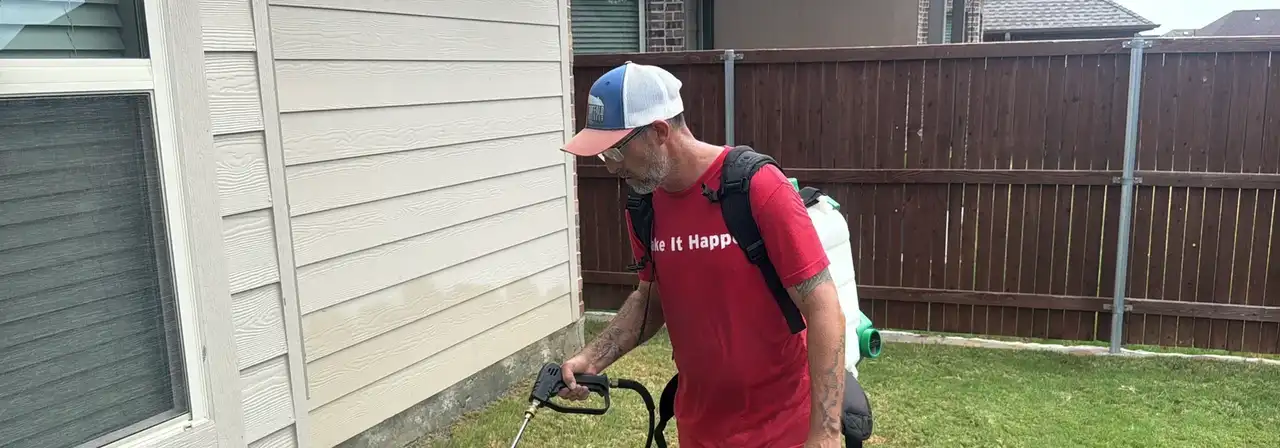
The broadcast, then the water
Granular product goes across the lawn with a spreader instead of being spot-sprayed. When grubs are the target it has to be irrigated in afterwards to reach them, and we tell you how much water before we leave.