NORTH OF THE LOOP
Fort Worth's fire ant problem is a north Fort Worth problem
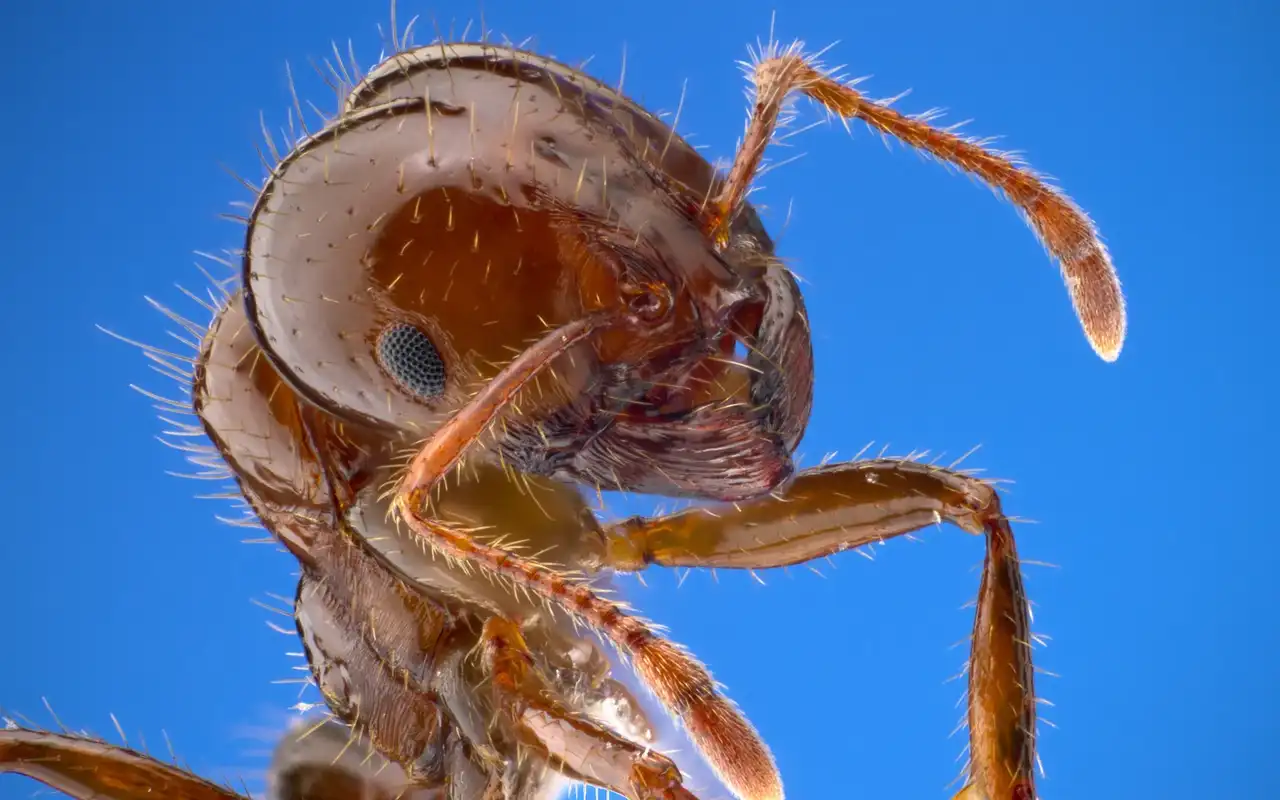
Almost all of our fire ant volume comes from the Alliance corridor and the subdivisions north of Loop 820. That ground was farmland twenty years ago, and every phase of construction since has scraped it flat, which removes the competing ants and hands the soil to fire ants before anything else can move back in.
Inside the loop it is a different city. Arlington Heights, Ridglea and the streets around TCU have sixty-year-old trees and soil that has not been turned in decades, so the calls there are roaches and scorpions from unsealed brick, with fire ants as an occasional sunny-lawn nuisance rather than the main event.
THE PRICE IN FORT WORTH
What a Fort Worth homeowner actually pays for fire ant control
You pay for the plan, and the fire ant treatment rides along at no charge. Home Defender is $30 to $54 a month and covers the perimeter, eaves and 25 feet out on four visits a year; Complete Home & Lawn Defense is $40 to $73.50 a month and treats the entire yard. The bait goes down across the whole lawn on either plan.
Both are priced by house size. A 1,900-square-foot Park Glen home in 76131 is $33 to $38 a month on Home Defender; a 3,200-square-foot Presidio build in 76177 is $38 to $46. You see the number before you commit, and you can stop any month without a fee.
Up to 1,500 sq ft
$30/mo
Older Summerfields and Fossil Creek homes in 76137
1,500 to 3,000 sq ft
$33–$38/mo
Most of Park Glen
3,000 to 4,500 sq ft
$38–$46/mo
Newer Alliance corridor builds
Over 6,000 sq ft
Quoted
Both plans
Every number on this page comes from our published price list. Fort Worth homes get the same table as everyone else; the instant quote reads your square footage and lot size and hands you your own line.
WHERE IT FALLS SHORT
Three things fire ant bait cannot promise
It cannot be fast. A drench kills what you can see in an afternoon; bait takes two to three weeks because it has to be carried to the queen and eaten. That trade is the whole reason it works, but it is a real wait.
It cannot seal the border. A north Fort Worth yard sits next to lots still being built, and new queens fly in after every summer rain. We keep the yard clear with follow-up visits, and re-treatments between scheduled visits are included, but we are not going to tell you a single application ends it.
It cannot be spread in the rain. Wet bait goes stale before the foragers find it, so we watch for a dry 24-hour window, and in a wet spring that occasionally means your visit moves by a day or two.
PLAN VS PLAN
Home Defender or Complete Home & Lawn Defense for fire ants?
For fire ants alone the two plans do the same thing: broadcast bait over the whole yard. Home Defender is the right buy for most of Fort Worth if fire ants and the perimeter pests are the problem, because it costs less and the bait coverage is identical.
Complete Home & Lawn Defense earns the extra $10 to $19.50 a month when the yard itself has other problems: chinch bugs in the young St. Augustine the Alliance builders lay, grubs, armyworms, chiggers along a Trinity greenbelt edge. If the only thing bugging you is mounds, we will tell you to take the cheaper plan.
FIRST VISIT, NORTH OR SOUTH
How the first fire ant visit goes in Fort Worth
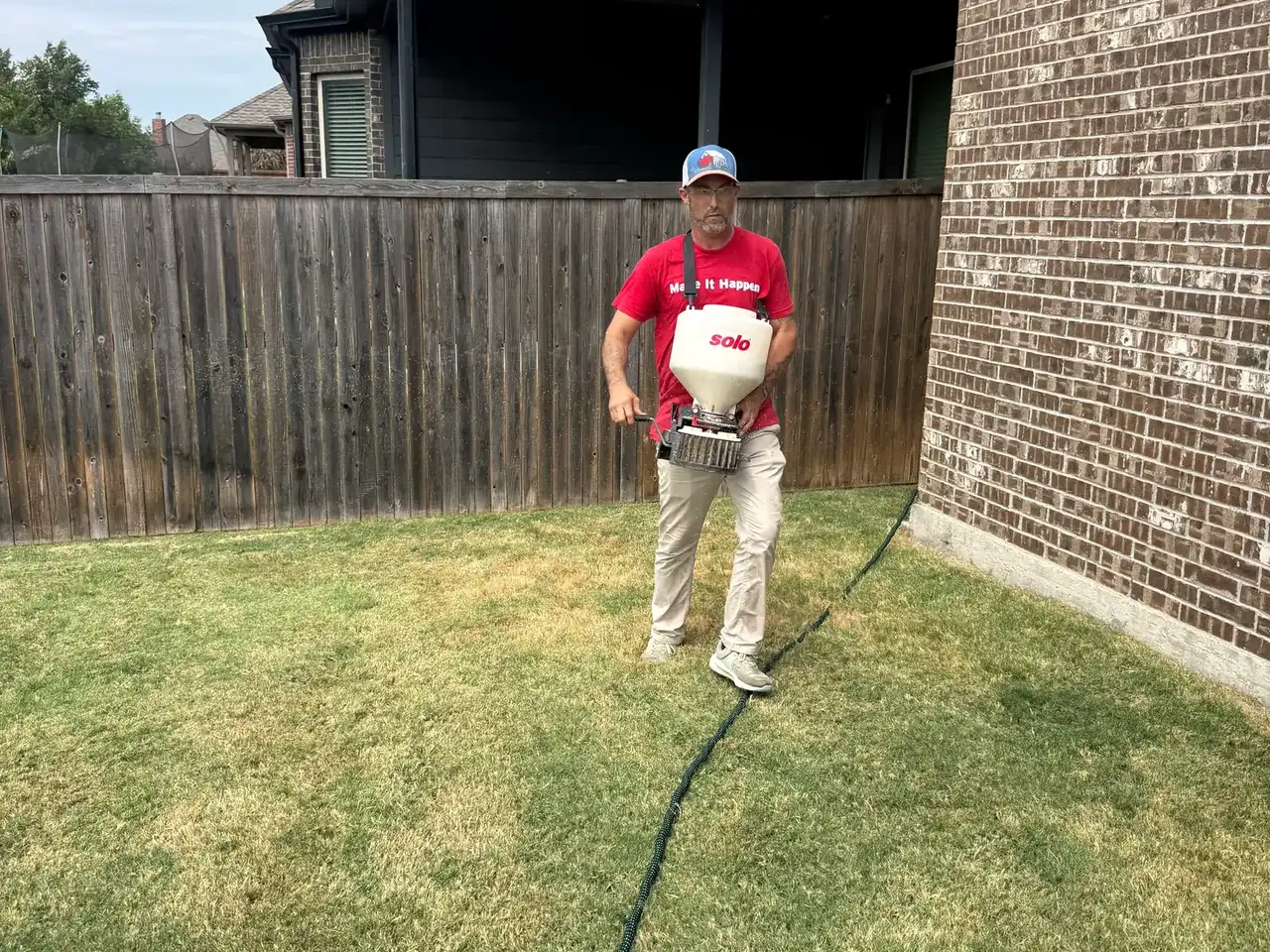
We map the sun
Fire ants build where the ground is warm and open, so we look at the sunny front lawn and the strip along the driveway before the shaded back. On a new Alliance build that is often the whole lot.
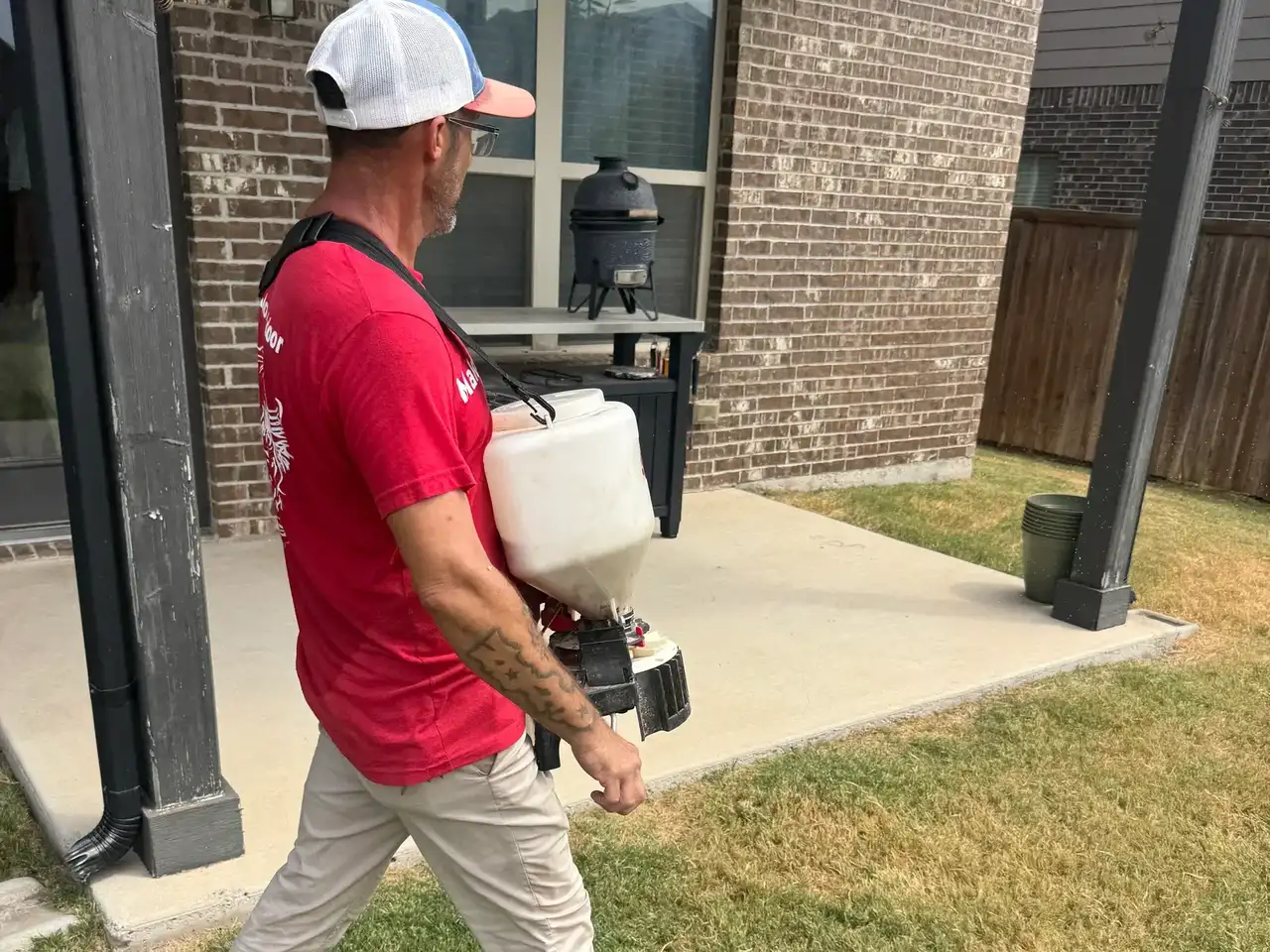
We spread, we do not drench
The bait goes on with a broadcast spreader at a light rate over every square foot of turf, including ground with no visible mound. Nothing is poured on individual mounds, because that just moves the queen.
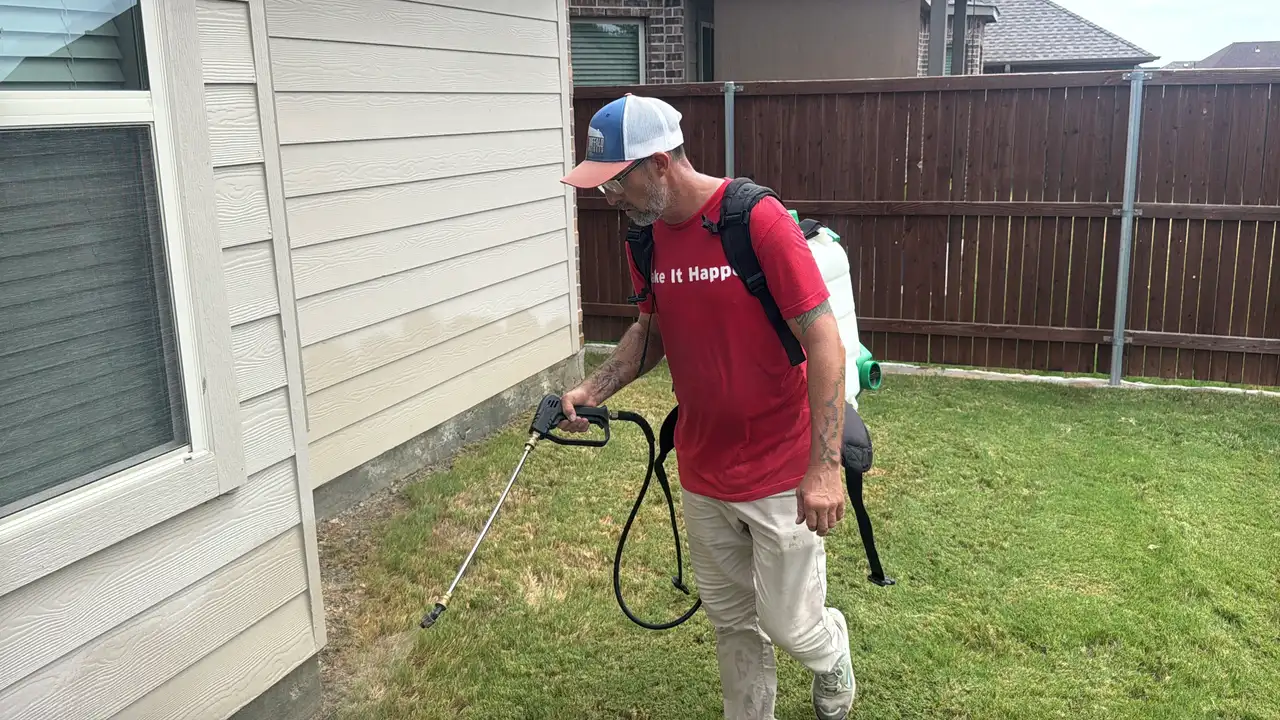
We tell you what to expect
Mounds stay active for a couple of weeks, then collapse. If a new mound pops up before the next scheduled visit, call or text and we come back at no charge.