FORT WORTH RODENTS
Where rats and mice get into Fort Worth houses
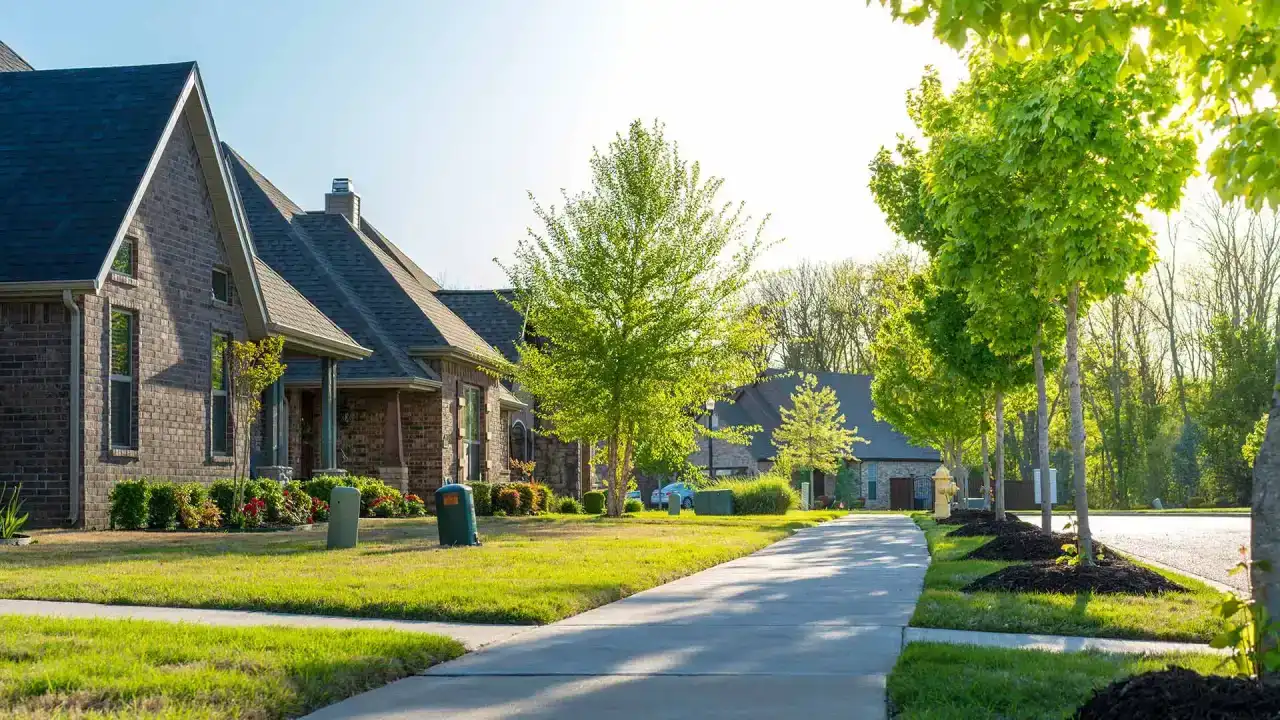
It depends on the age of the house, and Fort Worth has every age. In the older neighborhoods inside the loop, Arlington Heights, Ridglea and the streets around TCU, the brick and the weep holes are original, sixty and seventy years old, and a mortar joint that has opened up a quarter inch is all a mouse needs.
North of Loop 820, in the Alliance corridor, Park Glen and around Fossil Creek, the houses are newer but the fields next door are still being graded, and every new subdivision displaces the rats that lived in the grass. They move to the closest structure with an open garage-door corner or an unsealed pipe penetration.
Our shop is on Harmon Road in 76177, so this is the ground we know best. We inspect, close what they are using, trap the ones already in, and come back to make sure the seals held.
PRICE, PLAINLY
What rodent control costs on a Fort Worth home
Twenty-five dollars a month, added to whichever year-round plan you are on. It is never sold by itself, because the visits that check the traps and the seals are the same visits that treat the perimeter and dust the weep holes.
A 1958 brick ranch inside the loop is usually under 3,000 square feet, so Home Defender runs $30 to $38 and the total with rodents is $55 to $63 a month. A 3,500 square foot Alliance-area build is $38 to $46 on the base plan, so $63 to $71 all in. There is no startup fee, no contract and no cancellation fee, and you get the number before you commit.
Rodent add-on
$25 a month
Requires Home Defender or Complete Home & Lawn Defense
Home Defender, 1,500 sq ft or less
$30 a month
Many of the post-war houses inside the loop
Home Defender, 3,000–4,500 sq ft
$38–$46 a month
Typical of the Alliance corridor and Park Glen
Homes over 6,000 sq ft
Quoted
Call or text (817) 984-8611 for a number
Every number on this page comes from our published price list. Fort Worth homes get the same table as everyone else; the instant quote reads your square footage and lot size and hands you your own line.
WHERE IT FALLS SHORT
Three things this service does not fix
It does not fix a neighbor's problem. In the older Fort Worth blocks the houses are close together, and if the vacant house next door has an open crawl-space vent, there will be rats on the block for as long as it stays open. We can keep them out of your house; we cannot clear the street.
It does not replace maintenance. A garage door that leaves a gap at the corner, a dryer vent with no flap, a soffit that a squirrel has already opened: we will find them and show you, but repairs beyond sealing the entry points are on your side. Exclusion holds only if the door sweep gets fixed.
And it is not fast the way a spray is fast. A perimeter treatment knocks down ants in days. Rodent work takes an inspection, a sealing visit, a trapping period and a follow-up, and on a heavily used house that is several weeks of patience.
SEALING VERSUS SPRAYING
Why we do not spray for rodents in Fort Worth
Because nothing in a perimeter treatment stops a rat. Pest sprays are built for insects, and a rodent walks across a treated slab without noticing. The only thing that keeps a rodent out is a physical barrier over the hole it uses, which is why this work is mostly mesh, sealant and hardware cloth, not a tank. Copper mesh in the brick weep holes already comes with either year-round plan; the add-on covers the inspection, the rest of the openings and the trapping.
The fair comparison is the trap-only approach. Traps alone work if the entry is already closed, and on a tight new build that can be the case. On original 1950s brick in Fort Worth the entry is almost never closed, so trap-only turns into a permanent hobby. Seal first, then trap, and the trapping ends.
THE INSPECTION
How the first Fort Worth visit goes
Walk the exterior
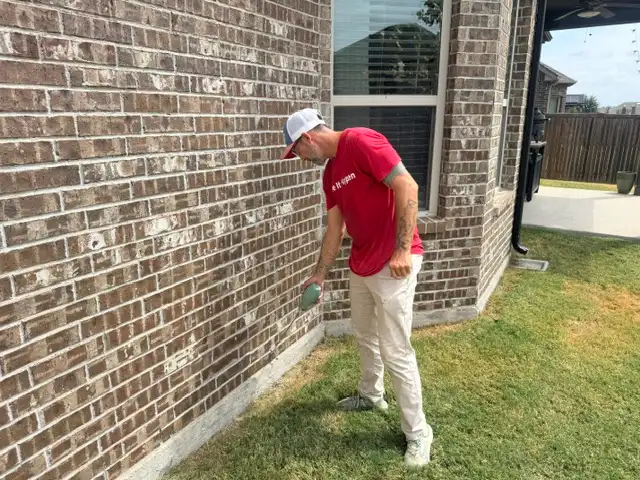
We go around the whole foundation looking for rub marks, droppings and gnawing at weep holes, garage corners and utility penetrations. On the older brick we probe the mortar joints too, because a joint that has crumbled is as good as a hole.

Check the accessible interior
The attic, the garage and under the sinks tell us where the runways are. Traps and tamper-resistant stations go on those runways, not in the middle of the pantry floor where you happened to see the droppings.
Seal and schedule the follow-up
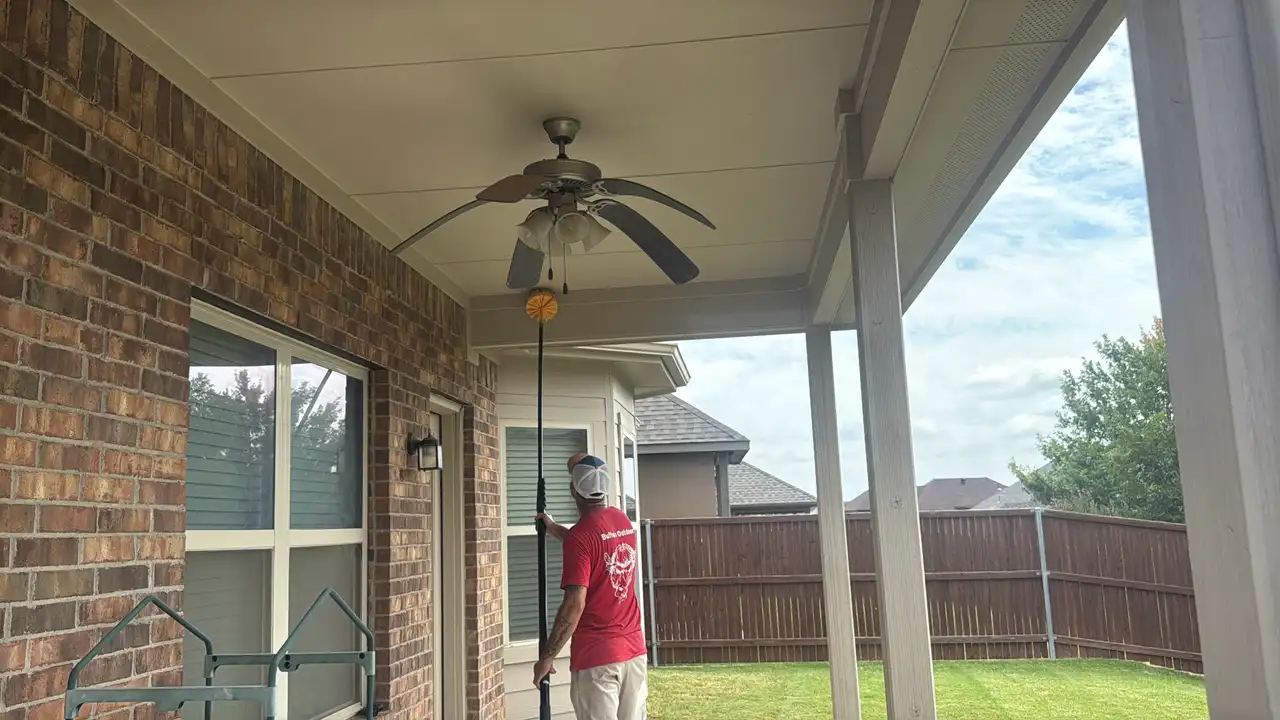
The openings in use get closed the same day where possible, weep holes packed with copper mesh and penetrations sealed. Then we set a follow-up to check the catches and confirm nothing has chewed back through.