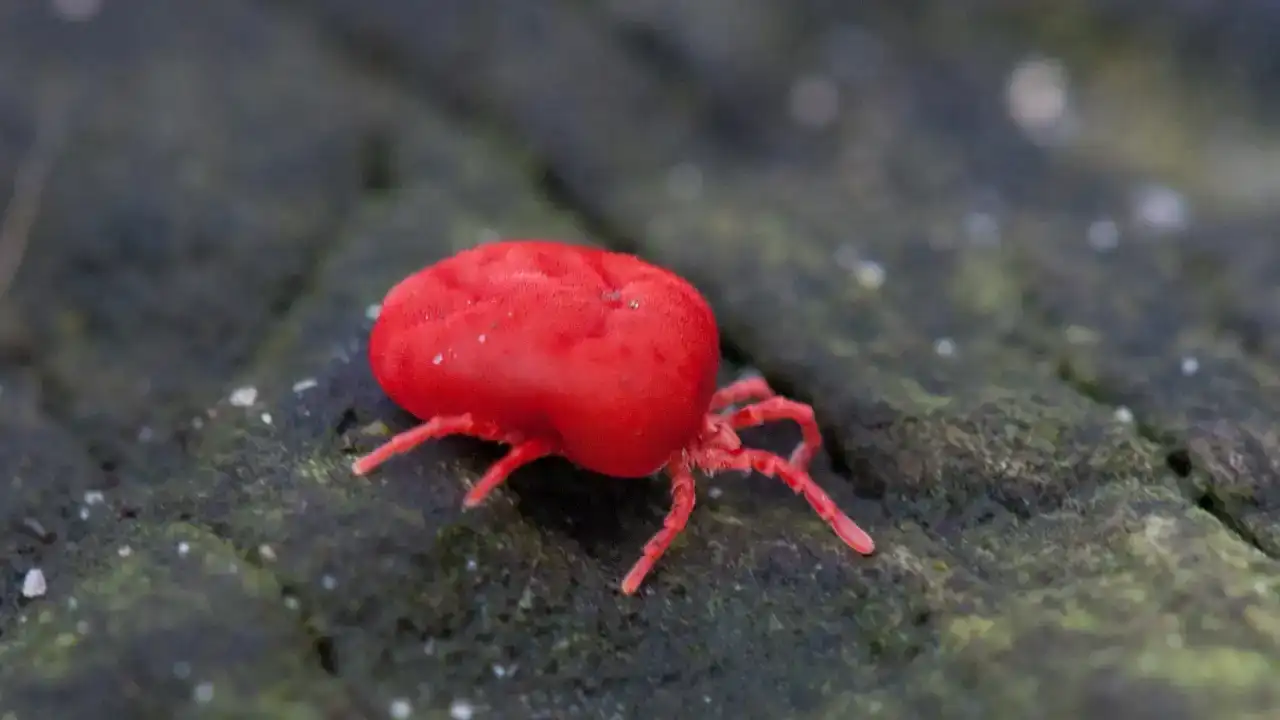
A YARD PEST, NOT A HOUSE PEST
Where Haltom City chiggers actually come from
From the ground outside, and usually from one particular part of it. Big Fossil Creek and the smaller channels feeding it run through Haltom City, and the tall grass along them is where the larvae are produced, after which they spread into whatever mowed lawn touches the corridor. A drainage easement or a vacant lot left to grow does the same job on a smaller scale.
Seventy years of tree growth is the other half of the story. The houses here went up between the 1950s and the 1970s, and the trees planted with them now shade enough ground to keep leaf litter damp from one autumn to the next, which is where a chigger survives the winter. It is also why the biting starts in one fixed corner of a Haltom City yard year after year.
OLDER HOMES, LOWER END
What it costs to have chiggers handled on a Haltom City lot
Less than in most towns we cover, because the price tracks the size of the house and Haltom City houses are modest. A home under 1,500 square feet pays $40 a month for Complete Home & Lawn Defense and one between 1,500 and 3,000 pays $40 to $51.50, the plan that treats the lawn end to end rather than a ring near the slab. Chiggers are covered inside it, with no line item to add.
Home Defender runs $30 to $38 a month on those same houses and stops twenty-five feet from the foundation. It is a real option on the tighter lots here, where that ring takes in most of the grass, and it carries the same weep-hole work: Delta Dust at every visit and copper mesh in the holes, standard rather than quoted, which is not how this market usually prices it. What it will not do is reach a fence line on Big Fossil Creek.
Under 1,500 sq ft
$40 a month
Lawn treated fence to fence
1,500 to 3,000 sq ft
$40 to $51.50 a month
The bulk of the 1950s and 60s stock
Home Defender, under 1,500 sq ft
$30 a month
Ring only; fine away from the creek
3,000 to 4,500 sq ft
$51.50 to $62 a month
Larger rebuilds and big additions
Every number on this page comes from our published price list. Haltom City homes get the same table as everyone else; the instant quote reads your square footage and lot size and hands you your own line.
SAYING THE QUIET PART
The limits worth knowing before you spend the money
Product does not work through a mat of old leaves, and older Haltom City yards have plenty of them. The larvae sit at the soil under the litter while the application sits on top, so a corner that never gets raked keeps producing bites however many visits it has had. Clearing that layer is the homeowner's share, and it gets said at the first visit rather than after the second complaint.
The creek corridor stays untreated. Public ground along Big Fossil Creek and the channels behind some Haltom City blocks is not ours to spray, and it keeps making chiggers into August. Treating the lawn cuts the population you actually walk through, but no application seals a boundary.
There is also a decent chance this is not your pest. In a town of older houses, bites get blamed on chiggers that are really fleas off a pet, mosquitoes in the shade, or mites out of a bird nest in an eave. Scattered welts on bare forearms are not this; a ring of them at every elastic band a few hours after yard work is.
SEALING VERSUS SPRAYING
Why the exclusion work that solves most calls here misses this one
Most pest problems in Haltom City get solved at the wall. The brick is old enough to have opened up, so copper mesh in the weep holes, a fresh door sweep and sealed utility penetrations are what stop rodents and scorpions, and all of it comes with both year-round plans instead of being quoted extra. None of that does a thing about chiggers, which never try to live indoors.
This pest is beaten outdoors, with a mower and with product on turf. Cut the grass along the creek or the easement short and hold it there into August, then clear the leaf litter instead of pushing it into the fence corner, and most of the habitat is gone for free. The treated lawn deals with what is already breeding, and the three-foot band at each door stops the survivors riding in on a sock. Should they come back early, the return is part of the plan.
FIRST CALL, 76117
What the first chigger visit covers at a Haltom City address
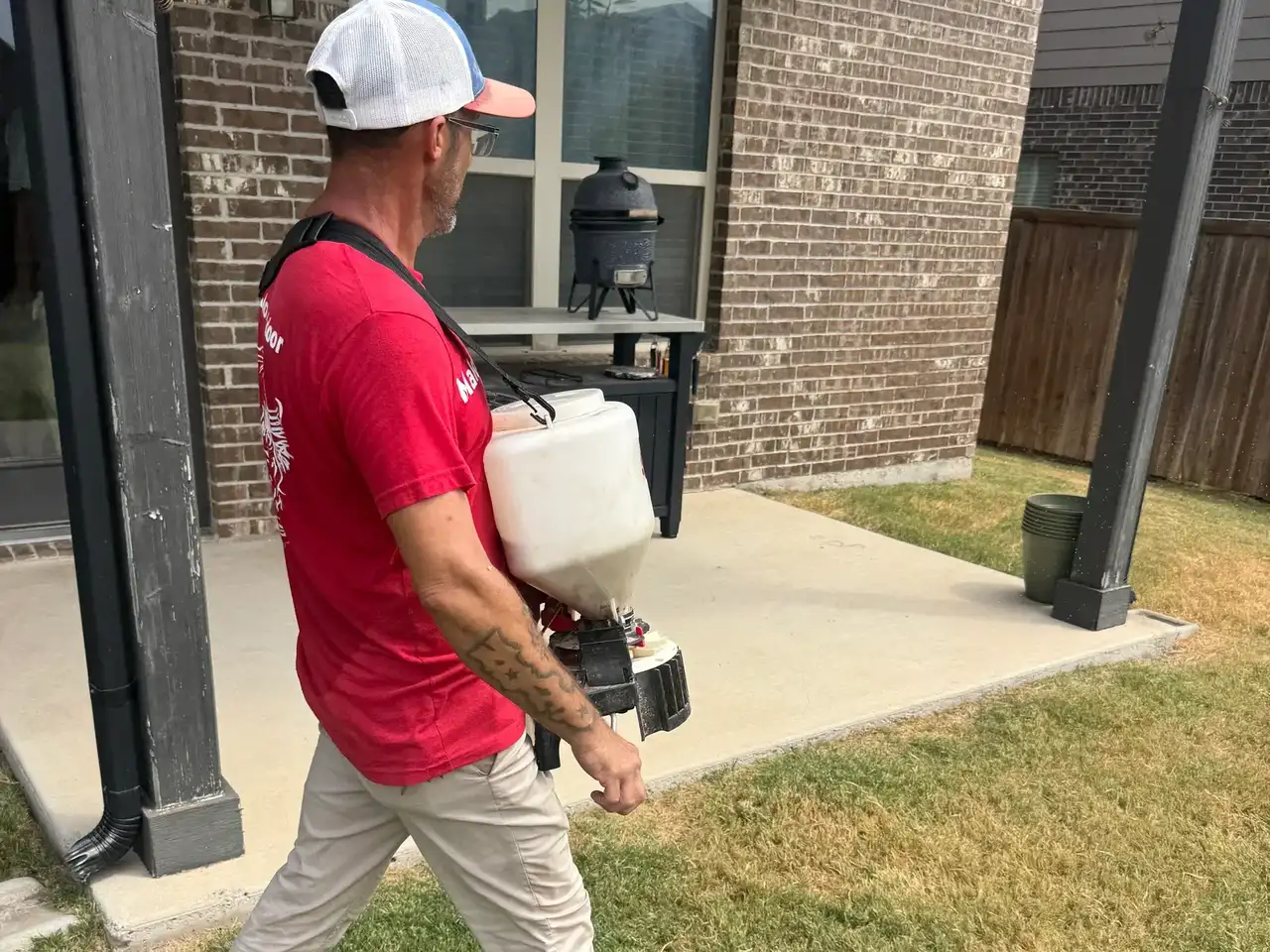
Starting at the low ground
The technician goes to whichever side of the lot faces the creek, a channel or an unkept neighboring parcel, then to the deepest shade under the trees. Those two spots are usually the whole problem, and they take the heaviest application.
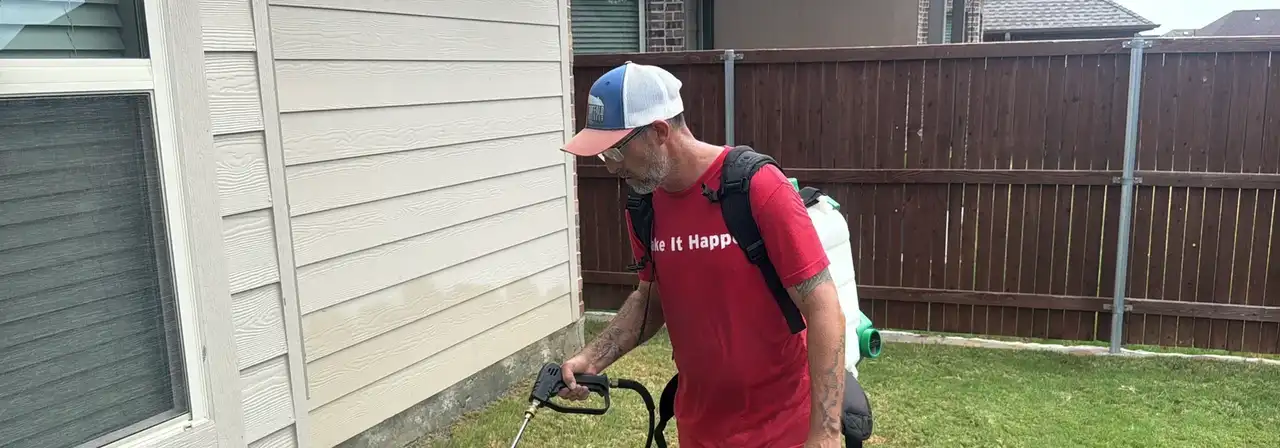
The litter conversation
If there is a bed of leaves under the canopy it gets raised before anything is applied, since spraying the top of it treats the wrong layer. We would rather ask you to clear it than sell you a visit that was always going to disappoint.
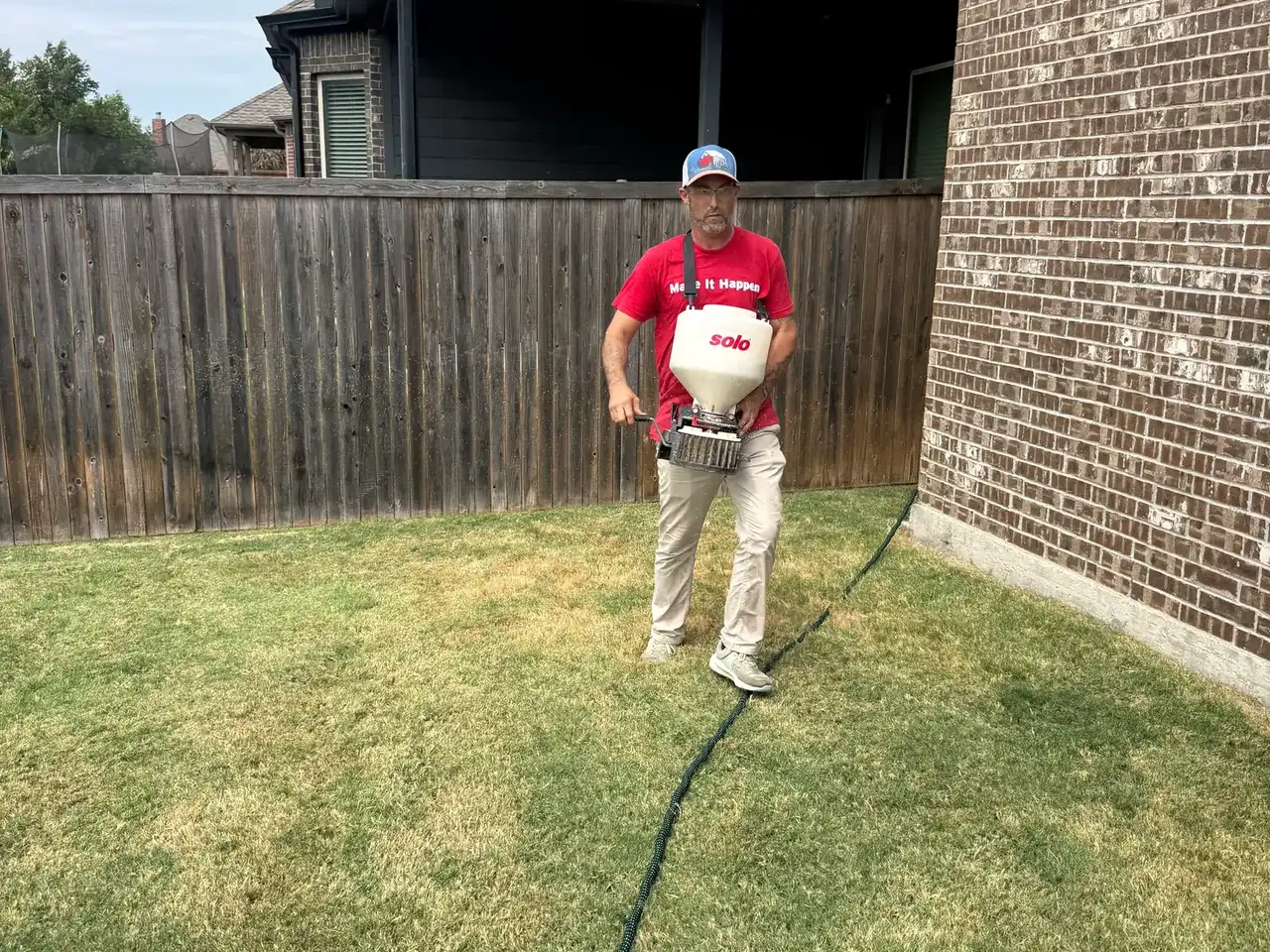
Thresholds and entry points
Doors, the garage and any patio slider each get three feet of treated ground so chiggers picked up in the yard stop outside the house. That same pass puts dust and copper mesh into the weep holes, which matters far more for rodents on brick this age than it does for this pest.