OLD SOIL, WET CREEK
Where the fire ants in Haltom City actually come from
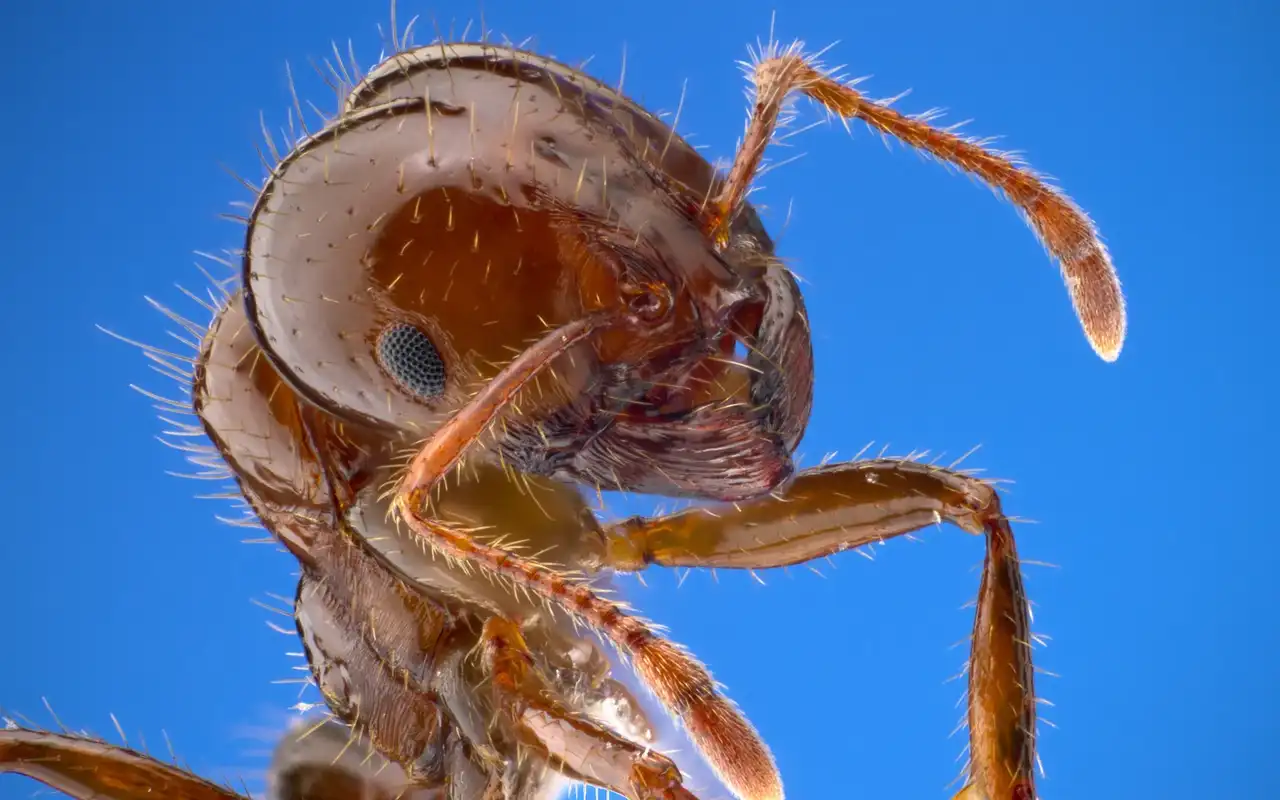
Mostly from low ground rather than from your lawn. The housing here went up between the 1950s and the 1970s, and six decades of undisturbed soil under that brick is crowded with ant species that arrived first and hold their territory. The floodplain along Big Fossil Creek and its tributaries is the opposite kind of ground: it floods, it dries, it is disturbed over and over, and fire ants beat everything else at recolonizing that cycle.
So the pattern here runs by elevation and by sunlight. Streets sitting above the creek carry a few mounds in the open front lawns, while properties down near the bottom get a fresh wave every time water comes up and goes back down. Both get the same treatment. The one by the creek just leans harder on the follow-up visits.
PRICED OFF THE HOUSE
What a Haltom City homeowner pays, and for what
Nothing for the ants themselves. Broadcast baiting is built into Home Defender and into Complete Home & Lawn Defense, and those are priced by the square footage of the house. Post-war homes in Haltom City are mostly small to middling, so the bulk of them sit at $30 a month up to 1,500 square feet, or $33 to $38 a month from there up to 3,000.
The same two sizes on Complete Home & Lawn Defense come to $40 and $40 to $51.50, which adds whole-yard turf treatment to the perimeter work. Retreatments between your scheduled visits cost nothing, one interior treatment is available if you need it, and you can end the service without a fee.
1,500 sq ft or less
$30/mo
Much of the original housing stock
1,500 to 3,000 sq ft
$33–$38/mo
The larger post-war homes
Add the whole yard
$40–$51.50/mo
Complete Home & Lawn Defense, same sizes
Every number on this page comes from our published price list. Haltom City homes get the same table as everyone else; the instant quote reads your square footage and lot size and hands you your own line.
WHAT WE CANNOT PROMISE
Three straight answers about bait in a creek-side town
Rain will undo our timing now and then. Bait needs roughly 24 dry hours after it goes down so the foragers can collect it, and a North Texas spring does not always hand us that, which means applications move to fit the forecast rather than the calendar.
The bait is slow by design too, and that feels wrong when the mound is beside the back step. Two to three weeks is the honest window for a colony to carry the food down and lose its queen. Anything promising faster than that is killing workers while the queen quietly relocates.
And it will not shut down what is coming through the walls. On sixty-year-old brick, ants, roaches and scorpions get in at worn door sweeps, cracked mortar and open weep holes, and closing those is a separate piece of work. On an older Haltom City house, that piece usually matters more than anything happening on the lawn.
DRENCH OR SPREADER
Why we never pour anything on the mound
A drench is satisfying and largely pointless. It kills the workers on the surface and floods the top chamber, while the queen, the only ant that decides whether the colony lives, is often deep enough to ride it out and simply move house. The nest reappears a few feet away and the homeowner concludes that nothing works.
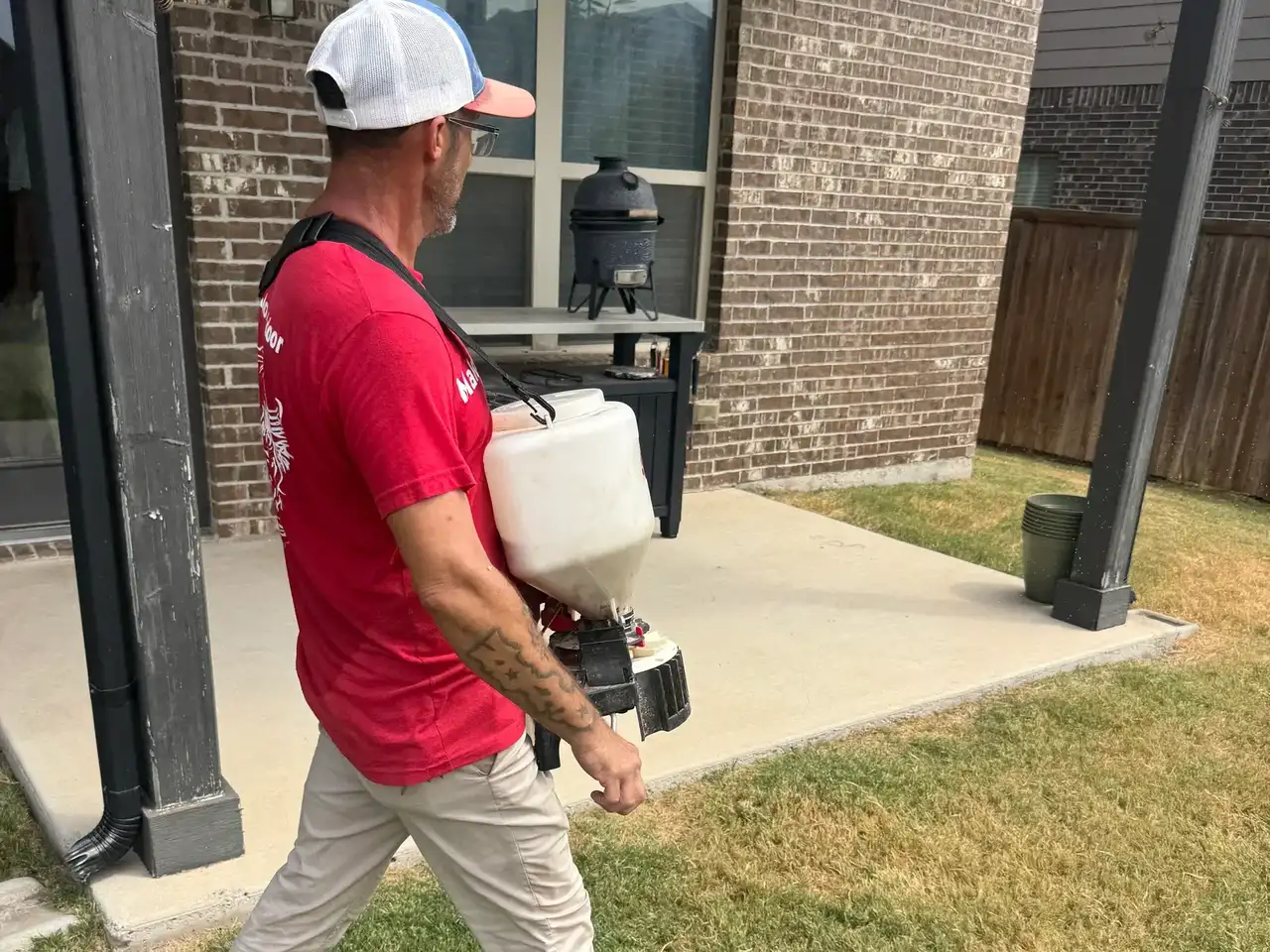
Bait reverses the order of events. Foragers treat the granules as a find, carry them below and feed the queen, so the colony collapses from the middle outward, and because the spreader covers the full lawn it also reaches nests nobody has spotted. Slower, far less dramatic, and the reason the mounds are not simply rebuilt.
ON AN OLDER LOT
The order we work in at a Haltom City house
Sun, slope and disturbance
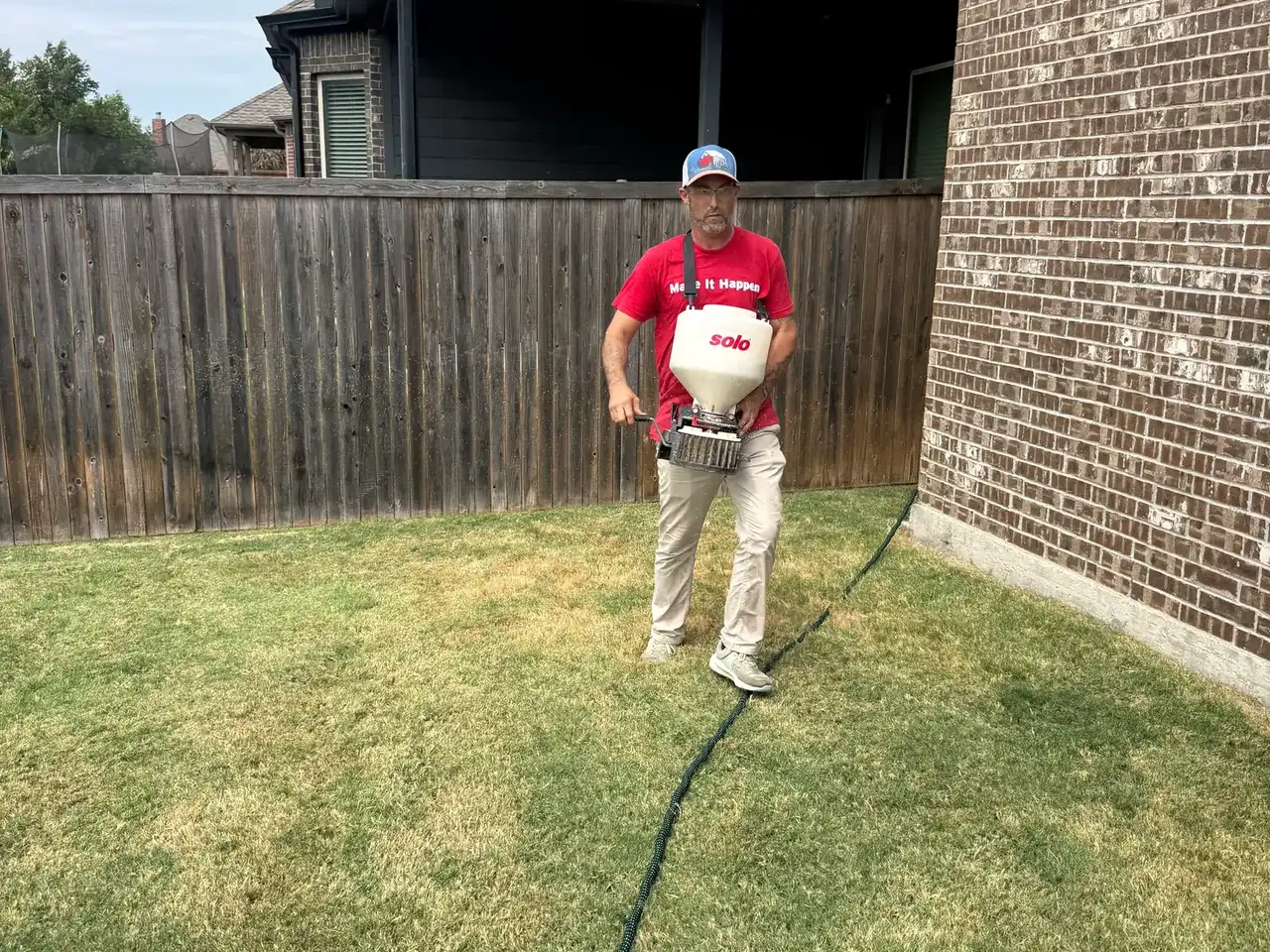
We look for full-sun turf, low ground that collects water, and anything recently dug or re-sodded, because between them those three account for most of the mounds in this town. Deep shade over settled soil rarely produces any, and we are not going to pretend to be finding them there.
The spreader goes everywhere
Bait is broadcast across the whole lawn rather than tipped onto the domes. The rate is light enough to vanish into Bermuda or St. Augustine, and the colonies you have never walked past get exactly the same coverage as the one by the driveway.
Then the sixty-year-old brick
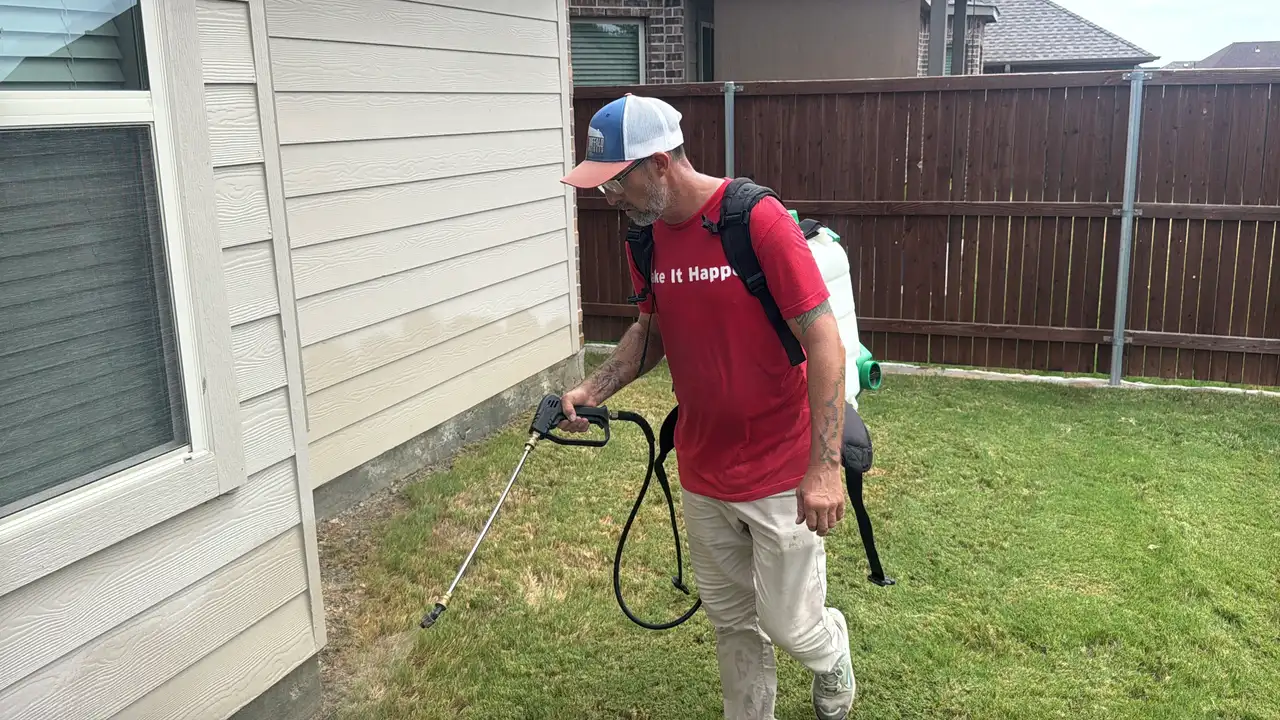
Because this work rides on a year-round plan, the same visit treats the foundation band and eaves and dusts the weep holes with Delta Dust. The permanent fix goes in at the same time: copper mesh packed into each hole, at no charge beyond the monthly price, which is not how most of this market prices that job.