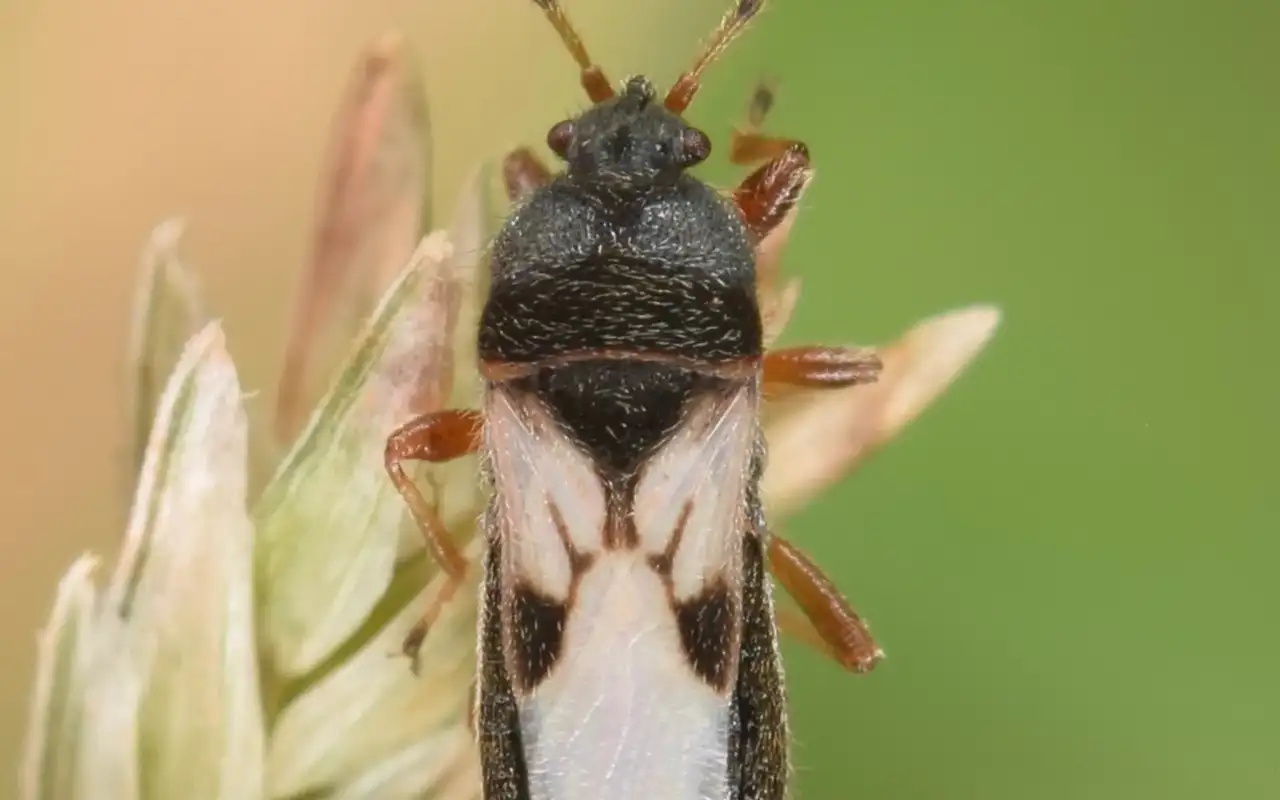
READ THE TURF FIRST
What is actually eating a Haltom City lawn?
Start with the age of the grass. Most lawns here went down with the houses between the 1950s and the 1970s, which means deep-rooted Bermuda and St. Augustine sitting under trees that have had sixty years to spread out. That combination feeds grubs and armyworms far more often than chinch bugs, because chinch bugs want hot, open, shallow-rooted turf and there is not much of that left on these streets.
Grubs are beetle larvae working two to four inches down on the roots, so the first symptom is not colour but grip: the grass goes spongy underfoot and peels up in a sheet. Armyworms do the opposite and work in plain sight, arriving as a moving front that can scalp a lawn between one evening and the next. Along the Big Fossil Creek corridor there is more unmowed grass for them to build up in before they cross a Haltom City fence.
PRICED OFF THE HOUSE
What the lawn coverage adds to a Haltom City bill
Turf insects are not sold on their own; the treatment travels with a year-round plan, and the plan is priced on the square footage of the house rather than the yard. Complete Home & Lawn Defense covers the entire lawn at $40 to $73.50 a month. Home Defender runs $30 to $54 a month and carries the applicable lawn treatment about 25 feet out from the foundation.
Post-war houses here are mostly modest, so a lot of them land in the first two rows of the table below. You get the number before agreeing to anything, there is no startup charge on a standard plan, and the instant quote at /instant-quote prices your square footage without a phone call.
House under 1,500 sq ft
$40/mo
Complete Home & Lawn Defense, whole lawn
House 1,500 to 3,000 sq ft
$40–$51.50/mo
Where most Haltom City homes land
Same house, Home Defender
$33–$38/mo
Turf treated about 25 feet out
Smallest houses, Home Defender
$30/mo
The floor of our year-round pricing
Every number on this page comes from our published price list. Haltom City homes get the same table as everyone else; the instant quote reads your square footage and lot size and hands you your own line.
WHERE IT FALLS SHORT
Three problems an insecticide cannot solve on these streets
It cannot put roots back. Killing the grubs stops the damage spreading, but a patch already chewed loose still has to grow a new root system, and the worst of it usually needs sod. We would rather point that out on the first visit than let you expect a green lawn in three weeks.
It does nothing for shade. Under sixty-year-old canopy the grass is thin because it is short of light, and no product on our truck changes that. Raising the mowing height, thinning limbs or giving up and planting a bed is the honest fix, and none of those are billable to us.
It is also the wrong answer for disease. Brown patch and dollar spot show up in the same damp weeks as the insects and look close enough to fool almost anybody. If our checks turn up nothing feeding in the soil, we say so and leave without writing up an application.
THE RING VS THE WHOLE YARD
Which plan makes sense on a post-war lot
Walk 25 feet off your back wall before you choose. Home Defender already treats the turf inside that line, and on the compact lots that make up much of Haltom City it reaches a good share of the mowed grass. If the spongy patches sit inside the ring, you would be paying for coverage you already have.
The upgrade to Complete Home & Lawn Defense costs $10 to $19.50 a month more and earns it when the trouble is beyond that line: a deep lot running back toward a creek easement, a long side yard, or a front lawn that has been going backwards for two summers. It also puts fire ant bait across the entire yard instead of the band, which matters less on settled soil than it would in a new subdivision.
ON THE FIRST VISIT
How we work out which insect you have
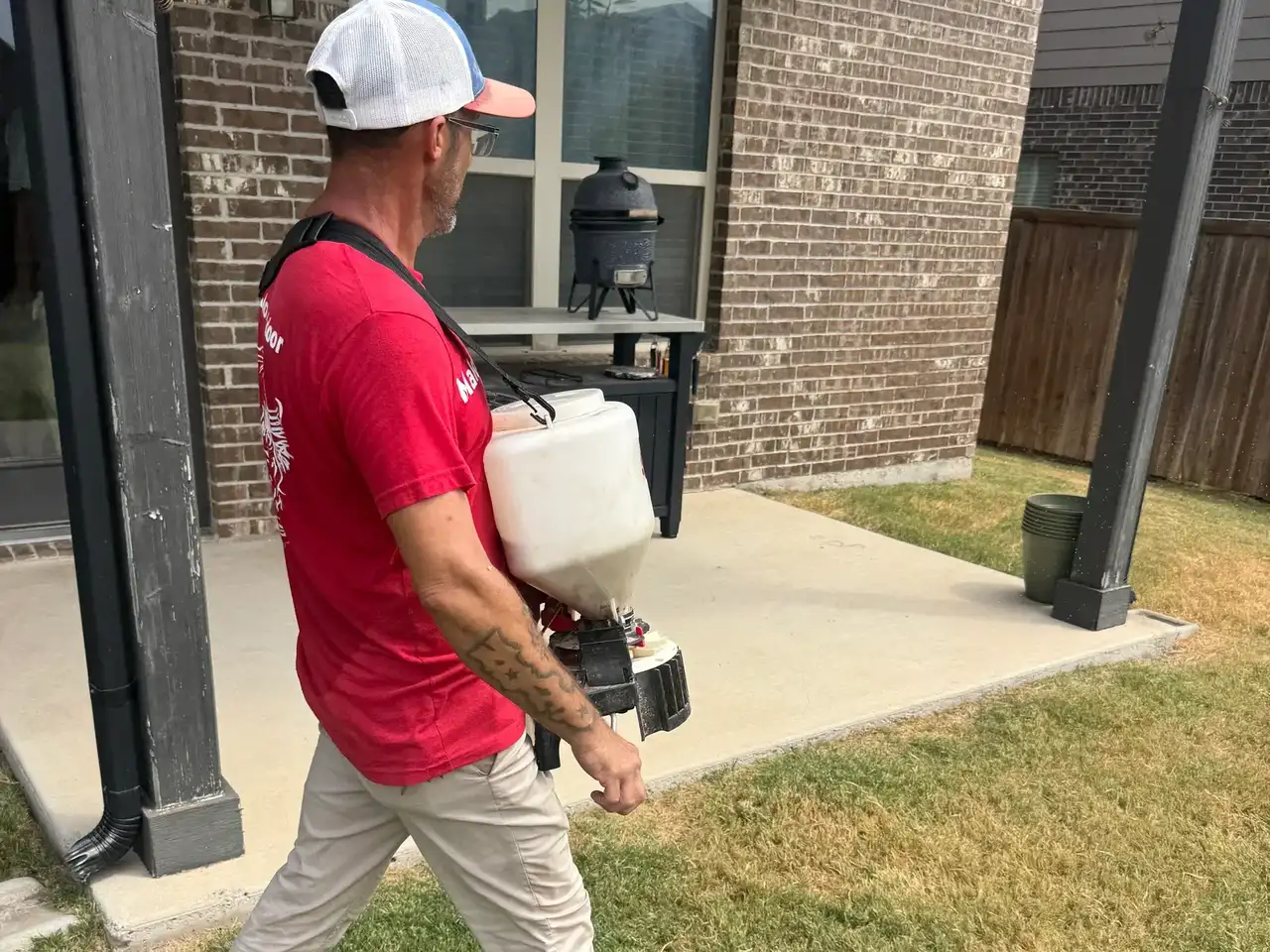
Lift before we treat
The opening move on an old lawn is to grab the grass at the edge of the damage and pull. Turf with roots fights back; turf that grubs have been under comes away like a loose rug. We fold back a square foot and count, and under five larvae is not worth an application.
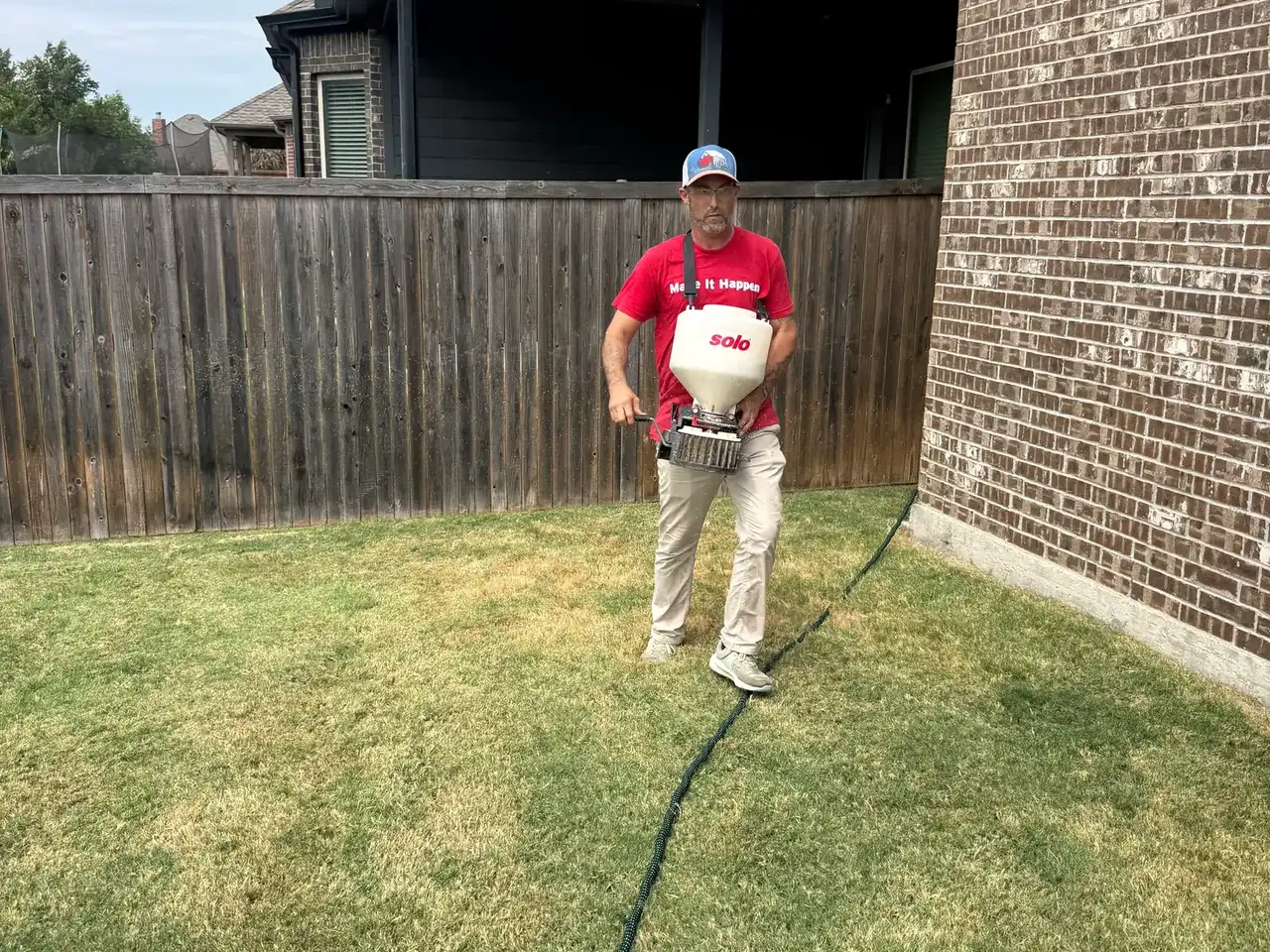
Look at any new sod
Wherever a strip was replaced in the last season or two, especially a sunny piece next to the drive, we check it separately. That is the only place in a Haltom City yard where we expect chinch bugs, and a can of water sunk into the soil at the green-to-brown line answers it in about ten minutes.
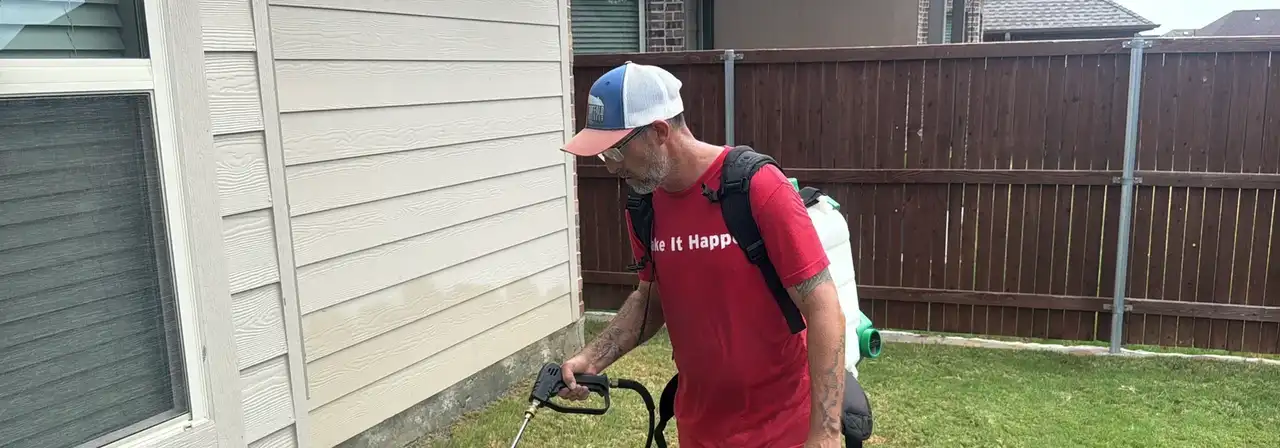
The house gets done too
Since the lawn work rides on a year-round plan, the same trip treats the foundation band and eaves, dusts the weep holes with Delta Dust and puts fire ant bait down. On brick that has been standing since the Eisenhower years, that walk-around usually turns up more than the lawn does.