SEVENTY YEARS OF BRICK
Why these houses let so much in
It is the age of the wall, not the amount of product. Most of Haltom City went up between the 1950s and the 1970s, and six or seven decades of clay moving under a slab opens mortar joints, drops thresholds out of true and widens the gaps where pipes and cables come through. Ants, crickets, silverfish, roaches and scorpions all travel through openings like those.
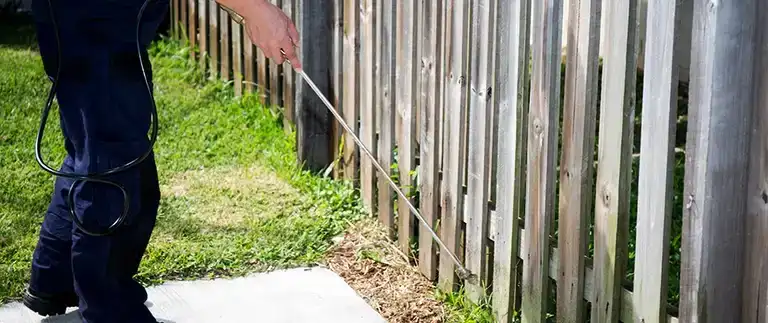
Home Defender is built around that reality. Four visits a year put a liquid band on the foundation and three feet up the wall, dust into every weep hole, a web-pole sweep across the eaves and soffits, and a granular ring roughly 25 feet out into the yard. On a house this age, the dusting and the sweeping do more of the work than the lawn side of the visit does.
WHAT IT RUNS IN 76117
The monthly figure for a Haltom City home
Square footage of the house is the only input. Post-war floor plans around here are modest, so the majority of homes fall between $30 and $38 a month, and that $30 floor is a real number rather than a teaser rate.
The same figure covers return visits between the scheduled four, one interior treatment if you need it, and fire ant treatment as part of the plan instead of a separate line item. Nothing has to be signed, there is no startup fee, and stopping costs nothing.
1,500 sq ft or less
$30 a month
A large share of the older housing
1,500–3,000 sq ft
$33–$38 a month
The bigger 1960s and 1970s plans
3,000–4,500 sq ft
$38–$46 a month
Later additions and remodels
Interior treatment
Included once
If something already got past the brick
Every number on this page comes from our published price list. Haltom City homes get the same table as everyone else; the instant quote reads your square footage and lot size and hands you your own line.
THE UNCOMFORTABLE PART
What four visits a year will not solve here
A barrier cannot outperform an open door. If a Haltom City house has a threshold you can see daylight under, a garage-door corner that no longer seals, or a gap around a utility penetration, insects and mice keep walking in between treatments. We will show you what needs fixing, but the repair belongs to you or a handyman, not to a sprayer.
The creek side of town keeps its own schedule. Big Fossil Creek and the tributaries feeding it hold damp, brushy ground where mosquitoes, ticks and chiggers breed no matter what happens along your foundation. Those pests belong to the 21-day mosquito, flea and tick program, which is priced on lot size and is not this plan.
Fire ant bait works slowly by design. It is broadcast across the yard so foragers carry it home, rather than drenched mound by mound, and collapsing a colony that way takes days to weeks. Fresh mounds after a spring storm are ordinary on settled clay, and retreating them costs you nothing.
SPRAY MORE OR SEAL UP
Sealing the house versus treating around it
On older brick the two are not rivals, they are halves of the same job. Sealing removes the invitation: copper mesh packed into the weep holes, a fresh door sweep, caulk at the penetrations. Treating handles the population already living in the mulch, the leaf litter and the shaded ground outside the wall.
If you are only going to do one thing on a house this age, seal first, and do the weep holes yourself if you are handy, because it is straightforward work. If you would rather it was done for you, copper mesh is an add-on quoted on its own, and the Delta Dust that goes into those holes on every visit is part of the plan regardless.
DAY ONE IN HALTOM CITY
How the first treatment actually goes
A slow lap of the wall
The technician circles the house before touching a sprayer, reading the bottom course of brick, the door frames, the vents and the utility penetrations. On a seventy-year-old house that lap is where the plan is genuinely decided.

Band, sweep and dust
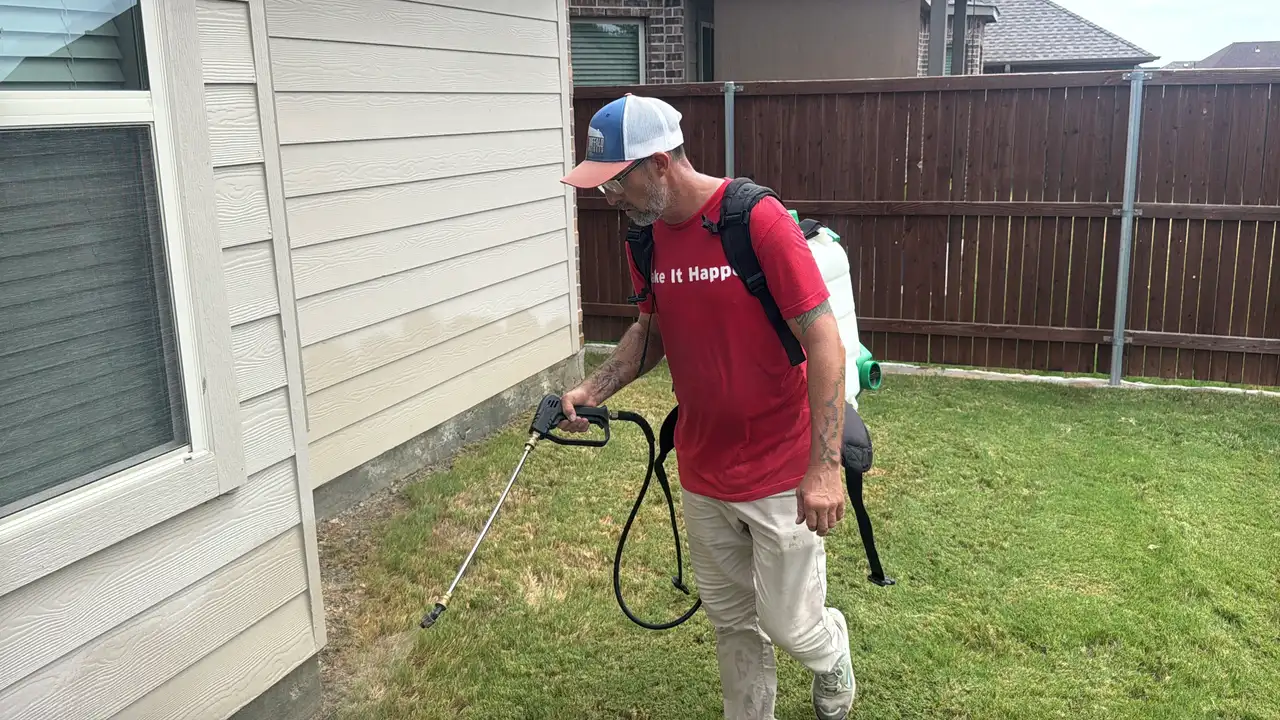
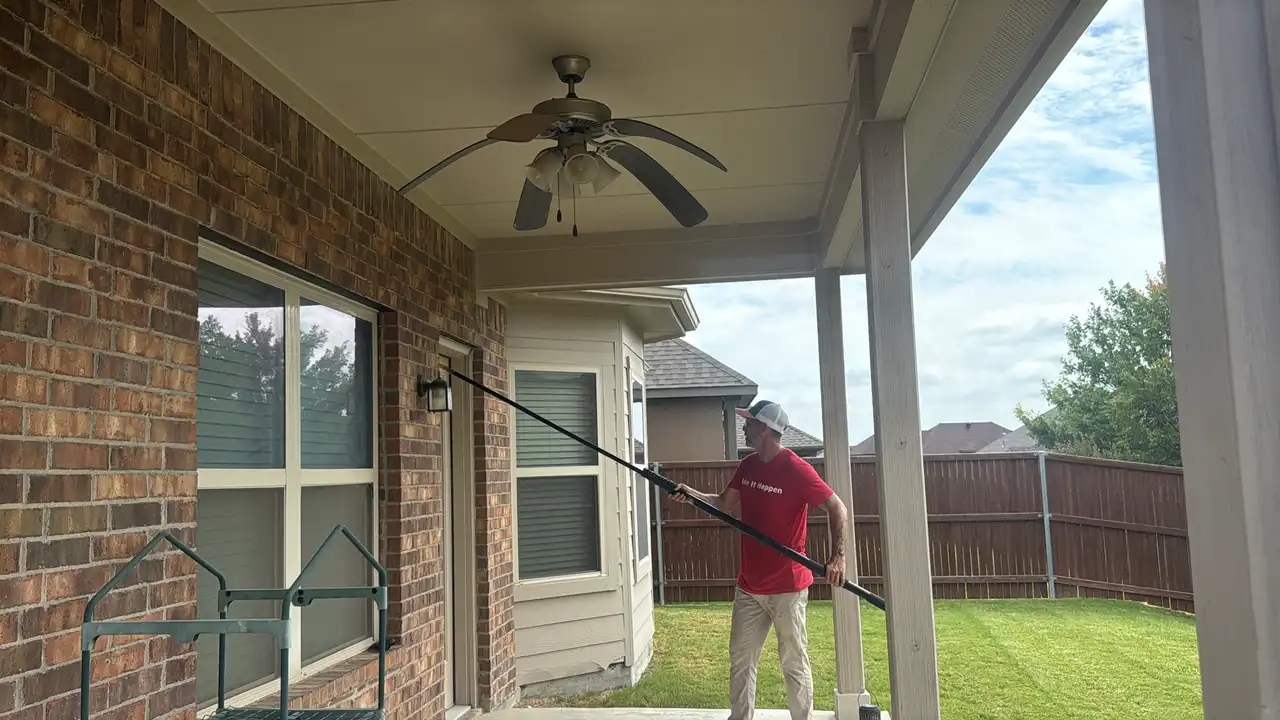
Then liquid goes down along the slab and up the wall, the web pole clears webs and wasp starts out of the eaves and soffits, and Delta Dust goes into each weep hole along the bottom course. That sequence repeats on every visit, not only the first.
Out into the yard
A granular barrier is broadcast about 25 feet out through the turf and the beds, and fire ant bait goes across the yard on the same trip. You get a text when the technician is on the way, and gate access is the only thing needed from you.