OLDEST BRICK ON THE MAP
What makes 1950s Haltom City brick so easy to get into?
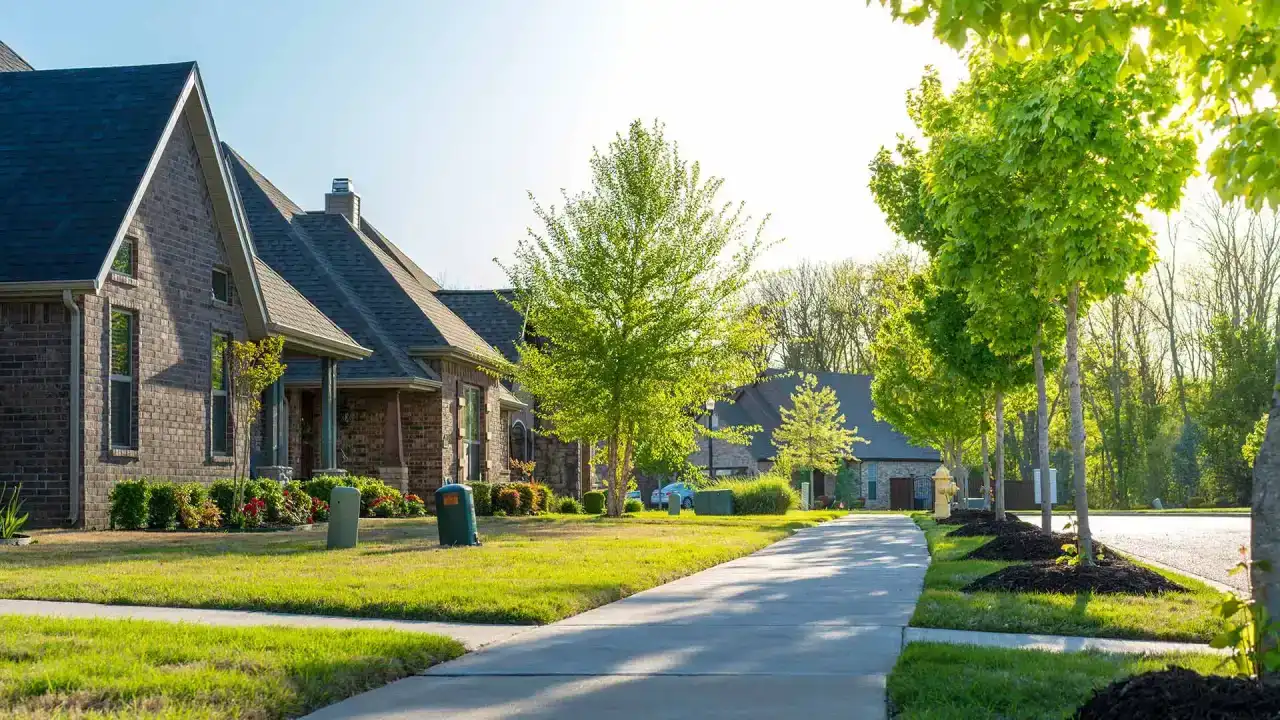
Time. Most Haltom City housing went up between the 1950s and the 1970s, and six or seven decades of slab movement, weather and repairs leave a wall with more openings than the builder ever put in it. Cracked mortar joints, a vent screen eaten through, plumbing and gas penetrations patched with something soft — a mouse needs a quarter inch and an old wall offers several.
Then there is the creek. Big Fossil Creek and the drainage feeding it run through town, and that corridor is a highway rats use to move between blocks under cover. Properties along it see traffic at the back fence all year, and the animals work inward from there toward whichever house is easiest to enter.
That is why the service is an exclusion job before it is a trapping job. Close the way in first, and the traps have a finite population to work through instead of a queue of new arrivals.
HALTOM CITY, PRICED
The number on a Haltom City house, start to finish
Rodent control is $25 a month on top of a year-round plan. It is not available by itself, and the reason is practical rather than commercial: keeping rodents out depends on somebody coming back four times a year to check the seals, which is what the plan visits are.
Most of the post-war stock here is modest, so the base plan is too. A house under 1,500 square feet carries Home Defender at $30 a month, making $55 in total; the 1,500 to 3,000 range runs $33 to $38, so $58 to $63. If you want the yard treated as well, Complete Home & Lawn Defense starts at $40 and the rodent line stays exactly $25. There is no startup charge and no contract to sign either way.
Rodent inspection, exclusion and trapping
$25 a month
Added to a year-round plan, never alone
Home Defender, 1,500 sq ft or under
$30 a month
A lot of the 1950s houses
Home Defender, 1,500 to 3,000 sq ft
$33–$38 a month
The 1960s and 70s stock
Complete Home & Lawn Defense, 1,500 to 3,000 sq ft
$40–$51.50 a month
Whole yard as well
Every number on this page comes from our published price list. Haltom City homes get the same table as everyone else; the instant quote reads your square footage and lot size and hands you your own line.
WHAT THE $25 DOES NOT BUY
Four limits worth knowing before you add it
It does not buy carpentry. On a house this old we regularly find rotten trim, a soffit board that has come loose or a garage jamb that no longer meets the slab. Those are repairs, and they belong to a carpenter; what we can do is seal around them and tell you which ones are actually letting animals in.
It does not buy a clean neighbourhood. A vacant house, an alley with overgrown ground or a neighbour feeding strays keeps a population within easy reach of your fence, and nothing in the program reaches across a property line. Sealing your own building is the part that is under your control.
It also will not deliver an instant result, and anyone who promises one is guessing. Trapping takes a couple of weeks to work through what is already inside a Haltom City attic, and the follow-up exists because that is roughly how long it takes to know whether the exclusion held.
A PATCH OR AN INSPECTION
Paying somebody to seal what they can see, versus finding what they cannot
Hiring a handyman to close up the obvious holes is cheaper on the day and sometimes it is enough. He will foam a gap under the siding, screen a vent and be gone by lunch, and if the house had one entry that genuinely solves it. On older Haltom City brick that is a gamble, because the opening being used is usually not the one visible from standing height.
The difference is that an inspection reads sign before it seals anything. Grease rub on a wall, droppings under a joist, gnawing at a weep hole and runways across attic insulation tell us which openings are live, and those get closed with copper mesh, steel and hardware cloth rather than whatever is in the van. Then someone comes back to check the work instead of assuming it held.
WHAT WE CHECK, IN ORDER
How the first Haltom City visit is run
Outside, low, all the way round
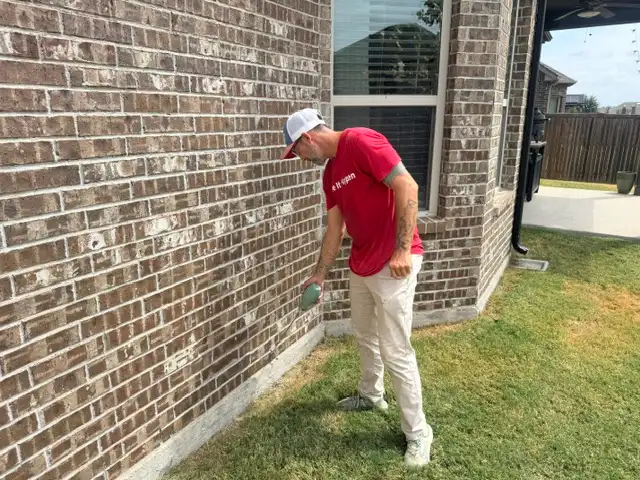
We start at ground level and work the whole footprint: the bottom course of brick, thresholds, the gap under a garage door, crawl vents and every place a pipe or wire enters the wall. On both year-round plans the weep holes are already packed with copper mesh and dusted as standard, so the hunt is for the openings around them.

Up at the roof line
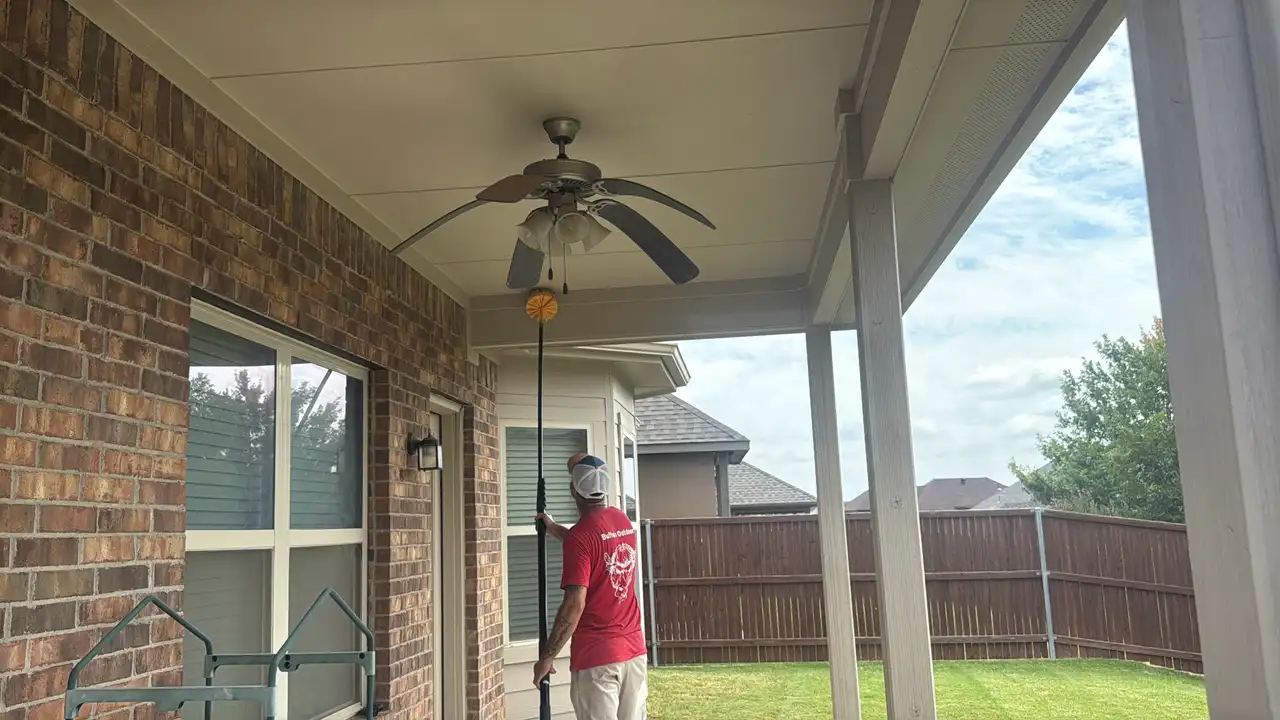
Mature trees over a sixty-year-old roof mean limbs on the shingles, lifted flashing and torn soffit screens, all of which put a roof rat inside without it ever touching the ground. We check the eave line and the roof returns, and anything open gets closed rather than noted for later.
Inside and the trap plan
We look at the attic, the garage and any accessible interior for droppings, runways and nesting material, then set traps on the routes the animals are actually using. Bait goes only in locked stations where children and pets cannot get to it, and you get a return date before we leave the driveway.