
HEAVY HERE, AND WHY
Why chigger pressure in Lake Worth runs above average
Because the town is built around an edge. Lake Worth wraps its namesake lake, and wherever a mowed yard runs out into shoreline vegetation, brush or a patch of pasture there is a strip of tall, damp growth producing larvae from May into August. Interior streets are calmer, but little of this town sits far from one of those boundaries.
The water itself is not the cause, which is worth saying because people assume it is. A chigger has no use for a lake; it needs standing grass to climb and shaded ground that never quite dries, and a shoreline simply happens to guarantee both. The bites tell you more than the address does, landing in a close band at the sock top, the waistband and the backs of the knees, where the larva ran out of room to climb.
MID-CENTURY, LOW BANDS
What Lake Worth homeowners pay for chigger coverage
Forty dollars a month covers a house under 1,500 square feet, and $40 to $51.50 covers one between 1,500 and 3,000, which is where much of the older Lake Worth housing sits. That is Complete Home & Lawn Defense, priced on the square footage of the home, and its whole-yard treatment is the part that deals with chiggers. Nothing about the lot or the shoreline moves the number.
Home Defender is $30 to $38 a month across those same house sizes and reaches twenty-five feet out from the walls. On a shoreline or brush-edge lot that ring stops short of the ground the larvae occupy, so it is a false economy here despite the cheaper line. Both plans run month to month, nothing is charged to start or stop, and the figure is agreed before a visit goes on the calendar.
Under 1,500 sq ft
$40 a month
Whole lawn treated out to the edge
1,500 to 3,000 sq ft
$40 to $51.50 a month
Most of the established Lake Worth streets
3,000 to 4,500 sq ft
$51.50 to $62 a month
The larger houses on lakeside lots
Home Defender, under 3,000 sq ft
$30 to $38 a month
Ring stops short of a shoreline edge
Every number on this page comes from our published price list. Lake Worth homes get the same table as everyone else; the instant quote reads your square footage and lot size and hands you your own line.
THE CEILING ON THIS
How much a treated Lake Worth yard can honestly achieve
It brings the biting down hard and it does not end it. Vegetation past your fence line, whether public shoreline, a neighbor's unmown acre or brush on an empty lot, keeps producing larvae all summer and a few walk in. The colony living in your own grass does nearly all the damage, and that is the one treatment removes.
Leaf litter is the second ceiling. Under a mature tree the larvae sit at the soil beneath a mat of dead leaves, and anything applied lands on the mat rather than under it. Raking that out ahead of a visit is worth more than an extra application, and on an established Lake Worth lot it is an afternoon's work in two or three spots.
Third, the season is short. Chiggers run from roughly May through August here, so their share of a year-round plan is three or four months, while the remaining visits work on ants, spiders, scorpions in the sheds and the weep holes on older brick. A summer-only yard spray is not something we offer.
WHICH BITE, WHICH PLAN
Chigger coverage against the mosquito program on a lakeside lot
These are two different purchases, and near the water people regularly buy the wrong one. Chiggers come with a year-round plan, priced on the house, with the entire lawn treated at every visit. Mosquito, Flea & Tick is separate: a visit every 21 days from April through September, priced on the size of the lot, running from $49.95 up to $129.95 with anything over about an acre quoted.
Decide by the bite rather than by the season. Welts ringed at the elastic a few hours after you were in the grass are chiggers and belong to the yard plan; bites scattered over bare arms on the patio at dusk are mosquitoes and belong to the other program. A Lake Worth household near open water often has both, and running both is reasonable; buying one to solve the other is not.
THE FIRST APPOINTMENT
What the first chigger visit looks like at a Lake Worth address
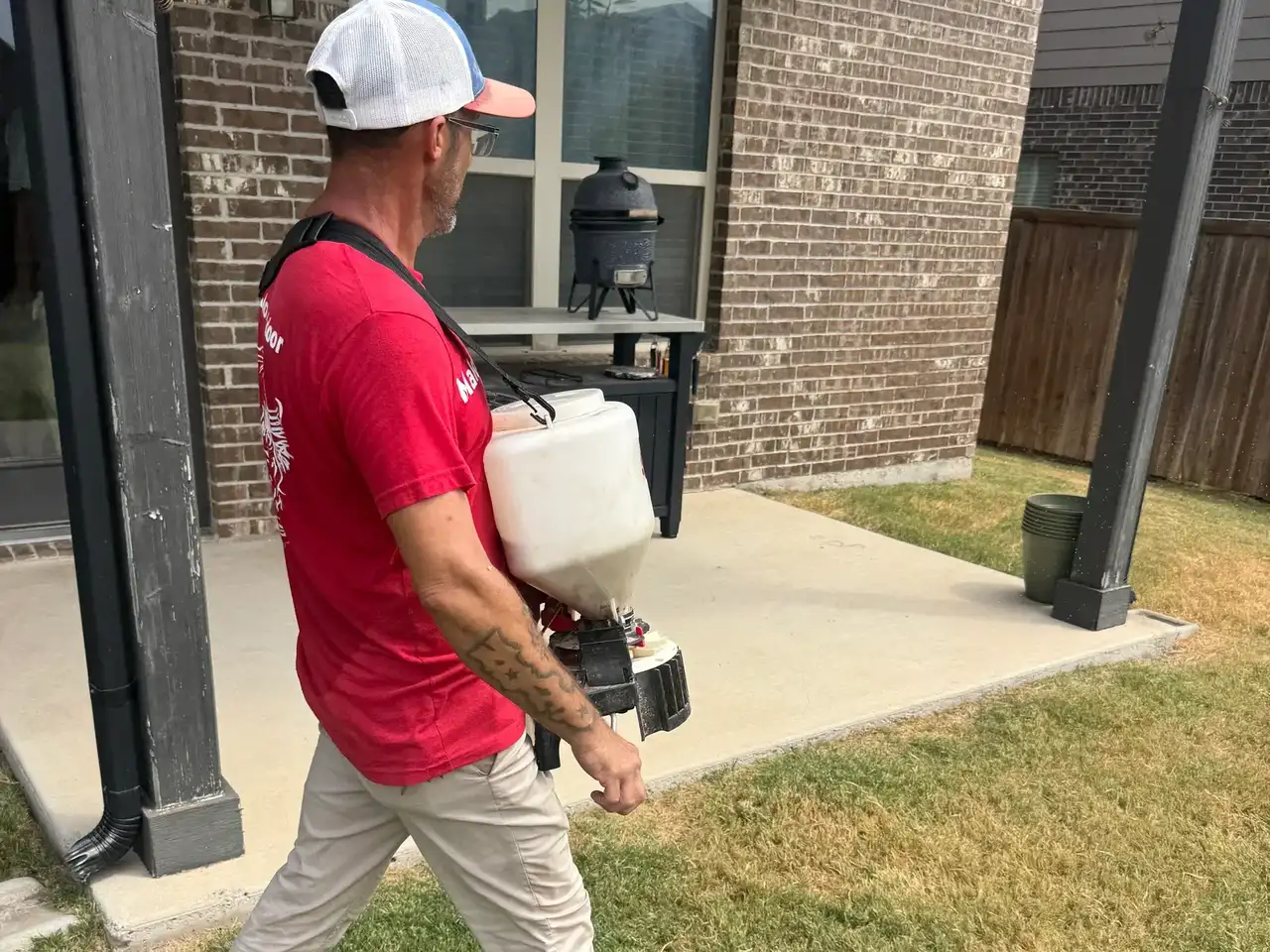
Finding where mowing stops
The technician follows the boundary to where cut grass turns into brush, shoreline growth or pasture, because that line is the source and the middle of the lawn is not. It takes the heaviest application on the property, and the rest of the turf follows.
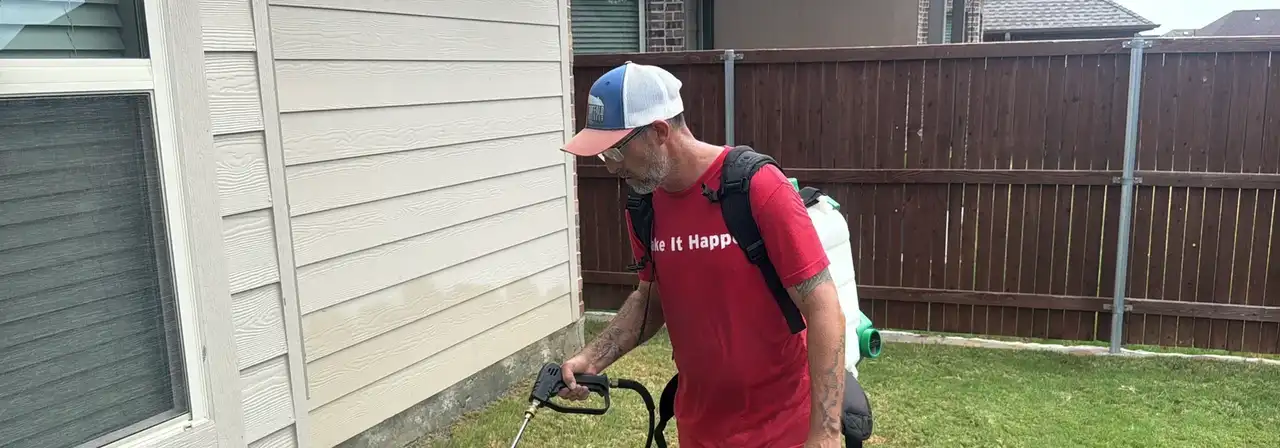
Sheds, docks and woodpiles
Anything sitting on undisturbed ground gets looked at, since the shaded strip behind a shed or under stacked wood holds moisture the open lawn does not. Those spots are treated, and where brush has grown tight against them you will be asked to cut it back so the work lasts.
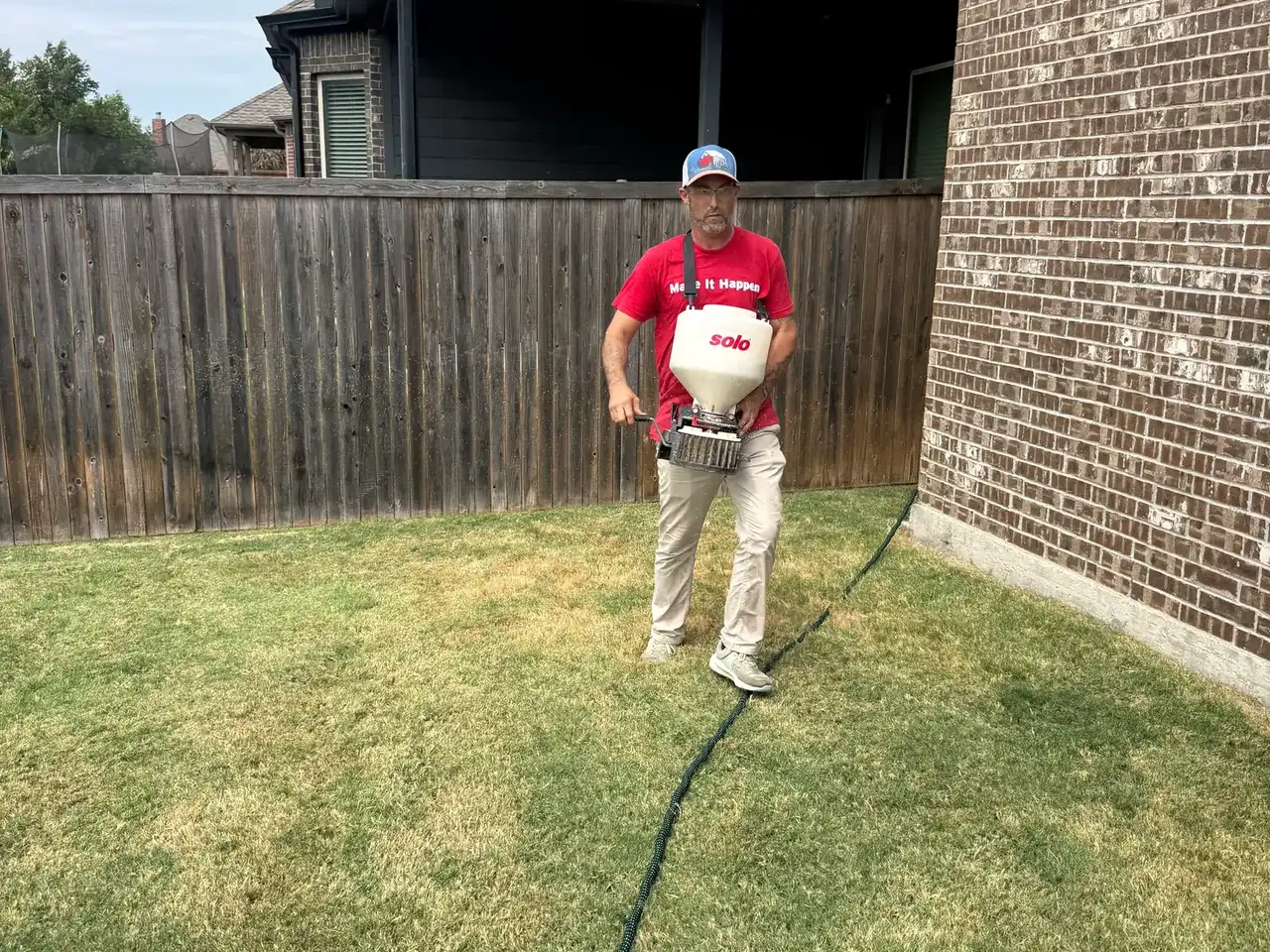
Every threshold, one ZIP
Each door gets three feet of treated ground so larvae picked up at the fence are not carried onto the floor. All of Lake Worth runs on 76135, and the lakeside addresses that mail as Lake Worth are priced and scheduled exactly like the rest.