WHY THE LAKE MATTERS
Do fire ants really get worse near the water?
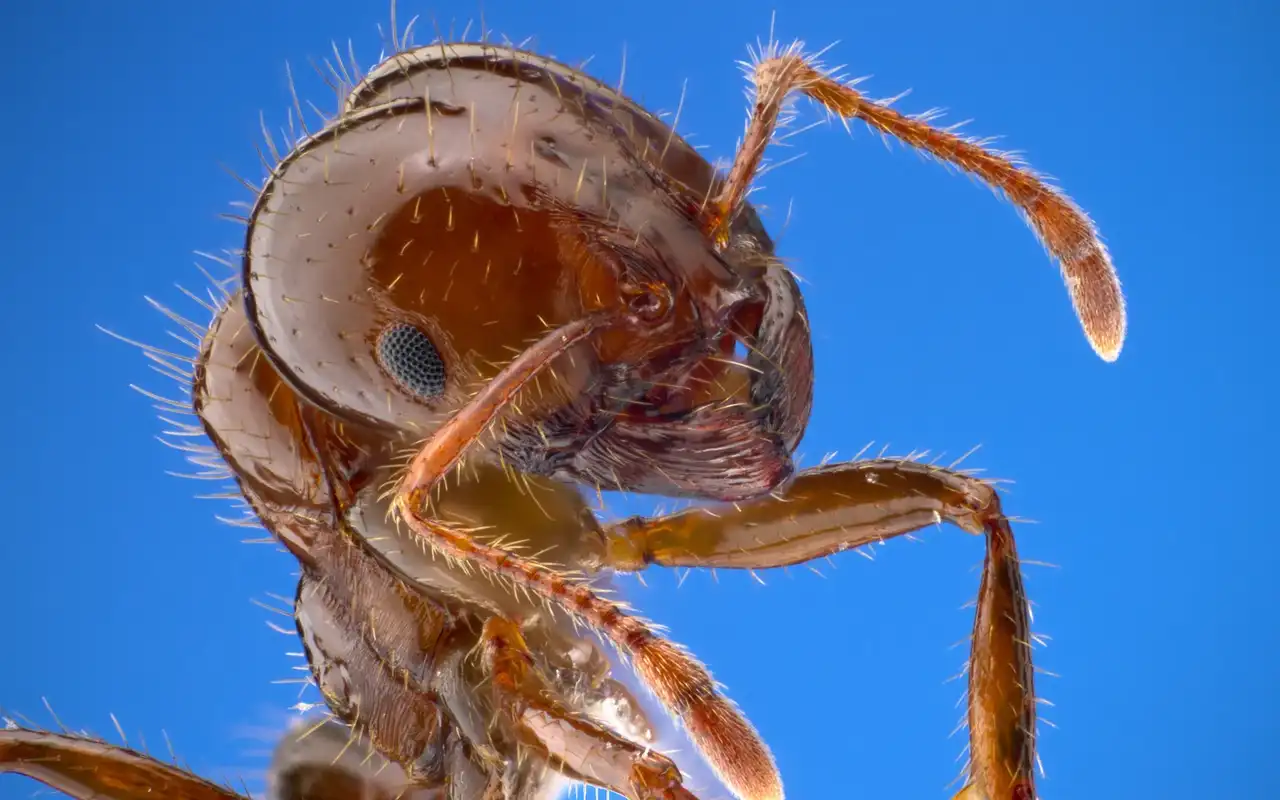
Near water that rises and falls, yes. Fire ants handle flooding in an unusual way: a colony can link up, float and come ashore somewhere new, which makes shorelines and drainage channels delivery routes rather than barriers. Lake Worth wraps around its namesake lake, so a great many properties in 76135 sit on exactly that kind of ground.
The rest of town behaves like any settled North Texas suburb. Mid-century streets back from the shoreline sit on soil undisturbed long enough for other ant species to hold it, and mounds there show up in the sunny front lawn or wherever something has been dug. A single Lake Worth property often has both patterns at once, so we treat the whole thing rather than choosing between them.
THE NUMBER FIRST
What fire ant work costs on a Lake Worth lot
On its own, nothing, because it is not sold on its own. Broadcast bait is included in both year-round plans, and those are priced on the house rather than on how much shoreline you happen to own. The older streets here are mostly modest homes, which puts them at $30 a month under 1,500 square feet, or $33 to $38 a month up to 3,000, on Home Defender.
Complete Home & Lawn Defense over those same sizes is $40, or $40 to $51.50, and covers the entire yard instead of the perimeter and 25 feet out. Whichever you pick, the figure is on the table before you commit to it, there is no contract behind it, and cancelling costs nothing.
Smaller lakeside homes
$30/mo
Home Defender, under 1,500 sq ft
Up to 3,000 sq ft
$33–$38/mo
The bigger houses on the water side
Whole-yard upgrade
$40–$51.50/mo
Complete Home & Lawn Defense at those sizes
Every number on this page comes from our published price list. Lake Worth homes get the same table as everyone else; the instant quote reads your square footage and lot size and hands you your own line.
LIMITS WORTH KNOWING
Three things we will not claim about a lakeside yard
The lake keeps restocking you. A treated lawn out here is an island beside a permanent source, so the aim is a yard you can walk barefoot across, not a property line ants have agreed to stop crossing. Whatever turns up between scheduled visits is retreated at no charge, which is what makes that a promise rather than a slogan.
Bait also cannot work in the wet. The granules have to stay dry long enough for foragers to find them, about a day, so a run of spring storms pushes an application back. We would far rather move the date than spread product that is going to dissolve into the turf before an ant touches it.
And treating the lawn does nothing for what is already living in the shed or under the dock. Spiders, scorpions and rodents shelter in the dry dark spaces that come with lake property. That is perimeter and exclusion work, and in the case of rodents a $25 a month add-on that sits on top of a year-round plan.
BAIT AGAINST BOILING WATER
Kettle, mound killer, or the spreader?
Boiling water and the hardware store drench run on the same flawed theory, that the colony is the mound. Most of the ants and all of the reproduction sit below whatever you can reach from the surface, so a scalded or drenched mound usually means a relocated colony rather than a dead one, plus a burned patch of Bermuda where you poured.
Broadcast bait is fairest to compare on time rather than on outcome. It takes two to three weeks instead of an afternoon, it looks for a while as though nothing at all is happening, and then the mounds stop being rebuilt. If you would rather do it yourself, buy broadcast bait instead of a mound product and cover the whole yard in early spring.
WALKING THE WATER SIDE
What the first Lake Worth visit covers
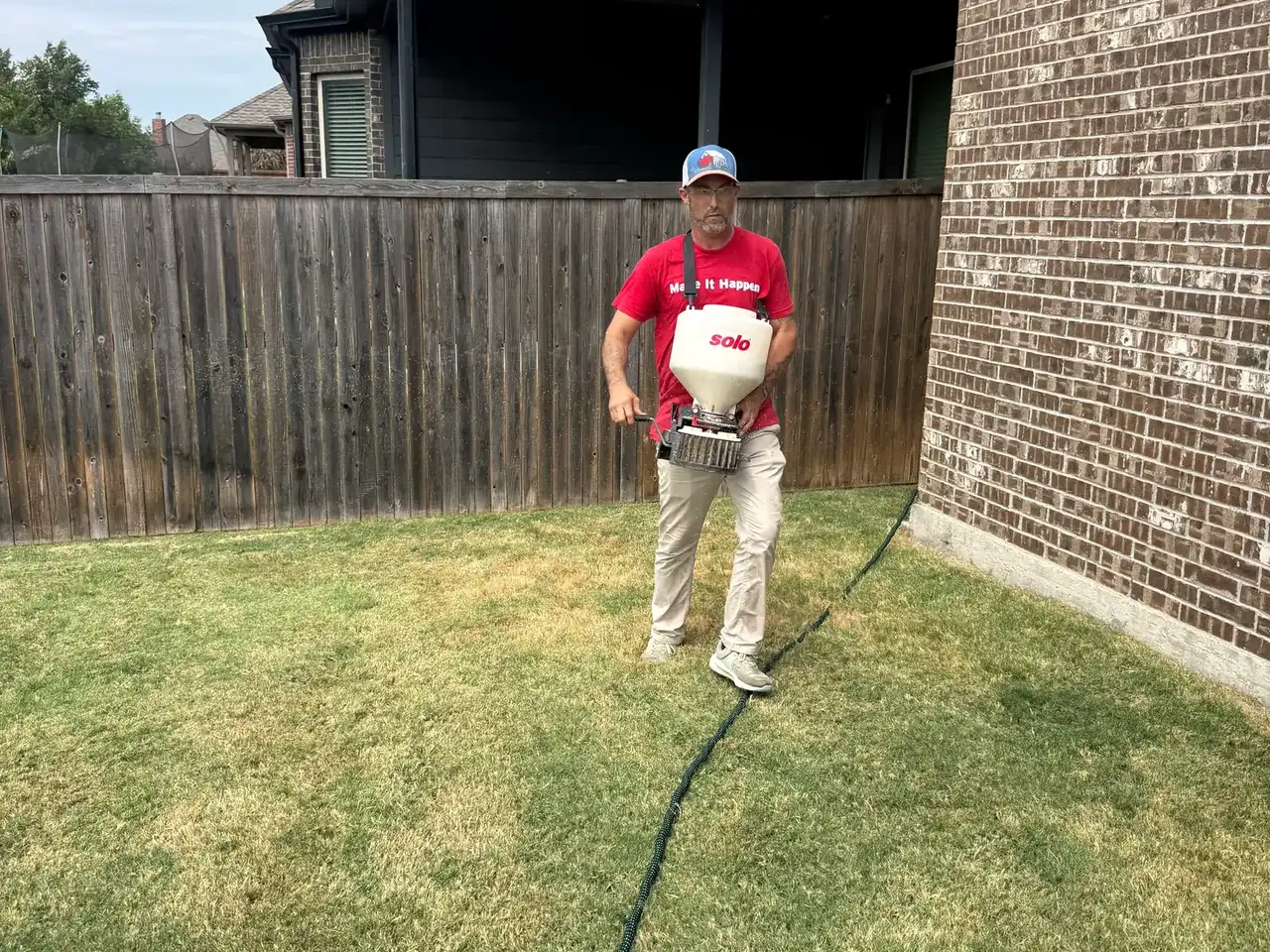
Where the lot stops being lawn
The boundary is the first thing we walk, because on a property here it is often brush, a slope down toward water, or unmowed ground, and that is where colonies sit before they move into the turf. We will tell you what we can treat there and what falls outside what a residential plan covers.
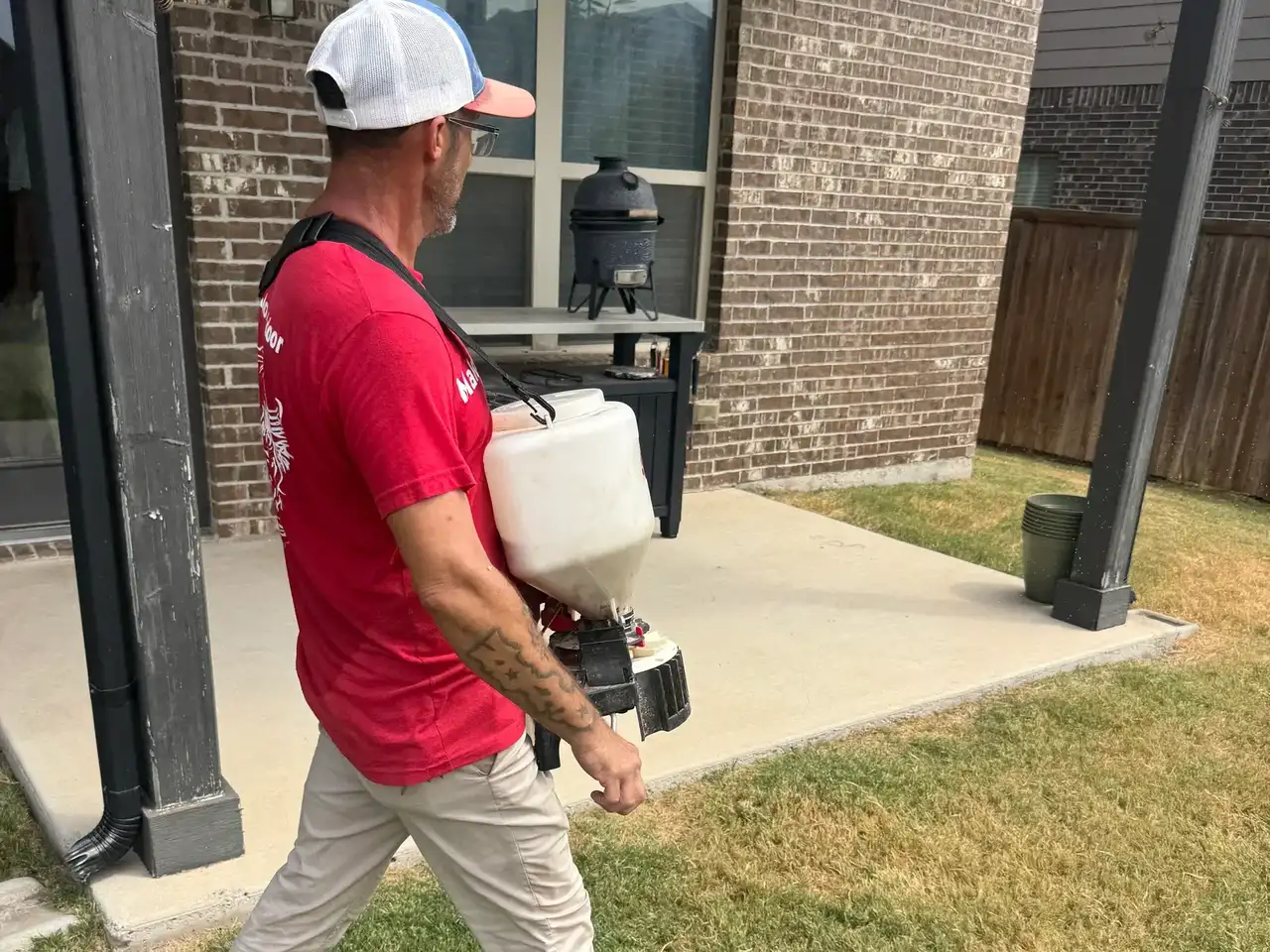
Bait across the whole lawn
The spreader covers the entire mowed area rather than the mounds you have marked, because on this ground the nests you cannot see outnumber the ones you can. We check the forecast first and book the spreading into a dry window.
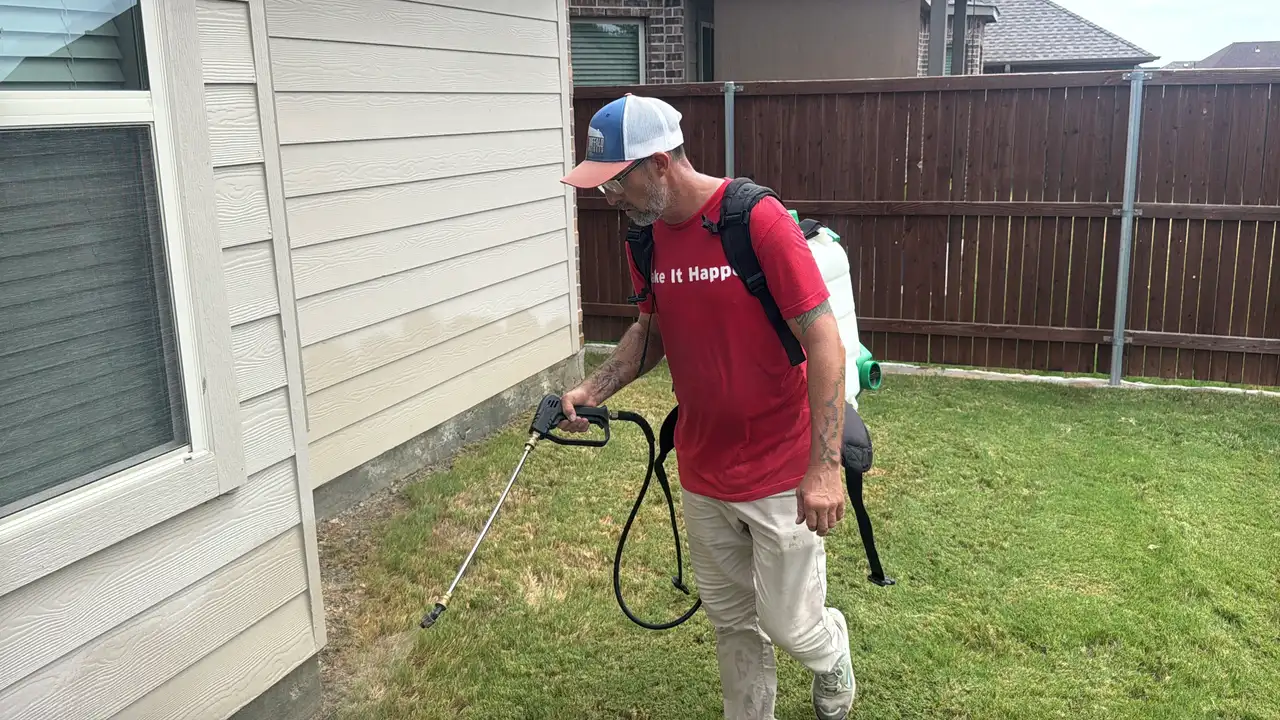
Standing water and the brick
The same visit handles the rest of the plan: foundation band, eaves, Delta Dust through the weep holes, and a list of whatever is holding water on the property. Tipping out a plant saucer or an old boat cover does more against mosquitoes than anything we could spray.