LAKE WORTH, ON THE WATER
What does a perimeter plan actually stop at a house out here?
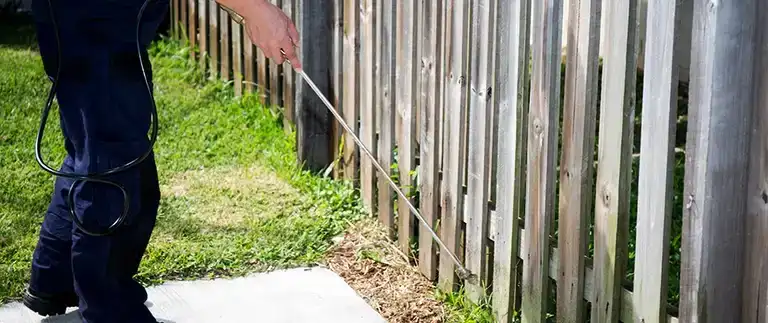
It stops the pests that walk. Ants, spiders, wasps, roaches, crickets, silverfish, earwigs, pillbugs, millipedes, centipedes and scorpions all live outdoors first and come to the house hunting water, food or shelter, and in Lake Worth they come off the shoreline brush and the tall grass at the back of the lot before they ever reach your slab.
The second half of the answer is the house itself. Much of this town went up mid-century, and sixty-year-old brick on settled clay has weep holes and thresholds that have widened just enough for a scorpion. The Home Defender Plan works that whole line four times a year, starting at $30 a month, across every address in the single 76135 ZIP.
PRICED ON THE HOUSE
The monthly number on a Lake Worth street
Home Defender runs $30 to $54 a month, and the figure comes off the square footage of the home, not the size of the lot. That distinction is worth knowing here, because a modest mid-century house can sit on a generous piece of ground sloping toward the water. You are billed for the walls we treat, not the acreage you happen to own.
Most of the older housing in town falls in the first two bands, which puts a great many Lake Worth homeowners between $30 and $38 a month. Four scheduled visits are inside that price, along with any retreatment you need between them at no charge and one interior treatment if something already got past the door. Nothing is charged to start, nothing is charged to stop, and there is no contract.
1,500 sq ft or less
$30 a month
Where many of the older lakeside houses land
1,500 to 3,000 sq ft
$33 to $38 a month
The common range on the established streets
3,000 to 4,500 sq ft
$38 to $46 a month
Rebuilds and the larger newer construction
Complete Home & Lawn Defense
$40 to $73.50 a month
Same four visits, whole yard instead of 25 feet
Every number on this page comes from our published price list. Lake Worth homes get the same table as everyone else; the instant quote reads your square footage and lot size and hands you your own line.
WHERE IT FALLS SHORT
Three honest limits, and the lake makes the first one big
This is not mosquito control, and next to open water that has to be said first. The barrier is engineered for insects that crawl along the ground and the wall; mosquitoes arrive on the wing from the shoreline and from whatever is holding water two lots over. Biters are handled by Mosquito, Flea & Tick, a separate program on a 21-day cycle from April through September.
Dusting is not sealing, either. Delta Dust goes into the weep holes on every visit and kills what tries to crawl through, but the openings themselves stay open. Packing them with copper mesh is a separately quoted add-on, and on Lake Worth brick that has been standing open for five decades it tends to earn the money back.
The treated ring stops at about 25 feet, which is a real edge rather than a figure of speech. If your lot runs a long way back toward brush or the shoreline, the chiggers and ticks living past that line are outside what Home Defender covers. The fix is either the whole-yard plan or a mower, and we will say which we think you need.
TWO PLANS, ONE CHOICE
Home Defender or the Complete Home & Lawn Defense upgrade?
The difference is how much ground gets treated, not how often anybody shows up. Both plans are four visits a year with fire ant treatment built in and no agreement to sign. Home Defender covers the structure, the eaves, the weep holes and roughly 25 feet of turf and beds; the upgrade extends that to the entire yard for $40 to $73.50 a month.
On a tight lakeside lot where the mowed grass runs out a few strides past the patio, those 25 feet already reach your fence and the cheaper plan is the correct answer. On a deeper Lake Worth property that backs onto brush or water, the upgrade is what puts product where the biting things actually sit. You get the number for both before you commit to either.
DAY ONE
What the technician works through the first time out
The brick, bottom to eave
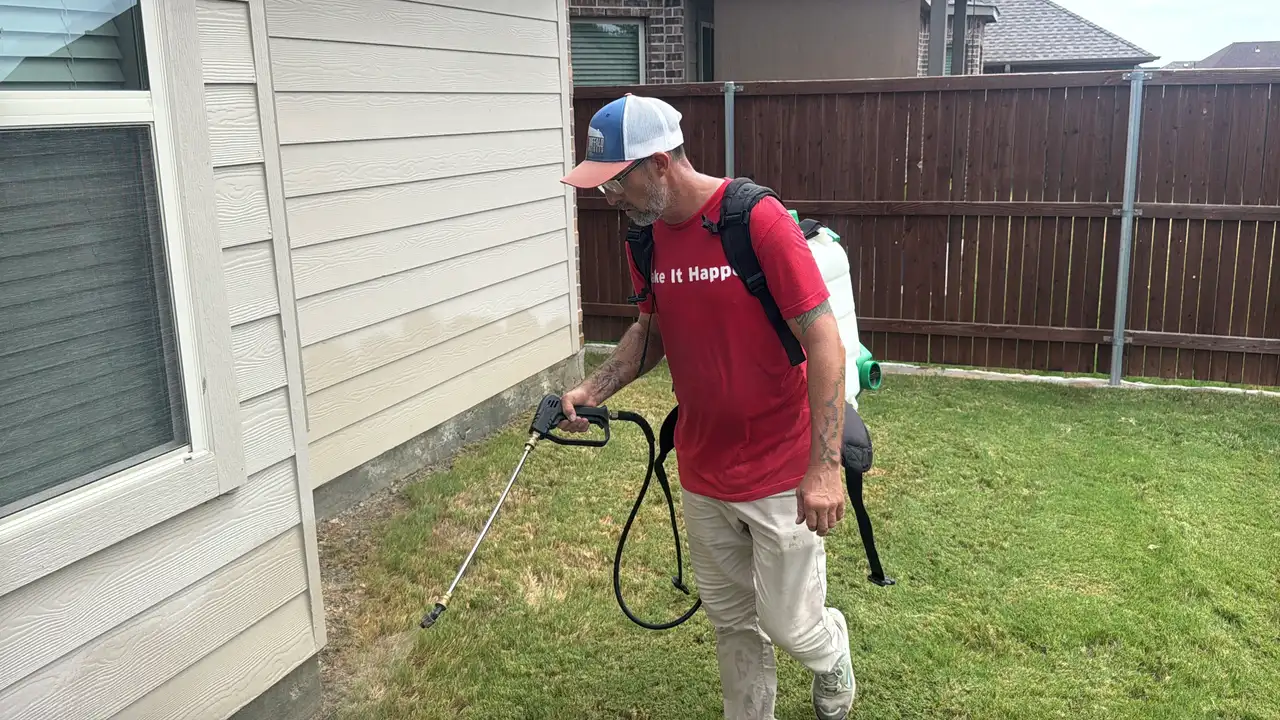
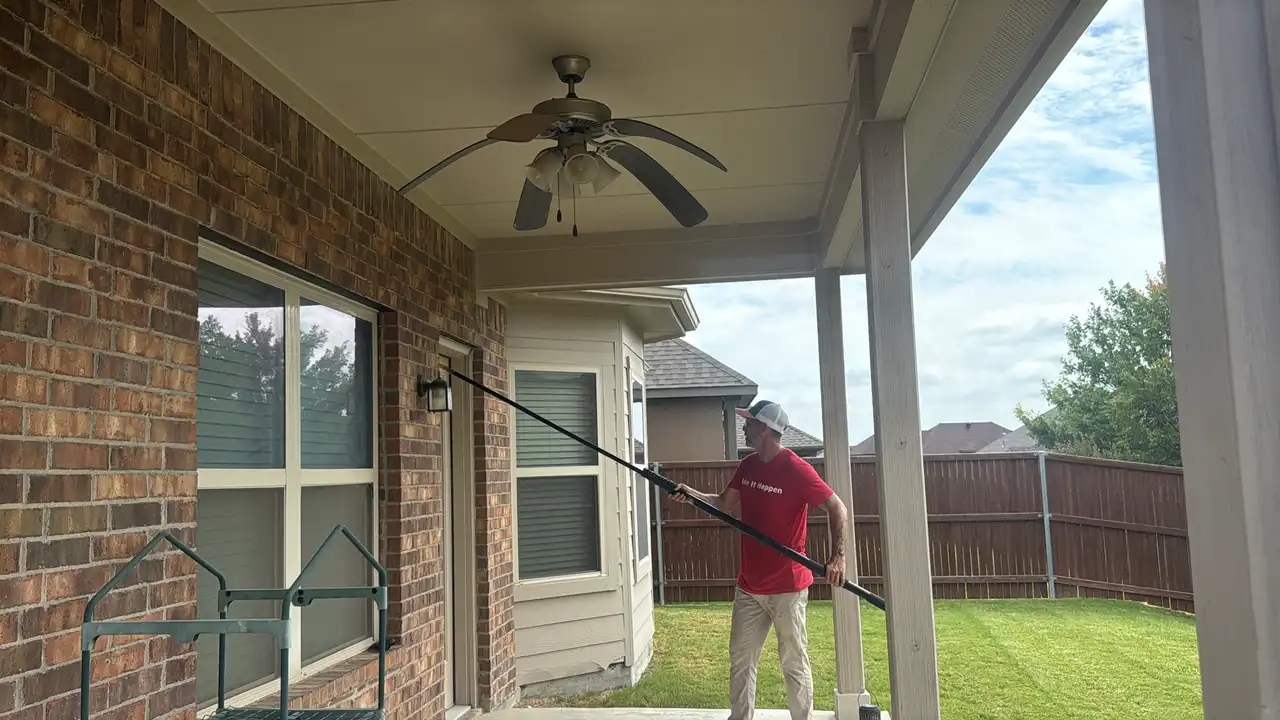
A liquid band goes around the entire foundation and about three feet up the wall. Then the eaves, soffits and door frames get swept with a web pole, which is the step that keeps wasps and spiders from rebuilding in the same porch corner a month later.

Every weep hole on the course
Delta Dust is applied in the weep holes along the bottom course of brick, the most-used doorway into a North Texas home. On older Lake Worth brick the technician will also flag the thresholds and utility penetrations worth closing, and quote copper mesh if you want those holes shut permanently.
Granular out, then bait
A granular barrier is broadcast about 25 feet out into the turf and landscape beds, and fire ant bait goes across the yard in the same trip at no extra charge. Nobody needs to be home for it. Leave the gate unlocked, and a text lands when the truck is on the way.