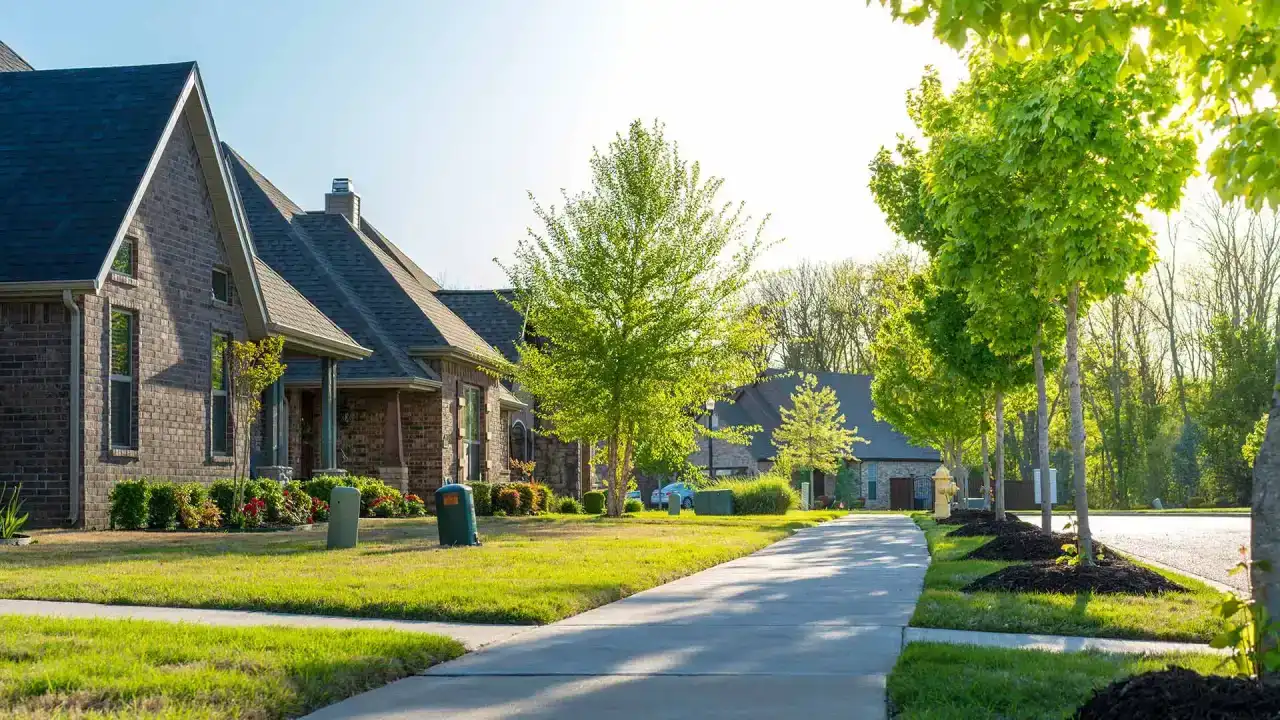
LAKESIDE, MID-CENTURY
What brings rats up from the Lake Worth shoreline?
Cover and water, in that order. The vegetation along the shoreline never dries out and never gets mowed flat, which makes it permanent harborage, and a rat with that behind it will work its way up through a yard in a night. Lake Worth properties near the water get this traffic regardless of how the house is kept.
What turns traffic into an infestation is usually an outbuilding. Sheds, detached garages, boat covers and stacked timber are not built to keep anything out, so they become the staging post: warm, dry, undisturbed and close to the house. By the time something is heard in the ceiling it has generally been living forty feet away for a while.
Then the house itself. Much of the older Lake Worth housing is mid-century brick on settled ground, with worn thresholds, open utility penetrations and mortar that has cracked along the bottom course. Those are the last few inches of the journey, and they are the part we can close.
PRICE ON A LAKE WORTH HOME
What rodent control adds to the monthly bill
Twenty-five dollars a month, attached to Home Defender or Complete Home & Lawn Defense. There is no standalone rodent price at any address, on the lake or off it, because the exclusion only stays good if somebody is coming back to check it four times a year.
The plan under it is set by the size of the house. A small lakeside cottage under 1,500 square feet carries Home Defender at $30, so the whole thing is $55 a month; the more common 1,500 to 3,000 square foot houses run $33 to $38 for a total of $58 to $63. Bigger homes in the 3,000 to 4,500 range are $38 to $46. You get the figure before agreeing to anything, and you can check it yourself at /instant-quote.
Rodent add-on
$25 a month
Sits on a year-round plan; not sold separately
Home Defender, cottages under 1,500 sq ft
$30 a month
The smaller shoreline houses
Home Defender, 1,500 to 3,000 sq ft
$33–$38 a month
Most of the older streets
Complete Home & Lawn Defense, 1,500 to 3,000 sq ft
$40–$51.50 a month
Adds the yard to the same rodent line
Every number on this page comes from our published price list. Lake Worth homes get the same table as everyone else; the instant quote reads your square footage and lot size and hands you your own line.
WHERE THE WORK ENDS
The parts of a Lake Worth rodent problem we cannot close
The shoreline is not treatable and we will not claim otherwise. Nobody excludes rodents from open ground and water, so the honest version of this service is that your house and the structures we can seal become unavailable to them, while the lake edge carries on as it always has.
Uninsulated outbuildings are only partly fixable. A shed on skids with a gap under every wall, or a boat cover that is open by design, cannot be made rodent-proof in the way a brick house can. We seal what has a solid frame to seal to, and for the rest we trap and station rather than pretend.
And the yard treatment has nothing to do with it. Perimeter spray is for insects; rodents cross it without slowing down. If your reason for adding Home Defender in Lake Worth is mice, the $25 rodent line is the part doing that job.
LOOSE BAIT IN THE SHED
Why bait blocks tossed in the boathouse make it worse
Open bait is the standard Lake Worth mistake, and it is an understandable one: blocks are cheap, the shed is out of the way, and it feels like doing something. What it actually does is feed animals in a place nothing is sealed, which holds them on the property, and it puts poison where a dog, a raccoon or a child can reach it.
Trapping with the openings closed does the opposite. Nothing new gets in, what is inside has nowhere to go, and anything we do put out sits in a locked station on a known runway. It is slower for the first fortnight and far better by week three, which is the trade most people would make if anyone explained it at the store.
THE WALK-AROUND
Where we start on a house near the water
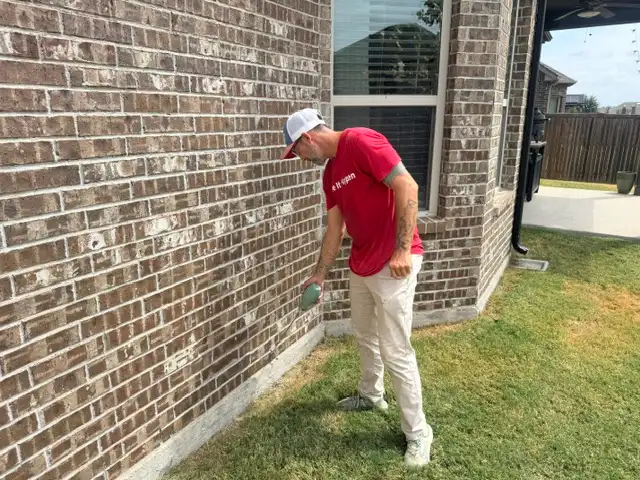
The lake-facing side and the lot edge
We begin on the side that faces the water, because that is where the pressure comes from. Tall vegetation running up to a fence, a path worn through ground cover and droppings along a wall tell us the direction of travel before we start looking at holes.

Sheds, carports and stored gear
Every outbuilding gets opened and looked at: nesting material in stored cushions, chewed wiring in a mower, droppings on a workbench. Sealing or trapping the shed first is often what finally quietens the house, because that is where the population is actually living.
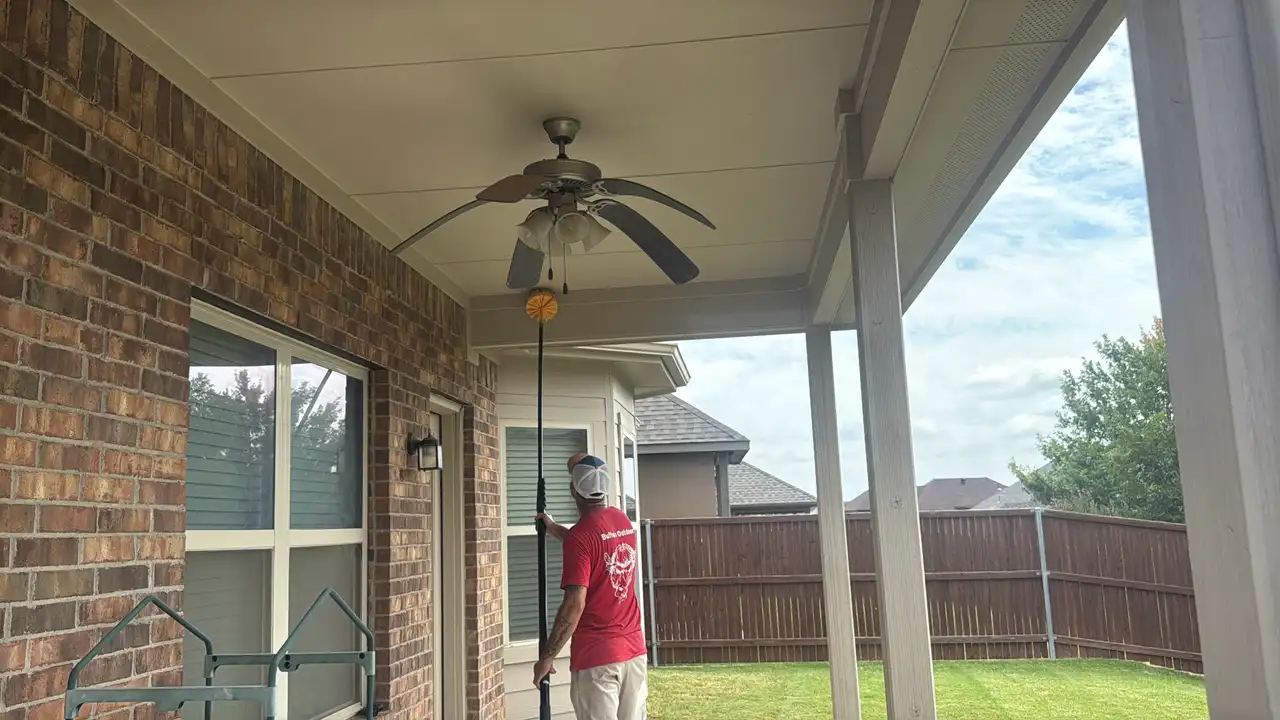
The bottom course and the attic
Then the house. Weep holes come sealed with copper mesh and dusted on both year-round plans, so we work through what is left — thresholds, crawl vents, pipe penetrations, roof returns — and read the attic for runways so traps and stations go where they will do something.