WHY THE LAKE MATTERS
What living beside the water does to mosquito season
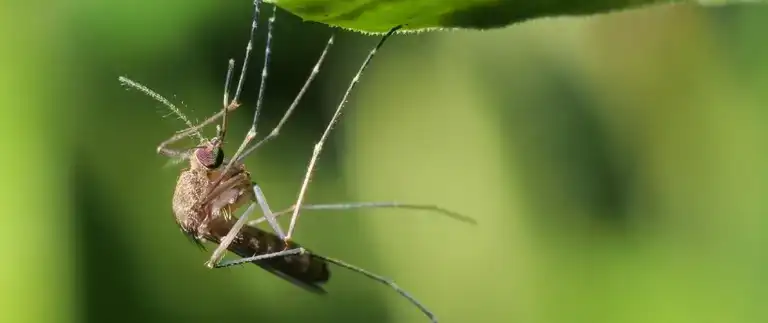
Lake Worth wraps a city around a lake, and that water pulls the first hatch forward by a couple of weeks. Adults get moving once nighttime lows hold above 50 degrees, and shoreline vegetation holds warmth and humidity better than an open interior lot, so streets near the water are already being bitten while the rest of Tarrant County still thinks it is early spring.
Back from the shoreline, the older core does its own damage: mid-century houses under trees that have had sixty years to fill in, with shaded, damp ground underneath where adults sit out the daylight. Our Mosquito, Flea & Tick program fogs that resting cover on a 21-day cycle from April through September, everywhere inside 76135.
LAKE WORTH BY LOT SIZE
What a visit costs here, and why the lot decides it
Most of the older Lake Worth streets fall into the first two rows of the price table: $49.95 a visit for a lot of 7,000 square feet or under, $59.95 from there up to 12,000. Nothing else moves that number — not the age of the brick, not how close the water is, not how many bites you counted last August.
Roomier properties climb the table in 5,000-square-foot steps, and anything past about an acre is quoted for the property instead. Billing happens per visit rather than up front, no contract binds you and no cancellation fee waits for you, and /instant-quote will hand you your own figure before you speak to anyone.
Lots of 7,000 sq ft or less
$49.95 a visit
The tighter mid-century streets
Lots of 7,001 to 12,000 sq ft
$59.95 a visit
The most common measurement in town
Lots of 12,001 to 17,000 sq ft
$69.95 a visit
Roomier properties nearer the water
Over 47,000 sq ft
Quoted for the property
Lake frontage running past an acre
Every number on this page comes from our published price list. Lake Worth homes get the same table as everyone else; the instant quote reads your square footage and lot size and hands you your own line.
WHAT IT WILL NOT DO
Being straight about a fog next to open water
No barrier treatment empties a lakeside yard, and we will not pretend otherwise. Open water and the growth along it produce mosquitoes on ground nobody owns or sprays, and those adults drift in at dusk; the fog removes the population that lives, rests and breeds on your Lake Worth lot, which is the bulk of what lands on your arm.
The rest of the job is yours and it is unglamorous. A boat cover pooling rainwater, a gutter that never drains, a saucer under a patio pot: those make larvae faster than any fog kills adults, and tipping them out once a week costs nothing. Standing water we cannot drain, such as a French drain, gets larvicide instead.
Hold time is roughly 21 days at peak and shorter when a storm blows through right after an application, which is why the cycle is three weeks rather than monthly and why a return trip between scheduled visits costs nothing. We also will not sell a single fog for a party date; we shift a program visit into the 24 to 48 hours ahead of it.
BARRIER OR MISTING SYSTEM
Installed misters versus a seasonal fog on a lake lot
Homeowners near the water ask about misting systems more than most, and inside their nozzle lines those systems work. The catch is $2,000 to $4,000 installed plus refills, and the tubing only covers where it was mounted, so the brushy strip where a Lake Worth lot meets the water — the part actually producing your mosquitoes — usually sits outside the spray.
A backpack fogger goes where the pest is rather than where the plumbing is: under the shrubs, through the hedge line, into shaded fence corners and along the boundary growth. It runs $49.95 to $129.95 a visit depending on your lot and it stops the day you say stop, which is a very different commitment from hardware bolted to the house.
VISIT ONE BY THE WATER
How the first Lake Worth appointment runs
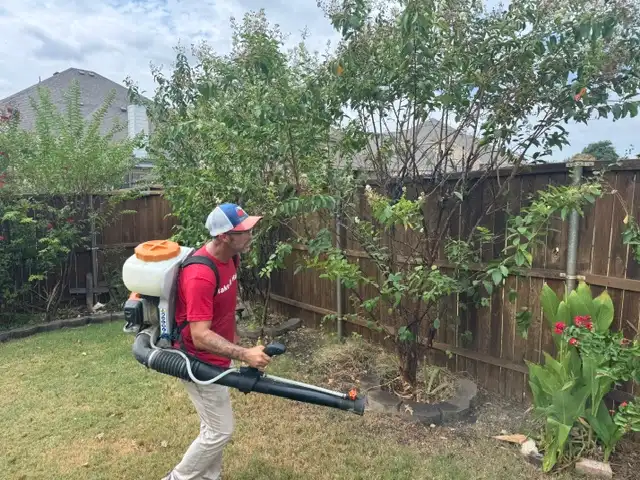
Reading the shade before treating
The technician walks the property hunting cool, damp daytime cover rather than hunting mosquitoes. On these lots that usually means the north wall, the fence line, dense ornamentals and whatever grows between the mowed grass and the water.
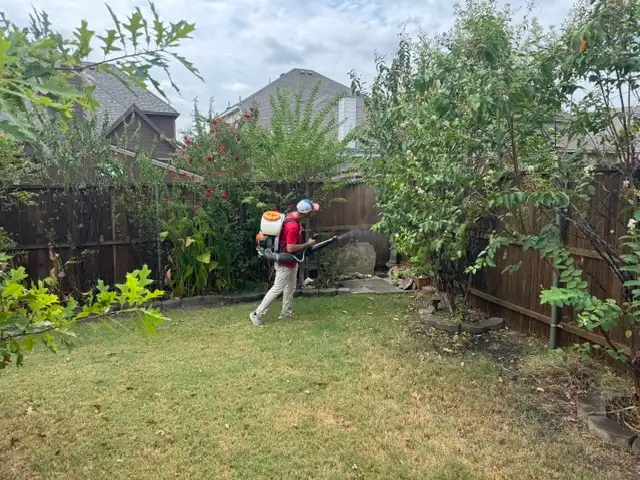
Fogging the resting cover
The fog goes through ornamental trees, shrubs, hedge lines and deck skirting, and skips the open sunny lawn, where nothing waits out the day anyway. Turf and bed edges are treated for fleas and ticks on the same stop, since one program covers all three pests.

The standing water walk
Before leaving, the technician points out every container, low spot and blocked gutter still holding water and larvicides what cannot be emptied. You do not have to be home for any of it: gate access is enough, and a text goes out when the truck is on the way.