
OUT OF THE BOTTOMLAND
Where River Oaks picks up its chiggers
From the low ground along the river. River Oaks sits on the West Fork of the Trinity, and the bottomland below the neighborhoods stays rank, shaded and damp all summer, which is where the larvae are produced. They move uphill into mowed yards wherever the two meet, so the lots that suffer are the ones whose back fences face that way.
Everything else about a River Oaks lot matters less than that. The 1940s-through-60s housing sits on settled soil under heavy canopy, and leaf litter there carries the population through winter, but a yard cut short and raked out will not build a problem by itself. Bites lined up at the sock cuff and the waistband a few hours after you were in the grass are the confirmation.
OLDEST HOUSES, LEAST MONEY
What whole-yard chigger coverage costs in River Oaks
River Oaks has some of the smallest houses we price, which puts much of the town at the bottom of the table. Complete Home & Lawn Defense is a flat $40 a month under 1,500 square feet and $40 to $51.50 from there up to 3,000, covering the whole lawn out to the property line at every visit. Chiggers are dealt with inside that yard treatment and never billed on their own.
Home Defender is $30 to $38 a month for the same house sizes and reaches twenty-five feet from the walls. On a small River Oaks lot that can take in most of the grass, which makes it a genuine choice rather than a downgrade, unless the back fence faces the river bottom. Both include the fire ant bait, the Delta Dust and the copper mesh in the weep holes, both run month to month, and you have the figure before committing.
Under 1,500 sq ft
$40 a month
Much of the 1940s and 50s housing
1,500 to 3,000 sq ft
$40 to $51.50 a month
Whole lawn, treated every visit
Home Defender, under 1,500 sq ft
$30 a month
Ring only; enough away from the bottom
3,000 to 4,500 sq ft
$51.50 to $62 a month
The rebuilt and expanded houses
Every number on this page comes from our published price list. River Oaks homes get the same table as everyone else; the instant quote reads your square footage and lot size and hands you your own line.
THREE PLAIN LIMITS
What treating a River Oaks yard for chiggers will not do
It will not touch the bottomland. The land along the Trinity and its drainage is not private lawn and will not be treated, and it goes on producing larvae into August whatever happens on your side. Treating the yard removes what has settled into your own grass, the great majority of what bites you, and the boundary strip takes the heaviest pass.
It will not do anything for the crawl space, which is worth saying in a town with pier-and-beam houses. Chiggers need living vegetation and moist soil and do not colonize under a floor, so the space beneath the house is not where this hides. Rodents and spiders are another matter, which is what the vent and weep-hole work on both plans exists for.
It will not solve a misdiagnosis either. Near the river one household often has mosquitoes, fleas off a pet and the occasional tick, and all three get called chiggers. A ring of welts at the elastic points one way; bites on bare arms at dusk point somewhere else.
HOSE-END OR A PLAN
The bug spray from the hardware store against a treated lawn
A hose-end concentrate off the shelf is not a scam, and it does kill chiggers it lands on. Where it struggles is coverage and persistence: dilution out of a hose swings with water pressure, the product has to reach every square foot of habitat rather than the parts you can see, and a humid North Texas summer burns through it faster than the label suggests.
The other gap is the edge. Most people spray the lawn they walk on and stop at the brush, which is exactly where the larvae come from, so the source survives the exercise. A plan puts the heaviest application along that boundary, treats the litter under the trees, bands every door with three feet of product and covers the return trip when bites come back early. Doing it yourself, at least start where the mowing stops.
FIRST TIME AT THE HOUSE
What happens on a first chigger visit in River Oaks
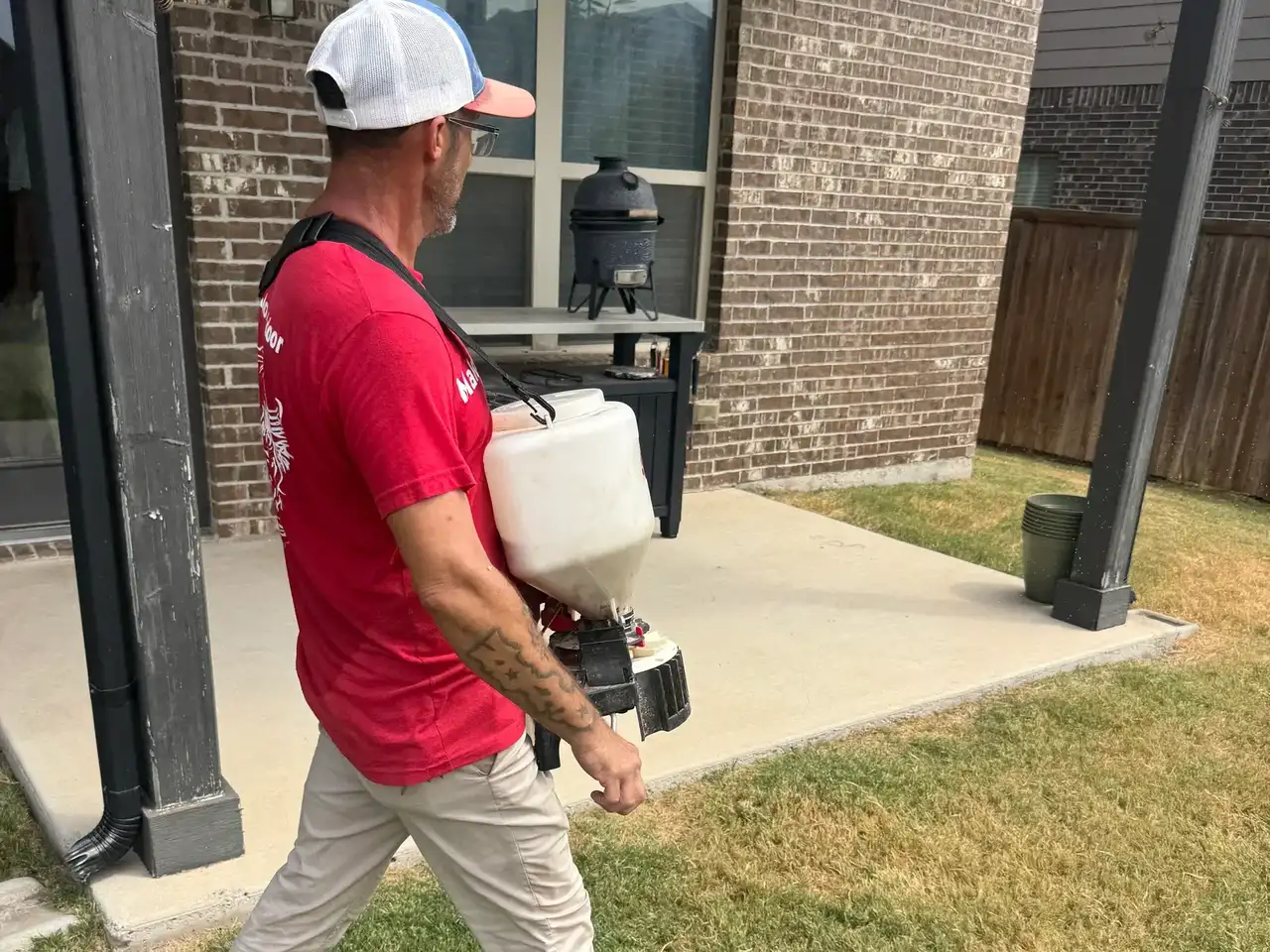
Finding the low side
The technician looks first at whichever boundary faces the river bottom or a drainage line, because on a River Oaks lot that is nearly always the source. The rest of the property is treated once that edge has been worked.
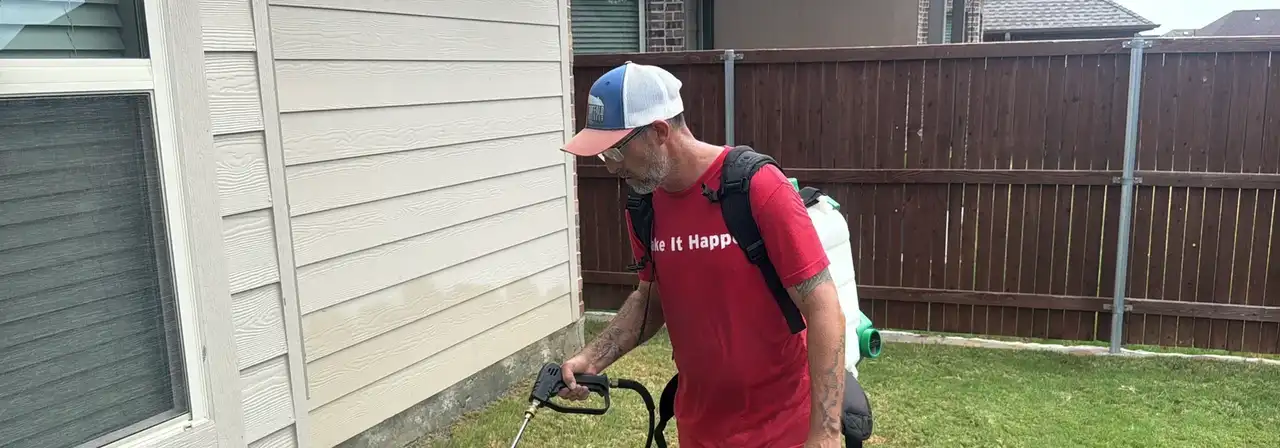
Litter under the old trees
Leaves banked up under sixty-year-old canopy or against a fence get pointed out rather than sprayed over, since product on a leaf mat never reaches the soil. Clearing it is your part of the job, and it decides how long the rest lasts.
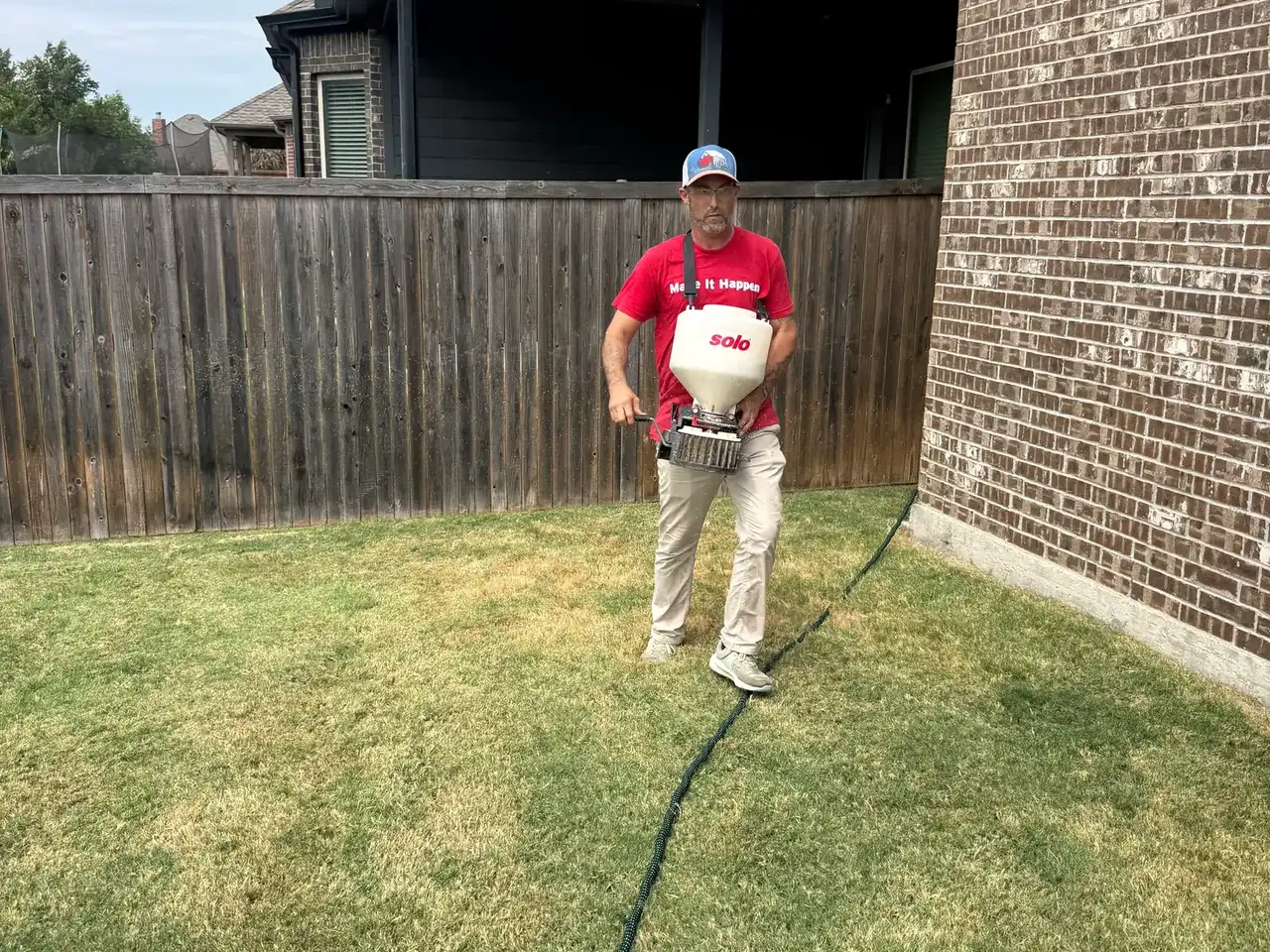
Doors, vents and a shared ZIP
Each entrance takes its three-foot treated band so nothing crosses the threshold, and the crawl-space vents and weep holes are handled on the same pass for the pests that do try to get in. River Oaks shares 76114 with Westworth Village, and the price is set by the house rather than the postmark.