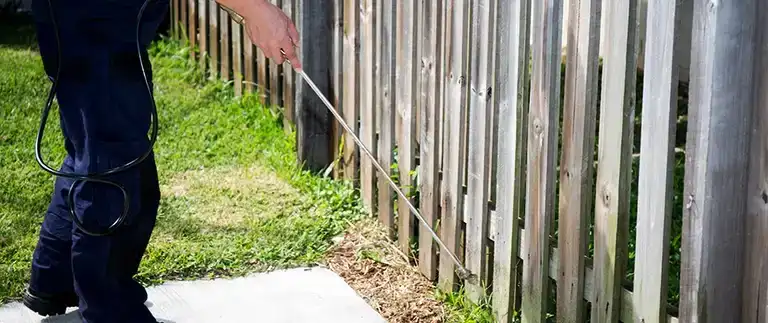
ALONG THE TRINITY
The two things driving pest pressure here
One is the river and one is the age of the houses. River Oaks sits on the West Fork of the Trinity west of downtown, and the bottomland along the water is permanent habitat: damp ground, dense growth, and a steady supply of insects and rodents working their way up toward the dry, warm structures on the interior streets.
The other is that most of this housing dates from the 1940s through the 60s, which is as old as anything we treat. Eight decades of settling opens weep holes, thresholds, crawl-space vents and utility penetrations, and a perimeter plan on a house like that is half treatment and half knowing where the gaps are. Home Defender covers it four times a year from $30 a month, with no contract.
PRICE BY SQUARE FOOTAGE
What the bands work out to on these streets
The plan is $30 to $54 a month and the square footage of the house decides where you fall, because that is what determines how much foundation line, eave run and brick there is to treat. Mid-century housing in River Oaks is mostly compact, so the bottom two bands cover the great majority of addresses in the 76114 ZIP that the city shares with Westworth Village.
Inside the price are four scheduled treatments, free retreatment any time something appears between them, and one interior treatment if you need it. Nothing is charged up front to start the plan and nothing is charged to end it. Anything beyond the core service, whether that is copper mesh, the whole-yard upgrade or rodent work, is quoted to you before it goes on a bill.
1,500 sq ft or less
$30 a month
A large share of the original housing
1,500 to 3,000 sq ft
$33 to $38 a month
Most of the rest of River Oaks
Rodent control add-on
$25 a month
Common on lots near the bottomland
Every number on this page comes from our published price list. River Oaks homes get the same table as everyone else; the instant quote reads your square footage and lot size and hands you your own line.
WHAT GOES WRONG
Three ways this plan disappoints people, and why
The first is expecting it to work on mosquitoes. It will not, and near the Trinity that is a genuine gap rather than a technicality, because the bottomland and its drainage keep producing them all season. Mosquito, Flea & Tick is the separate answer, a visit every 21 days from April through September, priced on the lot instead of the house.
The second is rodents. Lots close to the river see more rat and mouse traffic than the interior streets, and nothing sprayed on the outside of a building has ever fixed that. Rodent work means inspection, exclusion on the specific openings in use, trapping and follow-up, and it attaches to a year-round plan at $25 a month rather than being sold on its own.
The third is timing on fire ants. Bait is broadcast across the yard and carried into the colony by the workers, which is thorough but slow, so a mound that was there on treatment day may still be visible a fortnight later. Settled River Oaks soil means fewer mounds to begin with, but patience is still part of the deal.
CALL AS NEEDED OR PLAN
Waiting until you see something versus four scheduled visits
Calling somebody the week the ants arrive feels cheaper, and for one bad month it might be. The catch is that by the time a problem is obvious indoors, the population outside has been building for a season, and knocking it back costs more product and more time than keeping it low would have. We do not sell single treatments for that reason.
The scheduled version spreads the same work across four visits and holds the barrier through the year, and it carries a guarantee between visits that a call-out never does: if something turns up in month two, the return trip is free. For an older River Oaks house, where the gaps are numerous and permanent, the steady version is the one that actually holds.
HOW IT STARTS
The first appointment at an older River Oaks home
Reading the structure
Older housing here is a mix of slab and pier-and-beam, and the two leak in different places. The technician checks weep holes, crawl-space vents, door sweeps and utility penetrations first, and tells you which of them are doing the most damage before anything is treated.

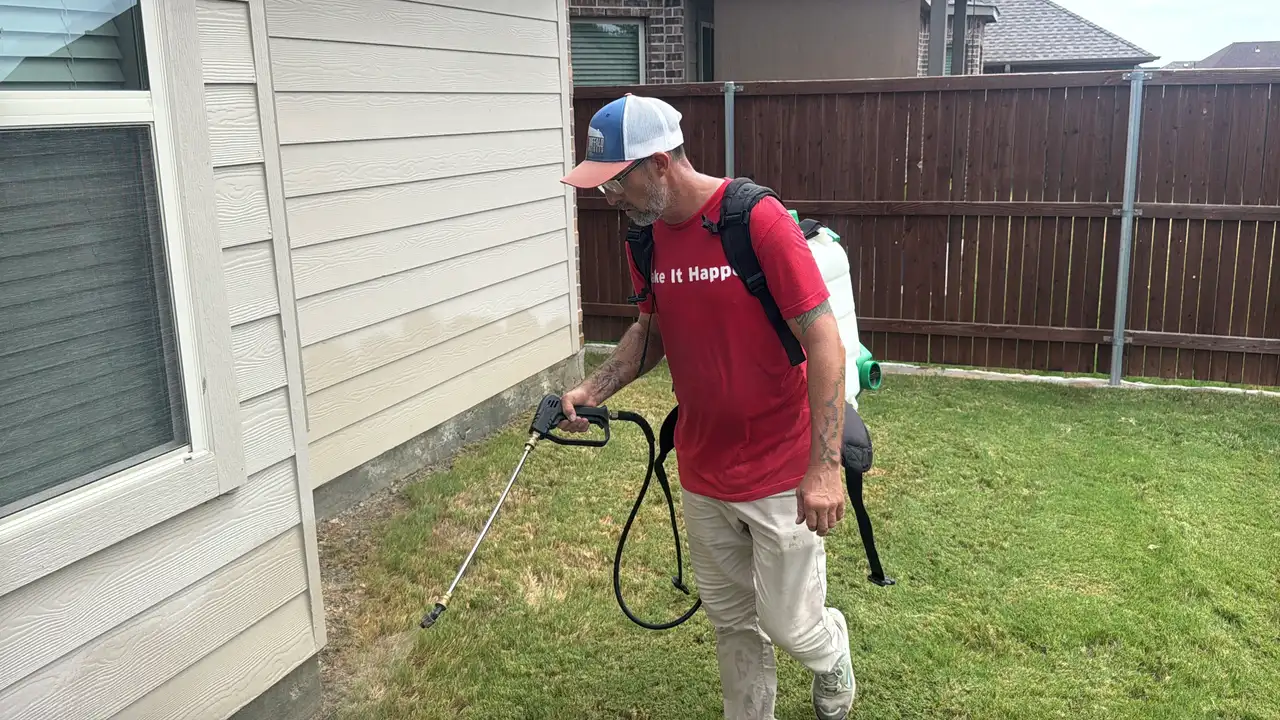
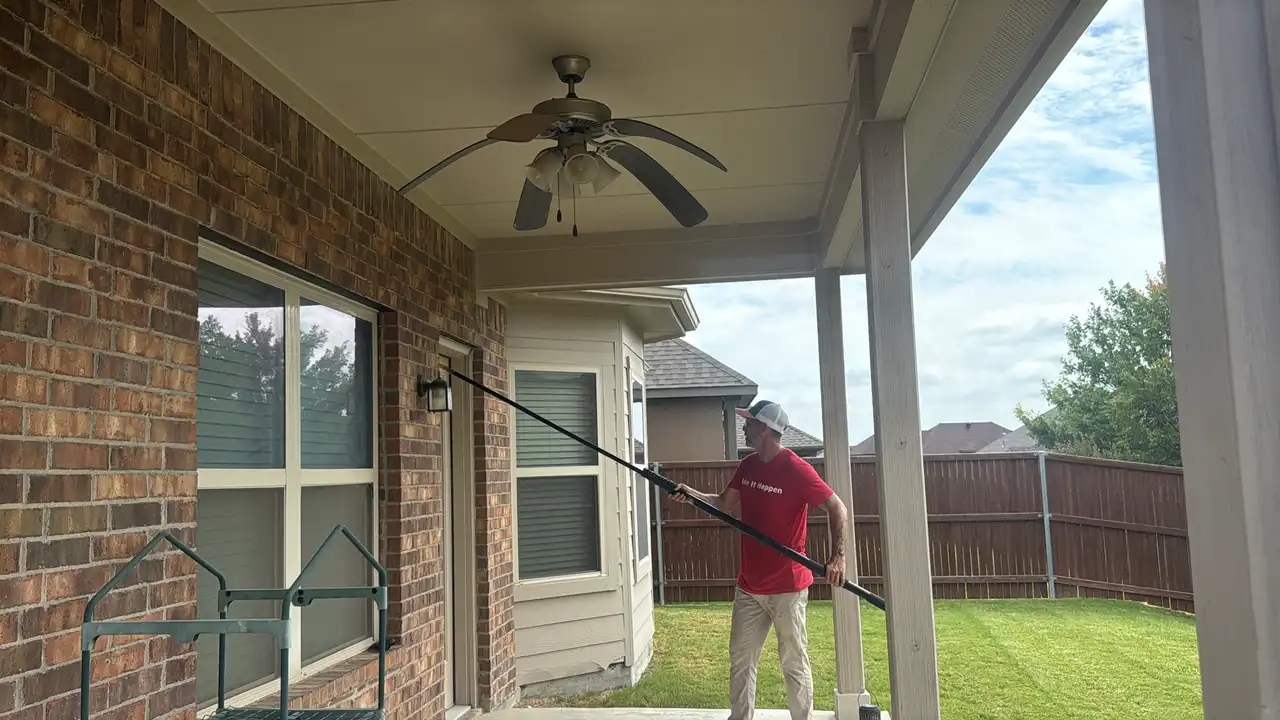
Liquid on the wall, web pole overhead
The barrier goes around the entire foundation and about three feet up, then eaves, soffits and door frames are swept clear of webs and new wasp nests. Clearing the overhead structures matters because a nest site knocked down has to be started again from nothing.
Weep-hole dust, granular and bait
Delta Dust is applied into the weep holes along the bottom course of brick on every visit, granular goes out roughly 25 feet into the yard, and fire ant bait is broadcast at the same time as part of the plan. You need only leave gate access; a text tells you when the truck arrives.