
UNDER THE HOUSE, NOT IN IT
The crawl space is the part most people miss
In a city whose housing mostly dates to the 1940s through the 60s, a good share of the flea problem happens underneath the floor. Cats, opossums and other animals bed down in the cool dark under a raised River Oaks house, leave flea eggs where they lie, and the larvae develop in ground that never sees sun or rain.
The Trinity bottom supplies the rest. Lots near the river and its drainage sit against brush that wildlife uses as a travel corridor, and that traffic seeds the back of the property with ticks in a way the interior streets never see.
Our treatment covers the lawn and a band around the structure every 21 days from April into September, billed per visit on lot size. The under-floor side is a joint effort, because if animals are living under there, the opening they use has to be closed or the supply never stops.
76114 LOT BANDS
What the visits come to on a River Oaks lot
Almost every lot in town is modest, which puts most homes at $49.95 or $59.95 a visit and the deeper parcels toward the bottomland at $69.95. Price follows lot square footage alone, so the age of the house, a pier-and-beam foundation and heavy tree cover all add nothing.
You will have the exact figure before agreeing to anything. There is no startup charge, no contract and no fee for stopping, and retreatment between scheduled visits is part of the price rather than an upsell.
7,000 sq ft or less
$49.95 a visit
The typical interior street lot
7,001 to 12,000 sq ft
$59.95 a visit
Wider lots and corners
12,001 to 17,000 sq ft
$69.95 a visit
Deeper parcels toward the bottomland
Return between visits
No extra cost
Warrantied until the next scheduled one
Every number on this page comes from our published price list. River Oaks homes get the same table as everyone else; the instant quote reads your square footage and lot size and hands you your own line.
WHAT WE CANNOT REACH
Three honest limits on an older property here
We cannot treat our way past an open crawl space. If something is denning under the floor it is manufacturing fleas faster than a surface application removes them, and the durable answer is screening the vents and skirting rather than more product. That is exclusion work, and it belongs first.
We cannot clear the river corridor either. Wildlife moving along the Trinity keeps dropping ticks at the back fence, so a boundary lot in River Oaks gets a treated buffer and a household that checks the dog, not a promise of nothing.
And the yard program does not settle an infestation that is already indoors. Fleas living in rugs and bedding run a self-contained cycle; hot laundry, hard vacuuming and a veterinary preventive are the cure, with one interior treatment included from us if it is needed.
SEAL IT OR TREAT IT
Exclusion or treatment: which does an older house need first?
If animals are under the house, closing the opening beats anything else the money could buy. A stray cat or an opossum bedding in a crawl space is a flea factory with a roof over it, and no volume of lawn treatment above ground outpaces it.
If the underside is already closed and the biting is happening outdoors, the order reverses and the 21-day visits are what change things. Most older River Oaks properties need some of both, and we would rather spend the first appointment telling you which half is driving your problem than sell you the easier one.
THE FIRST VISIT HERE
How we start on an older lot
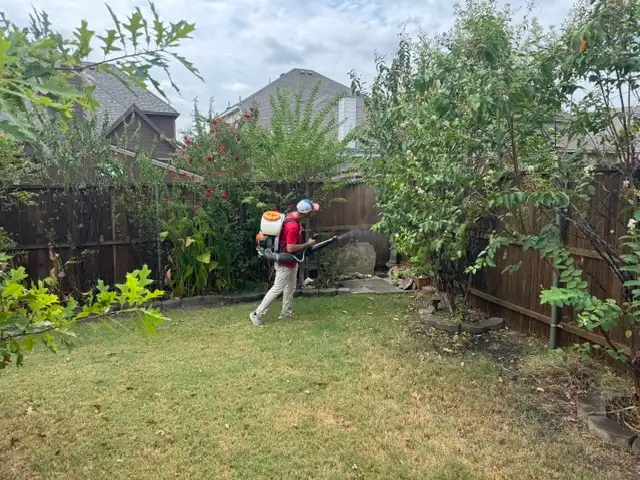
The underside and the skirting
On a raised house we look at the vents, the skirting and any gap wide enough for a cat, because that is where the flea reservoir usually turns out to be. You get told what needs closing and what we can treat as it stands.
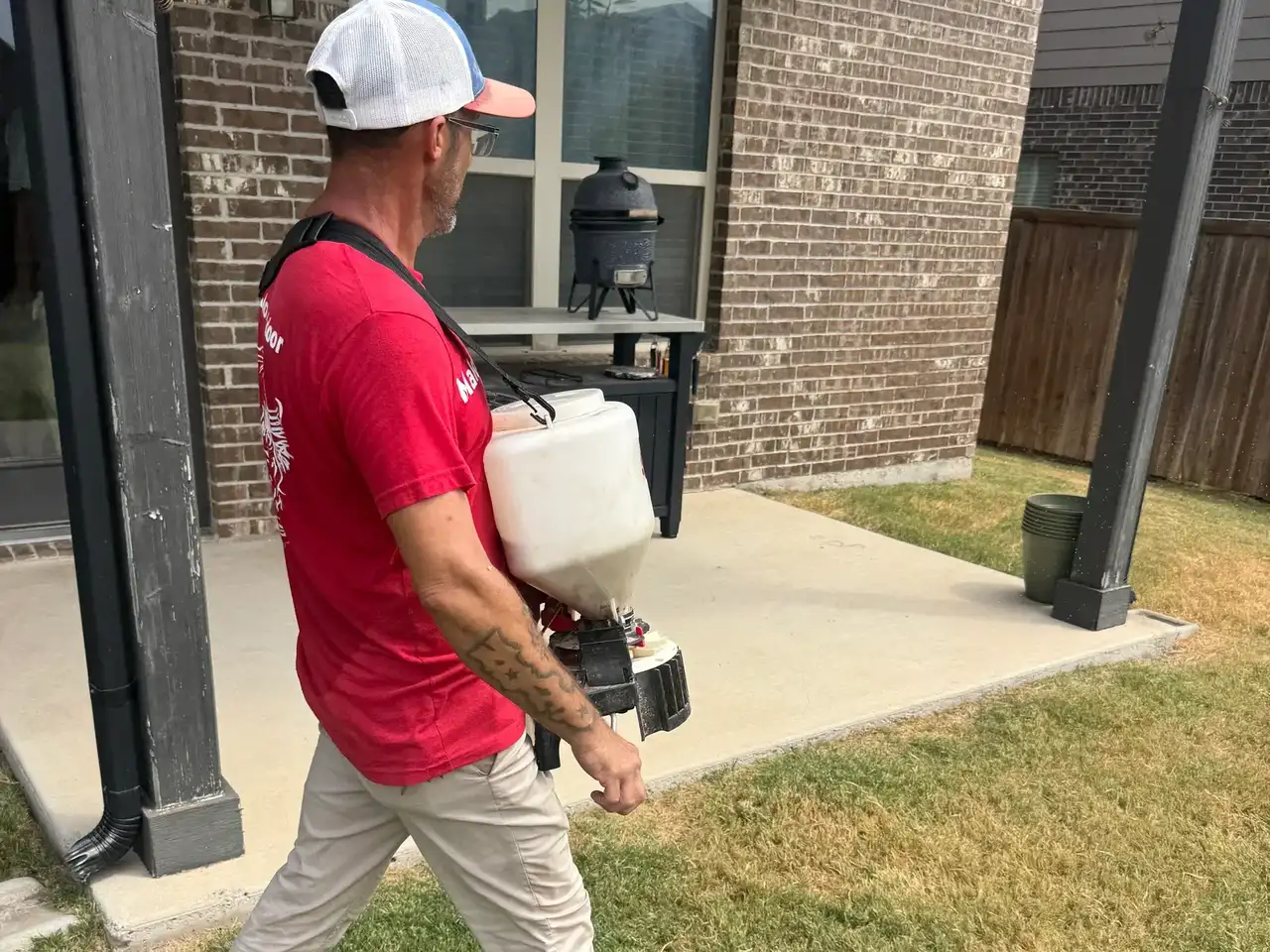
Shaded soil and the back boundary
Then the full lawn, with extra work along the north side, under decks and porches, and anywhere leaf litter has built up. Lots backing the Trinity drainage get a wider pass at the fence line where the ticks originate.
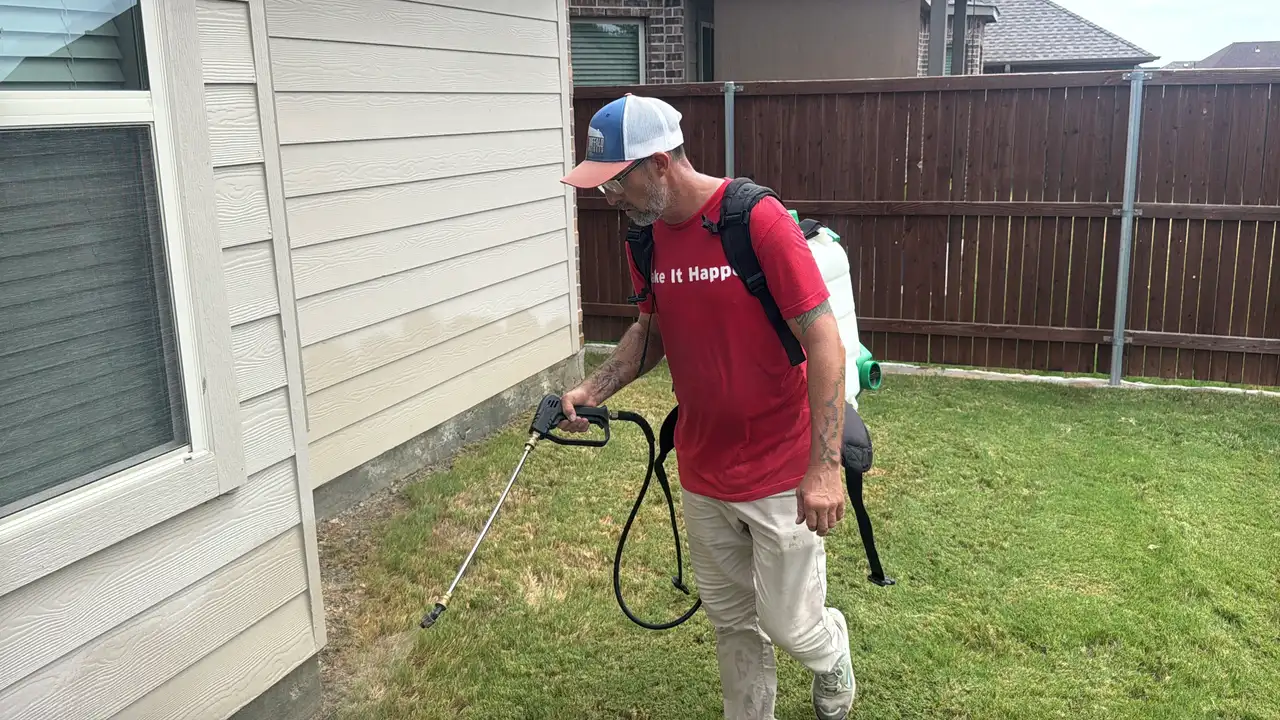
Drying time and the follow-up
Roughly two hours in summer and the yard returns to normal use. The next appointment lands 21 days later by design, meeting the generation that was still sealed in the soil on day one.