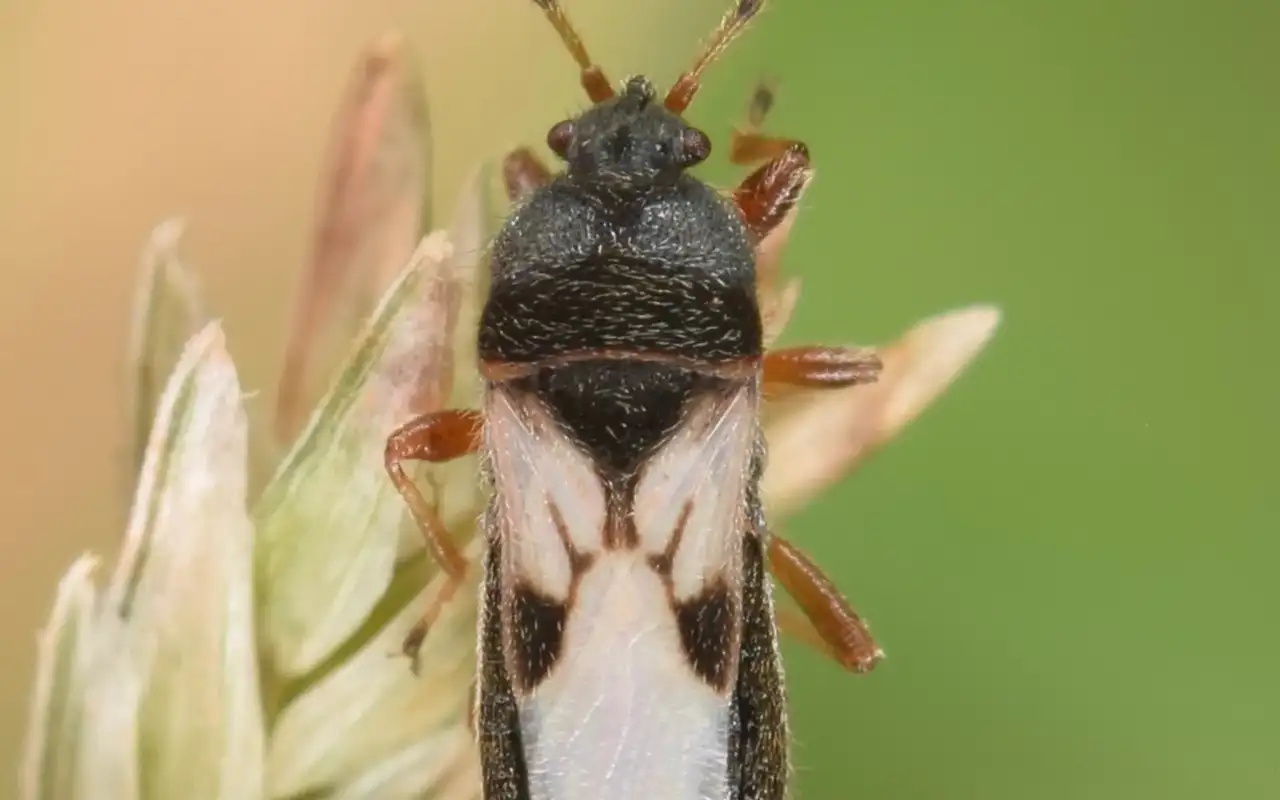
GRUBS BEFORE CHINCH BUGS
Why an older River Oaks lawn browns from underneath
On the 1940s-to-60s streets that make up most of River Oaks, the turf is established Bermuda and St. Augustine under trees that have been shading it for decades, and chinch bugs want the opposite of that. What those lawns get instead is grubs: beetle larvae feeding on the roots two to four inches below the surface, so the grass loses its grip on the soil before it ever changes colour.
Chinch bugs do turn up in River Oaks, but almost always where a strip of turf was replaced recently and is sitting in full sun by a driveway. The clue is that the brown looks like drought and water does nothing for it, because the insect's feeding blocks the plant from moving moisture. Down by the Trinity there is a second clue that is easier to spot: birds and armadillos tearing up patches of lawn at night, which means they have found grubs before you have.
PRICED ON THE HOUSE
What lawn insect coverage costs on a River Oaks lot
Nobody sells this as a stand-alone job, us included; it is folded into a year-round plan and the plan's price follows the square footage of the house. Complete Home & Lawn Defense treats every bit of the lawn and runs $40 to $73.50 a month. Home Defender is $30 to $54 a month and carries the applicable lawn treatment out about 25 feet from the foundation.
River Oaks housing is mostly modest, so a lot of homes here sit in the lowest two bands, and on a compact post-war lot the 25-foot ring on Home Defender can reach a surprising amount of the grass. There is no startup charge and no contract, and the instant quote at /instant-quote gives you the exact figure for your square footage without a sales call.
1,500 sq ft or less
$40/mo
Complete Home & Lawn Defense, the whole lawn
1,500 to 3,000 sq ft
$40–$51.50/mo
Where most River Oaks houses fall
Home Defender, under 1,500 sq ft
$30/mo
Lawn treated to about 25 feet from the wall
Home Defender, 1,500 to 3,000 sq ft
$33–$38/mo
Often enough on a small River Oaks lot
Every number on this page comes from our published price list. River Oaks homes get the same table as everyone else; the instant quote reads your square footage and lot size and hands you your own line.
WHAT IT WILL NOT FIX
Three things this treatment does not do in River Oaks
It does not regrow roots. Once grubs have chewed a patch loose, killing them leaves you with turf that still has to re-root, and in bad spots that means new sod rather than patience. We will point at the patches that are coming back and the ones that are not.
It does not help a lawn that is losing to shade. Under the mature canopy on the older River Oaks streets, thin grass is very often a light problem dressed up as a pest problem, and an insecticide has nothing to offer it. Mowing height, fertility and sometimes a groundcover are the honest answers there.
It also does not fix a fungus or a broken sprinkler zone. Brown patch, dollar spot, heat and under-watering all discolour turf in the same July weeks as the insects, and the majority of the usual causes are not bugs. If our checks find nothing feeding, we tell you that and leave without writing anything up.
HOME DEFENDER VS WHOLE YARD
Which plan a River Oaks homeowner actually needs
Pace off 25 feet from your back wall before you decide. On many River Oaks lots that line lands close to the back fence, and everything inside it already gets the applicable lawn treatment on Home Defender. If the loose, spongy patches sit inside that ring, the cheaper plan is doing the job and the upgrade buys you little.
Complete Home & Lawn Defense earns its extra $10 to $19.50 a month when the damage is out past that ring: a deep lot toward the river bottom, a side yard the ring misses, or a front lawn that runs long. It also broadcasts the fire ant bait across the full yard rather than the band, which matters less on settled River Oaks soil than it does in a new subdivision, but is still part of what you are paying for.
FIRST TIME OUT
How we read a River Oaks lawn before treating it
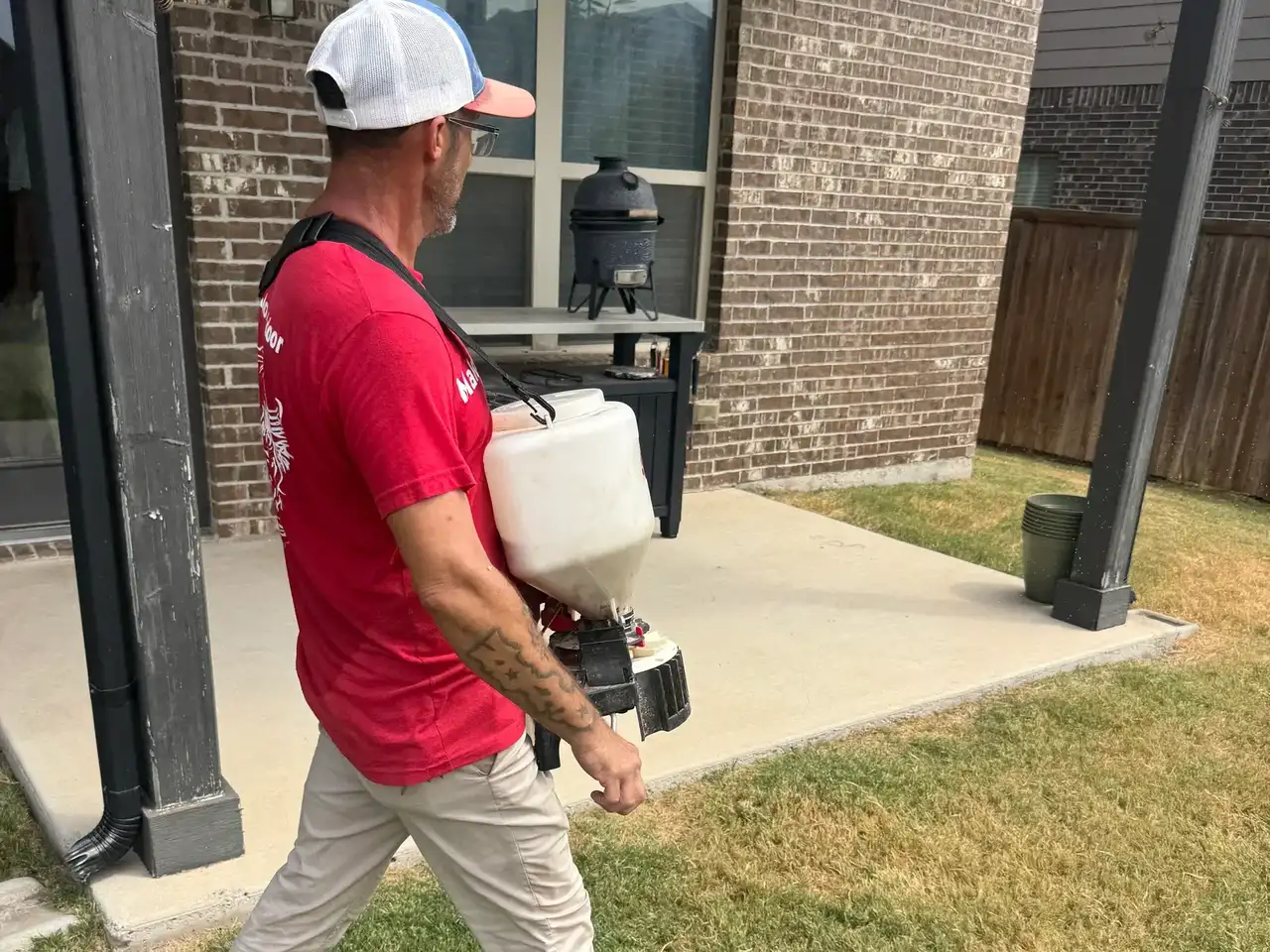
Pull before we spread
The first move on an older lawn is the tug test: grip the turf at the border of the damage and lift. Roots that have been eaten give way like a rug, and we fold back a square foot and count what is under it. Fewer than five larvae is not worth treating.
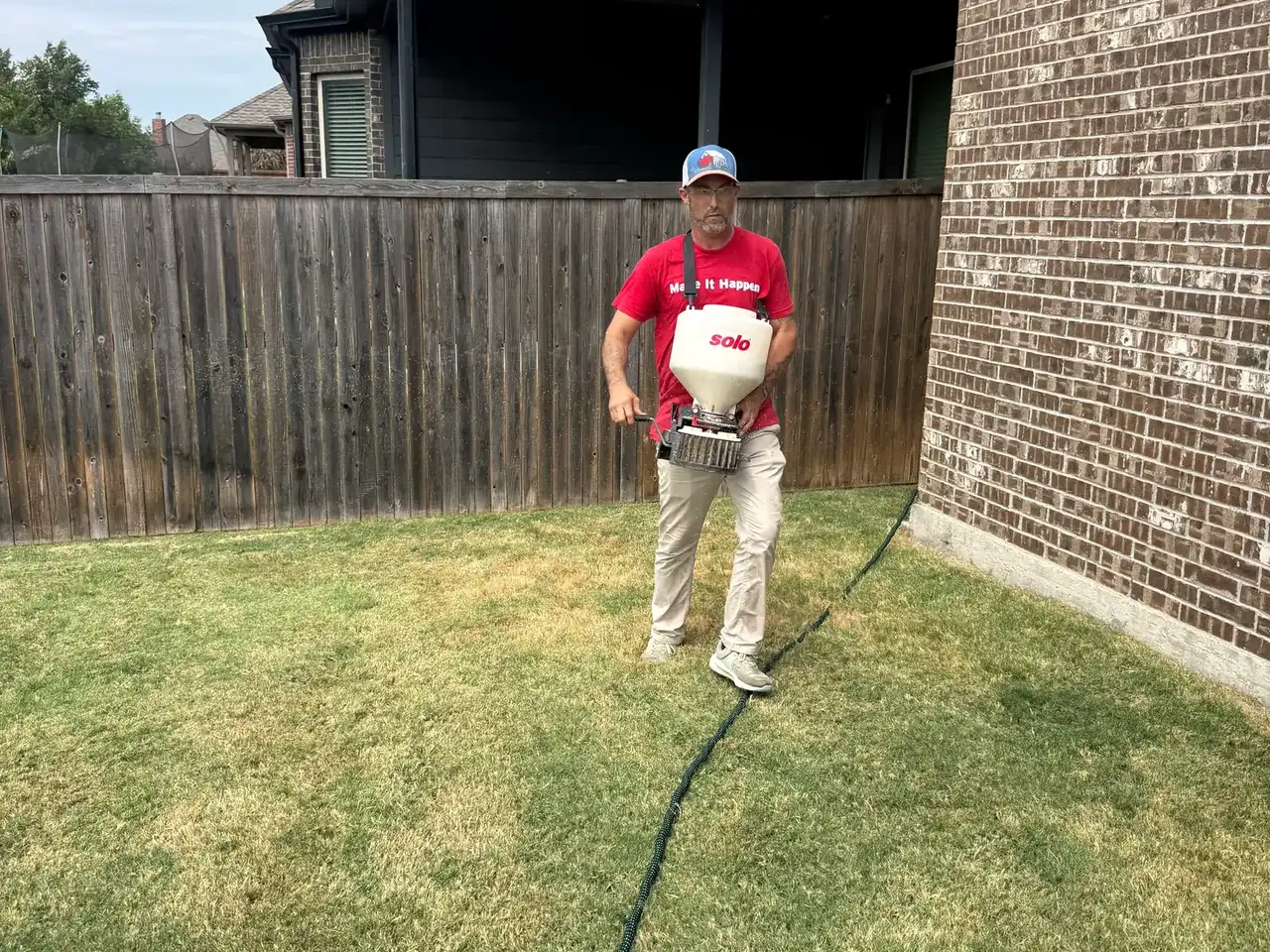
Check the replaced strips
Any sod that went down in the last couple of seasons gets a look on its own, especially along a sunny driveway edge. That is the only place in River Oaks where we expect chinch bugs, and a bottomless can of water pressed into the soil settles it in ten minutes.
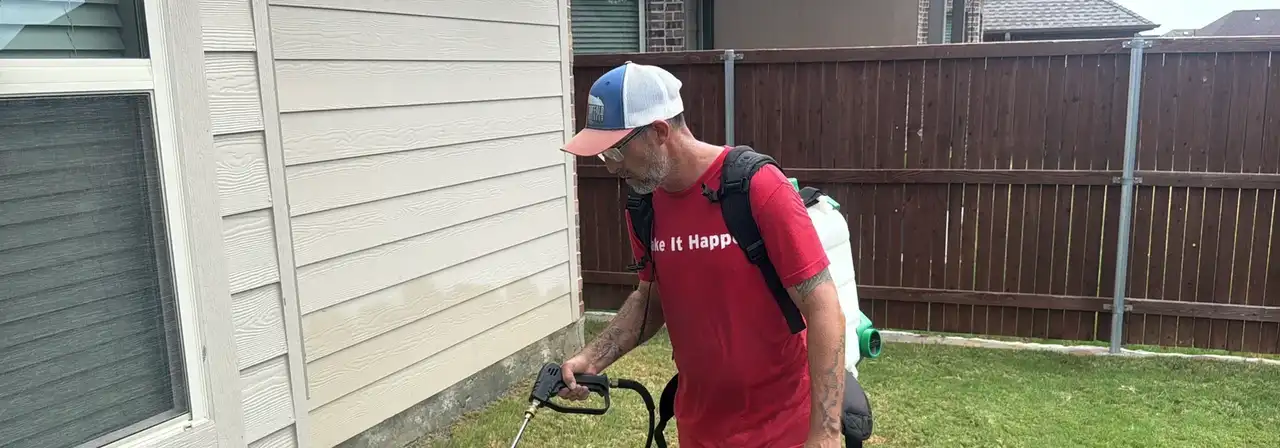
The house comes with it
Because turf coverage rides on a year-round plan, the same visit dusts the weep holes with Delta Dust, treats the eaves and foundation band and puts fire ant bait down. On 1950s brick and pier-and-beam that first exclusion look is worth as much as the lawn work.