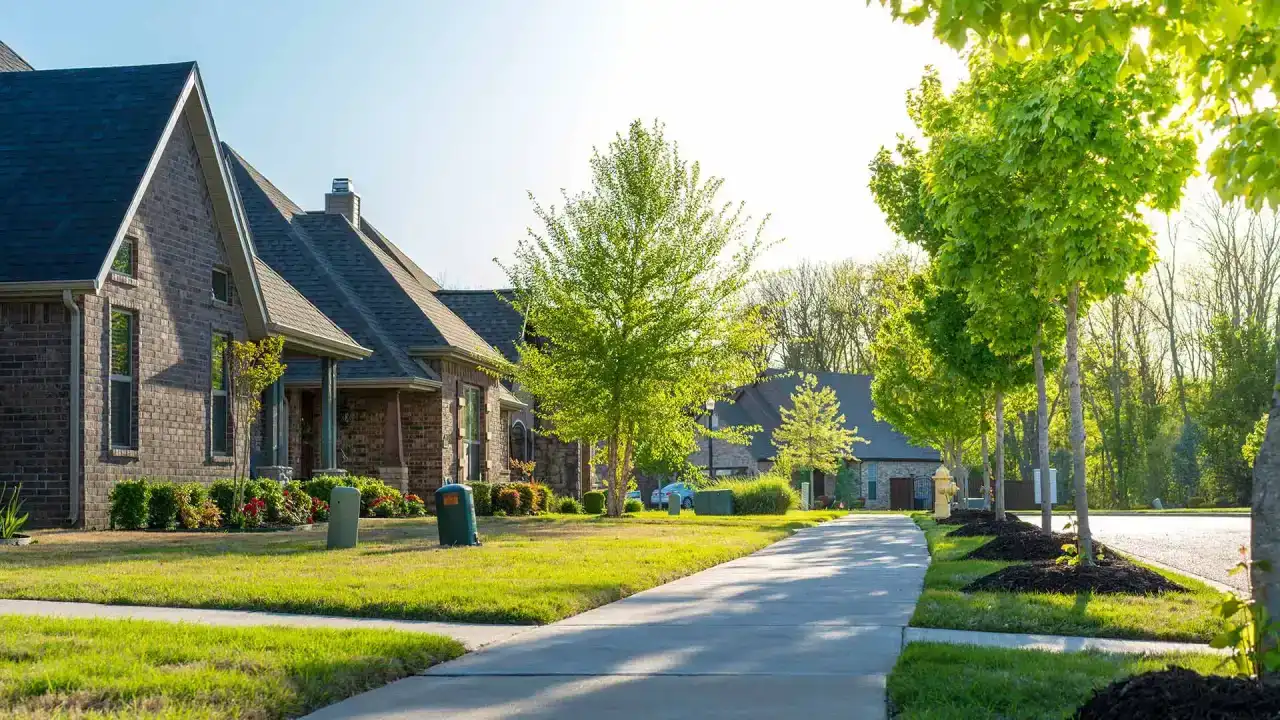
TRINITY BOTTOM, OLD STOCK
Why the crawl space is the first place we look in River Oaks
Because on a house built in the 1940s or 50s it is the easiest way in. A pier-and-beam River Oaks home sits over an open, vented space that a rodent can walk into at ground level, and once it is under the floor it has the whole footprint to work with: joists to run along, pipe penetrations to climb and insulation to nest in, all out of sight.
The Trinity bottom supplies the animals. The river and its drainage west of downtown hold a permanent rat population with cover the whole way, and properties nearer that low ground take more traffic at the back fence than the interior streets do.
Slab houses here are not exempt, they just fail somewhere else — at the bottom course of brick, a worn threshold or the gap where a line was run into the wall. Either way the work is the same shape: find it, close it, trap what is inside, come back and check.
THE RIVER OAKS NUMBER
What you actually pay, month to month
Rodent control is $25 a month, riding on Home Defender or Complete Home & Lawn Defense. It does not exist as a standalone service, because sealing that nobody returns to check is sealing that eventually fails without anyone noticing.
River Oaks housing is generally small, which keeps the base plan low. Under 1,500 square feet, Home Defender is $30 a month and the combined figure is $55; from 1,500 to 3,000 square feet it is $33 to $38, so $58 to $63. Complete Home & Lawn Defense, which adds the whole yard, starts at $40 with the same $25 rodent line on top. No contract, no startup charge, and you get the number before you decide.
Rodent add-on
$25 a month
On top of either year-round plan
Home Defender, under 1,500 sq ft
$30 a month
Much of the 1940s and 50s housing
Home Defender, 1,500 to 3,000 sq ft
$33–$38 a month
Extended and remodelled homes
Complete Home & Lawn Defense, under 1,500 sq ft
$40 a month
Adds yard treatment at the same rodent price
Every number on this page comes from our published price list. River Oaks homes get the same table as everyone else; the instant quote reads your square footage and lot size and hands you your own line.
WHAT IT WILL NOT REACH
The honest shortfalls on an older River Oaks house
It does not fix a floor. Under an old pier-and-beam house we sometimes find subfloor that has gone soft, a joist end rotted where a leak ran, or ductwork chewed open. Those are repairs, and a carpenter or an HVAC company does them; we can seal around sound material but not rebuild what has failed.
It does not touch the bottomland. The drainage and brush along the Trinity carry rodents year in and year out, and no exclusion programme reduces that. The claim we will make is narrower: the building becomes unavailable, and what is inside gets trapped out.
And it does not include a clean-up. Droppings and nesting material in a crawl space or attic need removing by somebody kitted out for it, and that is a separate trade. We will tell you honestly whether it is warranted, and often on a small River Oaks house it is not.
SCREEN IT OR BLOCK IT
Why a crawl vent gets screened rather than sealed shut
The instinct with a broken foundation vent is to close it off completely, and on an older River Oaks house that is the wrong move. Those vents are there to keep the space under the floor dry; block them and you trade a rodent problem for damp joists, which is a slower and more expensive kind of damage.
What we do instead is fit heavy galvanised mesh over the opening, screwed to sound material, so air moves and nothing gets through. It is the same principle everywhere on the house: the aim is not to fill every hole, it is to make every hole the wrong size. Weep holes are the clearest example — both year-round plans pack them with copper mesh, which drains and breathes while stopping a mouse.
UNDER, ROUND AND UP
How we work a first visit in River Oaks
Under the floor
Where there is safe access we go into the crawl space and read it: droppings along joists, runways in the dirt, nesting in insulation, gnawed duct. That tells us both how many are using the house and where they are coming in, and nothing seen from outside substitutes for it.

Vents, skirting and the bottom course
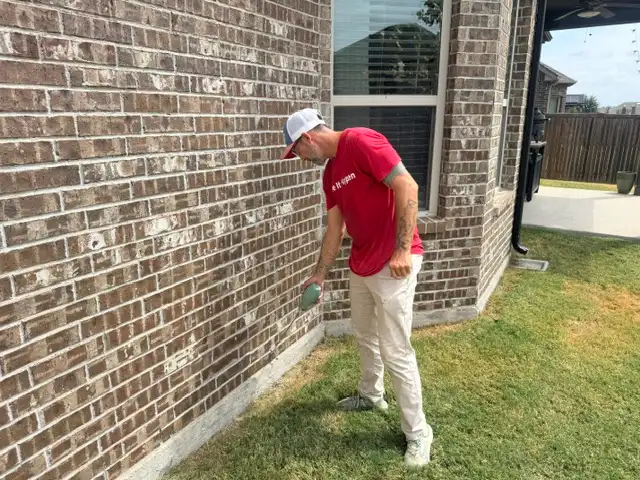
Foundation vents, skirting boards, porch skirts and the gap where a slab addition meets the original structure are the usual openings on housing this old. Each gets screened or packed with material that cannot be chewed, and the weep holes on any brick are already sealed with copper mesh and dusted under both plans.
Upstairs sign and where traps land
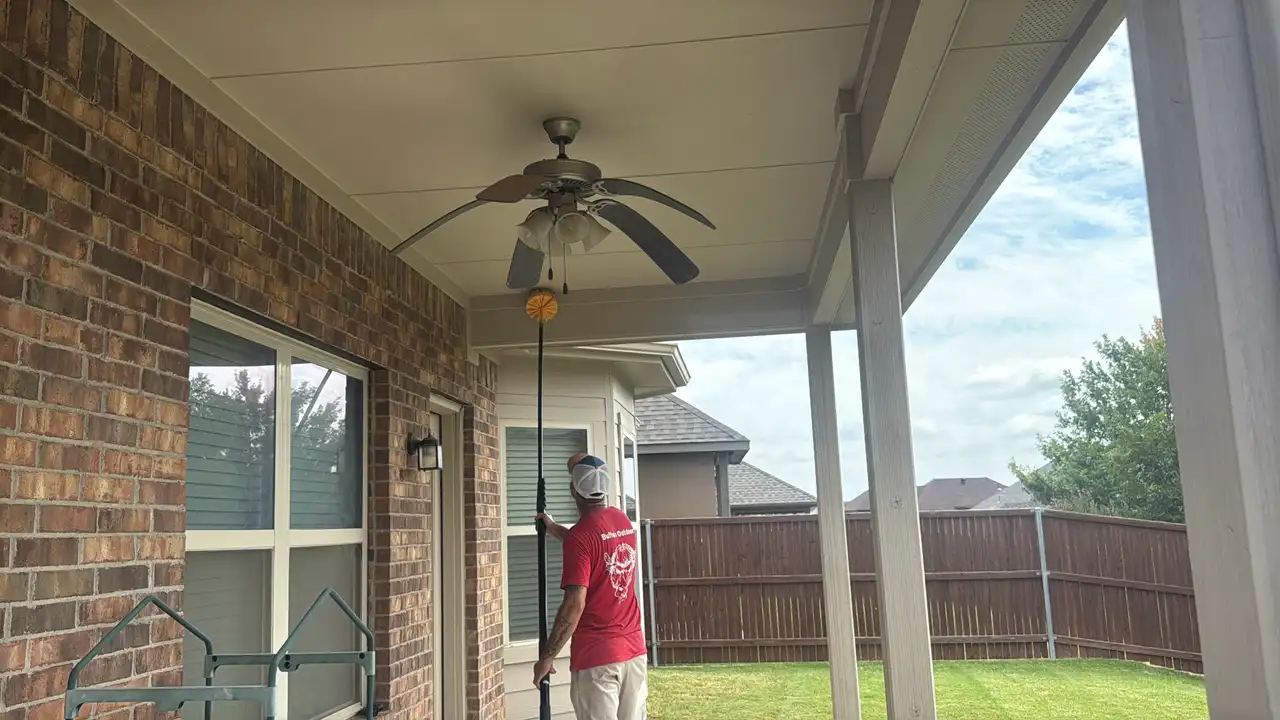
Inside and in the attic we look for droppings, rub marks and chewed packaging to work out the routes. Snap traps go on those runways, bait only in locked stations out of reach of children and pets, and the follow-up visit is set before we finish.