
THE ROUGH AND THE GREENBELT
Why course-side lots itch and interior blocks do not
Because the rough is chigger habitat and a fairway is not. Trophy Club was laid out around its golf courses, and the mown, irrigated turf of the course itself holds almost nothing, while the unmanaged rough, the greenbelt strips and the creek corridors behind them hold a great deal. A lot whose back fence opens onto that ground takes the pressure, and one in the middle of a block mostly escapes it.
Larvae climb rather than jump or burrow, waiting on grass stems for something to walk past and then climbing until clothing stops them. That produces the band of welts at the sock line, the waistband or under a strap three to six hours later, and it is why inspecting your skin at the time would have shown you nothing.
COURSE-SIDE PRICING
The monthly number on a Trophy Club home
Most houses here land in the upper bands, because both year-round plans price off the square footage of the home. Complete Home & Lawn Defense, the one treating the whole yard and therefore the one that reaches a back fence, is $51.50 to $62 a month from 3,000 to 4,500 square feet and $62 to $73.50 from 4,500 to 6,000. Above 6,000 square feet the figure is quoted after a look at the property.
Home Defender, $38 to $54 a month across those sizes, covers the structure and 25 feet beyond. On a Trophy Club lot where the trouble begins at the greenbelt fence, that ring is in the wrong place, though it makes sense when the bites happen in the beds beside the patio. No contract on either plan, no cancellation fee, and retreatment between scheduled visits is inside the price.
3,000 to 4,500 sq ft
$51.50 to $62 a month
Whole yard out to the back fence
4,500 to 6,000 sq ft
$62 to $73.50 a month
Many of the course-side homes
Over 6,000 sq ft
Quoted
Priced after walking the property
Home Defender, 3,000 to 6,000
$38 to $54 a month
Perimeter ring, for patio-side bites
Every number on this page comes from our published price list. Trophy Club homes get the same table as everyone else; the instant quote reads your square footage and lot size and hands you your own line.
WHERE THE PLAN STOPS SHORT
What chigger treatment cannot do on a fairway lot
The course is not ours to treat. Rough beyond your fence belongs to the club and stays a reservoir all season regardless of what happens on your grass. What treatment does is take out everything that has moved into your yard and make the boundary strip inhospitable enough that fewer of them settle there.
Greenbelt and creek ground behind the residential streets behaves the same way. It is shaded, damp and seldom cut, which is the ideal combination, and it runs continuously behind several properties at once. Anybody offering to clear the chiggers out of a greenbelt is selling a result that lasts until the next rain.
Manicured landscaping carries its own problem, which does surprise people. Deep mulch against the brick, shrubs planted tight to the wall and sprinklers keeping all of it damp build a small permanent chigger-friendly zone within arm's reach of the back door. Pulling that mulch back and letting the strip dry is your side of the work, and it changes the outcome.
SPRINKLERS VERSUS SPRAY
Watering habits against a treated lawn
Look at the irrigation before you look at the product. A yard on a heavy summer schedule keeps its shaded edges permanently moist, and moist shaded ground is what carries a chigger population through July when dry ground would have thinned it out. Cutting the run time on the zones along the back boundary costs nothing and works on the cause.
The treated version covers the entire lawn with its weight along the course or greenbelt boundary, under the shrubs and through the shaded beds, then bands every door out three feet. That is the part no irrigation change can do, since larvae already in the grass do not leave because the ground got drier. Run together they hold, and either one alone leaves gaps.
FIRST VISIT ON A COURSE LOT
How the first appointment runs in Trophy Club
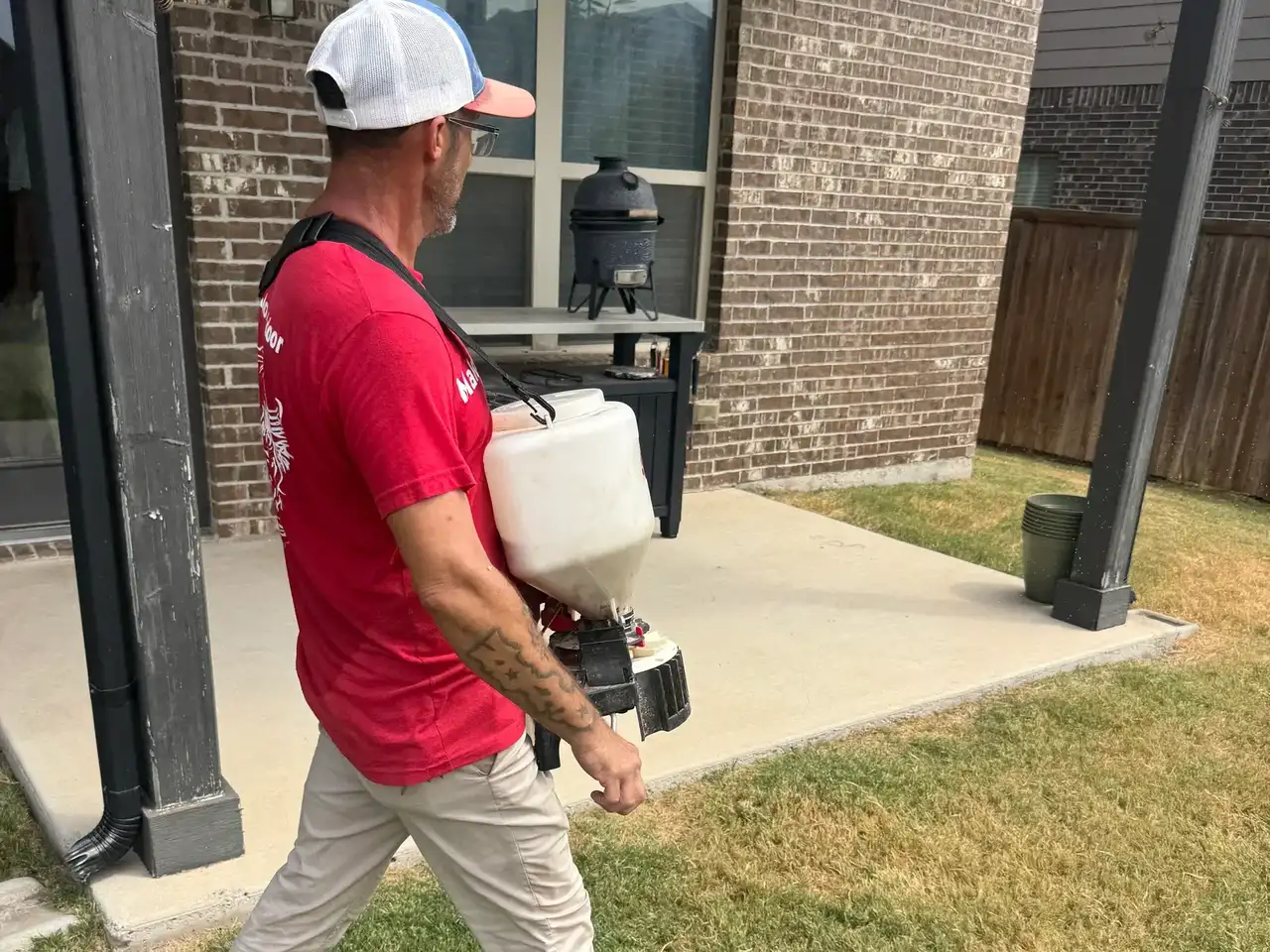
Standing at the back fence
The visit starts where your lawn meets the rough, the greenbelt or the creek, since that line is the source on nearly every Trophy Club property with this complaint. Its width and how much sun reaches it decide how heavy the boundary pass has to be.
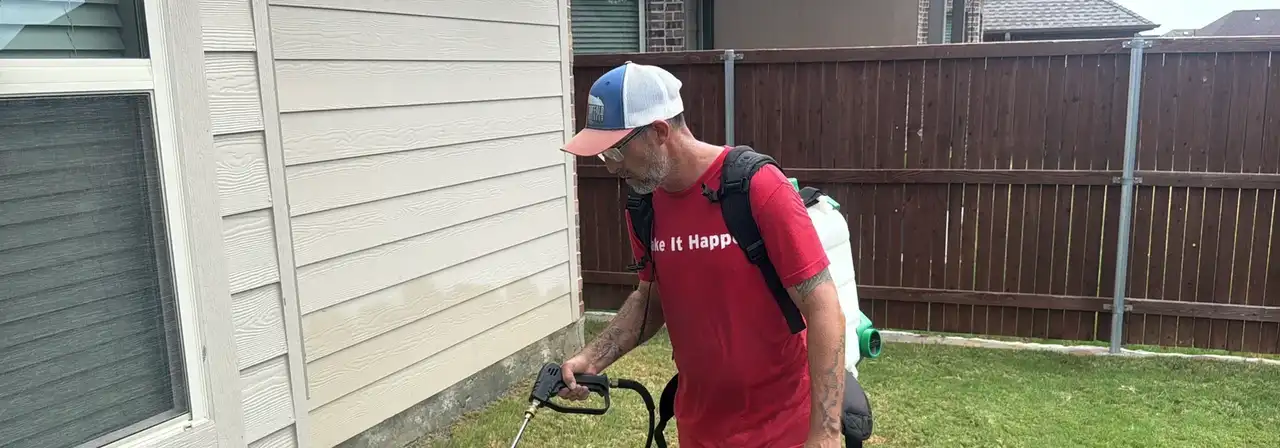
Beds, mulch and sprinkler heads
Landscaping against the house is checked for depth, dampness and litter, and you will hear which beds to thin out and which zones to turn down. Treating a bed that gets watered daily without touching the watering is a short-lived result and saying so beats pretending otherwise.
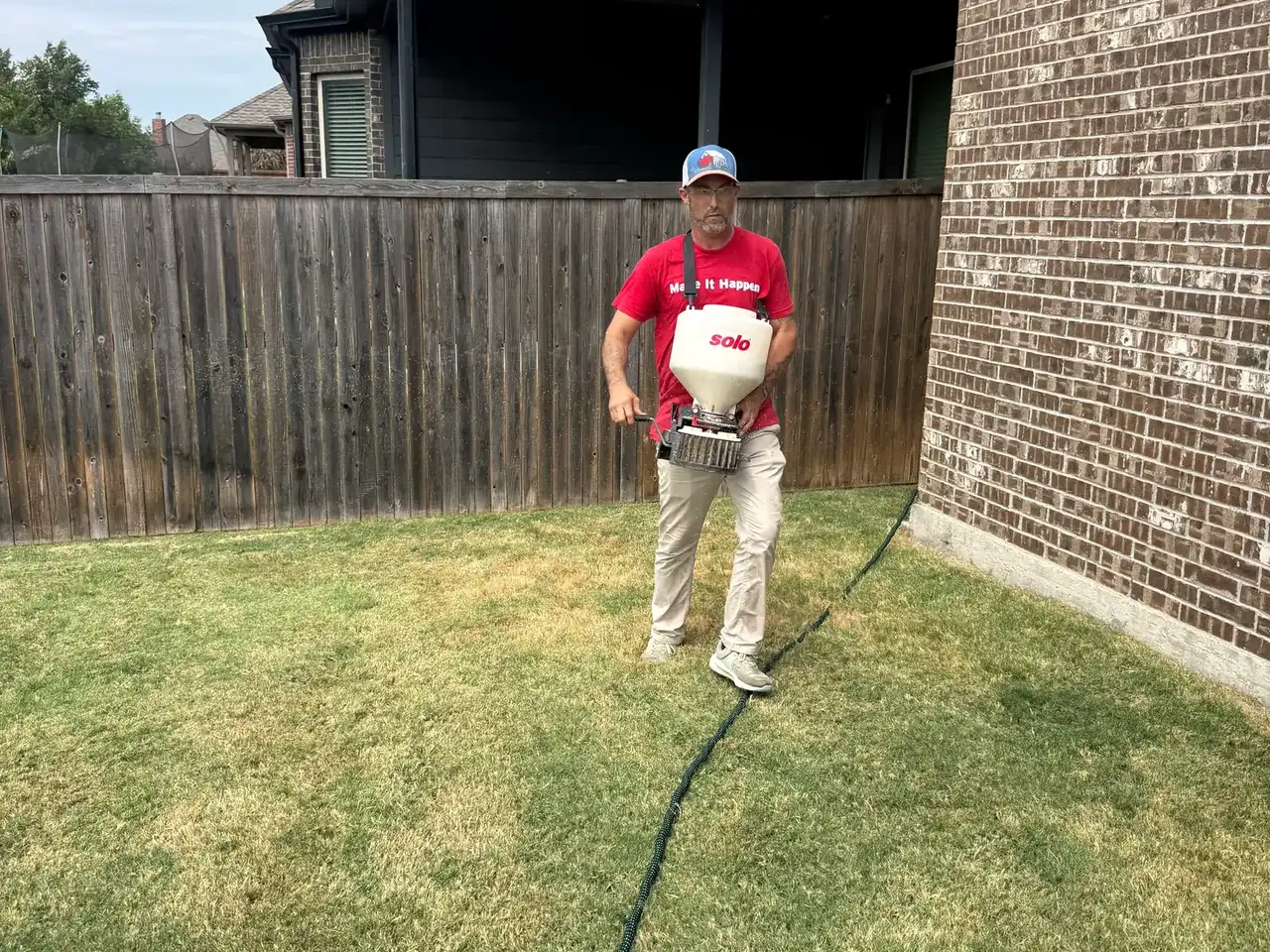
Doors and the weep holes
Each entry point takes a treated band so larvae are not carried in off the lawn, and the weep holes receive Delta Dust plus copper mesh. Sealing them permanently comes with both plans, which is worth holding up against any other quote you are looking at.