COURSE-SIDE LOTS, 76262
What is a perimeter plan up against in Trophy Club?
Irrigated ground, mostly. Trophy Club was laid out around its golf courses, so the town is full of watered turf, water features and manicured beds, and those conditions keep insects active later into the year than a drier neighbourhood manages. The rough and the greenbelts behind the course-side lots stack ticks and chiggers on top of that.
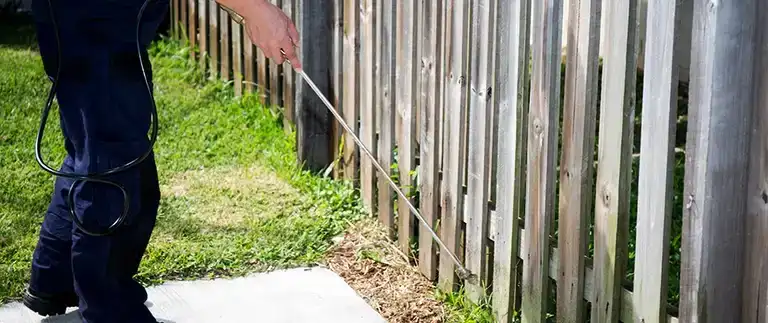
Home Defender meets it with four visits a year and a fixed list: a liquid band around the foundation and three feet up the wall, an eave and door-frame sweep with a web pole, Delta Dust in every brick weep hole, a granular barrier broadcast about 25 feet into turf and beds, and fire ant bait across the yard. Fire ant treatment comes with both year-round plans rather than being billed separately.
WHAT THESE HOMES PAY
Where a Trophy Club house lands in the table
Toward the upper half of it, because the houses are large. Home Defender spans $30 to $54 a month and the only input is square footage of the home, so a Trophy Club floor plan between 3,000 and 4,500 square feet pays $38 to $46, and one between 4,500 and 6,000 pays $46 to $54.
Above 6,000 square feet the plan is quoted instead of banded, which means somebody measures rather than estimates. Whatever the figure turns out to be, you hear it before committing, the four visits are billed monthly, return trips in between are free because the service is warrantied between treatments, and there is nothing to sign.
3,000-4,500 sq ft
$38-$46 a month
The common band in this town
4,500-6,000 sq ft
$46-$54 a month
The larger course-side plans
Over 6,000 sq ft
Quoted
Measured on site rather than estimated
Complete Home & Lawn Defense
$40-$73.50 a month
The whole-yard version of the same plan
Every number on this page comes from our published price list. Trophy Club homes get the same table as everyone else; the instant quote reads your square footage and lot size and hands you your own line.
THE FAIRWAY PROBLEM
What backing onto a course does that we cannot undo
We treat your property and only your property. The rough, the fairway and the greenbelt on the far side of your fence belong to somebody else and are mown and watered on somebody else's schedule, so ticks and chiggers living out there keep arriving no matter how carefully the boundary is treated. A treated buffer slows that traffic down. It does not seal a border.
Mosquitoes fall outside this program entirely. Water features and constant irrigation across Trophy Club keep breeding sites topped up through the summer, and a barrier built for crawling insects has no effect on something that flies over it. Mosquito, Flea & Tick is the program for that, running every 21 days from April through September and priced on lot size.
And no treatment out-works landscaping that is fighting it. Beds watered daily and shrubs pressed up against brick keep the wall shaded and damp, which is exactly the condition the pests you are paying to exclude are looking for. We will show you what to cut back. That part is not on the invoice, and skipping it costs more than it saves.
RING OR EVERY BLADE
Is the whole-yard upgrade worth it beside the course?
On a lot backing the rough, usually yes. The Home Defender ring reaches roughly 25 feet from the walls, and on a Trophy Club property with a deep back yard that can stop well short of the fence the chiggers and ticks are crossing. Complete Home & Lawn Defense treats the entire yard for $40 to $73.50 a month on the same square-footage bands.
On an interior street with neighbours on every side the calculation reverses, and the ring already covers the ground a family actually uses. Nothing locks you into either choice, since neither plan carries a contract, so a household that upgrades through a bad tick season can drop back afterwards without paying a penalty for it.
THE OPENING APPOINTMENT
How the first Trophy Club treatment runs
The fence at the back
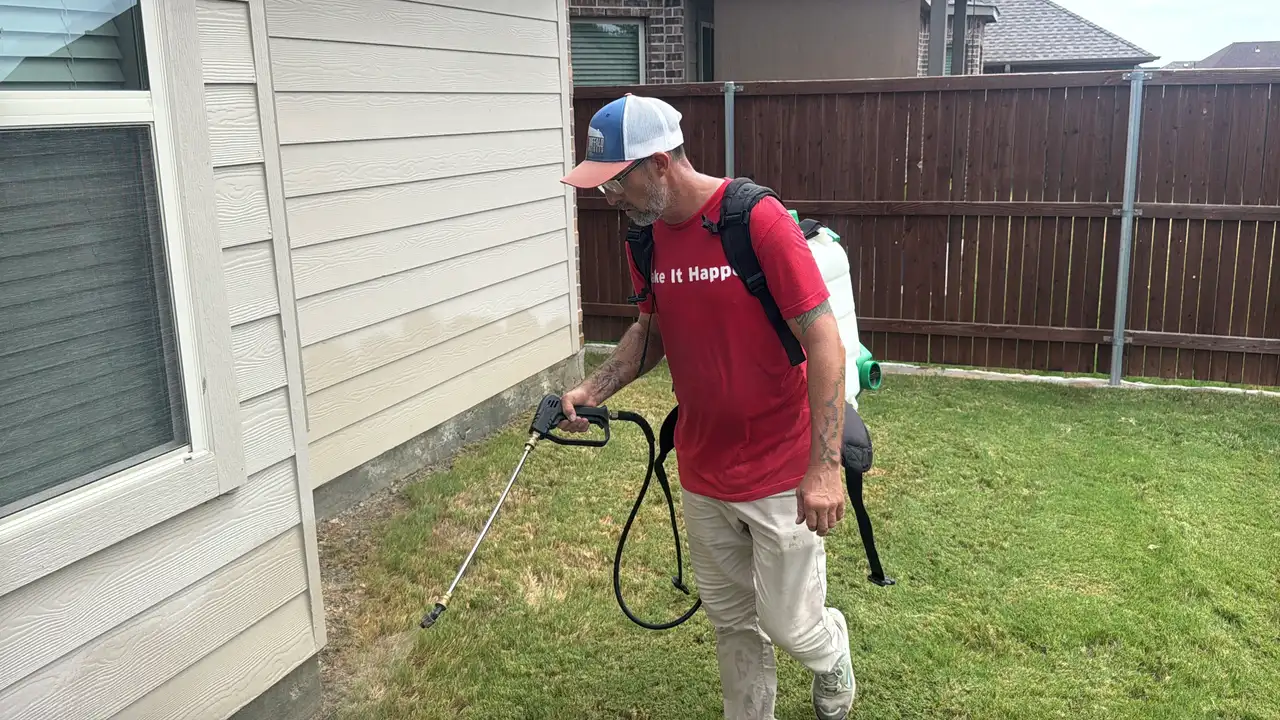
On a course-side lot the technician starts at the rear boundary, because that is the side sending the most traffic toward the house. How deep the yard runs from there to the wall decides whether a 25-foot ring is doing the job or whether the whole-yard version is the honest recommendation.

Beds, mulch and sprinkler heads
The next lap is the landscaping: how deep mulch sits against the slab, what is physically touching the brick, and which elevation the irrigation keeps wet. Those spots get treated, and the ones you would be better off trimming or pulling back get pointed out rather than quietly sprayed around.
Wall, eaves and the bottom course
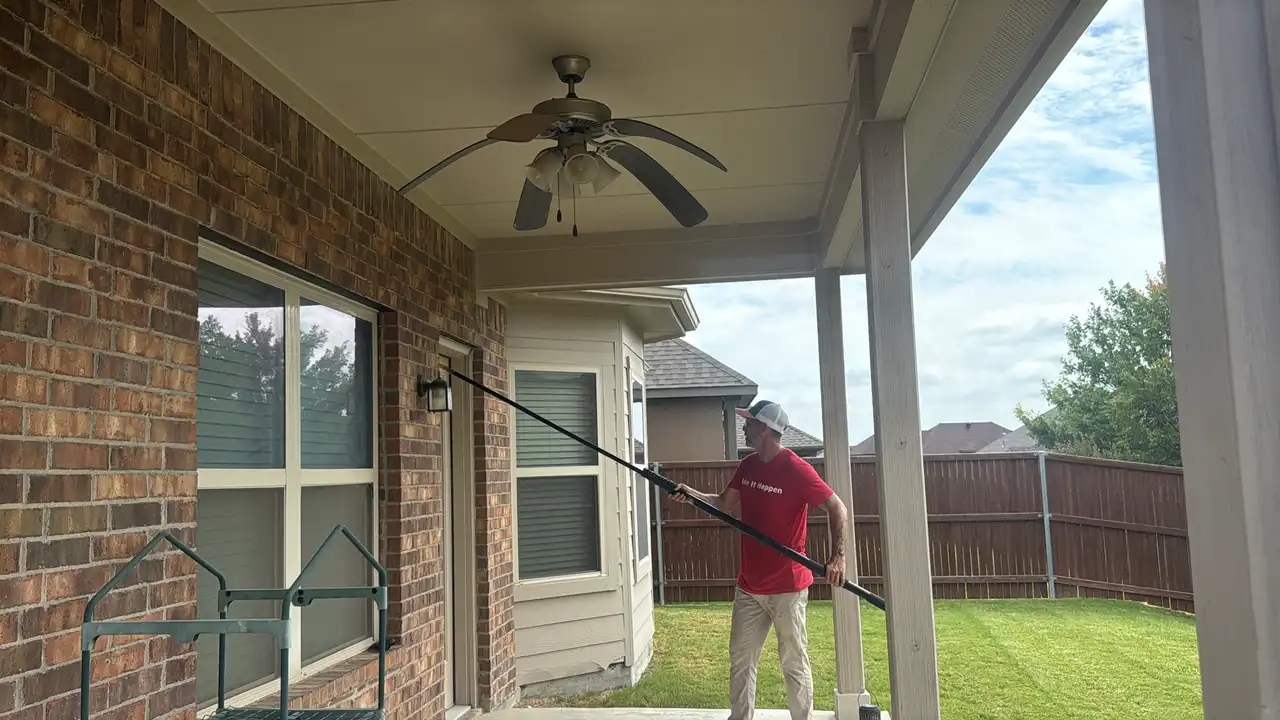
Then the treatment itself. Liquid along the foundation and up the wall, the web pole through eaves, soffits and door frames, Delta Dust into every weep hole, granular out to the ring and fire ant bait across the yard. Gate access is the only requirement, and a text goes out before the technician arrives.