BUILT AROUND THE FAIRWAYS
What golf-course living does to the mosquito count
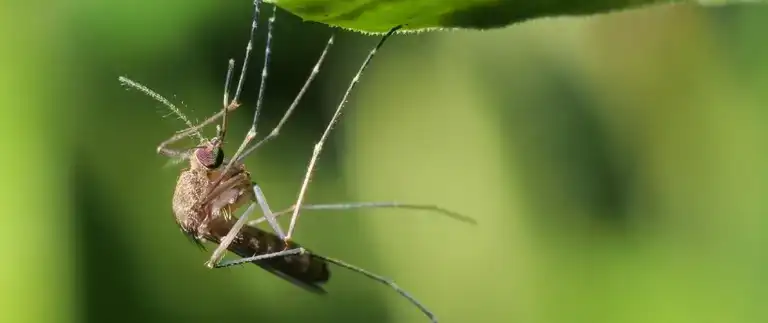
Trophy Club was drawn around its courses, and mosquitoes read that layout as a menu. Irrigated turf and water features stay moist into late summer, the rough and the greenbelt edges never dry the way a mown lawn does, and manicured beds sit watered and dense against the brick. Adults pass daylight in exactly that cover and feed at dusk.
So the work aims at cover, not open grass. We fog that shaded layer every 21 days from April through September, treating the rear boundary of a course-side lot as hard as the front beds, and the turf and bed edges get fleas and ticks on the same stop. It is sold as a season in this corner of Denton County because one application holds about three weeks.
PRICED ON YOUR LOT
What a Trophy Club visit actually costs
Between $59.95 and $89.95 a visit for most of the town, because the figure follows lot square footage and nothing else. A standard master-planned lot of 7,001 to 12,000 square feet is $59.95; a wider course-side lot of 17,001 to 22,000 square feet is $79.95. What the house measures plays no part in it.
You pay one visit at a time, as each treatment happens: nothing up front, nothing to sign, nothing owed if you stop in July. A flare-up before the next scheduled date is warrantied rather than billed. Put the address into /instant-quote and the band comes back attached to your lot.
Lots from 7,001 to 12,000 sq ft
$59.95 a visit
Standard interior streets
Lots from 12,001 to 17,000 sq ft
$69.95 a visit
Wider and corner lots
Lots from 17,001 to 22,000 sq ft
$79.95 a visit
Many of the course-side lots
Lots from 22,001 to 27,000 sq ft
$89.95 a visit
Roughly half an acre
Every number on this page comes from our published price list. Trophy Club homes get the same table as everyone else; the instant quote reads your square footage and lot size and hands you your own line.
STRAIGHT ABOUT LIMITS
What the fog cannot promise on a fairway lot
The course stays untreated, and that matters. Irrigated fairways, the rough, water features and the greenbelt corridors behind Trophy Club fences all produce mosquitoes that are not ours to spray, and a share of them cross the line each evening. A barrier removes what lives and breeds on your side, which is the larger part of the biting, though plainly not all of it.
Decorative water is the blind spot on a tidy lot. A fountain switched off in August, saucers under patio pots, a French drain that never dries, the dipped corner of a bed: each hatches more in a week than an afternoon of fogging removes. We name them on the walk-through and larvicide what cannot be emptied, but the tip-out belongs to you.
The clock also runs out at roughly three weeks. Product ages off foliage in Texas heat, which is why the interval is 21 days rather than monthly, and a storm the night after an application shortens it. That gap is covered, not charged for.
COMMON AREA OR YOUR LOT
Waiting on the course and the HOA against treating your own ground
Fair question: why pay when the source sits on shared land? Course maintenance and HOA landscaping crews look after the turf, the water and the common beds, and that genuinely cuts habitat on the far side of your fence. None of it is aimed at the shade inside your yard, and none of it runs on your calendar.
The split is about where adults spend the day. They are not sitting on mown fairway grass at noon; they are in your hedge line, the north wall, the deck skirting and the beds the sprinklers keep soft. That layer is small enough to do properly every 21 days. Residential lots and HOA common areas are separate jobs here, so if the HOA wants the shared ground priced, ask them to contact us directly.
OPENING VISIT, TROPHY CLUB
How the first treatment runs on a master-planned lot
Reading the back boundary
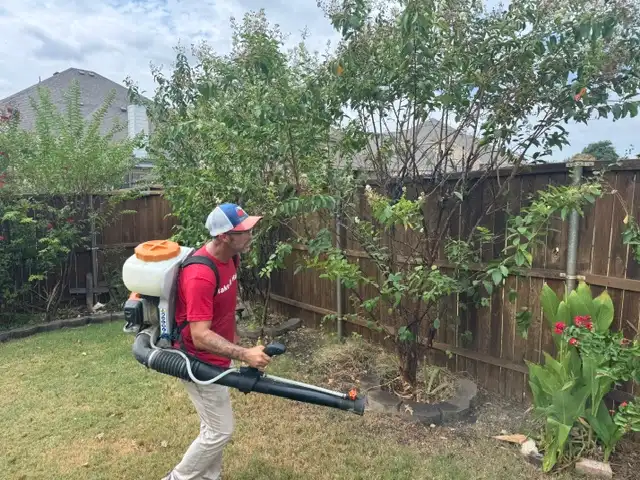
On a lot backing the rough, a greenbelt or a creek corridor, the technician starts at that rear line, where the heaviest resting cover sits. We check how far the mowing carries, which stretches hold shade all day, and how wide a treated band is worth running.
Working the landscaping
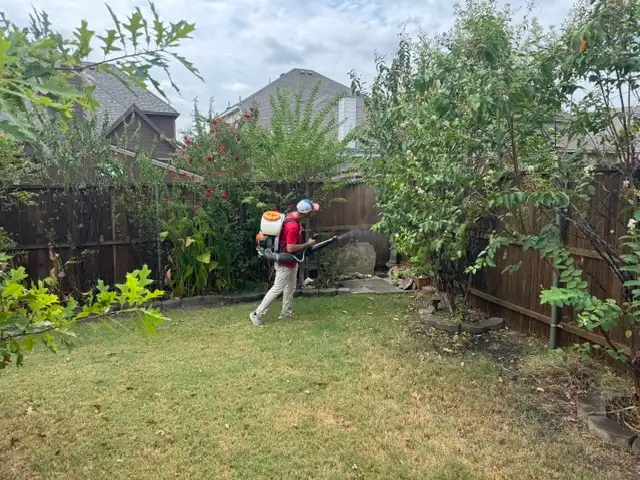
The beds pressed against the brick come next: mulch depth, what leans on the wall, where irrigation keeps the ground damp. The fogger then goes through those shrubs, the canopy, fence shade and deck skirting. Blooming flowers are skipped, and a pollinator bed is mapped no-spray if you flag it.

Edges, then standing water
Turf and bed edges are treated for fleas and ticks, the layer a dog collects them from on the way indoors. Containers, drains and low spots holding water are then pointed out one at a time, and anything undrainable gets larvicide. The crew is large and openings are kept for new signups, so a first appointment normally falls inside a week.