COURSE-SIDE AND IRRIGATED
What draws roof rats onto a Trophy Club lot
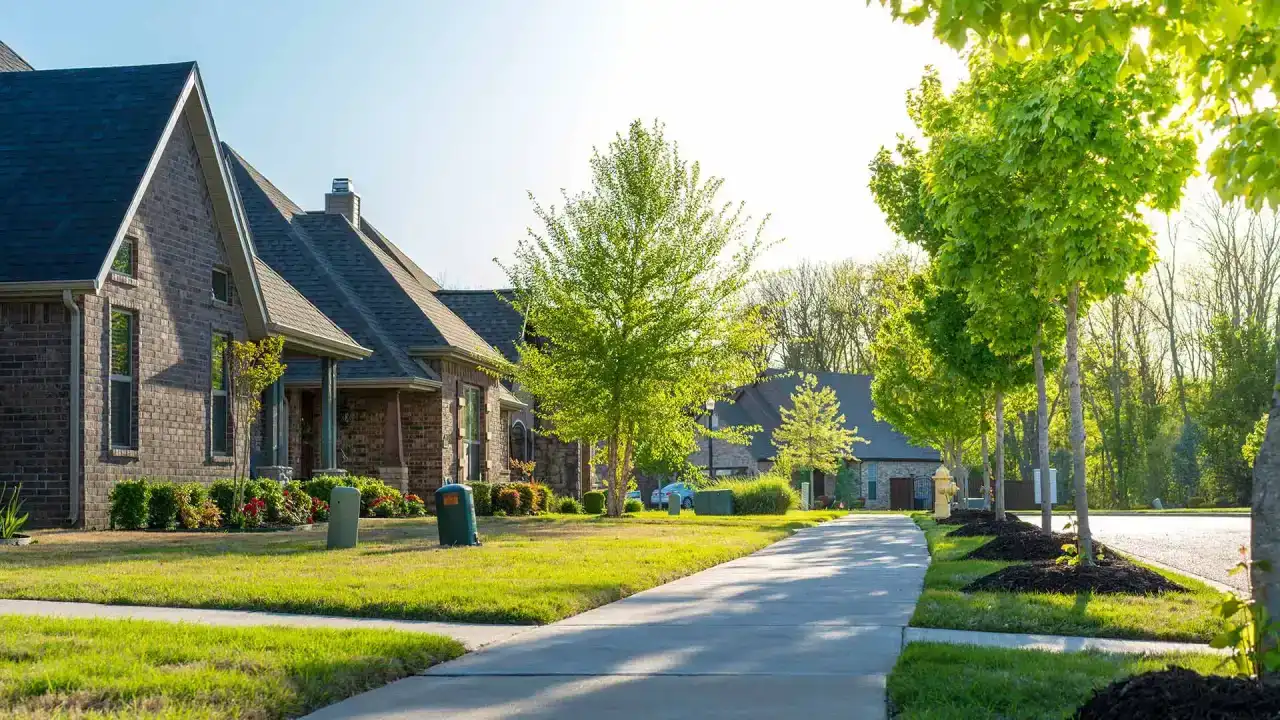
Water they never have to look for, cover they never have to leave, and a route to the roof. Trophy Club was laid out around its golf courses, so the town has irrigated turf, water features and the rough all in the same few streets, and a roof rat needs exactly that combination.
The planting finishes the job. Mature shrubs grown tight against the veneer, ivy on a wall and trees reaching the roof give an animal a covered path from the ground to the eaves without a single step in the open, which is the one thing that makes them cautious.
Entry is then a matter of what the roof line offers: a torn soffit screen, a lifted vent boot, the gap where a chimney chase meets the wall. None of that is about how well the house is kept, which is why tidy Trophy Club homes get this as often as anyone.
THE MONTHLY FIGURE
What rodent control adds to a Trophy Club plan
It is $25 a month, added to Home Defender or Complete Home & Lawn Defense, and it is not sold as a standalone service. A larger house does not pay a larger rodent line; the inspection takes longer and the price does not move.
The plan underneath is priced on square footage. Trophy Club houses commonly fall between 3,000 and 4,500 square feet, where Home Defender is $38 to $46 and the whole-yard plan is $51.50 to $62, or between 4,500 and 6,000, at $46 to $54 and $62 to $73.50. Above 6,000 square feet the house gets walked and quoted. Nothing is under contract, there is no startup fee, and you can get the plan figure yourself at /instant-quote before you speak to anyone.
Rodent add-on
$25 a month
Flat on any size of house; plan required
Home Defender, 3,000 to 4,500 sq ft
$38–$46 a month
The common size in town
Home Defender, 4,500 to 6,000 sq ft
$46–$54 a month
Larger course-side homes
Complete Home & Lawn Defense, 4,500 to 6,000 sq ft
$62–$73.50 a month
Adds the whole yard
Every number on this page comes from our published price list. Trophy Club homes get the same table as everyone else; the instant quote reads your square footage and lot size and hands you your own line.
WHAT WE CANNOT DO
Three honest limits on a Trophy Club property
We do not treat the courses or the greenbelts, and nobody else should be telling you they will. Those are permanent habitat with permanent populations, and the service on offer is a building they cannot enter rather than a neighbourhood they have left.
We do not prune. On a course-side lot the most valuable single change is usually getting limbs cut back off the roof and shrubs pulled away from the wall, and that is a landscaper's work. We will mark exactly which contacts are being used, because it is often two or three branches rather than the whole garden.
And there is nothing in the perimeter treatment that repels a rat. Insect products do what they say and no more. If rodents are the reason you are calling, the $25 line is the part of the bill doing that work, and the rest of the plan is for everything else.
COMMON AREAS OR YOUR WALL
What a community-wide contract does and does not reach
A community pest contract on shared spaces is worth having and it is not the same thing as this. It deals with the common areas, and if your HOA wants a quote for those we are happy to talk to them directly. What no shared contract can do is walk the roof line of your particular house and close the gap at your chimney chase.
Exclusion is a building-by-building job. The animals do not get into a neighbourhood, they get into a structure, through openings that differ from house to house even on the same street. So the useful division is simple: let the common areas be somebody's contract, and treat your own envelope as your own responsibility.
HOW THE VISIT RUNS
The first walk on a Trophy Club house
The course-facing side and the water
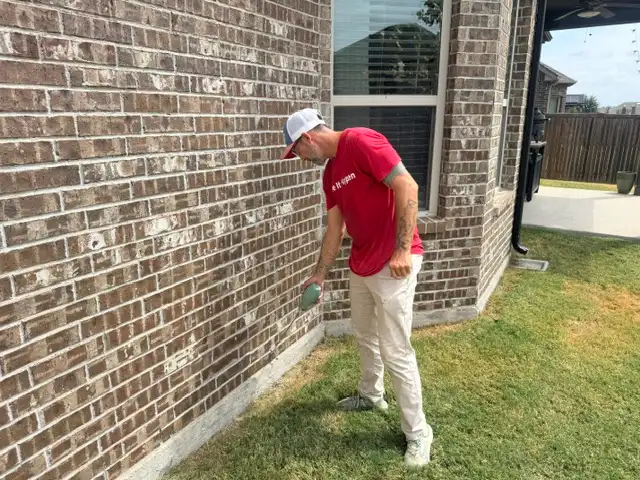
We start on whichever boundary faces the rough, a greenbelt or a water feature, looking for runs through ground cover, droppings along a wall and burrows at the fence. Irrigation matters here too, because a stretch of slab kept permanently damp by a sprinkler head is a place rodents keep returning to.

Roof line, chimney chase and vents
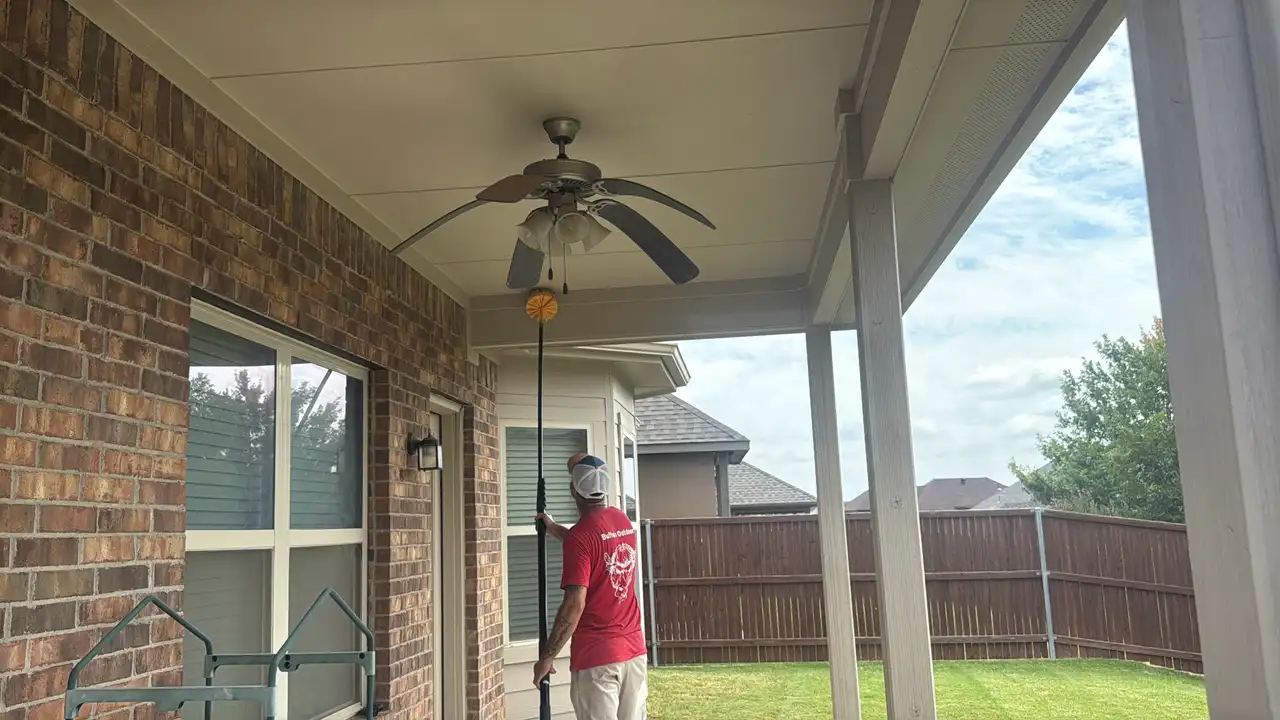
Roof rats come in high, so this is the productive part of the inspection: soffit screens, roof returns, vent boots, the flashing where a chimney chase meets the wall, and any branch touching the shingles. Anything open gets closed with hardware cloth or sheet metal rather than something a rat can work through.
Beds, outdoor kitchen and the attic
Lower down we pull back planting to look at the veneer behind it, check the outdoor kitchen and pool equipment cabinets, and work the garage. The weep holes are already packed with copper mesh and dusted under both plans, and the attic is read for runways so traps and locked stations go where the traffic actually is.