
THE ROUGH AT YOUR FENCE
What a fairway-backing lot is really up against
The rough is tall grass kept tall on purpose, which from a tick's point of view is prime real estate. They climb it, hold position around ankle height and transfer onto the first warm thing that brushes through, and on a Trophy Club lot backing the course that grass begins at your fence.
Wildlife working the courses and the greenbelts keeps restocking it. That is the supply line, and it explains why a course-side property can have a steady tick problem while a house three streets in has almost none.
Fleas are a shorter story out here. They need shaded, damp soil, which on these lots means irrigated beds against the house, the ground beneath decks and the shady strip along a fence rather than the sunlit lawn in between.
LOT BANDS IN TROPHY CLUB
The per-visit price on a master-planned lot
Lots in this town are generous by suburban standards without being acreage, so most homes fall between $59.95 and $89.95 a visit, and the larger course-side parcels reach $99.95. Lot square footage is the entire calculation; the house and the landscaping do not feature in it.
It is a per-visit arrangement every 21 days from April through September with nothing signed, and the number reaches you before you commit. Retreatment between visits is part of what you already paid for rather than an extra.
7,001 to 12,000 sq ft
$59.95 a visit
The tighter interior lots
17,001 to 22,000 sq ft
$79.95 a visit
A common size across the town
27,001 to 32,000 sq ft
$99.95 a visit
Larger parcels backing the courses
Return before the next visit
No charge
Warrantied between scheduled treatments
Every number on this page comes from our published price list. Trophy Club homes get the same table as everyone else; the instant quote reads your square footage and lot size and hands you your own line.
WHAT IT DOES NOT COVER
A treated boundary is a reduction, not a wall
We do not treat the golf courses or the greenbelts, and nobody should suggest that a treated yard makes a course-side lot tick-free. What the buffer at your fence does is intercept the traffic where it is heaviest, which is a large cut in what reaches the patio and the dog, and a check after time spent near the rough is still worth the thirty seconds.
Indoor fleas fall outside this too. Once a population is living in rugs and bedding the yard has stopped being the driver, and hot laundry, hard vacuuming and a veterinary product are what end it. If the interior needs a hand, one treatment inside comes with the program.
And if you are three streets from any course frontage, on an open sunny lot, with no pet, this may simply not be worth your money. A Trophy Club interior lot fitting that description carries very little flea or tick pressure, and we would rather say so than book six visits.
PERIMETER PLAN OR YARD PLAN
Home Defender or the flea and tick program?
They solve different problems and people mix them up on the phone constantly. Home Defender is the year-round structural plan at $30 to $54 a month, four visits a year covering the perimeter, eaves and weep holes with fire ant treatment included, and it is what you want for ants, spiders and wasps at the house.
Fleas and ticks live in the yard rather than in the wall, so they belong on the per-visit Mosquito, Flea & Tick program instead. If you want the structure covered all year and the whole yard treated as well, Complete Home & Lawn Defense runs $40 to $73.50 a month, and plenty of course-side households pair that with the season visits.
FIRST VISIT, TROPHY CLUB
Where the technician starts on a course-side lot
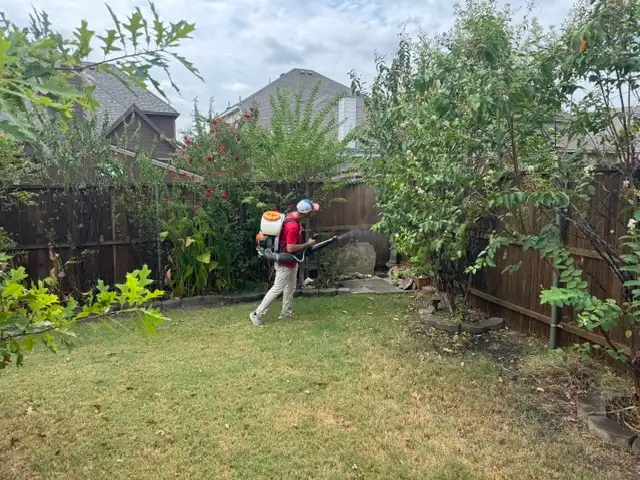
The fence line against the rough
This gets walked first and treated first, because it is where the ticks are entering. How wide the buffer needs to be depends on how much taller grass sits beyond your fence and how much of your own edge the mower actually reaches.
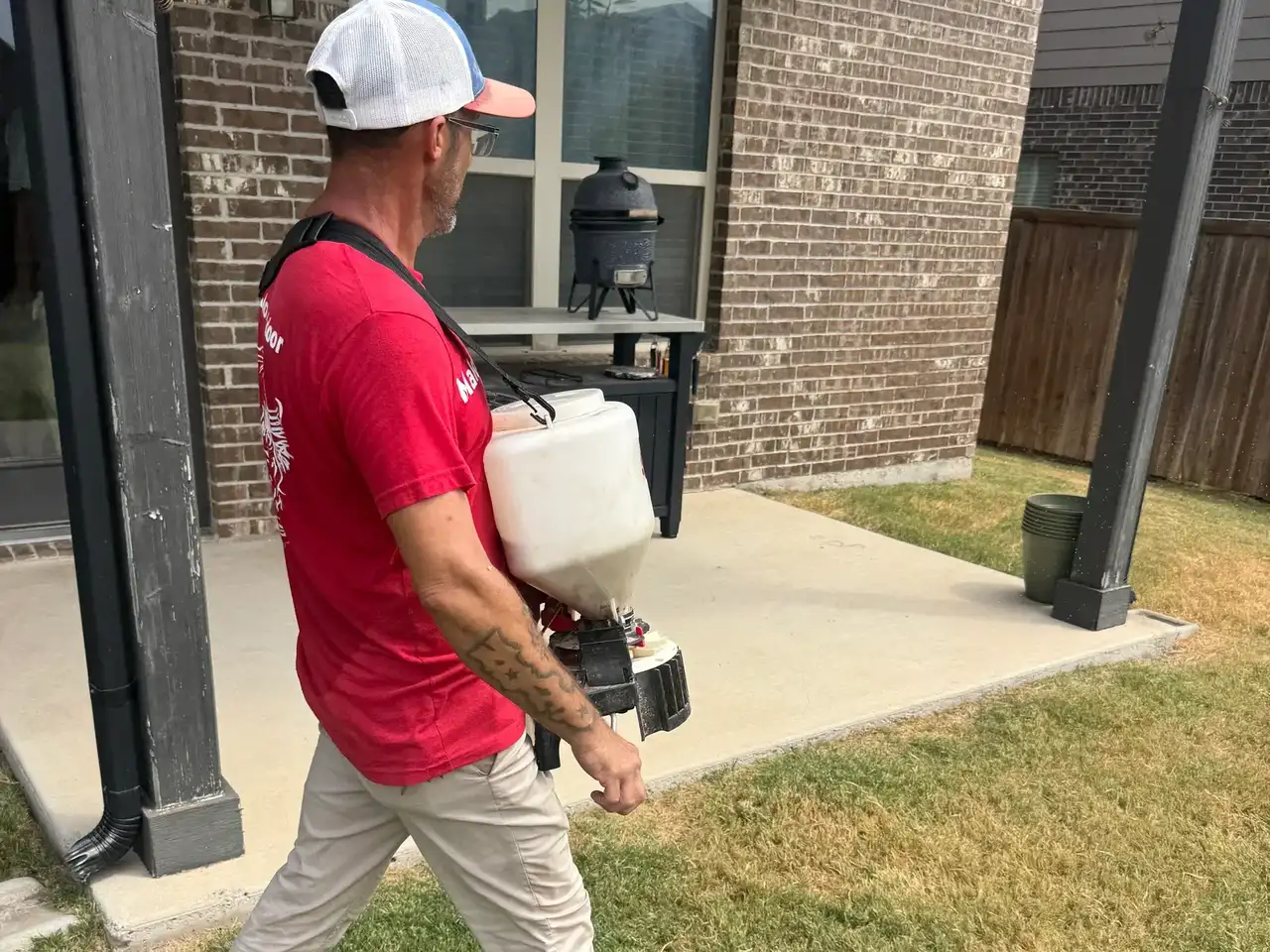
Irrigated beds and what touches the brick
Beds pressed tight against the house are shaded, damp and watered on a schedule, which makes them the flea ground on an otherwise sunny lot. Mulch depth against the slab is checked in the same pass.
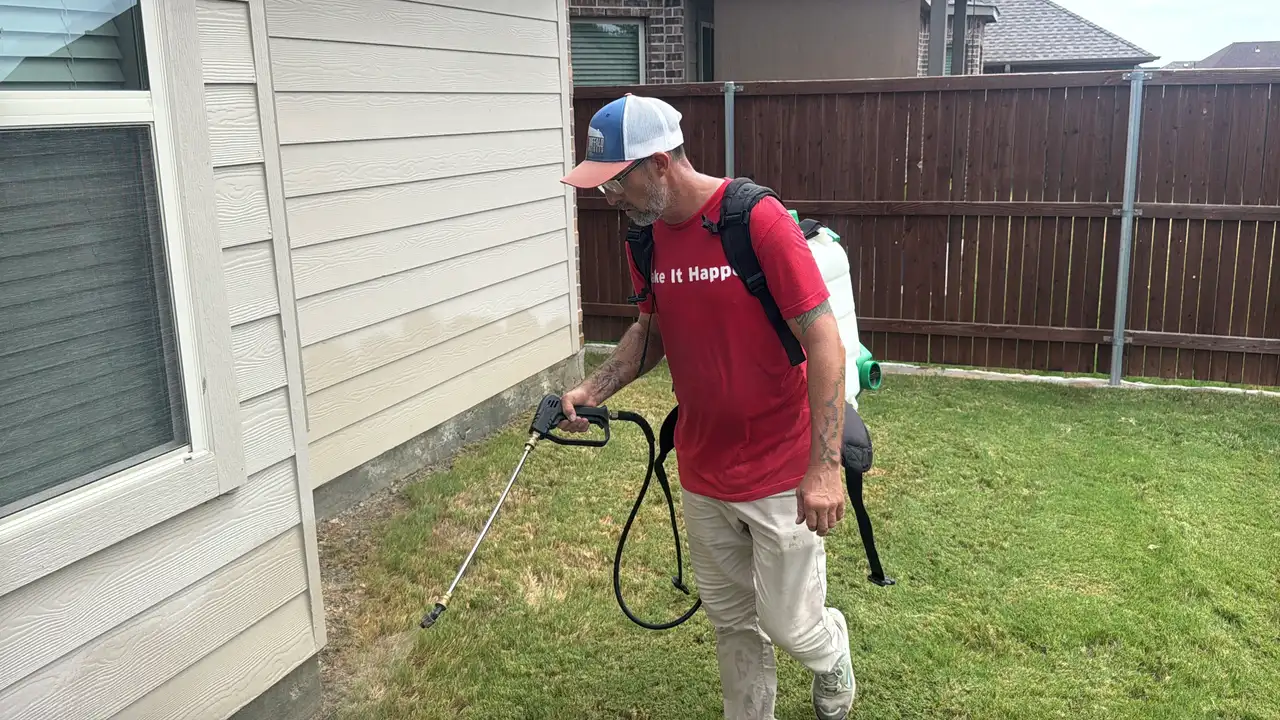
The lawn and the dry-down
The full turf area is treated afterward, then about two hours in the heat before pets and children use it normally. Nothing goes on the animal, which remains your veterinarian's side of the work.