
TWO HALVES OF ONE TOWN
Which part of White Settlement has a chigger problem
The western side, mainly. Where the town runs out toward Lake Worth and the undeveloped ground past it, mowed yards finish against tall grass nobody cuts, and that transition is where larvae are produced and where they cross. A back fence facing open country is the best predictor of whether a household spends July itching.
The settled streets are a milder case. Post-war houses under sixty-year-old canopy hold leaf litter and damp shade, enough for a small population to overwinter in one corner, but nothing like the supply an open boundary hands over. Either way the bites read the same, a close band of welts wherever clothing was tight.
WHAT IT RUNS A MONTH
What chigger coverage costs on a White Settlement house
Most of the town pays $40 to $51.50 a month, the Complete Home & Lawn Defense band for a house of 1,500 to 3,000 square feet, while smaller post-war homes pay the flat $40. Price is set by the square footage of the house and not the lot, so a place on the west edge with a long boundary costs what the identical house three streets in costs. That plan treats the whole lawn at every visit, which is what an edge lot needs.
Home Defender is the 25-foot version at $30 to $38 a month for the same house sizes. On an interior White Settlement lot it often covers everything that matters, and it carries the same weep-hole work: Delta Dust at each visit and copper mesh closing the holes for good, included here and charged for by most companies in this market. What it cannot do is reach a fence line against open ground.
1,500 to 3,000 sq ft
$40 to $51.50 a month
Most of the post-war housing stock
Under 1,500 sq ft
$40 a month
Smaller homes, whole lawn covered
Home Defender, same sizes
$30 to $38 a month
Fine inside town, short on the west edge
3,000 to 4,500 sq ft
$51.50 to $62 a month
Larger and rebuilt houses
Every number on this page comes from our published price list. White Settlement homes get the same table as everyone else; the instant quote reads your square footage and lot size and hands you your own line.
HONEST LIMITS
What a treated White Settlement yard cannot promise
It cannot promise zero bites on an edge lot. The open ground west of town is not ours to treat and keeps producing larvae through August, so a property facing it always takes some traffic across the fence. What treatment does is remove the population established in your own grass, which is responsible for almost every bite you get.
It cannot work through litter either. Under the older canopy the mites overwinter at the soil beneath a mat of leaves, and an application sits on the mat. A White Settlement yard raked out in early spring loses most of next summer's problem before it begins, a better return than any extra visit could give.
And it is a seasonal benefit sitting inside a year-round plan. Chiggers are active from roughly May to August, so the rest of the year those visits work on ants, spiders, scorpions and the gaps in older brick. If you wanted a yard spray for July alone we do not sell one, and a single application would not hold a whole season anyway.
YOUR YARD, THEIR YARD
Does treating your lawn work when the yard next door is untreated?
Yes, and better than most people expect, because chiggers are poor travelers. A larva moves a few feet at a time by climbing whatever is standing, so the population biting you is overwhelmingly the one that hatched in your own grass. That is why a single treated lot in a street of untreated ones still sees a real drop.
Where a neglected neighbor genuinely costs you is at the shared fence. Tall grass on the far side keeps a nursery running a few feet from your turf and larvae trickle across all summer, which is why that strip takes the heaviest application and why keeping your own side cut short matters as much as anything we apply. Nobody should wait for the whole block to sign up before treating their own ground.
FIRST VISIT, WEST SIDE
What the first chigger appointment covers in White Settlement
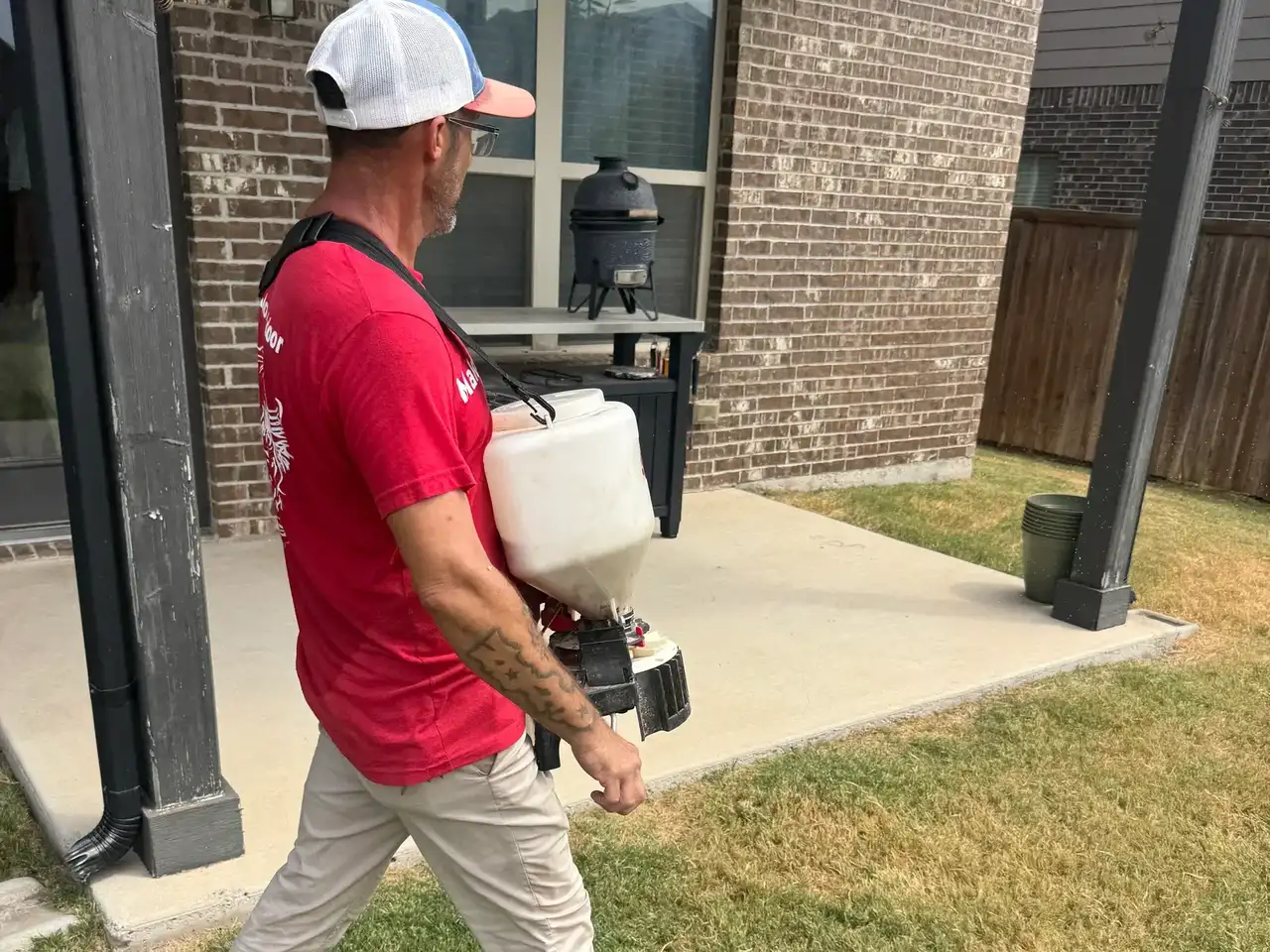
Reading which half you are in
The technician establishes straight away whether the lot has an open boundary or sits interior under canopy, because the two weight the same treatment differently. On a west-edge property the fence line is the job; on an interior lot it is the shade beneath the trees.
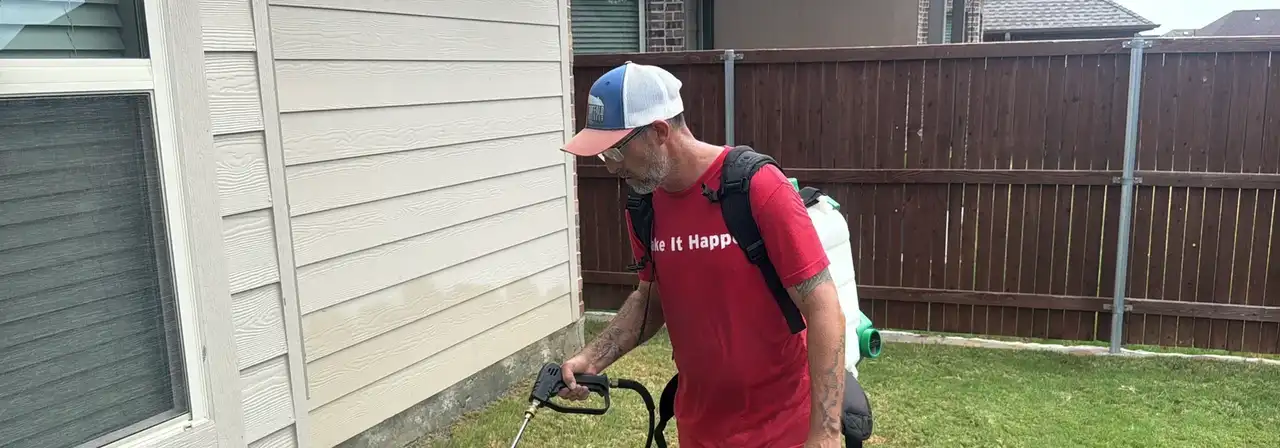
Leaf litter and the damp corner
Anywhere leaves have banked up or the ground never dries gets flagged before the application goes down, since treating over litter reaches the wrong layer. You will be asked to clear what you reasonably can, and told exactly why it matters.
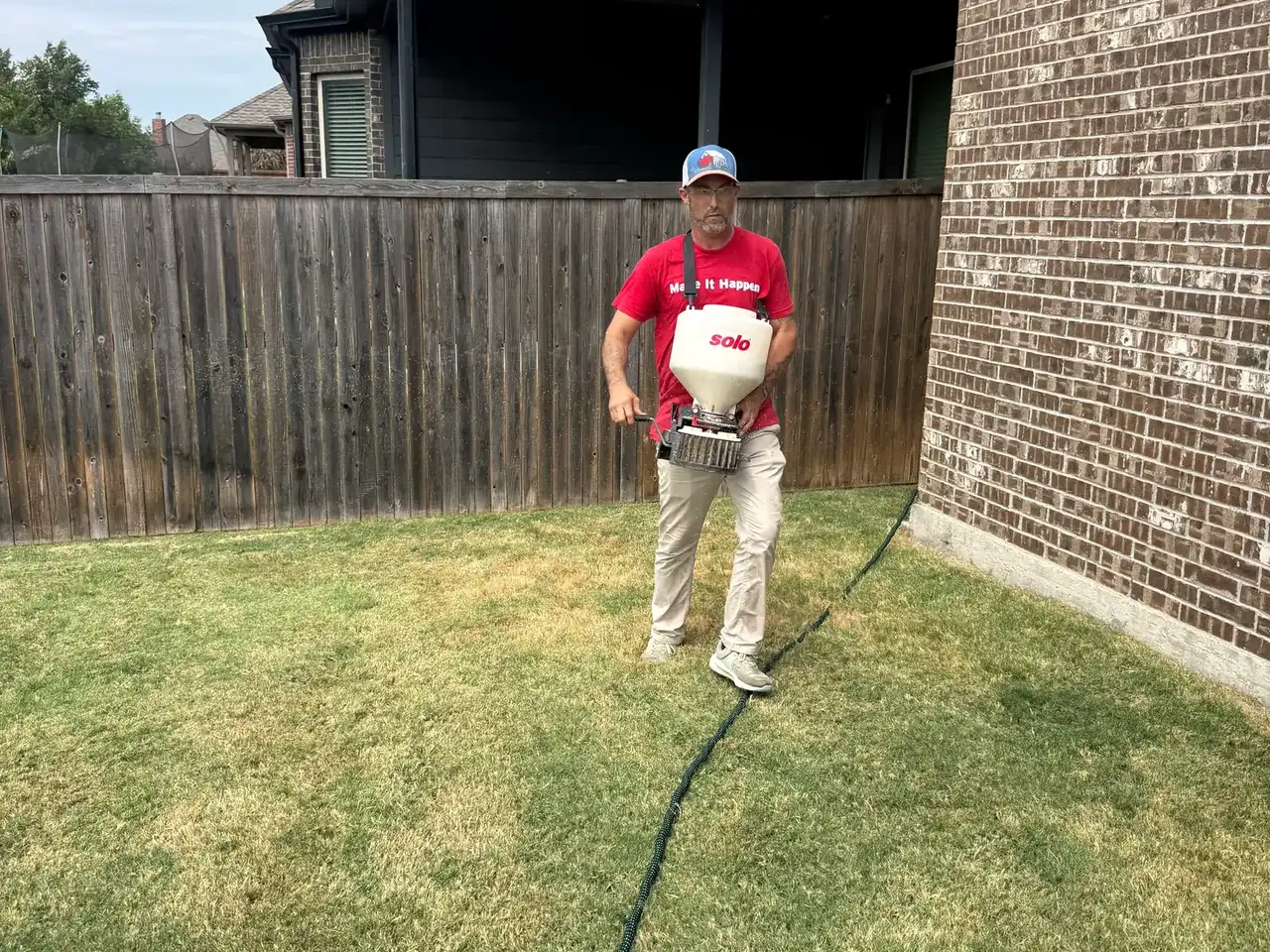
Doors, and a shared 76108
Each entrance takes three feet of treated ground so nothing is walked in on a sock. White Settlement shares its ZIP with the west side of Fort Worth, and both are priced and scheduled the same way, off the address rather than the postmark.