
WEST SIDE, OLD SOIL
Fire ants in White Settlement come from the edge, not the middle
The middle of town is quiet. White Settlement's post-war neighbourhoods sit on soil that was last disturbed when the houses were built, and ground that old has long since refilled with the native ants that crowd fire ants out, so a mound in the core of town is usually a lone colony in the one patch of lawn that gets full sun all day.
The west side is a different story. Where the streets run out toward Lake Worth, the Naval Air Station and the undeveloped ground beyond, mowed yards sit against open land that nobody treats, and every open field is a fire ant nursery. Mated queens fly off those fields after summer rain and land in the nearest sunny lawn, which is why the whole yard gets baited even on a house that only ever sees a mound or two.
SMALL HOUSES, LOW BAND
The cost of fire ant control for a White Settlement home
Zero on its own, because the bait is bundled into both year-round plans, and White Settlement's post-war footprints put most homes in the cheapest band. A house up to 1,500 square feet is $30 a month on Home Defender, and the ones that have been added onto over the years fall at $33 to $38 for 1,500 to 3,000 square feet.
Complete Home & Lawn Defense is $40 a month for that smallest size and $40 to $51.50 for the next, and it treats the entire yard for chiggers, grubs and lawn insects on top of the bait. On a west-edge lot backing open ground, that whole-yard coverage is often the version worth having. No startup fee, no cancellation fee, and you get the figure before you agree to anything.
Up to 1,500 sq ft
$30/mo
Most post-war White Settlement homes
1,500 to 3,000 sq ft
$33–$38/mo
Homes that have been added onto
Whole-yard plan, same sizes
$40 or $40–$51.50/mo
Complete Home & Lawn Defense
Every number on this page comes from our published price list. White Settlement homes get the same table as everyone else; the instant quote reads your square footage and lot size and hands you your own line.
PLAIN LIMITS
What fire ant bait does not do for you in White Settlement
It cannot hurry. Once the granules are down, foragers need days to gather them and the colony needs weeks to feed enough to the queen to collapse, so a White Settlement yard looks unchanged for the first fortnight and then the mounds go quiet. Anyone promising a same-day fix is describing a drench, and a drench mostly relocates the queen.
It cannot treat the field behind your fence. Open ground west of town belongs to somebody else and would not stay treated anyway, so new queens will keep arriving from it. The plan handles them as they land: the scheduled visits knock back new colonies and anything that appears between visits is dealt with at no charge under the warranty.
It also is not the fix for what an older White Settlement house really has. Sixty-year-old brick with open weep holes and worn thresholds is letting in roaches, scorpions and the occasional mouse, and none of that is touched by fire ant bait. It is touched by the perimeter and exclusion work in the same plan, which is the part most homeowners here are actually buying.
BUY IT FOR THE ANTS?
Should a White Settlement homeowner sign up just for fire ants?
Probably not, and we would tell you so. If your lawn in the settled part of town throws one mound a year, a bag of retail broadcast bait spread over the whole yard in early spring on a dry day will handle it, and that is honestly all you need. The product category is the same one we use; the difference is whether it gets applied correctly and at the right time.
Sign up when fire ants are one item on a longer list. West-edge lots that see chiggers and ticks coming in off the open ground, or any post-war house with pests getting through the brick, get more value from Home Defender or Complete Home & Lawn Defense than the bait alone could justify. Then the fire ant coverage is a bonus you stop having to schedule yourself.
FIRST VISIT IN 76108
What we do on the first fire ant visit to a White Settlement lot
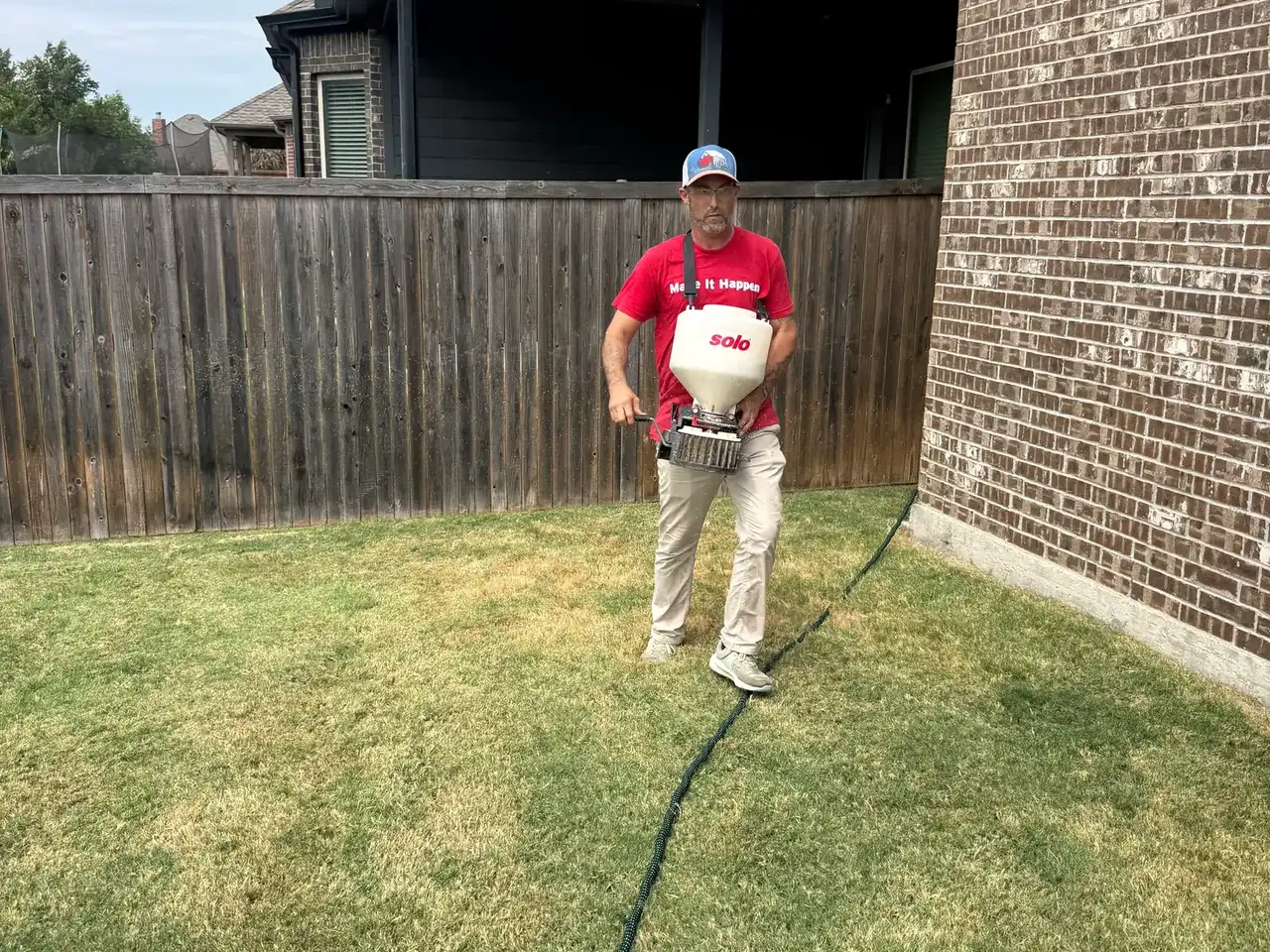
Check which way the lot faces
A yard backing open ground toward the lake gets walked along the back fence first, because that boundary is where queens arrive. A yard ringed by other post-war houses usually has one sunny spot worth watching, and we find it.
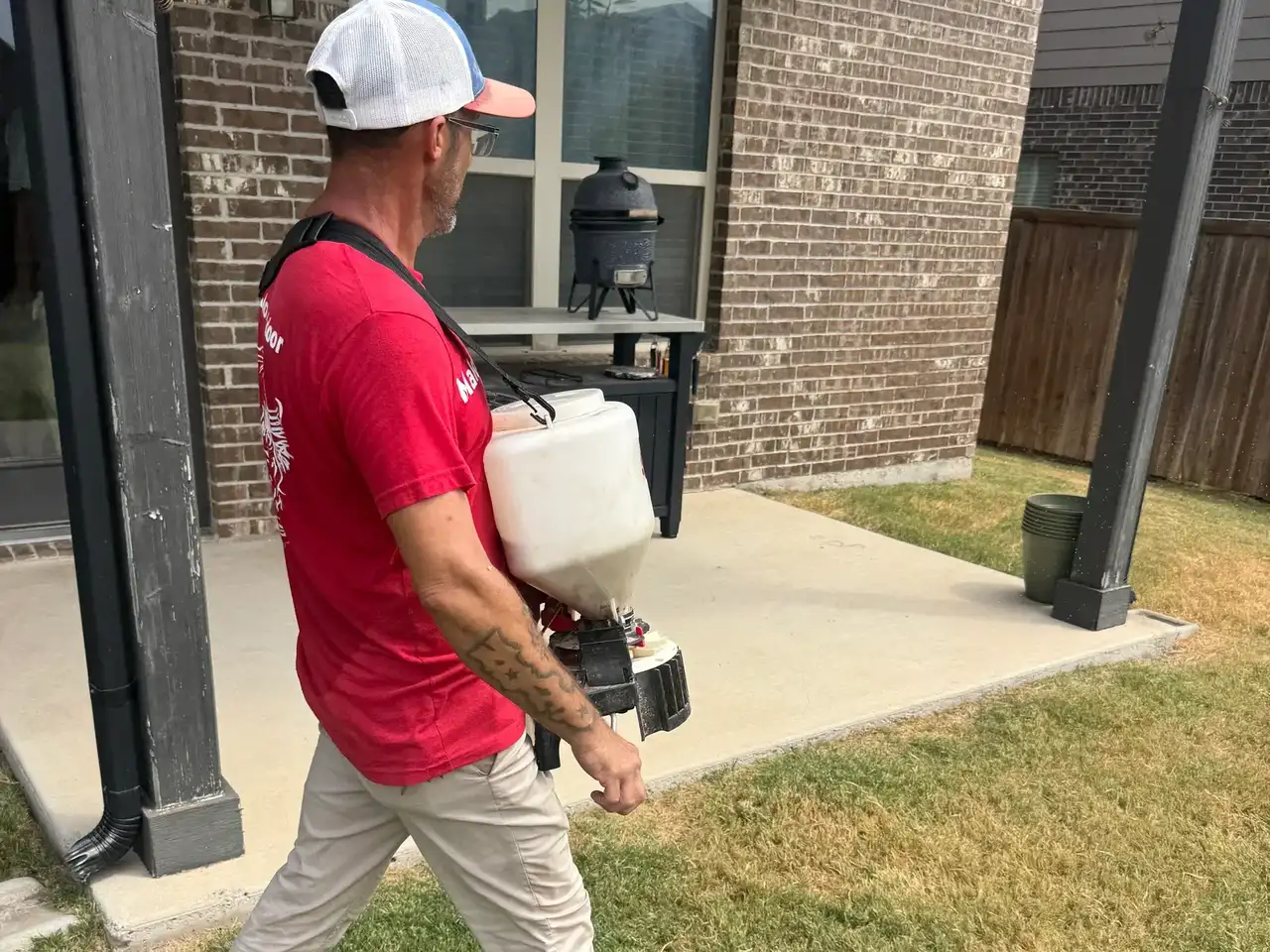
Bait the lawn end to end
The spreader puts a very light rate of granules over the entire turf, including the strip along the alley and the parkway at the curb. We do not drench mounds, and we do not skip the parts of the yard that look clean.
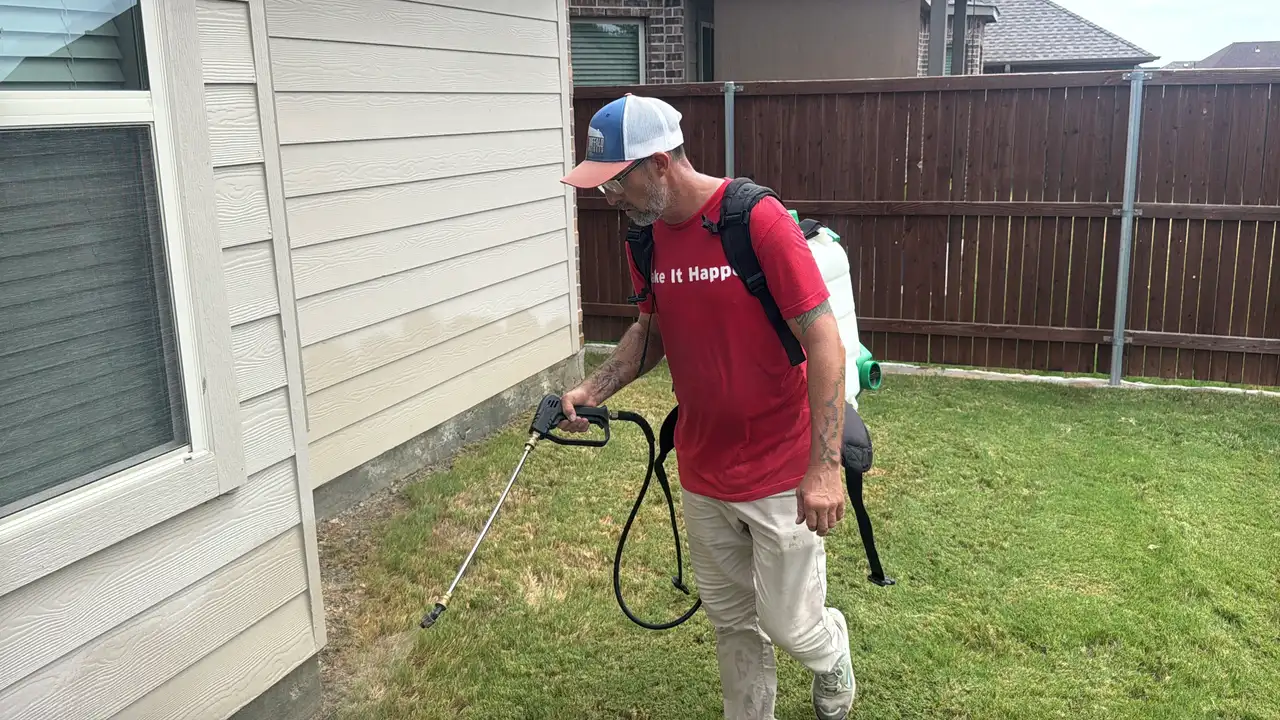
Work the perimeter and the weep holes
On a Home Defender stop the foundation, the eaves and the weep holes along the bottom course of the brick get treated on the same visit. For a post-war White Settlement house that is where the real pest traffic is.