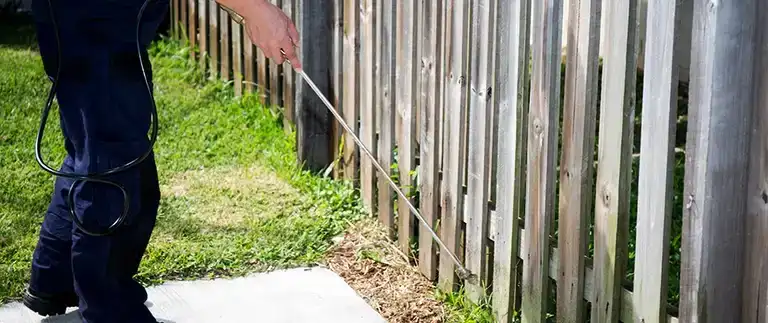
WEST SIDE, OLD BRICK
What the Home Defender Plan handles in White Settlement
Crawling pests that live outdoors and come in hunting water, food or shelter. Around here that means ants, fire ants, spiders, wasps, roaches, crickets, silverfish, earwigs, pillbugs, millipedes, centipedes and scorpions, and the reason they get as far as the door is usually the brick. Post-war walls on settled soil accumulate small openings for decades.
The other half of the local picture is the ground west of town. Where the streets run out toward the lake and undeveloped land there is more cover, more moisture and more of everything living in it, so a house on that edge takes pressure from a direction its neighbours do not.
WHAT YOU ACTUALLY PAY
The monthly cost for a White Settlement house
Home Defender begins at $30 a month for a house of 1,500 square feet or under and tops out at $54 for 4,500 to 6,000, and the large majority of homes in town sit in the lower half of that table. The size of your lot moves none of it.
Out of that figure come four scheduled visits, return trips between them at no charge, one interior treatment if it turns out to be needed, and fire ant treatment. No contract is signed, no startup fee is charged, no cancellation fee exists, and you are given the number before agreeing to anything.
1,500 sq ft or less
$30 a month
Much of the post-war housing here
1,500–3,000 sq ft
$33–$38 a month
Larger older plans and additions
Rodent control
$25 a month
Added to a plan, never sold alone
Complete upgrade
$40–$51.50 a month
Whole yard at those same house sizes
Every number on this page comes from our published price list. White Settlement homes get the same table as everyone else; the instant quote reads your square footage and lot size and hands you your own line.
WHERE IT STOPS SHORT
Three honest limits on a White Settlement lot
The ring ends 25 feet from the house. On a street running toward the open ground west of town, chiggers and ticks live in the taller grass past that line, so the base plan simply does not reach them. Complete Home & Lawn Defense carries treatment across the whole yard, and that is the version a west-edge property should be on.
Mosquitoes off the lake are a different line item. They are treated on a 21-day cycle from April through September, priced per visit by the size of the lot, and no amount of perimeter work substitutes for that. Pretending otherwise would cost you a summer.
And no plan makes old brick young again. Delta Dust in the weep holes kills what walks through, but where a White Settlement house has a threshold with daylight under it or cracked mortar at the meter penetration, the answer is a repair. We flag those, and copper-mesh sealing of the weep holes is an add-on priced on request.
DO IT YOURSELF OR NOT
Which parts of this can a homeowner genuinely handle?
More than the industry likes to admit. Packing weep holes with copper mesh is a real fix and plenty of people do it themselves in an afternoon. Raking mulch back off the slab and fitting a new sweep on the back door costs almost nothing and removes two of the most common ways in.
Spraying is the part that defeats people. A hardware-store concentrate has broken down in about a week under Texas summer sun, so matching what one professional application holds for three months means redoing the entire foundation over and over from June to September. Between product, time and the fire ant bait, the plan tends to win on arithmetic alone.
DAY ONE, 76108
The first White Settlement treatment, in order
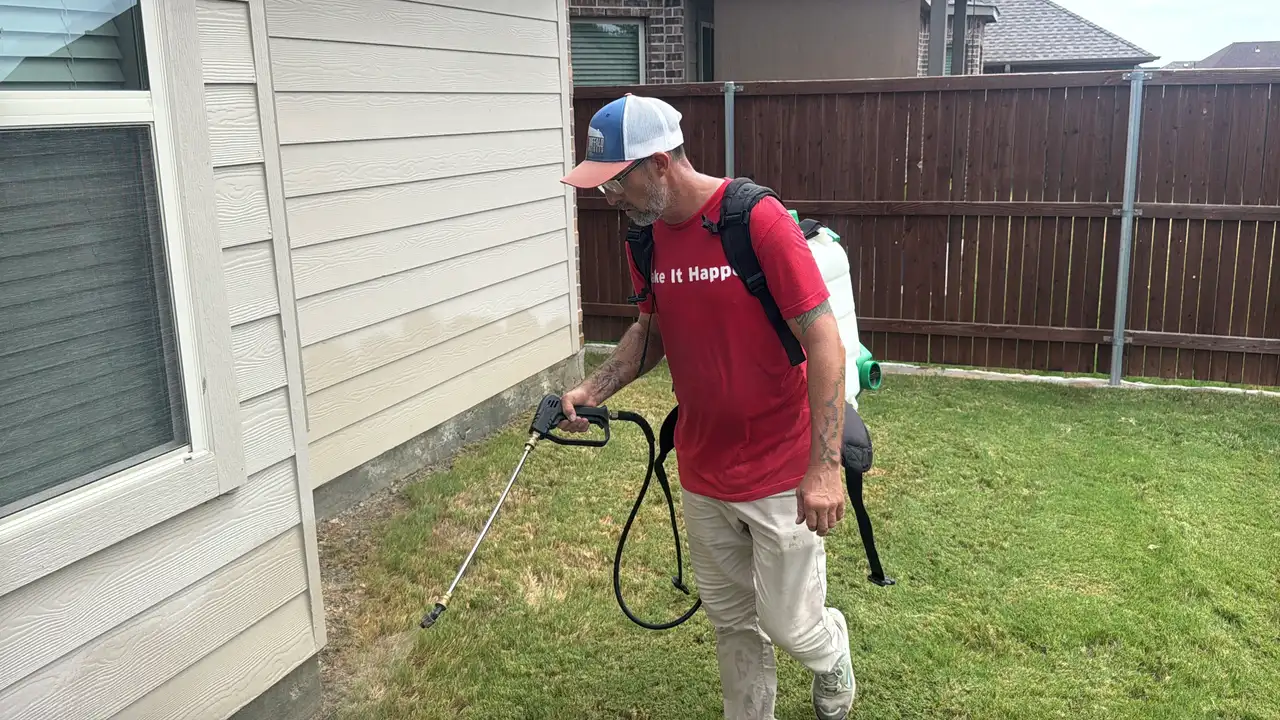
The bottom course of brick
Weep holes, thresholds and penetrations get read first, because on post-war brick that is where the recurring problems originate. Anything fixable on the cheap gets mentioned before a drop of product is applied.

Foundation band and web pole
Liquid goes around the entire slab and roughly three feet up the wall, then the eaves, soffits and door frames are swept clear with a web pole so wasps and spiders lose their anchor points.
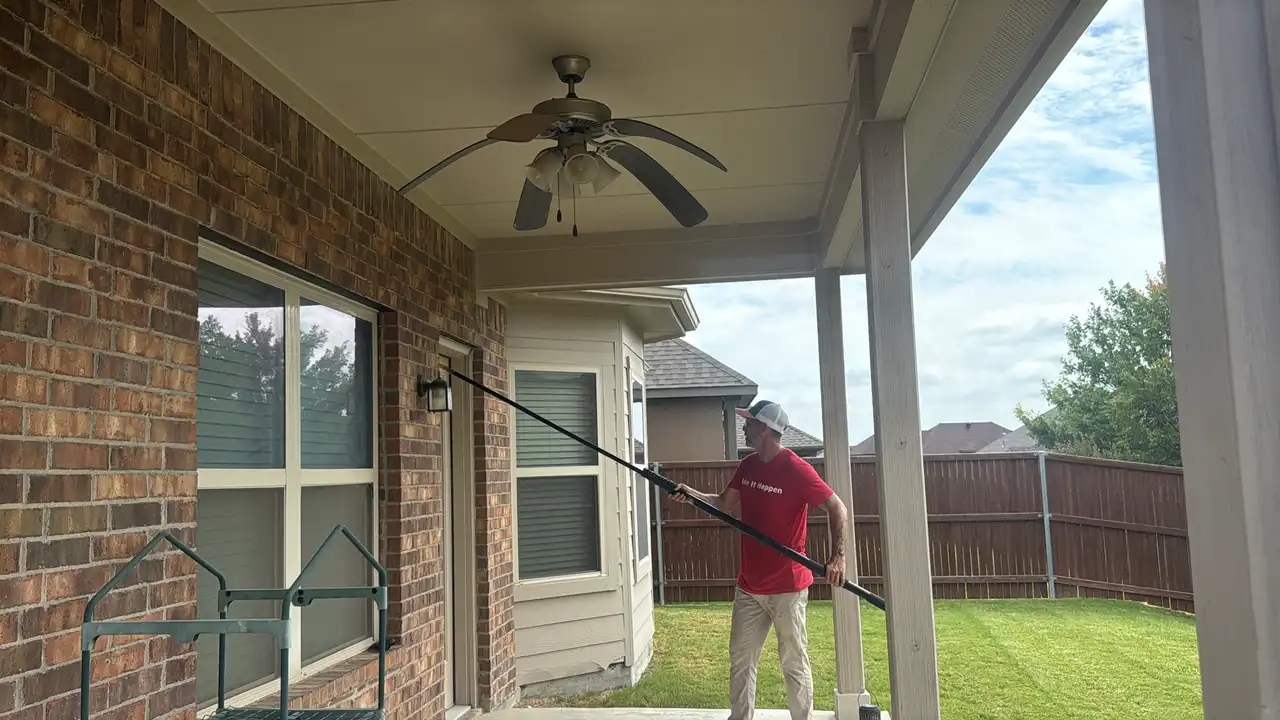
The yard side of the job
Delta Dust goes into the weep holes, granular is broadcast about 25 feet out through turf and beds, and fire ant bait is spread across the yard. On a lot facing the open west edge, the back boundary gets as much attention as that ring allows.