
WEST SIDE, OLDER LOTS
Fleas under the pecans, ticks toward the lake
White Settlement has two flea and tick problems and they sit on different parts of the map. In the post-war neighborhoods the culprit is age: trees planted in the 1950s now throw shade over most of the back yard, and shaded, settled soil stays damp enough for flea larvae to finish developing all summer.
On the west side, where the streets run out toward Lake Worth and undeveloped ground, the problem is ticks walking in from the brush. They do not breed in a mowed lawn; they climb grass stems at the boundary and wait for a leg or a dog to pass, and a lot that borders open land has a long boundary.
Both get the same program from us: every square foot of turf plus a perimeter band, on a visit every 21 days from April through September. The dog's monthly prevention from the vet is the other half, and neither half works well without the other.
WHITE SETTLEMENT BY LOT SIZE
What a visit costs on a typical 76108 lot
Older White Settlement lots are small by today's standards, which puts most of them at $49.95 or $59.95 a visit. Larger parcels on the western edge move up a band or two, and the price is set by the lot's square footage alone, not by how many fleas you have or how big the house is.
Each visit is its own decision. There is no agreement to sign, no fee to begin and none to leave, and re-treatment between scheduled stops is covered rather than billed. The instant quote at /instant-quote gives you the exact band for your address before anyone calls.
7,000 sq ft or less
$49.95 a visit
Most of the post-war streets
7,001 to 12,000 sq ft
$59.95 a visit
Larger lots and corner parcels
12,001 to 17,000 sq ft
$69.95 a visit
Edge lots toward the lake and open ground
Every number on this page comes from our published price list. White Settlement homes get the same table as everyone else; the instant quote reads your square footage and lot size and hands you your own line.
THE PART WE CANNOT SELL YOU
Why an outdoor treatment leaves an indoor infestation alone
If the fleas have moved indoors, spraying the yard will not get them out. A flea population inside a White Settlement house is living in the carpet, the couch and the dog bed, feeding and laying eggs without ever touching the lawn, and the outdoor visit only stops fresh recruits from arriving. Getting rid of the ones already inside is vacuuming every day for a couple of weeks, bedding in a hot wash, and whatever your vet puts on the animal.
The program also does not treat the open ground west of town. Ticks living in that brush will keep walking to the fence line, so we treat a buffer along it and are honest that a lot bordering undeveloped land will never be tick-free, only much better.
A house with no pets and no bites does not need six visits a year. Fleas need a host animal to build numbers, and a petless yard on a sunny post-war lot rarely has enough of a population to justify the spend.
STORE GRANULES OR A PROGRAM
Should you just buy a bag of yard granules?
Hardware-store granules can work, and for a small, mostly sunny White Settlement yard with one indoor cat they may be all you need. The product is similar in principle to what we apply; the difference is coverage and timing. Most people spread it once, in the open lawn where fleas are not, and stop when the bag runs out.
Our version treats the shaded strips and the foundation band as well as the turf, and comes back on a 21-day cycle that matches how quickly eggs turn into biting adults. If you can commit to treating the right spots every three weeks yourself from April to September, DIY is a fair choice; most people find the schedule is the hard part.
VISIT ONE ON AN OLDER LOT
What we do the first time out in White Settlement
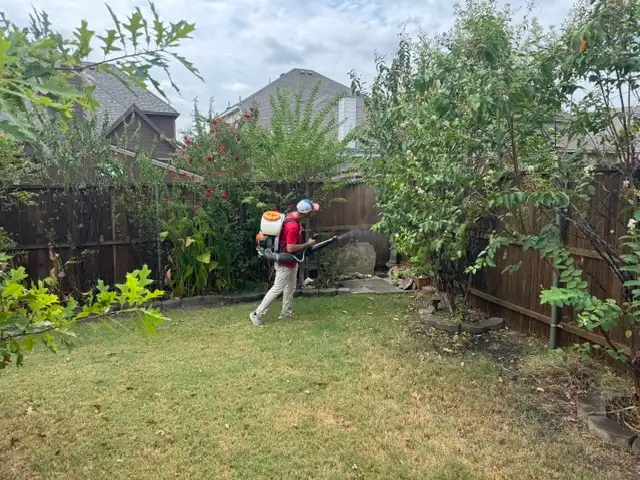
Reading the shade line
Before treating we look at where the tree canopy keeps the ground damp, where leaf litter has collected along the fence and under shrubs, and whether a shed or porch has a dark, dry gap underneath. Those are the flea nurseries on a settled lot.
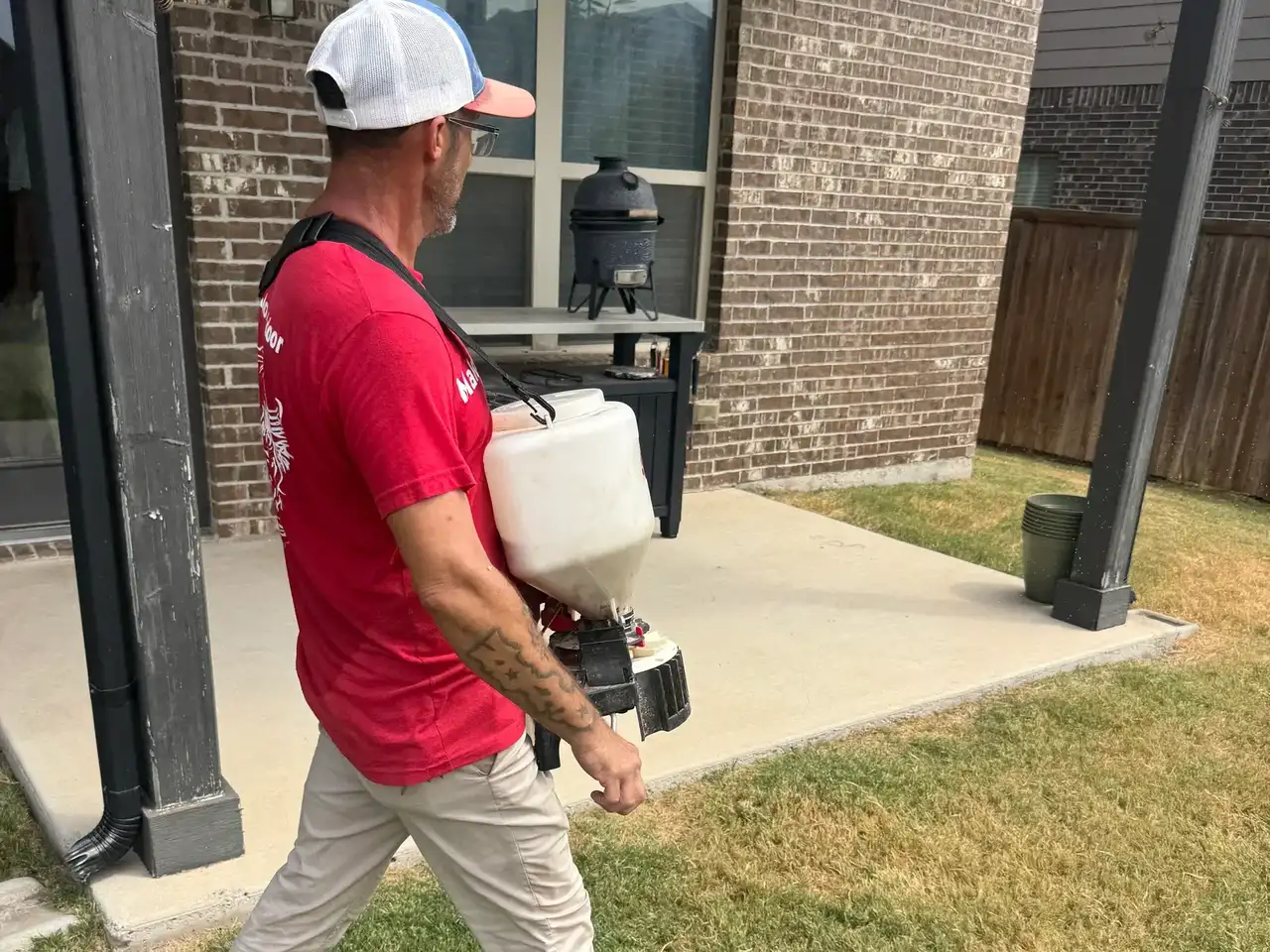
Turf, then the building line, then the west edge
The whole lawn is treated first, followed by a band around the house where animals cross the threshold. On a lot bordering the open ground toward Lake Worth, the boundary strip gets treated as its own zone rather than an afterthought.
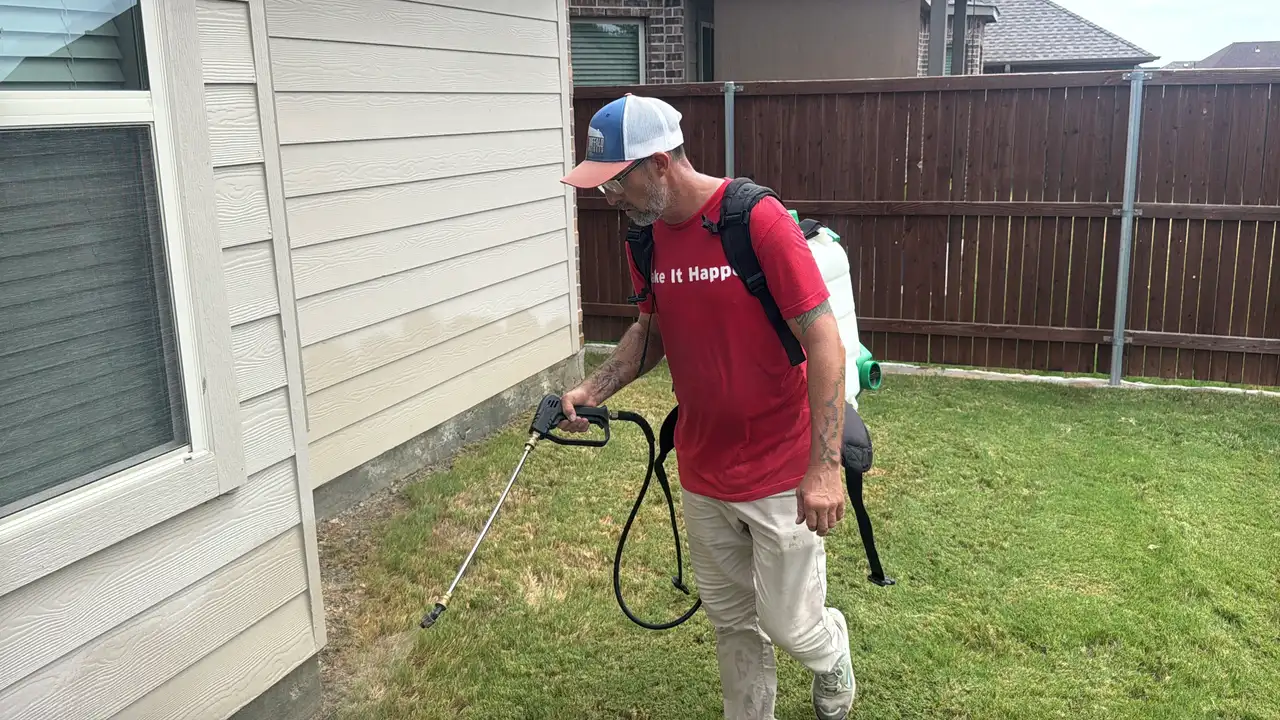
A frank word about the dog
We ask what the animals are on and when it was last given. If the answer is nothing, we say plainly that the yard treatment will underdeliver until the vet side is in place, because pretending otherwise costs you money in three weeks.