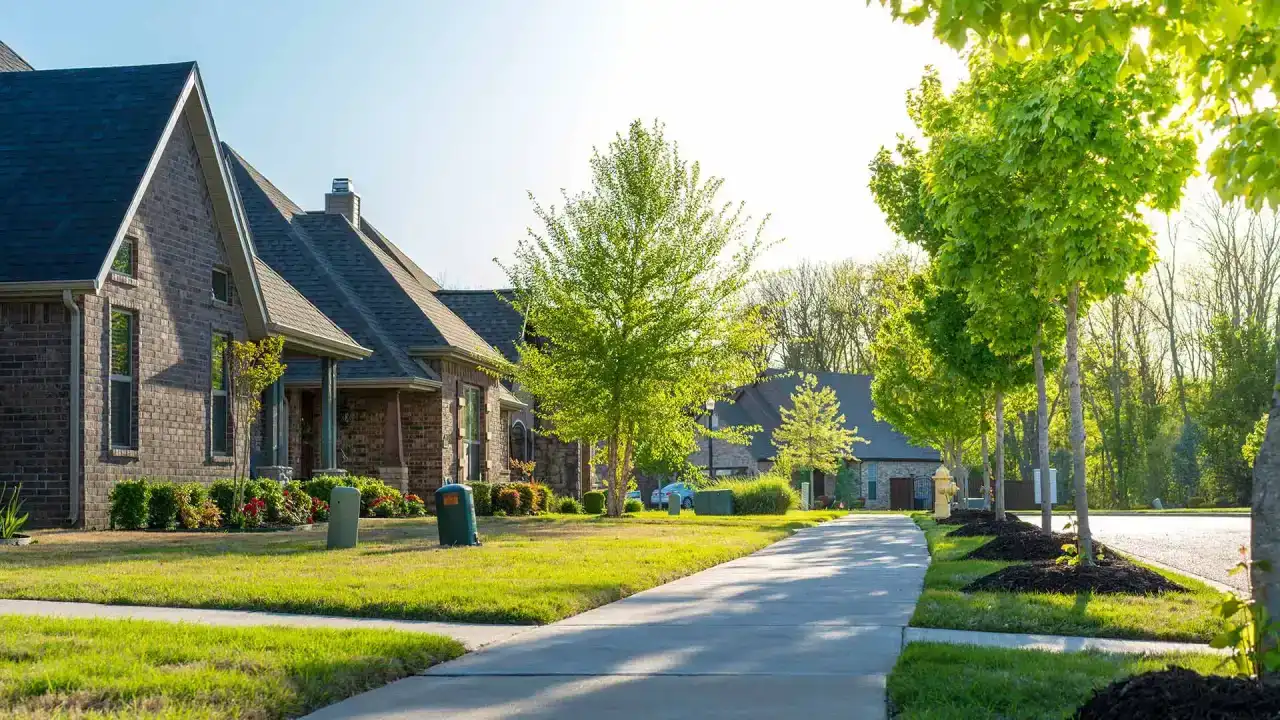
POST-WAR BRICK, OPEN WEST EDGE
Where do White Settlement rats come from, and how do they get in?
From the west, mostly, and in through the bottom of the wall. The undeveloped ground and the lake side beyond White Settlement's western streets hold a standing population of rats and field mice, and when the weather turns they move toward the nearest heated structure. Houses on that edge feel it first; the interior blocks feel it a few weeks later.
Getting in is easy on housing this age. Most of White Settlement went up in the years after the war, and brick from that period has settled for sixty or seventy years: weep holes that were left wide, mortar that has crumbled at the bottom course, back-door thresholds worn into a dip. A mouse is through a gap the width of a pencil, and these houses have a few.
Our part of the job is to find which gaps carry traffic, close them, catch what is already inside and then return to make sure the closure held. That order matters more than any product.
WHAT IT COSTS HERE
Rodent control on a small White Settlement house
A White Settlement house is often under 1,500 square feet, and that is the cheapest line on our table: Home Defender at $30 a month, plus $25 for the rodent add-on, or $55 in total. The 1,500 to 3,000 square foot homes run $33 to $38 for the base plan and $58 to $63 with rodents.
The add-on cannot be bought on its own, and that is the only rule about it. What you get for the $25 is the inspection, the exclusion on the openings in use, the traps and stations, and the follow-up trips. There is no startup fee on the plan, nothing charged to cancel, and any retreatment between the scheduled visits is already covered.
Rodent add-on
$25 a month
Only on top of Home Defender or Complete Home & Lawn Defense
Home Defender, up to 1,500 sq ft
$30 a month
Much of the post-war housing in White Settlement
Home Defender, 1,500–3,000 sq ft
$33–$38 a month
The larger and remodeled houses
Complete Home & Lawn Defense, up to 1,500 sq ft
$40 a month
If you want the yard treated too
Every number on this page comes from our published price list. White Settlement homes get the same table as everyone else; the instant quote reads your square footage and lot size and hands you your own line.
WHAT IT WILL NOT SOLVE
The honest shortfalls of rodent work on the west side
It does not empty the field behind you. Open ground toward Lake Worth is rodent habitat, and no amount of work on your house changes what lives in the grass west of the fence. What changes is whether they can get inside; on the edge streets of White Settlement, that is the realistic target.
It does not fix a sixty-year-old door. The most common working entry on a post-war house here is not a weep hole at all but a back door or garage door whose seal gave up decades ago. We identify it and tell you plainly, and the new sweep is your purchase; until it is on, the rest of the sealing is only half done.
It does not come out of a sprayer. Homeowners sometimes ask us to add a rodent product to the perimeter treatment, and there is no such thing that works. The perimeter spray is for insects; rodents get mesh, sealant, hardware cloth and traps.
GLUE BOARDS, POISON OR SEALING
What homeowners in White Settlement usually try first, and why it stalls
Glue boards and open poison from the hardware store are the two most common first moves, and both have a cost that is not on the box. Glue boards catch the young and the careless, then the survivors learn them. Loose poison kills a rat inside a wall, where it smells for weeks, and it is a real risk to a dog or a neighbor's cat.
Sealing is slower to start and faster to finish. Once the openings in use are closed, the animals inside have nowhere to go but the traps, and the trapping has an end date instead of becoming a routine. If a White Settlement house has one mouse and one obvious hole, we will say so and you can handle it; if the sign is in three rooms, the add-on is the shorter path.
THE FIRST HOUR
What we look at first on a post-war White Settlement house
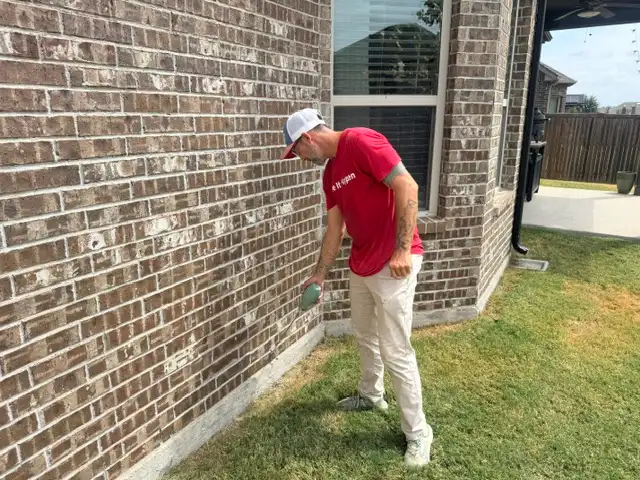
The west wall and the fence line
On lots at the edge of town we start where the rats arrive: the fence backing open ground, the runways along it and the nearest weep holes and penetrations. Rub marks there usually point straight at the working entry.

Weep holes, mortar and thresholds
Post-war brick gets checked hole by hole and joint by joint; the ones with droppings or chew marks are packed with copper mesh as part of the exclusion, while Delta Dust goes in the rest on the plan visits. Every door gets a daylight test.
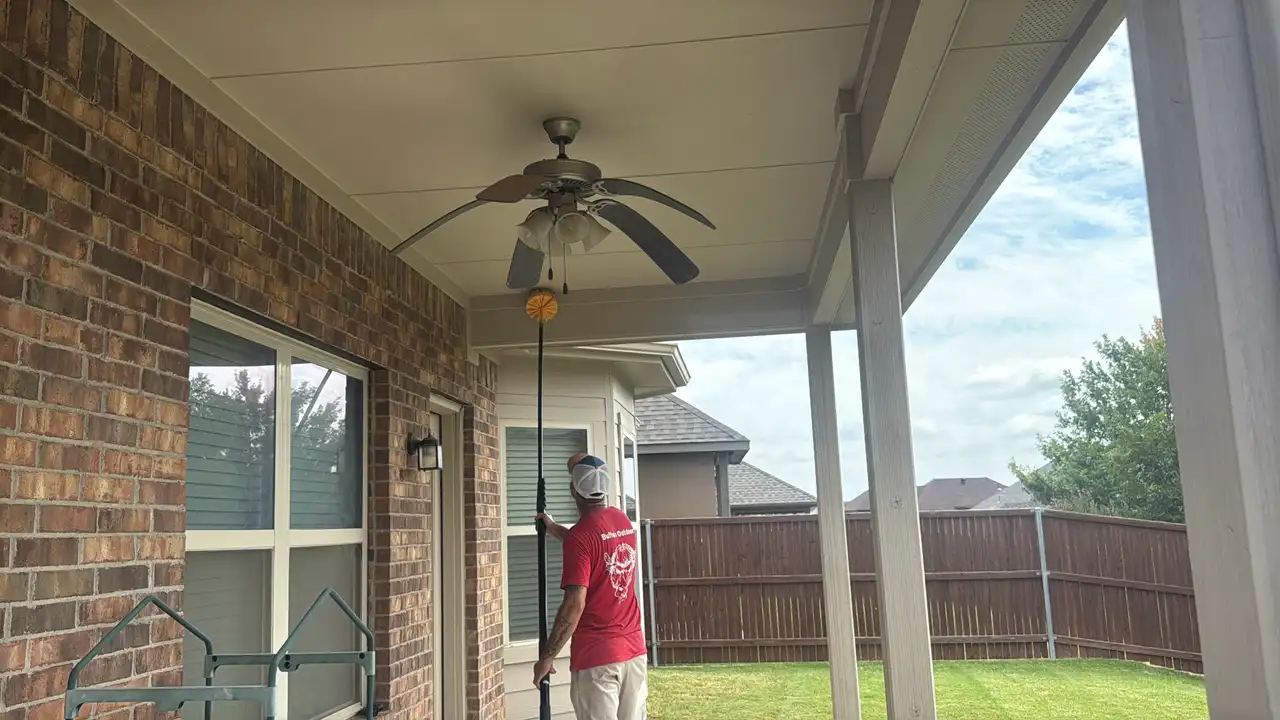
Attic, garage and the trapline
We read the attic insulation and the garage perimeter for runways, then set snap traps and locked stations on them rather than where the droppings happened to be noticed. The follow-up visit goes on the calendar before we leave.